As I near the end of my sabbatical—a season shaped by long writing days, quiet walks, and a study of mail-order esoteric courses in early twentieth-century America—I’ve been thinking a great deal about pace. Not productivity, not efficiency, but the rhythm of attention itself: how we move through our days, what we notice, and what we let notice us.
Over the past months, I’ve been immersed in the strange, fascinating world of early twentieth-century mail-order esoteric courses. The book I’ve been writing on this traces how these correspondence schools turned spiritual transformation into a kind of mediated intimacy, bringing occult wisdom into the homes of readers far from established centres of learning. It’s a history of aspiration and longing, but also of slowness. Students would wait weeks for lessons to arrive, copy out exercises by hand, and post back reflections to a distant mentor. Transformation was not instant. In that waiting, something profound happened: learning became devotional.
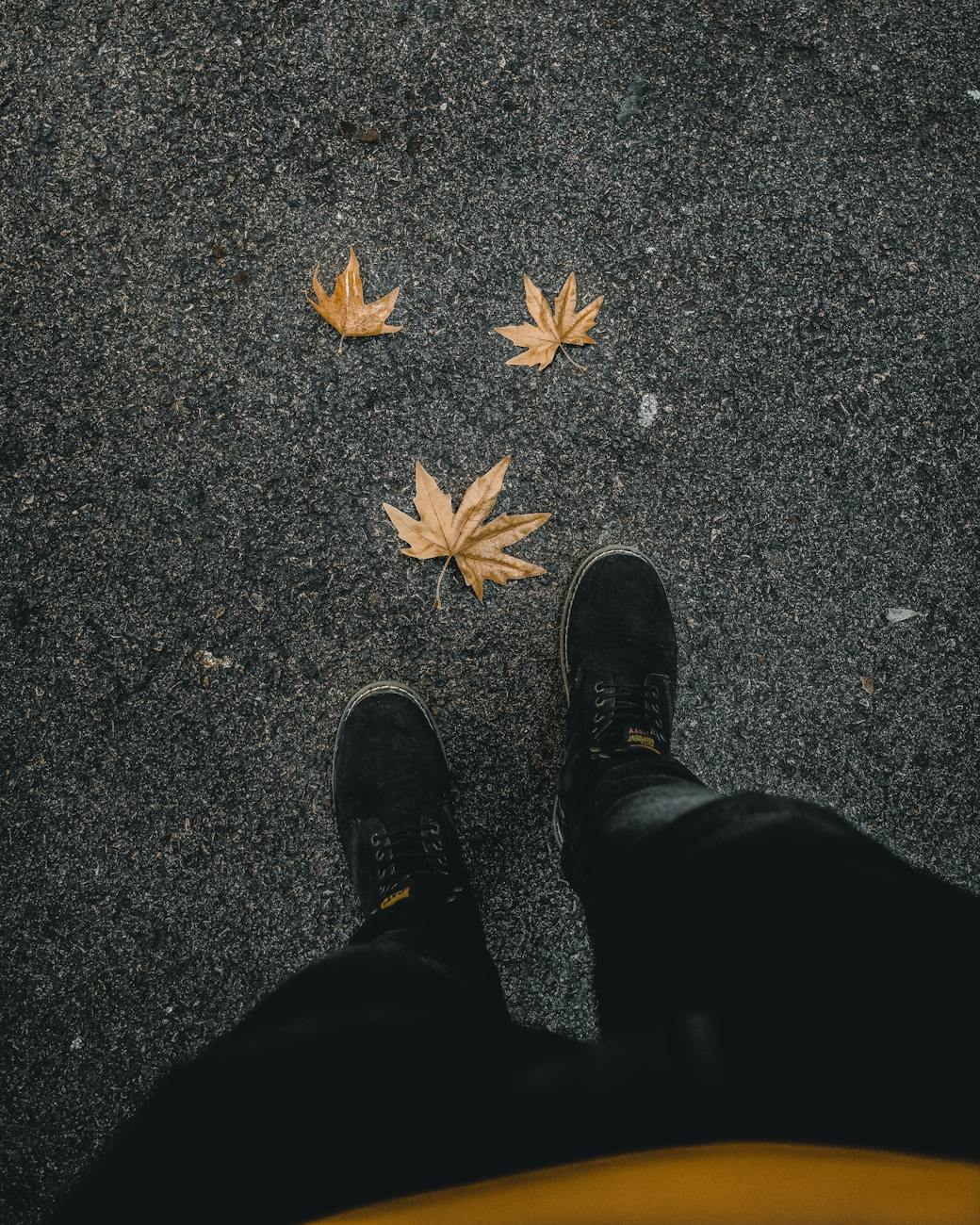
That realization has accompanied me through this autumn, which we celebrated with our small Samhain ritual—watching Hocus Pocus I & II by candlelight, gathering fallen leaves, and covering them with ink and pressing them onto paper to make monoprints. There was a childlike magic in it: the squelch of the sticky ink, the soft squeaky rolling of the brayer, the moment when the paper lifted to reveal the print. It struck me how close this is to scholarship at its best: slow, embodied, receptive. The act of noticing—whether in art, research, or life—cannot be rushed.
Our institutions, however, are built on speed. Academia, once imagined as a monastery of thought, now too often resembles an airport: loud, transactional, and defined by transit rather than presence. We are rewarded for throughput—papers, metrics, outputs—while the invisible labor of thinking, gestating, waiting is quietly devalued.
Philosopher Byung-Chul Han calls this “the burnout society”: a culture of hyperactivity that mistakes motion for meaning. Similarly, Jenny Odell’s How to Do Nothing (2019) reminds us that attention is not a private resource but an ecological one. How we attend to the world shapes the world itself, and to be slow is, in this sense, to resist.
Slowness allows the possibility of depth. When I teach, I often tell students that thinking is not something we do; it’s something we undergo. Insight arrives in its own time, not on schedule. When we move too fast, we interrupt the very process that might save us—from shallowness, from reactivity, from the illusion that our worth depends on our output.
This past year has been less about producing words and more about unlearning the compulsion to be constantly doing something. Writing about mail-order mysticism has only intensified that awareness. Students were told that true understanding could not be forced; each lesson would reveal itself “in due time.”
That phrase—in due time—has become a quiet mantra for me.
There were days this autumn when the words wouldn’t come, when the archival material felt stubbornly opaque. But I began to notice something else happening beneath the surface: a subtle attunement to pattern, rhythm, and resonance. I realised that my task wasn’t to force insight but to cultivate the conditions in which it might emerge.
The same principle lies at the heart of A Course in Miracles, which I’ll be exploring in my upcoming workshop, “Practical Miracles: Practicing the Course Beyond the Book” (Saturday, November 8th, 2–5pm GMT). In our fast-moving world, even spirituality can become hurried: one more thing to optimise, one more practice to master. But true practice, like true scholarship, begins with slowing down. It’s the decision to notice what’s really happening in the moment you’re already in.
During the workshop, we’ll work with simple, repeatable tools for applying this awareness in daily life: at work, in relationships, and especially in moments of frustration or overwhelm. If that sounds abstract, think again of the leaf print: the slowness of laying down ink, the patience of pressing, the surprise of revelation. That’s what a miracle is—a new image of reality emerging from the same material, seen through the quiet lens of love.
As I prepare to return from sabbatical to the rhythm of teaching and service, I’m reflecting on how to carry this slowness with me. I suspect the answer isn’t in withdrawing from the world but in moving through it differently: walking rather than rushing, listening rather than reacting, leaving unscheduled time for what Thomas Merton called “the hidden wholeness.”Slowness doesn’t mean stagnation. It means aligning with the tempo of reality itself, which, as nature reminds us, is cyclical, not linear. Leaves fall; the soil rests; then, without effort, new life begins. Our task is not to speed the process but to be faithful to it.
If we can do that—in writing, in teaching, in love—we might rediscover a form of productivity that isn’t extractive but regenerative. A scholarship that nourishes rather than depletes. A spirituality that unfolds rather than performs. This, to me, is what makes slowness radical: it reclaims our humanity. It reminds us that attention is sacred, that thought takes time, and that the most transformative acts are often the quietest ones.
If that resonates, I’d love you to join me for Practical Miracles: Practicing the Course Beyond the Book this Saturday. Together, we’ll explore how to live from a place of peace and guidance, even when life moves quickly. Because ultimately, the miracle isn’t found in escaping the world’s pace—it’s found in learning to move through it with grace.
You can learn more and register through the Living A Course in Miracles group on Meetup. And if you’re drawn to the work but cost is a barrier, please reach out. We’ll find a way.
Discover more from Allan Johnson, PhD
Subscribe to get the latest posts sent to your email.
