Overcoming Negativity Bias and Resistance: Cultivating a Sustainable Meditation Practice

Imagine you receive an email from your boss asking you to come in or give them a call. You may feel worried or anxious and think, “What is this about? Is it something bad?” These thoughts can trigger feelings of fear, dread and anxiety, which can lead to outward behaviours such as increased heart rate, sweating or blushing. Imagine the thoughts and feelings that arise and the physical sensations in your body — discomfort or uncertainty. You may also consciously react with anger because you are expecting bad news.

Notice what happened in this thought experiment: you did not know what the boss wanted, but our minds generated automatic reactions. The lack of clarity from the boss created a feeling of uncertainty and triggered a cascade of thoughts and emotions. These emotions in turn influenced our behaviour and led to a mixture of reactions that we struggled to control. As we observed this automatic flow from thoughts to emotions to behaviours, we realised that some of our actions were out of our control, while others could be consciously controlled. This realisation clarified the intricate connection between our thoughts, feelings and actions and shed light on the way our reactions are shaped by internal and external stimuli.

Humans have a negative bias that has developed over tens of thousands of years of evolution, causing us to see the more negative option as true. This bias is a defence mechanism that prepares us for the worst-case scenario. It is deeply rooted in our subconscious and guides our thoughts and actions in various areas of life. This bias likely arose from the need to be constantly alert to potential dangers in order to ensure our survival in a world full of uncertainties, and is now reinforced by the dissemination of negative information in the media and society, shaping our perceptions and reactions to the world around us. However, if we are aware of these biases, we can consciously challenge them and balance them with positive perspectives, fostering a more realistic and resilient mindset.

In the 21st century, however, we no longer need to be guided by these automatic evolutionary reactions. A regular meditation practise helps us to detach from these deeply programmed reactions by noticing when our mind is on autopilot. When we develop mindfulness, we can observe our thoughts and emotions without automatically reacting to them. This allows us to make conscious choices and respond to situations in a more aware and considered way. Over time, the practise of meditation can bring about significant changes in our neural pathways, leading to better emotional regulation and a greater sense of inner peace. In addition, mindfulness can help us become more aware of our automatic reactions and habitual patterns. In this way, we can free ourselves from unconscious reactions and live with more awareness and authenticity.

So when we focus on centring ourselves in the present, we become more receptive to the sensations in our body, the sounds around us and the subtle changes in our environment. Through this heightened awareness, we are able to notice when our thoughts wander, gently acknowledge them and bring our attention back to the present moment and the rhythm of our breath. Each cycle of this practise serves as an exercise to strengthen our mental resilience, much like an extra repetition on a strength machine or an extra mile on the treadmill. The tools of integrative meditation act as catalysts for change, gradually reshaping our neural pathways and redefining the way our minds work. By becoming more aware of our thoughts and emotions, we begin to decode their patterns and gain insight into the inner workings of our mind, leading to a deeper understanding of ourselves and our thought processes.

Meditation is a transformative journey that goes beyond the designated time slot. It becomes an integral part of our daily routine and influences our thoughts, actions and overall well-being. Much like the careful tending of a garden, our meditation practise requires patience, dedication and nurturing. If we continue to invest time and energy into this practise, we will witness its gradual development, much like the growth of a garden over time. Just as a gardener tends to the various aspects of his garden, we nurture our meditation practise, encourage its development and reap the rewards of our persistent care and attention.

When we start something new, we go through a motivational cycle. In the beginning, we are excited and enthusiastic, full of hope and ambition, eager to master new challenges and seize new opportunities. Over time, however, it is natural for motivation to wane as the novelty wears off and we look for something new to reignite our passion and interest. This is a common phenomenon that many people face, and it often serves as a reminder to look for new sources of inspiration and fulfilment in our pursuits.

Perhaps you are noticing a resistance to your meditation practise today. Are you bored? Are you frustrated because you have to keep focussing on the object of meditation? As you deepen your meditation practise, it is normal to encounter these challenges. It can be beneficial to recognise these moments of resistance as opportunities for growth. You could experiment with different meditation techniques or incorporate a change of scenery to revitalise your practise. Remember that every moment of resistance is an opportunity to strengthen your mindfulness muscles and deepen your meditation experience. Keep exploring and stay open to developing your practise.

Simply recognise these feelings without judging them. Recognise that each emotion has a purpose and a message to convey. Take the time to sit with these feelings and allow yourself to fully experience them without feeling the need to react immediately. This mindful approach can lead to a better understanding of your emotions and give you a sense of inner peace.

These resistances often reflect how we react to challenges in our daily lives. When we are faced with adversity, our inner strength and bravery are tested and through these challenges we discover the depths of our resilience. Whether it’s a personal struggle, a professional setback or a social issue, our ability to face and overcome obstacles shapes our character and determines our path. Any resistance we encounter serves as a mirror that reflects our reactions, our coping mechanisms and our ability to grow. These moments of resistance are not only obstacles, but also opportunities for self-knowledge and empowerment.

When you begin a meditation practise, simply be aware of these obstacles. Pay attention when they arise and understand that they are natural. The first step is to notice them when they arise. It is important to face these obstacles with patience and understanding. By recognising their existence, we create the space for self-reflection and growth. As you dive deeper into your meditation practise, you may find that these obstacles reveal valuable insights about your thought patterns and emotional responses. Embracing these insights can lead to profound changes that allow you to develop a more positive and compassionate attitude. Remember that this is a journey of self-discovery and that every obstacle is an opportunity for personal development and inner resilience.


Subscribe to my free newsletter for more tools, guided meditations, and productivity insights.

If you want to start putting these ideas into action, you can sign up for Integrative Meditation (Level 1). This course represents the culmination of years of learning, practice, and personal growth. Integrative Meditation is a comprehensive framework designed to enhance your mental and emotional well-being. It draws on Mindfulness-Based Cognitive Therapy (MBCT), positive psychology, neuroscience, Acceptance and Commitment Therapy (ACT), journaling, and breathwork to support you in reducing stress, enhancing focus, building emotional resilience, and discovering your true self.

Cultivating Present Moment Awareness: Your Journey to Mindful Living

My approach to meditation is deeply rooted in the belief that we can enrich our understanding of mind and psychology by incorporating a variety of contemporary approaches and influences on meditation. This holistic approach allows us to cultivate a greater sense of contentment, joy, pleasure, and connectedness in our daily lives. By embracing various meditation techniques and principles, we can tap into a deep well of strength and establish a regular and consistent meditation practise that serves as a source of inner strength and calm.

I want you to start by imagining a really happy memory from your life— perhaps a holiday with family or friends, or a great experience you had with a partner, child, or parent. Think of one of those truly happy, transcendent moments that keep popping up in our lives, moments that we savour and are grateful for when they happen. Maybe it was a sunny day at the beach, with the waves lapping gently against the shore and a cool breeze caressing your skin. Or maybe it was a special occasion, like a birthday party full of laughter and joy, surrounded by the people you love. These moments are like treasures that we carry with us, brightening our days and reminding us of the beauty and happiness that life has to offer.

As you recall this memory, I want you to become aware of all the sensory details, all the things you perceive in this scene as you let it reappear in your mind’s eye. Try to imagine the colours, the sounds and the scents that surround you at that moment. Feel the temperature on your skin and the feelings that were stirred up inside you. Let the scene play out like a vivid film in your mind’s eye and explore every detail and feeling associated with it. Now pay attention to where your thoughts are. Is it running into the future, into a time after this event? Is it going back to something that happened before that time? Or does it really only seem to focus on that one big, happy, transcendent moment?

It’s probably focussing primarily on that one moment, because that’s what these big, happy moments do for us. They create a sense of ‘present moment awareness’, a sense that we really are in this moment. The past does exist and the future will inevitably come, but neither seems that important in this moment. This is something I call ‘time-orientation’. Our mind tends to spend a lot of time in places that are not the present. It often dwells on the past, going over memories, stories, limiting beliefs and moments of shame or embarrassment. This leads to a mindset of rumination where we replay past events. In contrast, when we experience these profound moments, it is as if time stands still and we can only focus on the beauty and joy of that particular moment. It is as if the rest of the world fades away and we are completely immersed in the blissful present. This heightened awareness and connection to the present moment can bring about a deep appreciation for the simple yet extraordinary things that happen in our daily lives and remind us to cherish every moment.

I won’t deny that the past has happened or that bad things have happened. But maybe our minds spend a little too much time there. Memories, both good and bad, can have a powerful impact on our thoughts, shaping our present and influencing our future. It is important to acknowledge the past, learn from it and then gently release it from our thoughts. Similarly, our minds can also focus excessively on the future, on things that have not yet happened. This is where anxiety arises as we visualise things that could or might happen. The unknown can be scary, but finding a balance between recognising the future and living in the present can help to lighten the burden of worry and anxiety.

Our orientation to time plays an important role in shaping our thoughts and emotions. It constantly pulls us into the past, where we brood, or into the future, where we are afraid. It is a common human experience to dwell on past mistakes or worry about the future, but these tendencies can often overshadow the richness of the present moment. When we constantly project our thoughts backwards or forwards, we miss out on the opportunities and experiences that are available in the present. By consciously focussing our attention on the here and now, we have the opportunity to fully engage with our surroundings, connect with others and enjoy the beauty of the present moment.

One of the most important tools we use to create a stronger connection to the awareness of the present moment is the so- called meditation object. A meditation object is anything that we use to focus and centre our mind — a tool that we draw upon. This can be a sound, a body sensation, a mantra or a visualisation. In this module, we will focus on the breath. When we focus on the breath, we pay attention to the rising and falling of the chest, the sensation of air flowing in and out through the nostrils, and the rhythm of inhaling and exhaling. This practise can help us to develop a sense of calm and presence as we focus our attention on the natural and constant rhythm of our breathing. By refining our ability to stay present with the breath, we develop a valuable skill that we can use in various aspects of our lives to promote mindfulness and emotional regulation.

The breath is often the best and simplest meditation object. When we focus on the sensation of the breath, we start where we are most physically aware of it. The first step is to notice how the breath moves through the nostrils, how the chest expands or how the belly rises and falls. This will serve as a starting point for the mind to return to when it begins to wander. As we continue to practise, we may find that our awareness of the breath deepens and we can observe the subtle changes in its rhythm and temperature. We may also become more sensitive to the connection between our breath and our emotional state, noticing how it can become shallow and hurried in times of stress and slow and deep in moments of calm. By regularly meditating on the breath, we can cultivate a greater sense of presence and peace and gradually train our mind to become more focussed and aware both on and off the cushion.


Start experiencing the transformative power of Integrative Meditation today!

This course represents the culmination of years of learning, practice, and personal growth. Integrative Meditation is a comprehensive framework designed to enhance your mental and emotional well-being. It draws on Mindfulness-Based Cognitive Therapy (MBCT), positive psychology, neuroscience, Acceptance and Commitment Therapy (ACT), journaling, and breathwork to support you in reducing stress, enhancing focus, building emotional resilience, and discovering your true self.

Enrol Now and start your journey towards a transformed, healthier, and happier you.

Balancing Spirit and Self: Authentic Growth for Creative Minds

The term ‘spiritual bypass’ was coined in 1984 by the American psychologist John Welwood to describe the use of spiritual beliefs or practises to avoid dealing with painful feelings, unresolved wounds and unmet basic psychological needs. Our society values individualism and personal growth and supports the exploration of unique spiritual paths that deviate from established orthodox standards and yet contribute to authentic personal empowerment. 

Personal spiritual practises can help us to think outside the box and ultimately provide a sense of freedom and authenticity in one’s spiritual existence. But turning to meditation, yoga, ritual, journaling, or any other form of spiritual practise as a form of superficial growth neglects real development and ultimately hides or represses even more the aspects of ourselves that most need to be changed and resolved.

When we are spiritually bypassing, we avoid personal problems by using spirituality to escape emotional pain or difficult situations. Or when we over-emphasise positive thinking and ignore negative emotions or experiences, we begin to detach from reality and disconnect from the problems and responsibilities, such as someone who meditates to escape their anger instead of dealing with the cause of their anger, or someone who uses affirmations to ignore feelings of sadness or grief. 

Spiritual practises such as meditation or affirmations can be incredibly powerful opportunities for real personal growth, but we must be careful not to use our spiritual practises to hide from what we need to bring to light.

In our personal spiritual practise, the ego is quick to try to take control, using the appearance of spiritual development to boost its self-esteem or to avoid being confronted with personal flaws. We can recognise that the ego has begun to take control when someone begins to proclaim that they are more ‘enlightened’ than others, when they use spirituality to justify or ignore their own negative behaviour, or when they use spiritual practises to avoid life’s challenges. 

Recognising when this is the case for us is especially important for creatives because spiritual avoidance can actually hinder your creative and personal growth because avoiding emotional depth and intensity can limit our creative expression and authenticity.

On our spiritual path, we must continue to cultivate self-knowledge and discernment. We gain self-knowledge not only through our usual spiritual practises such as meditation, journaling or ritual, but also by seeking feedback from trusted peers and taking perspectives from others who can point out our avoidance patterns, such as therapists or counsellors. In this way, we can allow vulnerability and authenticity by allowing ourselves to experience and express all emotions rather than using spirituality to avoid them.

Likewise, discernment plays a crucial role in distinguishing between genuine spiritual growth and avoidance behaviours disguised as spiritual practises. This involves a deep, introspective examination of one’s own motivations and the ability to recognise when spirituality is being used to avoid unresolved emotional issues. 

Discernment requires honesty and self-awareness and allows individuals to see through the facade of spiritual superiority or forced positivity that often accompanies spiritual evasion. By cultivating discernment, one can navigate the spiritual path with integrity and ensure that spiritual practises are integrated into personal development rather than serving as an escape from it. This balanced approach fosters authentic growth and helps individuals address underlying psychological and emotional wounds, leading to a more holistic and grounded spirituality.

To avoid spiritual bypassing, the first crucial step is cultivating self-awareness and honesty. This includes regularly reflecting on your spiritual practises and motivations. Do you utilise meditation, yoga or ritual to truly connect with your inner self, or do you use these practises to escape unpleasant feelings and situations? Journaling can help you document your thoughts, feelings, and spiritual experiences. 

By honestly addressing your emotional state and recognising any tendency to avoid pain, you can begin to connect your spiritual practises to your personal growth. Mindfulness meditation, which focuses on attention to the present moment and non-judgmental observation of thoughts and feelings, can also help you stay grounded and avoid the avoidance behaviours typical of spiritual bypassing.

Another effective strategy to avoid spiritual bypassing is to seek support from professionals and peers. Therapists and counsellors who are trained in integrating spirituality and psychology can provide you with valuable insights and tools to address unresolved emotional issues. They can help you recognise patterns of avoidance and work through underlying emotional wounds. 

It is also beneficial to discuss your spiritual path with trusted teachers and guides  who can give you honest feedback. Sometimes others can recognise our avoidance patterns more clearly than we can ourselves. Participating in group discussions or spiritual communities where members value personal growth alongside spiritual development can create a supportive environment that encourages authenticity and vulnerability.

Finally, it is important to maintain a balance between spiritual practises and real-life commitments to avoid spiritual bypassing. It is important to remember that spirituality should enhance your ability to engage with the world, not serve to escape from it. Grounding practises such as physical exercise, spending time in nature, or engaging in community service can help you stay connected to reality. 

Check in regularly to see if your spiritual activities are improving your ability to deal with life’s challenges or if they are becoming a way to avoid them. By ensuring that your spiritual practises are integrated into your daily life and responsibilities, you create a holistic approach that promotes true personal and spiritual growth. This balance not only prevents spiritual bypassing, but also enriches your overall well-being and creativity.

Spiritual bypassing is a very common problem that hinders spiritual and personal growth as well as creative development. And recognising and addressing the spiritual bypass is crucial for creative people embarking on the path of authentic spiritual and personal growth, while overcoming the challenges that come with it. True spiritual and creative growth involves addressing and healing our soul wounds, utilising grounding practises such as exercise or walks in nature, and taking a holistic approach to our spirituality and creativity that allows input from experienced spiritual teachers.

Unlock Your Creativity with The Artist’s Way: Morning Pages and More

Julia Cameron is a prolific author, artist, and teacher best known for her transformative work in the realm of creativity who has helped millions of people worldwide unlock their creative potential through her innovative techniques and practices.  One of her most influential and widely used techniques, first introduced in The Artist’s Wayis called Morning Pages, a simple but very powerful invitation to write three stream of consciousness pages every morning to get down a jumble of thoughts, plans, worries, and hopes down on paper first thing in the morning. I’ve seen how Morning Pages can reduce anxiety and creates a sense of mental clarity that can positively impact your day. The beauty of Morning Pages lies in its simplicity and accessibility; all it takes to start is a notebook and pen.

While Morning Pages are definitely the most well-known of Cameron’s techniques, The Artist’s Way is rich with other innovative tools and insights designed to help us reclaim our creativity and personal power. I want to dive into some of these lesser known but equally powerful practices from her book, including the Artist Date, Affirmations, Time Travel, Synchronicity, and Creative U-Turns. By integrating these practices into our daily lives, we can expand our creative horizons and find deeper fulfilment in our life and work.

Nurturing Your Creative Self

For Cameron, the second most important tool after Morning Pages is the Artist Date, a weekly solo expedition to explore something that really interests you. It is a commitment to nurture your inner artist by setting aside time each week to do something you enjoy.

The importance of play, exploration and creativity cannot be overstated. Our daily routines often leave little room for spontaneity and fun, both of which are crucial for fostering creativity. As Cameron points out, Artist Dates encourage us to step out of our usual habits and see the world through new eyes, with a sense of wonder and curiosity. Some of the Artist Dates I enjoy are visiting a museum, taking a walk in one of the parks around London, going to a concert on my lunch break, or visiting an art shop to try something new.

Fitting Artist Dates into a busy schedule can definitely be a challenge, but it’s important that you prioritise this time for yourself, even if it’s just an hour a week: start by setting aside an hour each week for your artist states. Think of it as a non-negotiable appointment with your creative self.

Overcoming Creative Blocks

We regularly face blocks that hinder our progress on whatever we are working on. In The Artist’s Way, Cameron offers several tools to help us overcome these blocks and keep our creative energy flowing. One of the most important tools for overcoming creative blocks is the use of affirmations, positive statements that can counteract negative self-talk and limiting mindsets. For example, an affirmation could be: ;’I’m a talented and capable creator’ or ‘my creativity flows effortlessly.’ By repeating affirmations, we can rewire our neural pathways and cultivate a more positive and supportive inner dialogue.

Another important tool in The Artist’s Way called Time Travel, where we use journaling to work through and heal past creative wounds. Many of us carry emotional baggage from past experiences where our creativity was criticised or rejected. By acknowledging these wounds and writing through them, we can begin to free ourselves from their negative effects.

Cameron also introduces the concept of Creative U-turns, moments when we sabotage our own progress, often out of fear of success or failure. It’s important to recognise these patterns and consciously choose to overcome them. For example, if you find yourself putting off a project, you’re excited about, recognise this behaviour as creative U and take action to overcome it by breaking the project down into smaller tasks or setting a fixed deadline.

The Importance of Synchronicity

A key component of The Artist’s Way is synchronicity, or meaningful coincidences, and Cameron emphasises synchronicity as a guiding force in the creative process. When we open ourselves up to creativity, we often notice patterns and coincidences that seem to lead us in the right direction. These moments of synchronicity can be seen as signs that we’re on the right path. Recognising and trusting synchronicities means being open and receptive to the messages the universe sends us. This can be as simple as noticing recurring themes in conversations, books, or experiences that seem to resonate with your creative project. It can also mean paying attention to your gut instincts and intuitive impulses that guide your decisions, those little signals that keep us on the right path.

Cameron shares numerous personal anecdotes about how synchronicity has played a role in her creative journey. I’ve found that it’s been a part of my journey too, in moments when a particular resource or connection I need seems to suddenly appear out of nowhere. When we learn to trust these moments and follow the messages they give us, it can lead to unexpected and positive outcomes to enhance our awareness of synchronicity can be useful to keep a journal of coincidences and intuitive insights as they emerge, reflecting on these entries regularly, we can begin to see how they connect with our creative journey. And the more we practise recognising synchronicity, the more we can tune into its presence in our life.

Building Community

Creativity thrives in a supportive environment, while individual practises like morning pages and artist dates are essential. Having a community of people to share with also provides invaluable encouragement and feedback. Cameron emphasises the importance of community and nurturing our creative spirits. Finding or starting a supportive group can take several forms. You could join a local writing group, meditation class, or a creative workshop. There are also online forums where you can share and network with other creatives around the world. Sharing your work with others and getting feedback is a really good way to grow as a creative—constructive feedback can help you hone your craft and boost your confidence and motivation. Being part of a community also provides an opportunity to collaborate, learn from others and be inspired.

Living the Artist’s Way

Integrating the practises from The Artist’s Way into your daily life is a gradual process that requires commitment and consistency. But the rewards of a more creative and fulfilling life are well worth the effort. Start with a morning routine that includes morning pages. This exercise sets you up positively for the day and clears your mind so you can approach your creative work with a fresh perspective. Combine this with weekly artist appointments to ensure you’re regularly engaging in activities that inspire and rejuvenate you. It can be challenging to balance creativity and other life commitments, but it’s important that you prioritise your own creative pursuits.

Start small and build consistency over time. The key is to create a sustainable routine that supports your creative growth without overwhelming you. The Artist’s Way provides a comprehensive 12-week framework for unlocking your creative potential, and there’s much more you can learn from the book. The impact of these exercises is profound, and as you embark on this journey, remember that creativity isn’t a destination, but a continual process of growth and exploration.


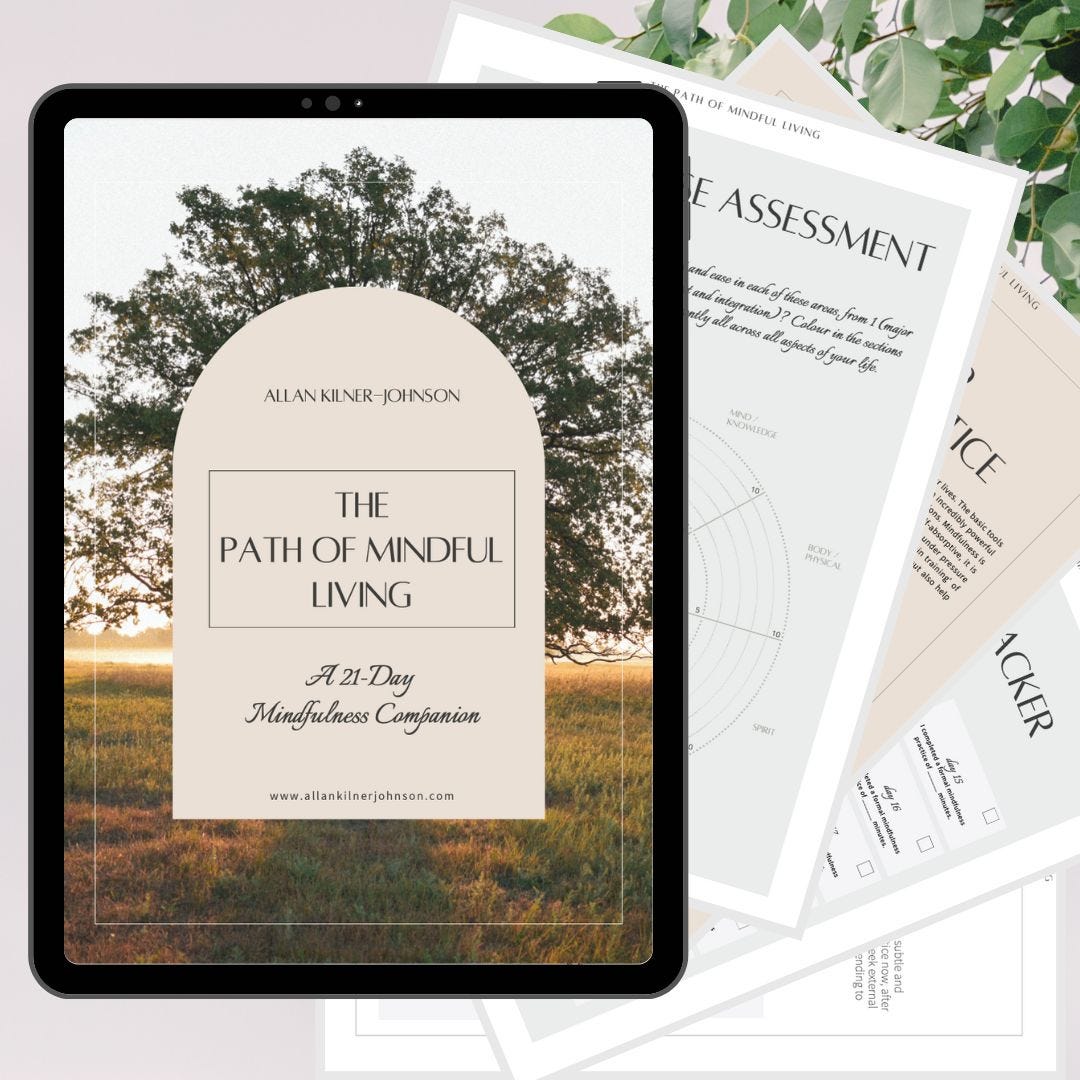
In The Path of Mindful Living: A 21-Day Mindfulness Companion, I lead you through a series of self-guided mindfulness exercises and show you how to bring mindfulness into your daily life. Readers of Integrative Creativity can download the workbook and pullout charts for only £6


Psychologist Carl Rogers’ Three-Step Formula to Finding Joy Every Day

What does it mean to live the ‘good life’? Is it about having a big house, the right job, the freedom of time and the energy to pursue your own goals? Our culture gives us many misleading messages about how to find happiness. More often than not, the things we think will make us happy once we get them that turn out to be false promises. We tend to subconsciously believe that happiness is only something that is possible in the future: we can only be happy when we’ve got that promotion, when we’ve gone on holiday, when we’ve completed that creative project. However, the influential American psychologist Carl Rogers encourages us to look at the good life in a slightly different way.

Rogers was a pioneering American psychologist and one of the founders of humanistic psychology, a school of thought that emerged in the mid-20th century. Humanistic psychology emphasises people’s inherent striving for self-actualization and creativity. Born in 1902, Rogers developed his theories at a time when behaviourism and psychoanalysis were the predominant paradigms in psychology. He believed that these approaches were too deterministic and didn’t take into account the subjective experience of the individual.

Rogers’ most important contribution is the development of client-centred therapy, also known as person-centred therapy. This approach is based on the idea that individuals have extensive resources at their disposal to understand themselves and change their self-concepts, attitudes, and behaviours. The role of the therapist is to create a supportive environment in which the client can discover these resources. Rogers set out his views on what constitutes the good life in his influential book On Becoming a Person. In it, he identifies three indicators of a good life, or more specifically, three steps in a process of how to achieve a good life.

An increasing openness to experience

The first step Rogers describes in finding the good life is cultivating an increasing openness to experience. As we explore new opportunities and possibilities, learn new things and create new projects, we realise how limiting and static vision of the future had been. It’s not that future plans are inherently bad; rather, our future plans tend to create a single monolithic vision of what happiness can look like for us. This singular focus can blind us to the myriad ways we can experience joy and fulfilment in the present moment.

Openness to experience means allowing the full range of our thoughts and feelings without denying or distorting them. It means being receptive to new experiences and perspectives and being willing to change and grow. This openness allows us to recognise the subtlety of sensations and feelings that arise in different contexts. By becoming more open, we begin to realise that the good life isn’t a destination, but a journey that requires constant learning and adaptation.

Increasingly existential living

The second step on the journey to the good life that Rogers points out is the increasing awareness of the existential nature of our lives. This concept may seem abstract, but it essentially means that we become more aware of the nature of our experiences. It’s about recognising how our inner emotional world interacts with our outer environment and understanding that we play a role in shaping both.

Existentialisation refers to the process of becoming more attuned to our existence and taking more responsibility for our lives. This involves recognising our freedom of choice and the responsibility that comes with it. It’s about understanding that we aren’t passive recipients of our circumstances, but active creators of our experiences. By expanding our awareness and taking responsibility for our actions, we begin to live more authentically and meaningfully.

Increasing trust in our own body

The third and final indicator of a good life, according to Rogers, is a growing trust in our own bodies. This doesn’t only mean our physical body, which is of course an important part, but also all functions and aspects of the body, such as our gut feeling, intuitive insights, and the feeling of physical affirmation.

Rogers emphasises how important it is to listen to our bodies and trust the signals it sends us. This includes recognising whether we’re rejecting something because it’s unfamiliar to us or whether we’re rejecting it because it’s really bad for us. It also means recognising the subtle difference between knowledge and belief, intellect and wisdom, and faith and blind trust. By trusting our bodies, we become more sensitive to our needs and desires and can make choices that are in alignment with our true selves.


These three characteristics of the good life — openness to experience, expansion and existentialisation, and trust in our bodies— have no final end point or destination. They are an expression of a continuous process that unfolds over time. The more open we become to experience, the more aware we become of our existence and the more trust we have in our bodies, the more we embark on a journey of self-discovery and growth.

Spiritual practises such as meditation, yoga, tai chi, and ritual can be incredibly important tools on this journey. Working with therapists, coaches, and spiritual teachers can also provide valuable support and guidance. The good life is not about accumulating material possessions or achieving external success. Instead, it is an alchemical state of being, a dynamic process in which we learn to shape our experience of the world so that it is authentic and fulfilling.

Rogers’ perspective on the good life challenges us to look beyond societal expectations and external achievements. By increasing our openness to experience, expanding our awareness of our existence and trusting our own bodies, we can cultivate a richer, more meaningful life. The good life is not a static destination, but an ongoing journey of self-discovery and growth guided by our inner wisdom and supported by our outer practises.


In The Path of Mindful Living: A 21-Day Mindfulness Companion, I lead you through a series of self-guided mindfulness exercises and show you how to bring mindfulness into your daily life. 

Readers of Integrative Creativity can download the workbook and pullout charts for only £6