Balancing Spirit and Self: Authentic Growth for Creative Minds

The term ‘spiritual bypass’ was coined in 1984 by the American psychologist John Welwood to describe the use of spiritual beliefs or practises to avoid dealing with painful feelings, unresolved wounds and unmet basic psychological needs. Our society values individualism and personal growth and supports the exploration of unique spiritual paths that deviate from established orthodox standards and yet contribute to authentic personal empowerment. 

Personal spiritual practises can help us to think outside the box and ultimately provide a sense of freedom and authenticity in one’s spiritual existence. But turning to meditation, yoga, ritual, journaling, or any other form of spiritual practise as a form of superficial growth neglects real development and ultimately hides or represses even more the aspects of ourselves that most need to be changed and resolved.

When we are spiritually bypassing, we avoid personal problems by using spirituality to escape emotional pain or difficult situations. Or when we over-emphasise positive thinking and ignore negative emotions or experiences, we begin to detach from reality and disconnect from the problems and responsibilities, such as someone who meditates to escape their anger instead of dealing with the cause of their anger, or someone who uses affirmations to ignore feelings of sadness or grief. 

Spiritual practises such as meditation or affirmations can be incredibly powerful opportunities for real personal growth, but we must be careful not to use our spiritual practises to hide from what we need to bring to light.

In our personal spiritual practise, the ego is quick to try to take control, using the appearance of spiritual development to boost its self-esteem or to avoid being confronted with personal flaws. We can recognise that the ego has begun to take control when someone begins to proclaim that they are more ‘enlightened’ than others, when they use spirituality to justify or ignore their own negative behaviour, or when they use spiritual practises to avoid life’s challenges. 

Recognising when this is the case for us is especially important for creatives because spiritual avoidance can actually hinder your creative and personal growth because avoiding emotional depth and intensity can limit our creative expression and authenticity.

On our spiritual path, we must continue to cultivate self-knowledge and discernment. We gain self-knowledge not only through our usual spiritual practises such as meditation, journaling or ritual, but also by seeking feedback from trusted peers and taking perspectives from others who can point out our avoidance patterns, such as therapists or counsellors. In this way, we can allow vulnerability and authenticity by allowing ourselves to experience and express all emotions rather than using spirituality to avoid them.

Likewise, discernment plays a crucial role in distinguishing between genuine spiritual growth and avoidance behaviours disguised as spiritual practises. This involves a deep, introspective examination of one’s own motivations and the ability to recognise when spirituality is being used to avoid unresolved emotional issues. 

Discernment requires honesty and self-awareness and allows individuals to see through the facade of spiritual superiority or forced positivity that often accompanies spiritual evasion. By cultivating discernment, one can navigate the spiritual path with integrity and ensure that spiritual practises are integrated into personal development rather than serving as an escape from it. This balanced approach fosters authentic growth and helps individuals address underlying psychological and emotional wounds, leading to a more holistic and grounded spirituality.

To avoid spiritual bypassing, the first crucial step is cultivating self-awareness and honesty. This includes regularly reflecting on your spiritual practises and motivations. Do you utilise meditation, yoga or ritual to truly connect with your inner self, or do you use these practises to escape unpleasant feelings and situations? Journaling can help you document your thoughts, feelings, and spiritual experiences. 

By honestly addressing your emotional state and recognising any tendency to avoid pain, you can begin to connect your spiritual practises to your personal growth. Mindfulness meditation, which focuses on attention to the present moment and non-judgmental observation of thoughts and feelings, can also help you stay grounded and avoid the avoidance behaviours typical of spiritual bypassing.

Another effective strategy to avoid spiritual bypassing is to seek support from professionals and peers. Therapists and counsellors who are trained in integrating spirituality and psychology can provide you with valuable insights and tools to address unresolved emotional issues. They can help you recognise patterns of avoidance and work through underlying emotional wounds. 

It is also beneficial to discuss your spiritual path with trusted teachers and guides  who can give you honest feedback. Sometimes others can recognise our avoidance patterns more clearly than we can ourselves. Participating in group discussions or spiritual communities where members value personal growth alongside spiritual development can create a supportive environment that encourages authenticity and vulnerability.

Finally, it is important to maintain a balance between spiritual practises and real-life commitments to avoid spiritual bypassing. It is important to remember that spirituality should enhance your ability to engage with the world, not serve to escape from it. Grounding practises such as physical exercise, spending time in nature, or engaging in community service can help you stay connected to reality. 

Check in regularly to see if your spiritual activities are improving your ability to deal with life’s challenges or if they are becoming a way to avoid them. By ensuring that your spiritual practises are integrated into your daily life and responsibilities, you create a holistic approach that promotes true personal and spiritual growth. This balance not only prevents spiritual bypassing, but also enriches your overall well-being and creativity.

Spiritual bypassing is a very common problem that hinders spiritual and personal growth as well as creative development. And recognising and addressing the spiritual bypass is crucial for creative people embarking on the path of authentic spiritual and personal growth, while overcoming the challenges that come with it. True spiritual and creative growth involves addressing and healing our soul wounds, utilising grounding practises such as exercise or walks in nature, and taking a holistic approach to our spirituality and creativity that allows input from experienced spiritual teachers.

Mindset Revolution: Building True Contentment From Within


white wooden shelf and decors

We have all fallen into the trap of longing for the perfect car, the dream house, or the ideal partner and believing that these external factors will bring us lasting joy and satisfaction. The truth, however, is much more nuanced. What we’re really looking for isn’t the tangible object itself, but the inner state and the feelings we associate with it. This realisation can really have a big impact on our pursuit of happiness.

According to psychologist Daniel Gilbert, our expectations of how certain possessions or achievements will make us feel often lead to a psychological phenomenon known as ‘impact bias’. This bias causes us to overestimate the emotional impact of future events, including the acquisition of material possessions.

Our emotional reactions to external stimuli are often short-lived. The initial excitement of a new car or a bigger house gradually fades, and we look for the next purchase to fill the void. 

Why is this important? In a world where we are bombarded by advertising and societal norms that equate success with material wealth, it’s important to re-evaluate our desires and challenge the narrative that possessions alone can ensure our happiness. This shift in perspective invites us to explore the profound impact of inner states and mindsets on our overall wellbeing.

When we obsess over external objects, we inadvertently overlook the impermanence of the joy they bring us. The point isn’t to deny the value of material comfort, but to recognise that possessions alone cannot sustain our inner happiness.

Think of a time when you acquired something you longed for — perhaps a new gadget or an expensive pair of shoes. Initially, the excitement and joy may have been very real, but over time these feelings have probably diminished. This phenomenon isn’t uncommon; it’s a common experience that highlights the transience of external pleasure.

Imagine someone who worked tirelessly to afford their fantasy house. The day the keys are handed over is a moment of unrivalled bliss. But as the months go by, the novelty of the house wears off and the initial euphoria gives way to the realisation that the external object of the house was no guarantee of lasting happiness.

This realisation isn’t to diminish the importance of achievements or possessions, but to emphasise that they should be seen as a complement to our inner state and not a substitute for it. By understanding this, we can recalibrate our approach to desires and create a foundation for a more lasting sense of contentment.

The pursuit of possessions for lasting happiness is an illusion. While external achievements can bring temporary joy, it’s important to recognise their transience and seek a more sustainable source of contentment within.

Why should we prioritise the cultivation of inner states and emotional well-being over the accumulation of possessions? The answer lies in the profound impact these inner aspects have on our overall quality of life.

Positive psychology studies emphasise the link between emotional well-being and life satisfaction. The pursuit of positive emotions, meaningful relationships and a sense of purpose is consistently associated with higher overall levels of happiness. This isn’t to dismiss the role of external achievements, but to emphasise that they’re most fulfilling when they align with our inner state.

Imagine someone who has shifted their focus from the acquisition of material goods to activities that bring them joy and a sense of fulfilment. Meaningful relationships, gratitude and personal growth became the guiding principles of their life. Over time, this shift in focus led to a more sustainable and deeper sense of satisfaction. They begin to see challenges as opportunities for growth, setbacks as lessons and every moment as a chance to feel gratitude. This shift in perspective not only improves their general wellbeing, but also influences the way they coped with life’s ups and downs.

This shift isn’t about giving up on external goals, but understanding that striving for an ideal future should include both tangible achievements and cultivating a positive inner state. By recognising the intricate relationship between these elements, we lay the foundation for a more balanced and fulfilling life.

Prioritising inner states and emotional wellbeing is not about rejecting external achievements, but recognising their synergy with our overall happiness. Building a life based on positive emotions and meaningful connections contributes to a more fulfilling and lasting sense of satisfaction.

Why should we consider a shift in mindset as the cornerstone of our pursuit of happiness? The answer lies in the transformative power of our perspectives and beliefs in shaping our reality.

Adopting a growth mindset, where challenges are seen as learning and development opportunities, is associated with greater resilience and life satisfaction. This shift in mindset is an active choice that can be cultivated through mindfulness, self-reflection and deliberate practises.

Changing our mindset is not a passive reaction to circumstances, but an active choice that shapes our experience of happiness. By adopting a positive and growth-orientated perspective, we empower ourselves to navigate life with resilience and satisfaction.

Our journey to understanding the true nature of our desires debunks the illusion of lasting happiness through possessions. By prioritising inner states and emotional wellbeing and adopting a shift in mindset, we pave the way for lasting fulfilment. The ideal future is not a mere collection of objects, but a harmonious blend of outer achievements and a rich inner landscape. So as we head for life’s goals, let us not lose sight of the profound impact our inner state and mindset can have on shaping a life that goes beyond the fleeting pleasure of possessions.


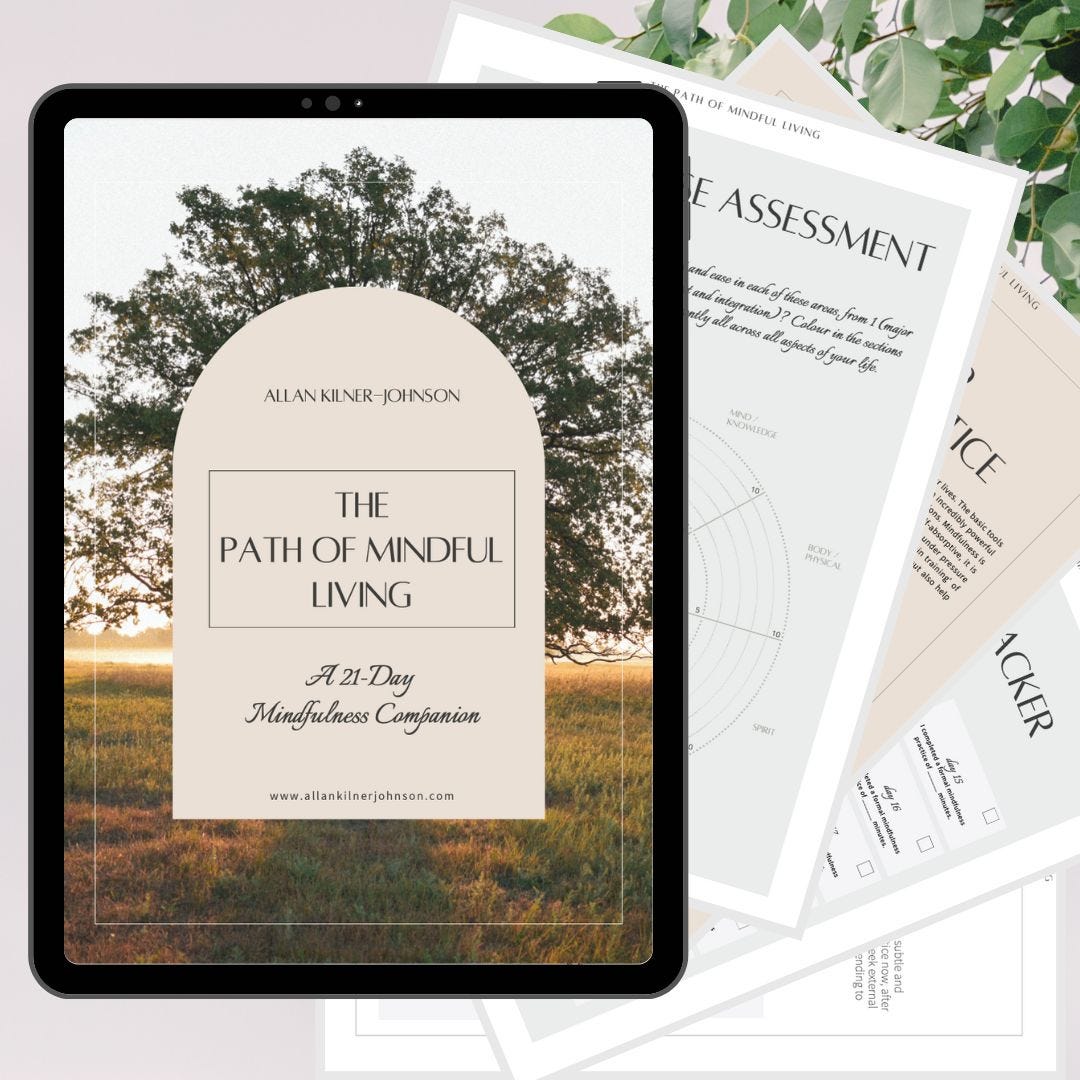
In The Path of Mindful Living: A 21-Day Mindfulness Companion, I lead you through a series of self-guided mindfulness exercises and show you how to bring mindfulness into your daily life. 

Readers of Integrative Creativity can download the workbook and pullout charts for only £6.

Listening to Another’s Soul

Much of the spiritual work we do is learning to listen to and connect with our own soul. Through this connection we are able to reach a deeper place of peace, happiness, and fulfilment where we can embrace all that life has to offer. In this way we are able to connect with the truth of who we are and the deeper meaning and purpose we see, and connect with our inner wisdom, even in the midst of a busy life.

But can we also learn to listen to the souls of others? We are poor observers of our own behaviour and often even worse observers of those around us. We are also generally not very accurate at interpreting the motivations behind other people’s actions, and often mistakenly assume that we know why people do what they do. When we encounter someone doing something that makes no sense to us, our first impulse is to make a negative judgement. We may think they are selfish, lazy, or hard-hearted. Rarely does this kind of judgement lead to a positive change in the other person’s behaviour or in our own. Instead, we seem to point the finger at others and feel bad about ourselves, just as the other person feels bad.

The disconnection we feel from others is one of the most powerful features of the human experience, and the inability to ever fully know another person is one of our greatest challenges. We can make assumptions about how someone else feels, what their intentions are, or why they have acted in a certain way. But these assumptions are always based on our own experiences and our own interpretation of the situation. In our efforts to help or assist others, we often make the mistake of jumping to conclusions. Rarely do we take the time to really look at the situation and really understand what is going on. Instead, we adopt our own interpretation of what happened or, even worse, we adopt someone else’s interpretation.

No matter how well-meaning we are, the reality is that we can never fully know what is going on inside someone else. But when we assume we do not know the whole story, we are forced to look for more information and connect more with the person in front of us. We open our awareness to the whole picture and not just the picture we want to see. In this way, we can learn to listen to another person’s soul if we remain open to possibilities. We will never be able to know for sure what another person felt, what their intentions were, or why they behaved the way they did. But we can be certain of some things. We can be sure that each person has their own motivations and intentions. We can also be sure that each person has their own interpretation of what they are experiencing.

To learn how to listen to another person’s soul, we must be willing to accept the mystery of another person’s experience. The truth that lies deep within another person is often very different from the challenges we see on the surface. We have to be willing to accept the possibility that we could be completely wrong about that person, and we have to be willing to accept the possibility that there is another way of looking at that situation that we may never have considered. One of the most powerful ways to listen to another person’s soul is to listen to their hopes and fears. When we listen to another person’s hopes and fears, we are listening to the part of the person that is looking for answers. We listen to the part of the person who is trying to find meaning and purpose in their life.

The only way to understand another person’s truth is to understand their own interpretation of their reality. If we can understand what is most important to them, we can better understand the unique perspective they share with us. We can find a bridge to their soul, their inner wisdom, and their truth. In this way, we can see behind the masks of their ego and self-centred desires and find the deeper truth that lies within us all. When we are able to connect with others in this way, we have the chance to understand them in a deeper way and help them come into alignment with their inner wisdom. We have the opportunity to support them in living a more fulfilling, meaningful and purposeful life.


Download your free 21-day course in The Path of Mindfulness. In this life-changing 21-day mindfulness journey, Dr Allan Kilner-Johnson guides you through a series of self-guided mindfulness exercises and shows you how and when to bring mindfulness into your daily life. 

Time and Attachment in Spiritual Practice

The most common concern I hear from students is usually expressed in one of two ways. The first is, “I can’t meditate. I just can’t.” The second is a variation on the first theme, which is the idea that meditation is something you have to do every day for 30 minutes in a quiet room. In the same way that hiking can be as simple as walking up a hill to appreciate the view, or as complicated as a multi-day expedition across the Rockies, meditation can be quiet and passive, or active and challenging. In the broadest sense, meditation is a way to focus your attention, and when you can focus your attention on a single thing, you can develop that ability to an almost superhuman degree.  In fact, the goal of meditation is not to make your mind completely empty. The goal is to establish and maintain a relationship between your mind and your heart so that the two work together in tandem. When this happens, you are able to make better decisions and live a more mindful and meaningful life. 

When we begin one of the spiritual practices such as meditation or embark on a spiritual path, we may notice a change in our perception of the world around us. It is easy to interpret these changes as a loss of interest in the material world. However, there is a very important difference between materialism and material value. Materialism is attachment to material possessions, whereas material value is the idea that we can derive value from our relationship with the material world. Many people have a very fragile relationship with the material world. We can have a material relationship that is defined by attachment, or we can have a material relationship with a value system that is positive and sustaining. Material value is based on the idea that we can find value in the material world. When we are able to look past the distractions of the material world and focus our attention more on the things that really matter, we are able to find a deeper relationship with the material world that is full of supporting value.

When it comes to the spiritual path, we are often given the idea that we must detach ourselves from the world around us. The problem with this idea is that it creates a conflict between the material world and our spiritual practice. When we begin to develop a spiritual practice, we often become aware of the limitations of our body or the limitations of the material world. This conflict often leads to a kind of spiritual burn-out, where the student stops developing their inner wisdom and instead starts developing their inner intolerance toward the world around them. In meditation we are not encouraged to disconnect from the world around us. Instead, we are encouraged to connect with our inner guidance and find a deeper relationship with the universe. We can love our family, enjoy our hobbies and interests, and even enjoy being busy or working hard. When we open ourselves to our inner guidance and a deeper truth, we are able to find a deeper relationship with the material world. By being in touch with our inner guidance, we can find a deeper relationship with the material world. This deeper relationship is full of supportive values, and these values can help us to live a more fulfilling, meaningful, and purposeful life. 

The most valuable thing we possess is time. The more time we can spend in a conscious state, the more conscious time we can enjoy. The more conscious time we can enjoy, the more value we can create in our lives. When we are in a conscious state, we are able to make conscious choices, understand the choices we make and live a more conscious life. When we are not in a conscious state, we are not able to make conscious choices, understand the choices we make and live a more conscious life.

We have so much to gain by developing a stronger relationship with our inner guidance and listening to our inner wisdom. We can create a more fulfilling, meaningful, and purposeful life for ourselves. We can overcome our limitations and find the power to change. We can find peace, happiness, and fulfilment when we let our inner wisdom guide us. But we can also lose so much if we neglect our inner wisdom. We can lose our peace, happiness, and fulfilment. We can lose the ability to live our lives in alignment with the truth that we are. We can lose our dreams, our purpose, and our sense of purpose. We can lose ourselves in the world and lose the opportunity to find the deeper meaning and significance we are searching for. The more we are in touch with our inner guidance, the more we understand the impact of our thoughts and feelings on our lives. The more we understand the impact of our thoughts and emotions on our lives, the more we are able to change the things that make us unhappy, stressed or unfulfilled. The more we are able to change the things that make us feel unhappy, stressed and unfulfilled, the happier, more peaceful and fulfilled we are. 

Time is a precious commodity. We need to make a conscious decision to be in touch with our inner guidance. This is the most powerful choice we can make. When we are in touch with our inner guidance, we are able to create a more conscious life, a more fulfilling life and a life that is in harmony with the truth that we are.


Download your free 21-day course in The Path of Mindfulness. In this life-changing 21-day mindfulness journey, Dr Allan Kilner-Johnson guides you through a series of self-guided mindfulness exercises and shows you how and when to bring mindfulness into your daily life.