Journaling as a Thinking Process

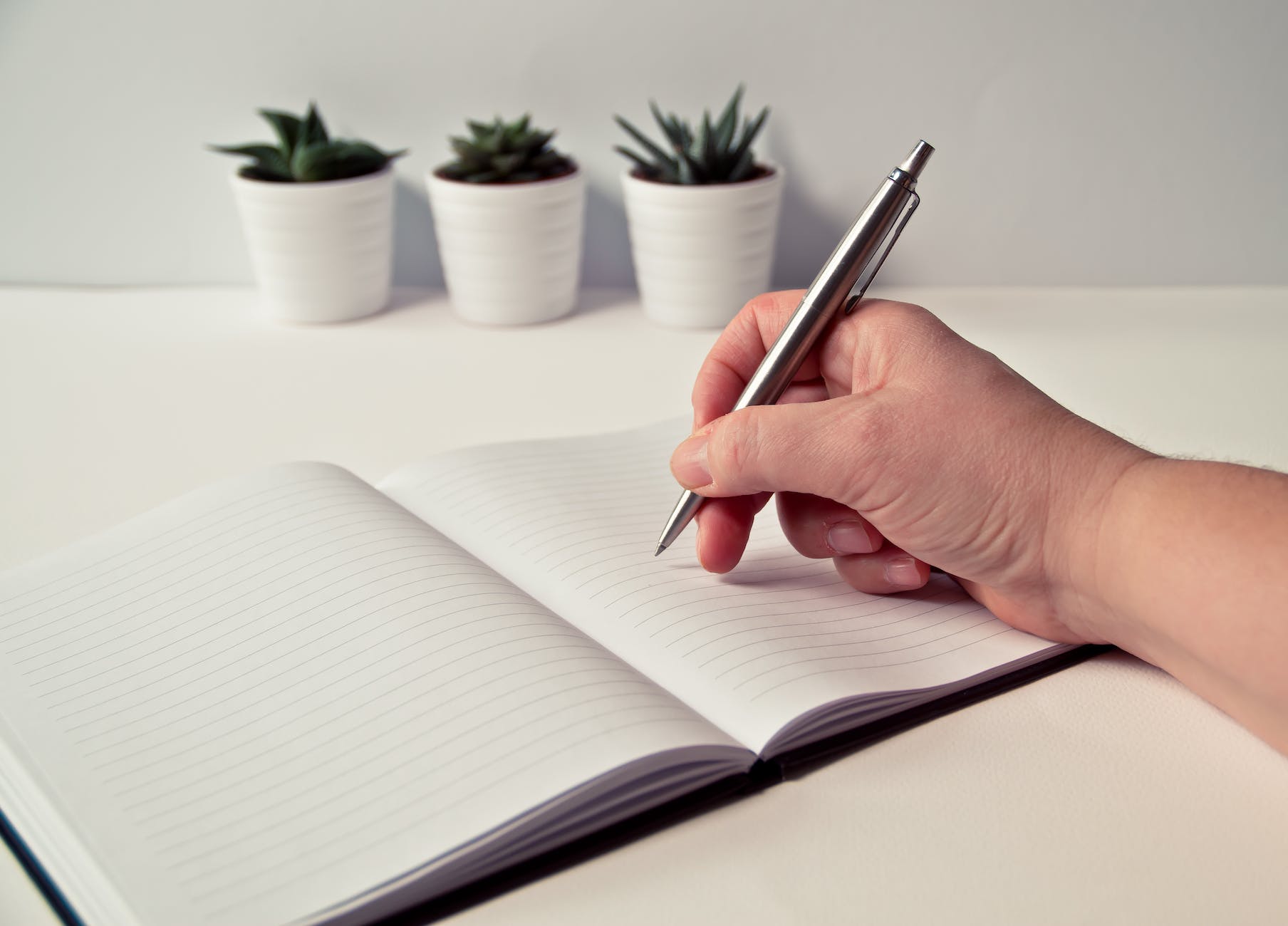
I’m the kind of person who really loves the -ember months, you know: September, October, November, December, spooky season, PSLs, sweater weather, cosy throws, piles of books and cups of tea. Even as an adult, I still treat myself to shopping for back-to-school supplies, my set of new pens, a beautiful notebook, a pad of notecards. And as is so often the case this time of year, I’ve been thinking a lot about writing lately—not the big writing projects, not my next book that has been hovering in draft form for too long, but the more intimate, private act of journaling. The kind of writing that doesn’t begin with an audience in mind, but with a simple intention: to notice, to clarify, to think. Writing to get cosy with.

This practice has been quietly foundational for me. Some days it is a place to record the traces of a dream before the day sweeps it away. Other days, it’s a notebook page where I sketch out the shape of an idea, a plan, a dream that feels still just beyond reach. And sometimes, if I’m honest, it’s little more than the banal recounting of my to-do list, things I need to buy, or minor annoyances still weighing on me. But even in those moments, journaling does something important. It reminds me that thought is not just an invisible current in the mind; it is something that can be externalised, shaped, and returned to.

The philosopher Hannah Arendt wrote that thinking itself is a kind of dialogue, an inner conversation between me and myself. Journaling, in that sense, is a way of giving that dialogue a more durable form. It’s a way of ensuring that fleeting insights don’t evaporate, but have the chance to develop into something more sustained.

There’s a temptation to imagine journals only as records of the past, those childhood diaries with locks and keys, filled with secrets that we might cringe to reread, or those teenage of angst and whingeing. I have many examples of both. But even in those examples, a journal is still always a tool for invention. The monks who kept commonplace books weren’t merely keeping records; they were building repertoires of thought that could be recombined in new and surprising ways.

When I journal, I notice that same shift. I might begin with the day’s details—what I’m reading, what I need to do next—but somewhere in the act of writing, connections spark. A line from Woolf collides with something I overheard on the bus. A fragment of a lecture I once gave resurfaces beside a description of the changing light on my balcony garden (sadly now largely barren as I prepare to leave this flat after several years). The page becomes less about recording and more about thinking with.

This is one of the reasons I encourage students and coaching clients alike to develop their own journaling practices. It’s not about producing beautiful prose; it’s about cultivating a space where the mind can stretch into unexpected directions.

At the moment, my own journaling practice feels especially necessary. September has always been a transitional month for me: the academic year begins again, new projects gather momentum, and the end of summer invites reflection on what has—or hasn’t—shifted over the past few months.

Recently, I’ve been writing in the mornings with coffee that I’ve started brewing with increasing precision with a V60 and scale, sometimes before the world is properly awake. I’ve found that this time of year asks me to slow down, even when everything around me is speeding up. My journal becomes a place where I can give shape to that paradox.

In these quiet pages, I notice the themes that recur: what it means to balance leadership and teaching; how to weave contemplative practices into daily life; where writing itself is pulling me next. These aren’t polished arguments—they’re more like fragments waiting to be assembled. But without journaling, they might never find their way into language at all.

Several thinkers have shaped the way I understand journaling as a thinking practice. Julia Cameron, of course, is central: her practice of ‘morning pages’ in The Artist’s Way remains one of the most accessible and transformative ways to encounter journaling. She invites us to write three pages, longhand, every morning, without editing or censoring. The point is not literary craft but mental hygiene, clearing away the clutter that keeps us from more original insights.

Another companion is John Dewey, whose philosophy of education placed such emphasis on reflection. Dewey argued that genuine learning happens when experience is turned over in the mind, tested, connected. Journaling is, in many ways, the simplest technology for making that reflection visible.

And then there is Joan Didion, who once said, ‘I write entirely to find out what I’m thinking.’ That sentence could be the motto both for journaling as a practice, and for my entire life.

One of the questions people often ask me is: What happens to all this writing? Do you go back and read it? Do you publish it?

The truth is that most of it remains private, and that’s part of the point. Of course, there are occasional fragments that spark something bigger, and find their way into a draft or an article. But there is something liberating about knowing the page doesn’t demand performance. More often, I find that themes crystallised in my journals resurface later as a sort of inspired spark in a lecture, a coaching session, or a blog post. The journal becomes a kind of compost heap for thought, where scraps and off-cuts break down into fertile soil, ‘breeding / Lilacs out of the dead land, mixing / Memory and desire’ to quite Eliot’s eminently autumnal Waste Land.

If you’re curious about beginning—or rekindling—a journaling practice, here are a few approaches that I’ve found useful:

  1. Set a container. Whether it’s Cameron’s three pages or simply ten minutes with a timer, give yourself a boundary. Paradoxically, limits make the practice feel more spacious.
  2. Write by hand if possible. The slowness of handwriting often brings a different quality of attention. That said, typing can work too—especially if it helps you keep pace with fast-moving thoughts.
  3. Don’t censor. The journal isn’t for anyone else’s eyes. Let yourself be clumsy, repetitive, contradictory. That’s where the interesting material often hides.
  4. Return to your entries selectively. You don’t need to reread everything. But every so often, leaf back through your notebook. Notice what recurs. Pay attention to what surprises you.
  5. Link journaling to other practices. For me, journaling often dovetails with meditation or with my reading life. It’s less a stand-alone ritual and more a node in a larger web of reflection.

If journaling is, at its heart, a practice of listening—both to the self and to the world—then it naturally lends itself to creative community. That’s why I’m so looking forward to starting a new Artist’s Way Circle on 23 September.

For twelve weeks, we’ll walk together through Cameron’s classic text, supporting one another as we experiment with morning pages, artist dates, and the many other tools she offers for creative recovery. Journaling will be our daily companion, but the circle itself will be a space for sharing insights, frustrations, and breakthroughs along the way.

If you’ve been feeling the tug to reconnect with your creative self—or if you simply want to explore how journaling might change the way you think—I’d love for you to join us. You can find the details here.

Ultimately, journaling reminds me that thought is not finished before it appears on the page. Writing is not simply a vehicle for communication, but a method of discovery in its own right. In a world that often prizes speed, certainty, and polished outputs, there’s something quietly radical about sitting down with a notebook and allowing thought to unfold in its own time.

For me, it remains one of the simplest and most profound ways to live more reflectively, more attentively—and perhaps even more creatively.


More to Explore

A Mindful Writer’s Work

Writers are, by nature, time-travellers. We inhabit fictional futures, resurrect the past, and drift into imagined dialogues with people who may never have existed. We are also specialists in the art of absence. We wait. We hesitate. We circle. We listen to silence and hope it speaks. Sometimes, we write. But more often, we pace, daydream, refresh the kettle, and convince ourselves that all this not-writing is a necessary prologue to the real work. And sometimes, it is. The mind is not a faucet to be turned on. It is an ecosystem — richly unpredictable, sometimes tangled, occasionally still, and most of all, profoundly sensitive to how we attend to it.

Mindfulness enters here not as a productivity hack or a therapeutic bolt-on, but as an ethical and perceptual stance. It is a way of meeting the page with honesty, curiosity, and renewed presence. It is not, as is often misunderstood, a kind of mental tidiness or a zen-like emptiness that promises a state of uninterrupted flow. Rather, mindfulness honours the interruption. It makes space for the full texture of attention — including boredom, restlessness, and self-doubt — as essential aspects of the writer’s path. To write mindfully is to learn to dwell with those textures, rather than race ahead of them.

The problem is rarely the blank page. The problem is how we relate to it. The mind, when left to its own devices, often gallops ahead with expectations, judgments, comparisons. We tell ourselves stories about the story before we’ve begun. We decide the quality of a paragraph before it has drawn breath. We rehearse the imagined criticisms of strangers. This is the veil we place over our writing — the veil of control, perfectionism, and outcome-oriented striving. Mindfulness does not remove the veil but helps us notice its weave. And sometimes, through that noticing, the veil lifts just long enough for a sentence to step through.

In my own experience — and in the experience of many writers I’ve taught or coached — the most radical breakthroughs often come not in the act of writing itself but in the subtle shift in how we attend to writing. A morning ritual, a breath before the keyboard, a pause between edits: these seemingly peripheral moments recalibrate the nervous system. They draw us out of our reflexive reactivity and into a state of contact — with the sentence, with the self, with the world. And in that contact, writing becomes something more than word production. It becomes a practice of attention.

The poet Mary Oliver, whose work is often misread as simplistic pastoralism, understood this deeply. “To pay attention, this is our endless and proper work,” she wrote. She did not say, “to be original,” or “to be ambitious,” or “to write something that wins the Booker.” She placed the emphasis squarely on attention — on the quality of presence brought to the ordinary. In this sense, mindfulness is less about achieving a calm state than about cultivating a truthful one. And truth, for writers, is a muscle: it must be exercised not only in the sentence, but in the attention that gives birth to it.

One of the key insights of contemplative traditions is that clarity arises not from mental force, but from relinquishment. This is perhaps counterintuitive to the writer, especially one steeped in the myth of genius — that Romantic notion of the tortured soul, pressing brilliance from suffering like ink from a bruise. But mindfulness offers a different myth. In it, creativity does not have to be extracted through pressure. It can be invited. Welcomed. Allowed. This does not make it easy. It simply changes the atmosphere.

To write with mindfulness is not to become passive or dispassionate. On the contrary, it is to feel more, not less. It is to become intimate with the swirl of emotions that accompany the writing process — the hope, the irritation, the grief, the flickers of joy — without being consumed by them. It is to befriend uncertainty without rushing to resolve it. It is to sit, sometimes for long moments, in the discomfort of not-knowing, without outsourcing that discomfort to distraction. And it is from this place that some of our most honest writing can emerge.

Mindfulness also recalibrates our relationship with time. Writers often live under the tyranny of two clocks: the deadline and the lost time. We chastise ourselves for starting late, for not writing more, for the years that have passed without finishing the novel. And when we do write, we’re often haunted by the awareness that we should be doing something else, something more productive, more impressive, more lucrative. Mindfulness invites us to release, even briefly, the grip of these clocks. In the mindful moment, time thickens. One paragraph written in full presence may be worth ten written in anxiety.

This is not to romanticise slowness or to fetishise the gentle. Writing is still a craft. It still requires editing, discipline, ambition, and an occasional ruthlessness toward the over-precious sentence. But mindfulness adds a layer beneath the craft: a foundation of awareness from which the work can rise. Without that awareness, we are often writing on automatic, mimicking the styles of others, pleasing imagined audiences, trying to prove ourselves to people who will never read us. With awareness, we can ask different questions: What am I truly trying to say? Where is this sentence resisting its own truth? What is this character afraid of?

In teaching contemplative writing to doctoral students, I have seen firsthand how mindfulness can shift the centre of gravity in the writing process. Students who were paralysed by perfectionism begin to experiment. Those overwhelmed by theory start to write from the body. Even footnotes start to feel less like obligations and more like conversations. Something happens when attention settles. It is as if the writing remembers what it was always meant to be: not a performance, but a practice of inquiry, of relation, of becoming.

Writers also need to learn to listen again — not just to characters or plots or research findings, but to themselves. Mindfulness trains this kind of listening. It sharpens the inner ear, the one attuned to both silence and signal. This is the listening that hears the deeper intention beneath the sentence. It is what tells you when a paragraph is honest and when it is merely clever. It is what lets you feel when a metaphor is alive and when it is just ornamental. This kind of listening cannot be rushed. It requires stillness, patience, and a certain humility — the humility to admit that we are not always in command of our own voice, but must learn to hear it anew.

And what of inspiration? That elusive, temperamental muse who arrives in fragments and often refuses to be summoned. Mindfulness does not guarantee inspiration, but it does cultivate the conditions in which inspiration is more likely to arrive. It clears space. It makes the mind more porous, more receptive. It creates a gentle rhythm of approach and withdrawal, of writing and pausing, that allows the unconscious to contribute its gifts. Inspiration is not, in this view, a lightning bolt but a dialogue — one that requires you to be home when the knock comes.

To be a mindful writer is, ultimately, to consent to presence. Presence not only with the page, but with the full ecology of your own being: your body, your breath, your irritations, your fatigue, your flickers of delight. Writing begins here. Not in the idea, but in the contact. Not in the goal, but in the ground. In this way, mindfulness is not merely a tool for writing. It is a stance, a spirit, an ethos. It asks not only what you are writing, but how you are living in relation to your writing.

There are, of course, practical ways to embed mindfulness into your craft. Begin your writing session with a minute of stillness. Anchor yourself in the body — feel your hands on the keys, the weight of your sitting bones, the breath moving in and out. When you notice yourself spiralling into judgment or distraction, gently return. Not as punishment, but as invitation. Pause between paragraphs. Gaze out the window. Let the world in. These small gestures are not indulgences. They are the very architecture of attention.

In the end, mindfulness reminds us that writing is not something that happens out there. It is not in the screen or the word count or the approval of others. It happens here, in the quiet, stubborn space of your own awareness. And when that awareness is tender, spacious, and alert, the writing that emerges from it — however slow, however strange — carries a certain resonance. It may not always be beautiful. But it will be real. And in a world saturated with noise, realness is no small offering.

So write. Not hurriedly, not perfectly, but presently. Let the mirror of your attention reflect the flickering truth of your inner life. Let the veil of distraction and doubt fall, even if only for a sentence. You do not have to write everything today. But you can write one honest thing. And that is enough. That is the path.


Mindfulness for Writers: Find Clarity and Inspiration in Your Craft

For many writers, silence—full of potential and hesitation—can feel simultaneously rich and unbearable. We long to write, to shape thought into language, to move the idea from the interior chamber of the self into some shared terrain. And yet we resist. We distract ourselves. We rehearse the moment of beginning without quite entering it. The cursor blinks. The mind loops. The feeling grows that something must be resolved—cleared, conquered—before the writing can begin.

Mindfulness offers another way.

To write mindfully is not to wait for the perfect conditions, but to enter the imperfect ones with attention and care. It is to befriend the silence, rather than avoid it. It is to recognise that clarity does not descend fully formed from on high, but arises gradually through relationship—with language, with mood, with the flickering mind itself. At its heart, writing is an act of intimacy: with our own thoughts, with the complexities of truth, with the reader we may never meet. And like all acts of intimacy, it benefits from presence. It flourishes in the absence of harshness, when control gives way to curiosity.

The mythology around writing tends to encourage the opposite. We are taught, implicitly or otherwise, that inspiration is rare and capricious, that a successful writer must discipline themselves ruthlessly, that the creative mind is both gift and burden. From this perspective, the writer’s job becomes one of wrangling: taming the wild impulse, dragging the idea across the threshold of productivity, pushing through inertia with sheer will. But this model creates a peculiar estrangement. The act of writing becomes adversarial. We are no longer in dialogue with our thoughts but in conflict with them. The page becomes a site of pressure rather than possibility.

Mindfulness undoes this subtle violence. It invites us to return to the writing process not as a battleground, but as a place of noticing. We begin to pay attention not only to what we want to say, but to what is happening as we try to say it. We notice the quickening of the breath when a sentence feels too vulnerable. We notice the flicker of doubt when the prose doesn’t match the inner image. We notice the impulse to check email, scroll, tidy the desk—anything but face the discomfort of uncertainty.

And then, rather than judge ourselves for these things, we soften. We stay. We write from within the mess rather than waiting for the mess to resolve.

This kind of writing is slower, yes. But it is also truer. When we learn to tolerate the moment of unclarity—when we stop fleeing the fog and start writing from within it—something begins to shift. The words that emerge may be halting, but they are honest. The rhythm that arises may be uneven, but it carries the weight of attention. And from this attention, something unexpected can unfold. We find ourselves saying what we didn’t know we knew. We surprise ourselves. We write not to assert, but to discover.

In this way, mindfulness is not simply a technique for calming the nervous system. It is a stance. It is a way of approaching the creative process with respect—for ourselves, for the material, for the reader. It acknowledges that the mind, left to its own devices, will often resist the work it most wants to do. Not out of laziness, but out of fear. The fear of not being good enough, not being original, not being able to finish. These fears are ancient and deeply human. But they are not the end of the story.

Through mindfulness, we begin to recognise these internal dramas for what they are: patterns, not truths. A thought is just a thought. A mood is just a weather system. They pass. And if we can learn to observe them rather than obey them, we free ourselves from their grip. We become less entangled. We make space for the writing to emerge on its own terms.

Of course, this requires a kind of humility. The mindful writer does not approach the page with the assumption of mastery. They approach with openness. They are willing to be surprised, to be wrong, to revise not just sentences but assumptions. They listen. And this listening begins long before the first word appears. It begins in the body—the breath, the posture, the quiet scan of inner state. How am I today? What is present in me right now? Not: what do I want to write about, but: where am I writing from?

This simple pause—this moment of turning inward—can change everything. It can prevent the unconscious projection of stress onto the writing task. It can reveal the source of resistance. It can allow a more grounded voice to emerge, one less driven by ego and more attuned to truth. In this way, writing becomes a form of meditation. Each sentence is a return. Each revision is a reckoning. Each paragraph is a field of attention.

This does not mean the process becomes easy. Writing mindfully is not a shortcut to flow. On the contrary, it often requires more patience, more willingness to linger with discomfort. But it also brings a deeper reward. The writing begins to feel less like a performance and more like a practice. We are not trying to impress. We are trying to see clearly.

And that clarity—when it comes—is not just about language. It is about alignment. The writer begins to feel aligned with their own voice, their own rhythm, their own pace. They stop comparing themselves to imagined others. They stop chasing an abstract standard. They begin to trust their process, even when it feels slow or strange. They begin to recognise that inspiration is not a bolt from the blue but a byproduct of attention. That the well of creativity refills not through pressure, but through presence.

In this spirit, many writers find it helpful to create small rituals that anchor them in mindfulness. Not elaborate routines, but subtle cues—a brief pause before beginning, a few breaths with the eyes closed, a wordless acknowledgment of the moment. These rituals are not about superstition. They are about orientation. They remind the writer that this work, however ordinary, is sacred in its own way. That to sit down and listen inwardly, day after day, is an act of both courage and care.

Sometimes, of course, the writing does not come. The mind is scattered. The ideas are half-formed. The inner critic is loud. Mindfulness does not banish these moments. But it changes our relationship to them. Instead of pushing through or giving up, we stay curious. We ask different questions: What is happening here? What am I afraid of? What part of me is not yet ready to write? And sometimes, the most important work a writer can do is not to write, but to listen. To let the stillness speak. To honour the pause, not as failure, but as part of the rhythm.

In the long view, what mindfulness gives to writing is not just clarity and inspiration, but resilience. It teaches us how to return. To begin again, without shame. To meet the page as it is, and ourselves as we are. This is not merely a mental skill; it is a spiritual one. It asks us to drop the mask. To write not from performance, but from presence. And in doing so, we make room for something deeper to come through.

Writing, in this mode, becomes less about control and more about conversation. A dialogue between self and world, between language and silence. We no longer need to force meaning; we allow it to emerge. And when it does, it carries the subtle texture of truth—not just what is said, but how it is said. Not just insight, but tone. That particular cadence of voice that can only arise when the writer is fully present to their own experience.

And so the invitation is simple: write as you are. Let the writing be an act of awareness. Let the process teach you something about your own mind. Let it be less about making a point and more about making contact—with yourself, with the page, with the invisible reader who may be longing for the very thing you are about to say.

Let writing become a place of return.

Let it be a home.


Unlock your potential with mindfulness! Discover how a few mindful moments can help spark breakthrough, overcome blocks, and transform your personal and professional journey. Subscribe to my blog today for more on the art of being present.


If you want to start putting these ideas into action, you can sign up for Integrative Meditation (Level 1). This course represents the culmination of years of learning, practice, and personal growth. Integrative Meditation is a comprehensive framework designed to enhance your mental and emotional well-being. It draws on Mindfulness-Based Cognitive Therapy (MBCT), positive psychology, neuroscience, Acceptance and Commitment Therapy (ACT), journaling, and breathwork to support you in reducing stress, enhancing focus, building emotional resilience, and discovering your true self.

Navigating the Filling-Fishing Fallacy: Balancing Inspiration and Creation

water drop on bucket photo

Part of the challenge we face as creatives is what feels like a constant pressure to come up with new ideas. We may feel compelled to continuously produce original works and keep pace with the ever-evolving landscape of our fields. This pressure can sometimes lead to creative burnout, a feeling of being stuck in a cycle of expectation and output. It’s important to recognize that creativity also requires rest, reflection, and rejuvenation. Sometimes, stepping back from the relentless pursuit of new ideas can actually lead to a fresh perspective and renewed inspiration. Taking the time to explore different experiences, engage in unrelated activities, or simply take a break can often spark the innovative thinking needed to push creative boundaries.

Julia Cameron often talks about how important it is for the creative process to ‘fill the well’. This concept entails actively seeking inspiration, experience, and knowledge to support our creative endeavors. According to Cameron, creativity thrives in a dynamic interplay between exploration and expression, making it crucial for us to engage in activities that replenish our well of creativity. This may involve immersing ourselves in diverse art forms, exploring nature, engaging in thought-provoking conversations, or delving into various cultural experiences. By continuously filling our well with new and stimulating input, we enhance our ability to generate fresh and innovative ideas, setting the stage for meaningful and impactful creative expression.

However, it’s equally important to recognise when it’s time to move from filling the well to fishing in it. This transition signifies the moment when we must delve into our accumulated ideas, influences, and inspirations and break through the inertia to start creating. By tapping into the wealth of experiences and knowledge we have gathered, we can breathe life into new projects, harnessing our creative energy to bring our visions to fruition.

It’s not uncommon for creatives to underestimate or overestimate just how much new information or external inspiration they need before getting down to work, what I call the Filling-Fishing Fallacy. This phenomenon can occur when creators feel like they need to continuously fill their minds with new ideas, never feeling fully prepared to start their projects. On the other hand, some may become so engrossed in seeking external inspiration that they never actually dive into the creative process. Finding the right balance between gathering new insights and diving into the work can be a challenge for many, but it’s an important aspect of the creative process to master.

Sometimes we just need to start writing, start painting, start moving, or start creating. Sometimes we’ve already consumed enough inspiration to get us going. Sometimes we need to stop filling the well and start fishing in it.

It’s a common misconception that we need to inundate ourselves with new information or inspiration before we can even begin the creative process. The truth, however, is that creativity isn’t just about the accumulation of information, but the delicate balance between ‘filling the well’ and fishing in it. This delicate balance involves not only seeking new input but also allowing time for reflection and synthesis. It’s the interplay between absorbing new ideas and allowing them to percolate within our minds, creating a rich reservoir of thoughts that can be drawn from when the time for creativity comes. The process of creativity is not solely about input, but rather the alchemical process that occurs when we blend new knowledge with our unique perspectives and experiences. Therefore, nurturing creativity involves both the acquisition of new information and the cultivation of a mental landscape conducive to the generation of original ideas.

By learning to distinguish between when we need to fill the well with new experiences, inspiration, and knowledge, and when we should start fishing in it, drawing from the resources we have gathered, we can optimise our creative process and avoid unnecessary burnout. Taking the time to nurture our creativity through exploration and learning, and then knowing when to harness that creativity by actually producing work, allows us to maintain a sustainable and fulfilling creative practice.

As I writer I used to spend hours scrolling through social media, bookmarking articles and watching videos for research and inspiration. Despite the abundance of material, I found it increasingly difficult to translate this flood of information into tangible creative results. What I didn’t then realise is that the act of creating requires not only input, but also processing and synthesis. I had to learn to take the time to think about and digest the information I’d gathered, and then to figuratively fish from this well of inspiration.

Many of us fall into the trap of overfilling our creative wells, believing that more information and inspiration will inevitably lead to better ideas. However, this can quickly become overwhelming and counterproductive. Overfilling the well can lead to analytical paralysis and creative stagnation. It’s important to find a balance between input and output to avoid getting trapped in this cycle. Taking the time to reflect and distill key insights from the multitude of inputs can lead to more focused and impactful creative output. Embracing moments of quiet and stillness can also allow the mind to process and connect the dots, resulting in innovative ideas and solutions. So, instead of overfilling the well, it’s essential to nourish it with a diverse range of meaningful inputs and allow the space for deep, uninterrupted reflection.

By understanding the signs of overfilling, such as feeling overwhelmed, mentally drained, or uninspired, we can proactively reclaim our creative energy and channel it into productive endeavours. Recognising the importance of balance and the need to differentiate between gathering inspiration and actively creating can empower us to break free from the cycle of overconsumption that the modern world often pushes us toward. Embracing moments of quiet reflection, engaging in activities that nourish our creativity, and setting boundaries around our time and energy can further support this shift towards a more sustainable and fulfilling creative practice.

Creativity isn’t a finite resource to be hoarded, but a dynamic force that thrives on movement and expression. When we embrace this mindset, we unlock endless possibilities for growth and innovation. By shifting our focus from accumulation to action, we open the door to new experiences and perspectives. This shift allows us to explore uncharted territories and break free from the confines of routine, fostering a sense of adventure and discovery. As we engage with our creative impulses, we not only fuel our own passions but also inspire and uplift those around us. It’s through this active engagement with creativity that we can truly harness its transformative power and make a meaningful impact on the world around us.

Once we have filled our wells with inspiration and ideas, it’s time to move from passive consumption to active creation. This is where the magic happens — the act of fishing in the well of creativity. Fishing in the well allows us to tap into our reservoir of ideas and insights and transform them into tangible works of art, innovations or forms of expression. This is the phase where inspiration meets action, where ideas are brought to life.

What characterises this phase isn’t only the act of creation itself, but also the depth and richness of the material from which we are able draw. Fishing in the well isn’t just about producing something, it’s about engaging with our creative resources in a meaningful way. It’s about breaking through the inertia, the uncertainty, and, yes, sometimes the fear, to begin to create.

It’s about trusting the depth of our inspiration and allowing intuition and curiosity to guide us. When we allow ourselves to fish in the well, we can turn ideas into reality and begin to unleash our full potential. Creativity isn’t a linear process, but an iterative one, built up piece by piece over time. As we navigate between filling the well and fishing in it, we should embrace the fluidity of the creative journey and trust in our ability to navigate through its ebbs and flows.

During the Renaissance, scholars and artists developed a profound appreciation for the intricacies of the natural world, leading to the creation of spaces known as kunstkammers or studiolos — personal rooms meticulously curated and filled with an array of treasures, curiosities, and sources of inspiration. These rooms served as the physical embodiment of the creative process, providing a sanctuary for exploration, reflection, and the convergence of expression. Within these carefully crafted environments, individuals fostered a deep connection with their work, surrounded by objects that ignited their imagination and encouraged artistic experimentation. The kunstkammers and studiolos symbolized the fusion of art, science, and intellect, serving as testimony to the multifaceted nature of creativity during this remarkable period in history.

The cultivation of our own art chamber — whether physical or metaphorical— is a tangible reminder of the interplay between filling the well and fishing in it. It is a sanctuary for creativity, a place where ideas can flourish and inspiration can unfold. What makes the art chamber special is not only the physical components, but also the intention and energy inherent in it. It’s about understanding the symbiotic relationship between inspiration and expression and creating a sanctuary for our creative endeavours. Our environment has a profound impact on our creative process and mindset. By consciously designing a space that encourages inspiration and productivity, we can optimise our creative potential and enhance our overall wellbeing.

The Filling-Fishing Fallacy serves as a powerful metaphor for the creative process, illuminating the intricate interplay between replenishing our well of creativity and actively engaging with the ideas and concepts within it. It prompts us to consider the dangers of overfilling the well, leading to stagnation and an overflow of undirected thoughts, thus hindering the creative process. Conversely, by embracing the act of “fishing” in our creative well, we learn to navigate the depths of our creativity, selecting and refining the most compelling ideas. This process allows us to cultivate our own unique art chambers, honing our creative intuition and enabling us to harness the full potential of our imaginative energy. Through this intentional and purposeful engagement with our creative resources, we are able to transcend previous limitations and reach new dimensions of inspiration, innovation, and expression.

Digital Minimalism and Why I Write My Morning Pages By Hand

In a world dominated by touchscreens and keyboards, the reason why writing by hand is still important seems to be increasingly forgotten. The physical act of putting pen to paper has a profound impact on our creativity and unleashes untapped potential in our minds.

This year, I have gone back to writing my Morning Pages by hand and it’s made a huge difference to me.

Many famous thinkers and writers throughout history have emphasised the benefits of writing by hand—and, indeed, Julia Cameron herself made it very clear that Morning Pages should be handwritten, even if I forgot about that for a while. The act of handwriting activates various cognitive processes and creates a unique connection between the brain and the hand. The tactile experience of writing seems to anchor the information deeper in our memory, promoting a deeper understanding of the material.

In a world where information overload is the norm, it becomes a valuable skill to retain and truly understand what we encounter. Handwriting provides a pathway to better learning as it allows us to grasp concepts more effectively and subsequently stimulates our creativity.

J.K. Rowling wrote the first drafts of Harry Potter by hand. This way of writing allowed her to give free rein to her creativity without the constraints of a blinking cursor. Rowling herself has spoken about the liberating experience of writing by hand, explaining that it allowed her to explore creative tangents and unexpected plot twists.

The cognitive processes triggered by the physicality of handwriting have the potential to fuel our creative minds and push us beyond the boundaries of conventional thinking. Handwriting improves memory, fosters deep understanding and unleashes creative potential. This practise can be a powerful tool to manage the complexity of our information-driven world.

Part of the problem I struggled with is that in the digital age, speed often takes precedence over thought. Clicking buttons can feel like a race against time, where our thoughts have to keep up with the incessant flow of information. However, when we focus on the deliberate pace of handwriting, a profound shift occurs.

Writing by hand encourages a slower, more contemplative approach to thinking. It makes us savour every word, every sentence as we put our ideas down on paper. The physical effort required to form letters and words engages our senses in a way that typing does not. This deliberate rhythm can be a balm for an overstimulated mind and provides a sanctuary for deep thinking in a world where speed is often more important than substance.

Take the example of Virginia Woolf, who filled countless notebooks with her handwritten thoughts. Her methodical approach to writing allowed her to immerse herself in the nuances of her characters and narratives, creating literary works that stand the test of time. This is in stark contrast to the speed of digital communication, where brevity often trumps depth.

Writing my Morning Pages by hand has taught me to trust the pace at which ideas flow. When I used to type them, my mind would race ahead and I’d find myself faced with pages of pretty nonsensical stream of consciousness. By gently slowing down with handwritten pages, my ideas have more time to take shape before flowing onto the page.

I have realised that the deliberate pace of handwriting creates a connection between mind and paper that is difficult to achieve in the digital world. By slowing down the pace, we give our thoughts the space they need to develop and mature.

In a society that celebrates constant productivity, the value of well thought-out, well-developed concepts cannot be overestimated. The deliberate pace of handwriting encourages deep thinking and provides a counterbalance to the hectic pace of digital communication.

I see the sensory experience of handwriting as a rebellion against the sterility of digital tools. The feel of paper under our fingertips, the scratch of the pen on the page — these sensations engage our senses in a way that a keyboard and a screen cannot.

Sure, I love technology as much as the next person, but I’m learning to connect more with a form of digital minimalism, where I rely on the best of digital and the best of analogue without assuming that a digital version of something is always preferable.

Why is this tactile experience of the analogue so important? When we write by hand, we activate not only the visual sense, but also the tactile and kinaesthetic senses. This multi-sensory engagement leaves a deeper and more lasting impression on our memory.

In addition, the tactile experience of writing by hand also has therapeutic benefits. It can be a mindful exercise that anchors us in the present moment and offers a break from the constant digital deluge. In a world full of distractions, the act of writing by hand becomes a meditative exercise that allows us to switch off from the chaos and reconnect with our thoughts.

Digital minimalism is a subtle rebellion against a world that tells us that digital is the only way forward.

The practise of writing by hand is not a relic of the past, but a key to unlocking creativity in the present. From improving memory and fostering deep understanding to promoting conscious thinking and engaging multiple senses, handwriting offers a multitude of benefits.

In a world increasingly dominated by digital technologies, rediscovering the power of writing on paper can be a revolutionary act, freeing our minds to explore unexplored realms of imagination. So, in the midst of the digital rush, take a moment to savour the simplicity and richness of writing by hand — your creativity will thank you.


In The Path of Mindful Living: A 21-Day Mindfulness Companion, I lead you through a series of self-guided mindfulness exercises and show you how to bring mindfulness into your daily life. Readers of my blog can download the workbook and pullout charts for only £6.