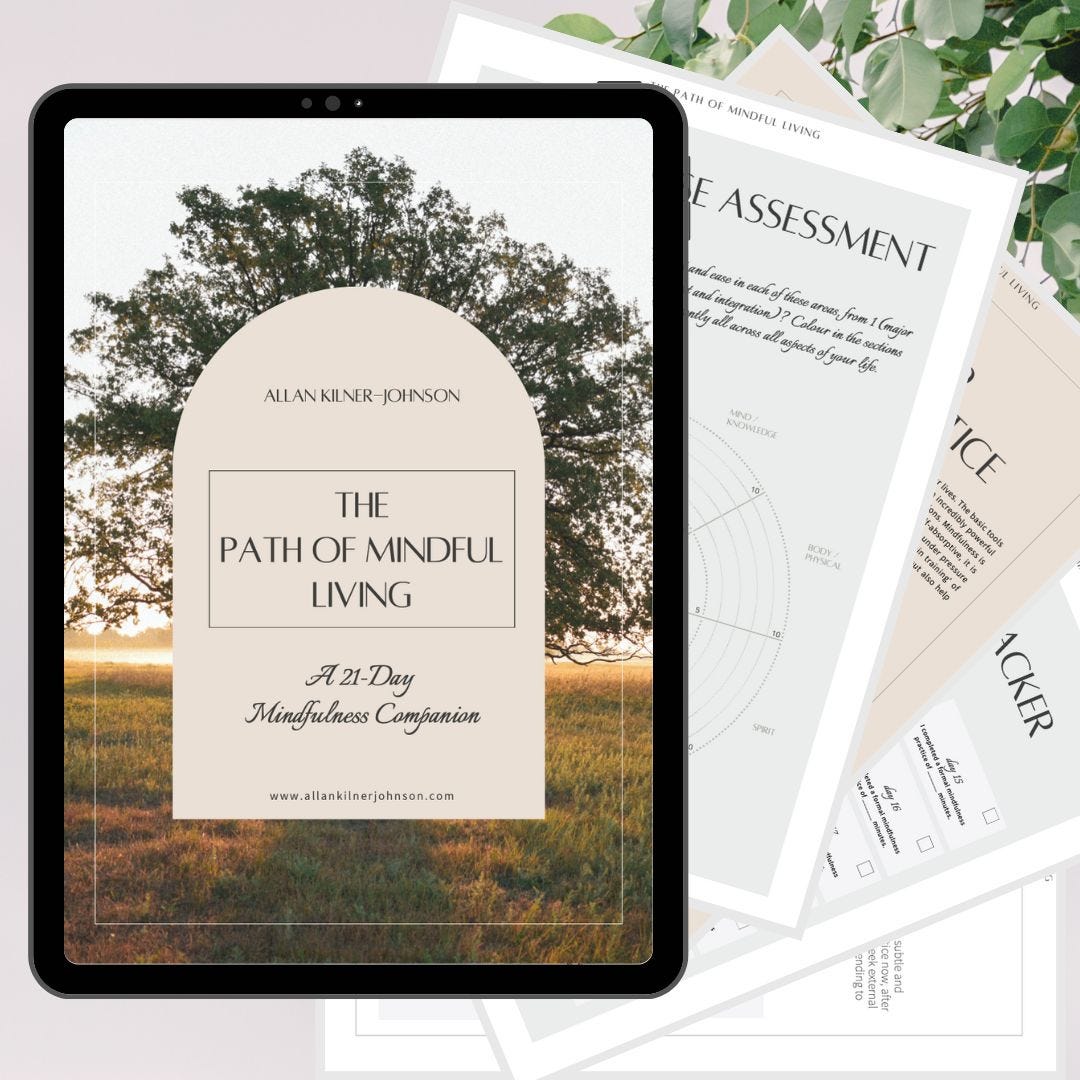
As I sit here planning the year ahead—scribbling ideas in the margins of my notebook, and gathering the threads of my personal and professional goals—I can still feel the calm from a few days spent on the Norfolk coast. Those few days away with my partner were a gentle break before the busy holiday season begins, but also a reminder of why I do this work: to create space for reflection, recalibration, and renewal. Not just for myself, but for the people who join me in the Art of Creative Practice community, which is now nearly 800 members strong.
Something that has been vital to me from the start is to be able to offer workshops, weekly circles, and deep-dive programmes at prices that are actually manageable, at a time when coaching has become, for many, a luxury product. It’s not at all uncommon for year-long coaching programmes to cost the same as a small car, and much of the industry operates on the premise that transformation must be expensive to be meaningful. And while I understand how that logic emerged—good coaching is labour-intensive, relational, and built upon years of professional training—there is something in me that resists the exclusivity that often surrounds coaching.
Over the past two decades, I’ve invested deeply in my own development, training, and accreditation, which, along with the extensive experience that has come alongside it, has placed me in the bracket of coaches who could comfortably charge premium fees. And yet my work has always been, at its heart, for creatives: for the writers, thinkers, makers, explorers, and the quietly ambitious; for the people who feel their inner life calling but don’t always have the financial means to invest in premium coaching programmes.
When I built my online offerings, I began with a simple principle: make the threshold low, but the impact high. I want the Art of Creative Practice to provide access to the kind of group coaching and masterminds typically priced out of reach of most, and delivered in a flexible, small-investment format where people can dip in and out based on need, capacity, and season. By offering a wide mix—free events, low-cost workshops and challenges, and longer 12-week programmes and circles—I want to ensure that nobody feels they have to choose between financial strain and personal growth.
I want to be really clear about this: when you sign up for a paid programme—whether it’s a £10 workshop or a 12-week group coaching programme for £99—you are directly supporting the free events and content I offer. You help someone else join a community for grounding, connection, or inspiration that they may not otherwise have been able to access. I structure my work so that:
free events remain genuinely free,
low-cost workshops offer significant depth, and
longer programmes give you the kind of cumulative transformation you would normally find only in high-ticket masterminds.
This model feels right to me, and it allows the community to grow without becoming extractive. It lets people engage at the level they need now, and return for more when they’re ready.
As I plan for 2026, I’m shaping a more cohesive coaching pathway which will include free and low-cost weekly events, monthly workshops, quarterly challenges, and biannual 12-week programmes. The events are entirely modular, so you can dip in and out of some, any, or all of them, while a central methodological and psychological throughline connects them all and will allow you to map your own personal journey growth in the community.
You don’t need to commit now. The easiest next step is simply to come to Inner Alchemy: Practices for the New Season of You, a free one-hour workshop on 1 December, which will serve as both a powerful workshop for taking stock of your current plans and objectives and a taster of the events ahead in 2026.
For those who want to go further, more personally, more intensively, I continue to offer one-to-one coaching. These sessions are where the detailed work happens, the long arcs of transformation, the careful untying and re-weaving of inner narratives, the stabilising of new ways of being. And at only £85 per session, they are significantly more affordable than most coaching options today.
My hope is that these offerings—either free or very affordable, and always deeply transformative—give you places to explore, grow, learn, and commit to deeper change and deeper integration in 2026.
There’s a moment, familiar to anyone who has tried to live deliberately, when the mind simply says no. One minute, we’re aligned with our highest intentions, the next, we’re scrolling, tidying, grazing. That small, invisible shift — from presence to avoidance — is the terrain I’ve been exploring lately. Not because I’ve mastered it, but because I’ve been caught in it more times than I can count.
Aversion is easy to mistake for laziness, distraction, or even moral weakness. But what if it isn’t? What if the mind’s pushback isn’t defiance, but a form of care — a protective reflex triggered whenever growth begins to feel unsafe? The older I get, the more I suspect that the moments I’m most tempted to flee are the moments that matter most.
Every meaningful change seems to summon a guardian. The Buddhists call it mara; Freud might have called it resistance; psychosynthesis would describe it as a subpersonality defending its role in the inner system. Whatever name we choose, the pattern is the same: when the psyche senses transformation, it activates its most familiar defences.
Sometimes I’ll wake up with a vague heaviness, an urge to delay, to simplify the day, to shrink the horizon of possibility. The rational mind can explain it away (fatigue, overwork, weather), but underneath there’s often something more intimate: a small, frightened part that’s unsure what will happen if I really allow change to occur.
The task isn’t to override that part but to listen to it. Roberto Assagioli urges us to treat each subpersonality as purposeful, never pathological. In the same spirit, Internal Family Systems founder Richard Schwartz suggests asking these inner protectors what they’re afraid would happen if they didn’t intervene. Often the answer is touching: You might get hurt again.
There’s a strange irony in inner work: aversion tends to appear at precisely the moment when we’re closest to contact. The body stiffens not because we’re far from the truth, but because we’ve brushed against it.
This, I think, is why so many contemplative traditions treat aversion as a doorway rather than a wall. Pema Chödrön describes it as “the moment we touch our edge.” In those moments, the goal is not endurance but intimacy — learning to stay with what trembles.
When I sit in meditation and feel the urge to move, I’ve started to see it as a kind of emotional sonar. The resistance tells me something important is near. Rather than pushing through, I name it: aversion is here. I feel where it lives — perhaps in the throat, the chest, the solar plexus — and I breathe around it, widening the frame. Sometimes that’s enough. Sometimes it’s not. Either way, the willingness to stay changes the quality of the moment.
Unexamined aversion tends to generate drama. The mind, avoiding stillness, manufactures movement — endless narratives, self-critique, external blame. I sometimes think of this as the “noise of protection.” Beneath the content, the function is the same: distraction from direct contact with feeling.
In my own life, this often appears as overthinking. If I’m avoiding grief, I become analytical. If I’m avoiding fear, I become productive. The activity disguises itself as virtue — busyness, preparation, clarity — but underneath is the same motive: anything but this.
This dynamic is at the heart of the next workshop I’ll be leading — Stopping the Drama Cycle: A Workshop on Love & Our Limiting Patterns (3 November, 7.00–8.30pm UK time). We’ll be exploring how the mind uses drama — both internal and relational — to regulate discomfort. It’s not about pathologising the habit, but learning to see it clearly, tenderly, and to notice the quiet peace that emerges when we stop feeding it.
The paradox is that aversion softens not through conquest, but through companionship. The moment we stop trying to get rid of it, it begins to loosen its grip.
One practice that helps is gentle inquiry:
Ask, what am I unwilling to feel right now?
Ask, what am I protecting myself from?
And then, what would it feel like to allow just one degree more of openness?
This incremental approach — widening the window of tolerance rather than forcing it — honours the nervous system’s intelligence. As Bessel van der Kolk reminds us in The Body Keeps the Score, safety is the foundation of transformation.
Psychologically speaking, aversion is a sign that the psyche is reorganising itself. Spiritually speaking, it’s the ego’s last resistance before surrender. Either way, tenderness is the most effective solvent.
So much of contemporary self-help is built on the rhetoric of mastery: “hacking”, “rewiring” the brain. But perhaps what’s needed is not mastery but maturity: the willingness to work with the mind, not onit. Lately, I’ve been experimenting with what I call “soft discipline.” Instead of pushing through aversion, I create conditions for the opposite of fear: trust. I light a candle, clear my desk, breathe slowly, and remind myself that resistance is just another form of aliveness. It’s the psyche’s way of stretching before the leap.
In contemplative traditions from Buddhism to A Course in Miracles, resistance is reinterpreted as an invitation — an opportunity to practice forgiveness, not in the moral sense but in the cognitive one: the gentle release of judgement against ourselves for finding the work difficult.
This theme continues in Practical Miracles: Practicing the Course Beyond the Book (8 November, 2.00–5.00pm UK time) — a longer session on translating spiritual study into lived practice. We’ll explore how resistance can become revelation when approached through the lens of practice, not theory.
The longer I’ve worked with clients and students — and with my own mind — the more I see that aversion is not an obstacle to healing but one of its instruments. It appears wherever the psyche is trying to protect what it loves. To work with aversion, then, is to enter a relationship with love in its most disguised form.
The next time your mind pushes back, you might imagine thanking it. “Thank you for trying to protect me.” This simple act of recognition can dissolve years of struggle. Aversion doesn’t vanish, but it begins to trust you enough to soften. Growth, after all, isn’t the elimination of resistance but the deepening of relationship with it. What begins as pushback may, in time, become partnership — the psyche’s way of saying, I trust you to take me further than I could go alone.
Upcoming Workshops
Stopping the Drama Cycle: A Workshop on Love & Our Limiting Patterns 🗓 3 November, 7.00–8.30pm (UK time) In this workshop we will explore how resistance and reactivity keep us circling the same emotional loops, and learn how to step out of them with compassion and clarity.
Practical Miracles: Practicing the Course Beyond the Book 🗓 8 November, 2.00–5.00pm (UK time) This half-day workshop is deeper immersion into A Course in Miracles as a lived practice, where we will translate insight into relationship, creativity, and peace.
In all of us there lies an inherent innocence — trust in the process, faith in the goodness of others, and a genuine curiosity that drives us forward. This innocence is the foundation for growth and learning, but it is also the beginning of a transformative journey full of challenges and revelations. This part of ourselves taps into an archetype known as The Innocent, which presents challenges but also offers deep wisdom to us as we explore what innocence means within us and within the complexities of our lives.
The Innocent archetype is characterised by a fundamental trust in life and in others, and fosters a sense of belonging to a larger community. It embodies qualities such as purity, simplicity, and optimism, and guides the individual towards a hopeful perspective and a genuine love of learning. At the core of the Innocent archetype lies a deep trust — in oneself, in others and in the inherent goodness of life. This trust serves as a source of strength and resilience and enables individuals to face challenges with a sense of optimism and hope. It fosters a belief in the potential for growth and transformation, even in the face of adversity.
However, this unwavering trust can also lead to a sense of naivety and vulnerability. The Innocent can be overly trusting of others and overlook potential dangers and risks. This can make them vulnerable to manipulation and exploitation as they struggle to recognise the darker side of human nature.
Being comfortable with discomfort is a lesson and challenge for the Innocent.
The Innocent archetype is also characterised by a sense of simplicity and purity. People who embody this archetype often see the world through a lens of innocence and perceive it as a place of wonder and beauty. This simplicity allows them to appreciate life’s small pleasures and find meaning in everyday moments. But, this simplicity and purity can also be a source of limitation, as the innocent have difficulty grappling with the complexities and ambiguities of life. They may shy away from difficult truths and uncomfortable realities, preferring to live in a world of innocence and naivety.
One of the greatest strengths of the Innocent archetype is its inherent sense of optimism. People who embody this archetype approach life with a sense of hope and positivity and believe in the potential for a better future. This optimism serves as a source of motivation and inspiration and drives their efforts to bring about positive change in the world. This optimism can also lead to feelings of disillusionment and disappointment when reality does not meet their expectations. The Innocent may struggle to reconcile their idealistic vision of the world with the harsh realities of life, leading to feelings of frustration and despair.
Despite these challenges, the Innocent archetype brings with it a sense of curiosity and wonder. People who embody this archetype have a genuine love of learning and exploration and are eager to seek out new experiences and knowledge. This curiosity fuels their creativity and imagination and enables them to approach life with a sense of wonder and awe. If left unchecked, this curiosity can also lead to a sense of restlessness and dissatisfaction as the Innocent is constantly in search of new experiences and adventures. They may find it difficult to be content in the present moment as they are always longing for something more or something different.
In the journey of The Innocent archetype, individuals must learn to balance their confidence and optimism with a healthy dose of scepticism and discernment. They must cultivate a sense of resilience and adaptability and learn to navigate the complexity and uncertainty of life with grace and wisdom. By embracing the challenges and opportunities that come with embodying this archetype, they can unlock their full potential and discover the deep wisdom that lies within.
Resources of The Innocent Archetype:
Optimism and hope: The Innocent embodies a sense of unwavering optimism and hope that enables individuals to face life’s challenges with resilience and positivity. This inherent optimism serves as a source of motivation and inspiration, fuelling their efforts to create positive change in the world. Curiosity and wonder: People who embody the Innocent archetype possess a genuine love of learning and exploration and are eager to seek out new experiences and knowledge. This curiosity fuels their creativity and imagination and enables them to approach life with a sense of wonder and awe. Trust and faith: At the core of The Innocent archetype lies a deep trust — in themselves, in others and in the inherent goodness of life. This trust is a source of strength and resilience that enables the individual to face challenges with confidence and grace. Simplicity and Purity: The Innocent sees the world through a lens of simplicity and purity, perceiving it as a place of wonder and beauty. This simplicity allows them to appreciate life’s small pleasures and find meaning in everyday moments, fostering a sense of contentment and fulfilment. Belonging to a community: The Innocent fosters a sense of belonging to a larger community and creates connections with others based on trust, empathy and shared values. This sense of belonging provides support and encouragement, helping individuals to navigate life’s challenges with resilience and grace.
Challenges of The Innocent Archetype:
Naivety and vulnerability: The Innocent’s unwavering trust and optimism can sometimes lead to a sense of naivety and vulnerability, making the individual susceptible to manipulation and exploitation. They can find it difficult to recognise the darker side of human nature and overlook potential dangers and risks. Idealism and disillusionment: The Innocent often approaches life with a sense of idealism and optimism, believing in the possibility of a better future. However, this idealism can lead to feelings of disillusionment and disappointment when reality does not meet their expectations. They may find it difficult to reconcile their idealistic view of the world with the harsh realities of life. Simplicity and limitation: The simplicity and purity of the Innocent archetype can be a source of strength, but also a limitation. People can have difficulty dealing with the complexities and ambiguities of life, preferring to live in a world of innocence and naivety. They may shy away from difficult truths and uncomfortable realities, hindering their personal growth and development. Restlessness and dissatisfaction: The curiosity and wonder of The Innocent can sometimes lead to a sense of restlessness and dissatisfaction. Individuals may constantly seek out new experiences and adventures and struggle to be content in the present moment. They may feel a constant longing for more or something different, which prevents them from fully appreciating the beauty of life as it unfolds. Absolutist thinking: The Innocent tends to think in absolutist terms, seeing things in black and white rather than appreciating the complexities and nuances of life. They may find it difficult to acknowledge shades of grey and cling to simplistic solutions and rigid beliefs. This can lead to narrow-mindedness and a lack of flexibility, affecting their ability to adapt to changing circumstances and perspectives.
We have all fallen into the trap of longing for the perfect car, the dream house, or the ideal partner and believing that these external factors will bring us lasting joy and satisfaction. The truth, however, is much more nuanced. What we’re really looking for isn’t the tangible object itself, but the inner state and the feelings we associate with it. This realisation can really have a big impact on our pursuit of happiness.
According to psychologist Daniel Gilbert, our expectations of how certain possessions or achievements will make us feel often lead to a psychological phenomenon known as ‘impact bias’. This bias causes us to overestimate the emotional impact of future events, including the acquisition of material possessions.
Our emotional reactions to external stimuli are often short-lived. The initial excitement of a new car or a bigger house gradually fades, and we look for the next purchase to fill the void.
Why is this important? In a world where we are bombarded by advertising and societal norms that equate success with material wealth, it’s important to re-evaluate our desires and challenge the narrative that possessions alone can ensure our happiness. This shift in perspective invites us to explore the profound impact of inner states and mindsets on our overall wellbeing.
When we obsess over external objects, we inadvertently overlook the impermanence of the joy they bring us. The point isn’t to deny the value of material comfort, but to recognise that possessions alone cannot sustain our inner happiness.
Think of a time when you acquired something you longed for — perhaps a new gadget or an expensive pair of shoes. Initially, the excitement and joy may have been very real, but over time these feelings have probably diminished. This phenomenon isn’t uncommon; it’s a common experience that highlights the transience of external pleasure.
Imagine someone who worked tirelessly to afford their fantasy house. The day the keys are handed over is a moment of unrivalled bliss. But as the months go by, the novelty of the house wears off and the initial euphoria gives way to the realisation that the external object of the house was no guarantee of lasting happiness.
This realisation isn’t to diminish the importance of achievements or possessions, but to emphasise that they should be seen as a complement to our inner state and not a substitute for it. By understanding this, we can recalibrate our approach to desires and create a foundation for a more lasting sense of contentment.
The pursuit of possessions for lasting happiness is an illusion. While external achievements can bring temporary joy, it’s important to recognise their transience and seek a more sustainable source of contentment within.
Positive psychology studies emphasise the link between emotional well-being and life satisfaction. The pursuit of positive emotions, meaningful relationships and a sense of purpose is consistently associated with higher overall levels of happiness. This isn’t to dismiss the role of external achievements, but to emphasise that they’re most fulfilling when they align with our inner state.
Imagine someone who has shifted their focus from the acquisition of material goods to activities that bring them joy and a sense of fulfilment. Meaningful relationships, gratitude and personal growth became the guiding principles of their life. Over time, this shift in focus led to a more sustainable and deeper sense of satisfaction. They begin to see challenges as opportunities for growth, setbacks as lessons and every moment as a chance to feel gratitude. This shift in perspective not only improves their general wellbeing, but also influences the way they coped with life’s ups and downs.
This shift isn’t about giving up on external goals, but understanding that striving for an ideal future should include both tangible achievements and cultivating a positive inner state. By recognising the intricate relationship between these elements, we lay the foundation for a more balanced and fulfilling life.
Prioritising inner states and emotional wellbeing is not about rejecting external achievements, but recognising their synergy with our overall happiness. Building a life based on positive emotions and meaningful connections contributes to a more fulfilling and lasting sense of satisfaction.
Why should we consider a shift in mindset as the cornerstone of our pursuit of happiness? The answer lies in the transformative power of our perspectives and beliefs in shaping our reality.
Adopting a growth mindset, where challenges are seen as learning and development opportunities, is associated with greater resilience and life satisfaction. This shift in mindset is an active choice that can be cultivated through mindfulness, self-reflection and deliberate practises.
Changing our mindset is not a passive reaction to circumstances, but an active choice that shapes our experience of happiness. By adopting a positive and growth-orientated perspective, we empower ourselves to navigate life with resilience and satisfaction.
Our journey to understanding the true nature of our desires debunks the illusion of lasting happiness through possessions. By prioritising inner states and emotional wellbeing and adopting a shift in mindset, we pave the way for lasting fulfilment. The ideal future is not a mere collection of objects, but a harmonious blend of outer achievements and a rich inner landscape. So as we head for life’s goals, let us not lose sight of the profound impact our inner state and mindset can have on shaping a life that goes beyond the fleeting pleasure of possessions.
Imagine the mind as an intricate tapestry, woven from the threads of consciousness and the hidden fibres of the unconscious. In this tapestry, ancient contemplative practises and the more recent theories of psychoanalysis find common ground — a meeting place of wisdom and inquiry. It’s a fascinating meeting place where the whisper of mindfulness echoes through the corridors of the unconscious, where symbols and dreams intertwine in a dance of deep meaning.
In the realm of contemplative studies, from the tranquil gardens of Zen Buddhism to the vibrant traditions of yoga, people have sought self-knowledge for centuries. In recent decades, psychoanalysts, armed with work of Freud and enriched by thinkers who followed him including Carl Jung and Roberto Assagioli, have ventured into the uncharted territories of the human mind. The question arises: what happens when these two paths, one deeply rooted in ancient wisdom and the other in modern psychology, meet? How can the practise of mindfulness be reconciled with the cryptic language of the unconscious?
Contemplative practises, rooted in ancient traditions across cultures, and psychoanalytic theory, born in the fervent intellectual soil of the late 19th century, have one thing in common: an exploration of the hidden depths of the human mind.
To understand the interaction between contemplative practises and psychoanalytic theory, we must first explore the deep roots of contemplation. Across cultures and centuries, from Vipassana meditation in ancient India to Zen practises in Japan, contemplative traditions have embraced the art of self-awareness. Rooted in philosophy and spirituality, these practises invite individuals to embark on an inward journey, a journey that goes beyond the superficial layers of consciousness.
At the heart of contemplative practises is the cultivation of mindfulness — a state of heightened awareness in which one observes thoughts and feelings without judgement. This mindfulness, an essential component of contemplation, paves the way for self-reflection and allows individuals to explore the complex fabric of their mind.
As we delve deeper into these practises, we encounter echoes of psychoanalytic concepts that resonate at their core. Psychoanalysis ventures into the unexplored territories of the unconscious. Freud’s groundbreaking work illuminated the existence of hidden desires, fears and motivations that govern human behaviour. Concepts such as the id, the ego, and the superego, which resemble the archaic gods within the human being, represent the complex interplay between conscious and unconscious forces.
Furthermore, psychoanalysis is concerned with the symbolic language of dreams, in which the unconscious communicates its deepest secrets. Dreams, like contemplative experiences, serve as windows to the unconscious and reveal the multiple layers of human consciousness. This is where contemplative practises and psychoanalytic theory intersect — the exploration of symbolism, the decoding of hidden meanings and the unravelling of the human psyche.
At the intersection of contemplative practises and psychoanalytic theory lies a fascinating convergence: the interplay of mindfulness and the unconscious. Mindfulness, as cultivated through contemplative practises, involves observing thoughts and sensations with unceasing attention. This heightened attention, similar to the psychoanalytic concept of free association, allows individuals to penetrate the depths of their unconscious thoughts without the constraints of conscious censorship.
In this overlap, contemplative practises offer a unique lens through which to explore psychoanalytic concepts. Mindful observation of thoughts and emotions without judgement is consistent with Freud’s concept of free association, where individuals express unfiltered thoughts and allow the unconscious to surface. Mindfulness reflects in its essence the psychoanalytic endeavour to reveal the hidden layers of the mind and to transcend the boundaries of language and rationality.
However, this convergence does not come without challenges. The theoretical integration of contemplative practises and psychoanalytic concepts raises questions about cultural nuances, conceptual differences, and the evolution of both fields. Can ancient contemplative wisdom co-exist harmoniously with the rigorously structured framework of psychoanalytic theory? Can the language of mindfulness communicate eloquently with the symbolic lexicon of the unconscious?
But in addressing these challenges, a world of possibilities opens up to us. The integration of contemplative practises into psychoanalytic theory offers a transformative paradigm that goes beyond the boundaries of traditional therapeutic approaches. It invites us to imagine a future in which the interdisciplinary synergy between ancient wisdom and modern psychology illuminates new ways of understanding the human mind.
In terms of theoretical implications, the intersection of contemplative practises and psychoanalytic theory offers a profound shift in our understanding of consciousness. Contemplative practises, with their emphasis on mindfulness, challenge the conventional boundaries of conscious experience. In the state of mindfulness, the individual traverses the realms of subjective and objective experience, blurring the boundaries between the observer and the observed.
This dissolution of boundaries finds resonance with psychoanalytic concepts such as the dissolution of the ego. As the individual engages in contemplative practises, the ego — the conscious perception of the self — gradually recedes, allowing the unconscious facets of the psyche to emerge. In this dissolution, the dichotomy between the conscious and the unconscious dissolves, leading to a holistic understanding of the human mind.
Furthermore, the integration of contemplative practises challenges the deterministic foundations of traditional psychoanalysis. Freudian concepts, such as the influence of early childhood experiences on adult behaviour, take on new dimensions when viewed through the lens of mindfulness. Contemplative practises enable individuals to observe their conditioned responses and automatic thoughts, and offer the possibility of overcoming the limitations of past experiences. This liberation from determinism, a hallmark of contemplative practises, leads to a paradigm shift in psychoanalytic thinking and invites a re-evaluation of established theories.
Another fascinating overlap between contemplative practises and psychoanalytic theory occurs in the realm of symbolism. In psychoanalysis, dreams serve as portals to the unconscious, laden with symbols and metaphors that convey hidden meanings. The symbolic language of dreams, meticulously analysed by psychoanalysts, reflects the intricate symbolism embedded in contemplative experiences.
In mindfulness practise, individuals often encounter vivid images and symbols that rise from the depths of their unconscious. These symbols, which are similar to the dream motifs analysed in psychoanalysis, have deep meaning. For example, a recurring image of water in contemplative experiences can symbolise the unconscious mind, which stands for the fluidity of thoughts and feelings. Similarly, symbols such as trees or mountains can represent inner strength and stability, reflecting the psychological landscape of the individual.
The convergence of these symbolic languages offers a rich field for exploration. Psychoanalysts familiar with dream interpretation can draw parallels between dream symbols and contemplative imagery, deciphering the common archetypes and motifs that permeate the human unconscious. This interdisciplinary dialogue enriches both fields and offers new ways of understanding the symbolic dimensions of the human psyche.
As contemplative practises are incorporated into psychoanalytic theory, the development of psychoanalytic theory takes a transformative course. Traditional psychoanalytic approaches rooted in verbal communication and introspection are expanding to include non-verbal expressions. Contemplative practises that include movement-based techniques such as yoga and tai chi are opening up new avenues of self-expression and self-exploration.
By incorporating these embodied practises into psychoanalytic therapy, psychoanalysts can explore the somatic dimensions of the unconscious. The body, a reservoir of unexpressed emotions and trauma, becomes a canvas for exploration. Through mindful movement and breathwork, people can release pent-up emotions stored in their muscles and tissues, allowing for catharsis and emotional healing. This integration of contemplative practises elevates psychoanalytic therapy into a holistic realm that encompasses not only verbal narratives but also the language of the body.
Moreover, contemplative practises introduce a temporal dimension into psychoanalytic theory. In mindfulness meditation, awareness of the present moment is heightened and the boundaries of past and future are overcome. This emphasis on the present challenges the traditional psychoanalytic framework in which the past is of paramount importance. Contemplative practises invite psychoanalysts to explore the therapeutic potential of the present moment and promote acceptance and self-compassion.
At the intersection of contemplative practises and psychoanalytic theory, an ethical imperative emerges— the call to cultivate compassion and empathy in the therapeutic relationship. Contemplative practises rooted in compassion-based traditions such as Buddhism emphasise the cultivation of loving kindness and empathy towards self and others. This cultivation of compassion is consistent with the basic principles of psychoanalytic therapy, in which the therapeutic relationship serves as a crucible for healing and transformation.
To the extent that psychoanalysts integrate contemplative practises into their therapeutic approaches, the focus shifts from purely intellectual understanding to embodied empathy. Through mindfulness, therapists tune into the emotional nuances of their clients and resonate with their inner experiences. This empathic resonance, fostered through contemplative practises, creates a sacred space where clients feel truly seen and heard, enabling a deep therapeutic relationship.
The cultivation of compassion in contemplative practises goes beyond the therapeutic dyad to encompass social dimensions. In an interconnected world characterised by divisions and conflicts, the integration of contemplative wisdom into psychoanalytic theory offers a beacon of hope. Psychoanalysts equipped with the tools of mindfulness and empathy can contribute to the collective healing of humanity and promote understanding and reconciliation.
As we traverse the unexplored horizons of the human psyche, the intersection of contemplative practises and psychoanalytic theory illuminates new paths of understanding. In this interdisciplinary dialogue, ancient wisdom and modern psychology meet to offer a holistic perspective on the complexity of the human mind. The dissolution of boundaries between mindfulness and the unconscious, the exploration of symbolic languages, the development of psychoanalytic theory and the ethical imperative of compassion — all these facets weave a rich tapestry of exploration and discovery.
In the words of the great minds who have explored these areas, from Freud to the contemplative masters of our time, we find echoes of a profound truth — the human mind, with all its complexities and mysteries, remains an inexhaustible source of fascination. As we continue to explore this intersection, we unravel the mystery of our own existence, one contemplative moment at a time.
In the convergence of contemplative practises and psychoanalytic theory, we find not only a theoretical integration, but also a profound invitation — a summons to embark on a transformative journey inward. This journey, informed by self-reflection, empathy and mindfulness, transcends disciplinary boundaries and invites us to explore the depths of our own consciousness. In answering this call, we unravel the intricacies of the human mind and engage with the enigma that is our existence. In this exploration, we discover not only the hidden depths of the psyche, but also the limitless potential for growth, healing and deep self-discovery.