Understanding Metaconsciousness for Personal Growth

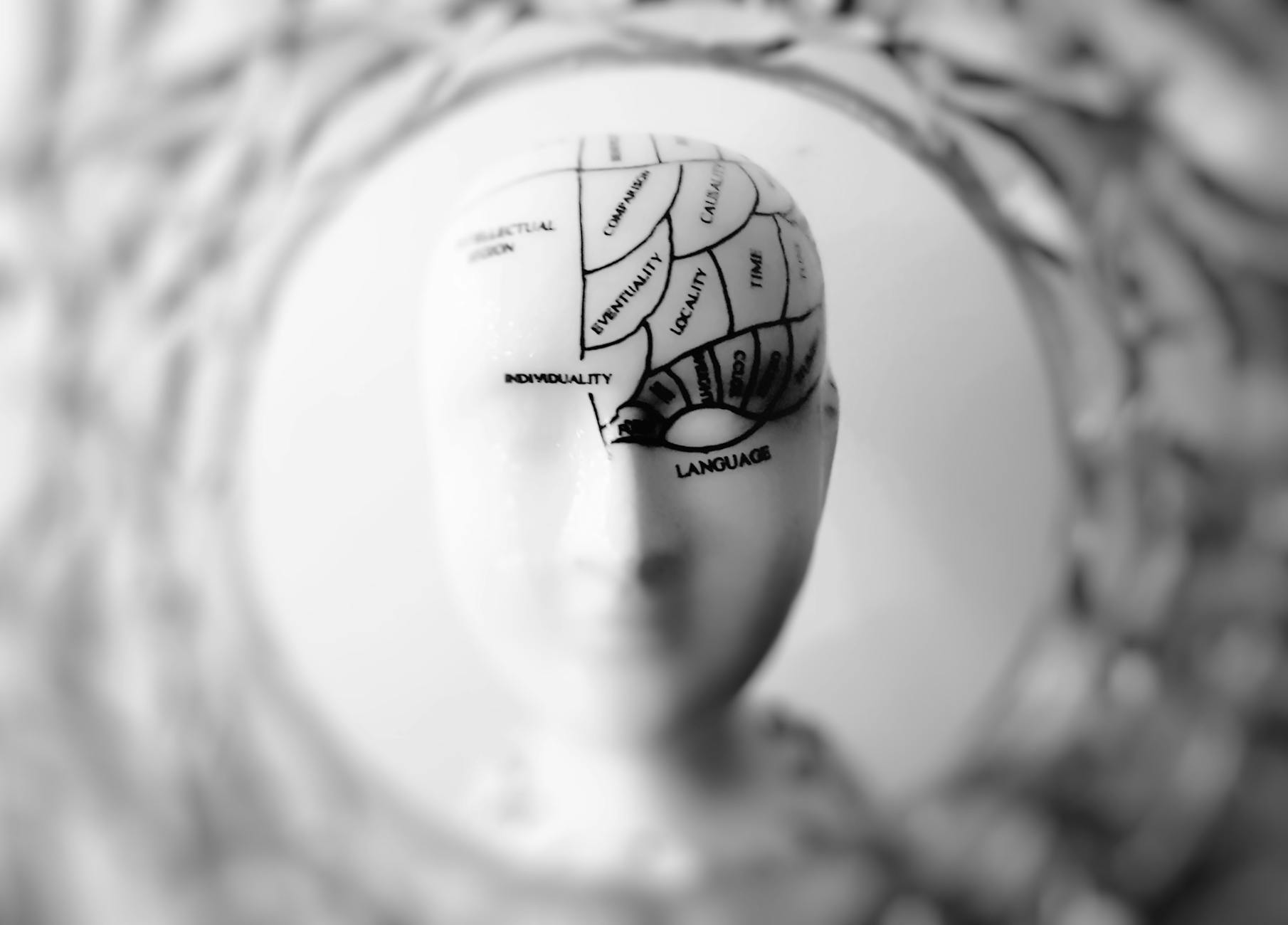
Photo by meo on Pexels.com

At this time of year, I always notice a subtle change in the quality of my attention. The external world doesn’t necessarily slow down, but something inwardly does. Even the light feels different. Darker, yes, but also more permeable. I’ve been feeling that contrast keenly over the last few weeks, particularly as I prepare for the turn into a new year.

It’s also been on my mind recently while reading Kate Atkinson’s Festive Spirits for my local book club’s Christmas meeting. Atkinson’s stories, playful and unsettling in equal measure, brush up against the unseen dimensions of experience without making grand metaphysical claims. They hover at the threshold. That, in its own way, is where much of my thinking about superconsciousness currently lives: not as an abstract spiritual pinnacle, but as a working edge of awareness that we keep rediscovering in different vocabularies.

In my last book and in much of my recent teaching, I’ve returned again and again to the idea that a large proportion of what we call “consciousness” is, in fact, automatic. It is hormonal, patterned, reactive, efficient. William James hinted at this more than a century ago when he described habit as the “enormous fly-wheel of society.” Freud, in his own way, mapped the vast subterranean machinery of the psyche. Contemporary neuroscience has largely confirmed what contemplative traditions have long suggested: most of what we do, think, and feel happens before we decide.

This is where the idea of metaconsciousness becomes so important, the capacity to notice that we are being moved by processes that are not, in any simple sense, “us.” It is the moment when you realise you are mid-reaction and something in you steps back just enough to witness it. Not to suppress it. Not to spiritualise it. Just to see.

But superconsciousness, as I’m increasingly working with it, points to something slightly different again. It is not merely awareness of the machinery. It is awareness that is not exclusively organised by the machinery at all. It gestures toward a dimension of mind that is less bound to survival, identity maintenance, or historical conditioning. Roberto Assagioli—whose work in psychosynthesis continues to shape my own—described the superconscious as the source of creativity, meaning, ethical insight, and transpersonal experience. Not an escape from the human, but its latent extension.

One of the things I’ve become more cautious about over the years is how easily “human potential” gets packaged as something to be maximised, extracted, or branded. The language of fulfilment can slide so quickly into performance metrics. Abraham Maslow’s later writings—often neglected in organisational culture—are far more subtle than his pyramid suggests. Self-actualisation, for Maslow, was never a static achievement, but an ongoing alignment with what is most alive and truthful in us.

Superconsciousness names a direction of travel, not a finish line.

In my own life, this shows up less in fireworks and more in micro-adjustments: choosing not to override tiredness with willpower; noticing when the body says no long before the intellect catches up; letting an idea take months instead of forcing it into productivity. It shows up in teaching too—in learning when not to fill the silence, when to let a group sit with not-knowing.

Even reading Festive Spirits this December has felt like a small act of this alignment. In between sessions, planning for the new year, and working with clients, sitting with a beautifully written short story by the fire (or, more accurately, a very convincing YouTube fire) has felt like a reminder that imagination itself is a superconscious faculty. We don’t manufacture it. We host it.

There is a tendency to associate higher states of awareness with peak experiences: mystical visions, altered states, moments of transcendence. And certainly, those exist. But what interests me far more now is how the superconscious expresses itself in the ordinary:

  • In ethical instincts that arise before rational justification
  • In sudden creative insight that reorganises months of confused thinking
  • In moments of compassion that interrupt long-established narratives about self and other
  • In the quiet certainty that a particular season of life has ended—even when nothing dramatic has occurred

This is not about becoming perfect. It is about becoming less confined.

I notice that many of the people I work with—particularly academics, creatives, and reflective professionals—are weary not because they lack insight, but because their insight has nowhere to land. They understand their patterns. They often know exactly where those patterns came from. But knowing is not the same as reorganising the centre of gravity from which one lives.

Superconsciousness, in this sense, is not an abstract spiritual add-on. It is deeply practical. It changes: how decisions are made, what counts as success, how time is experienced, where authority is located.

And perhaps most importantly, it reshapes the relationship between effort and surrender. Not everything meaningful can be solved through optimisation.

As this year draws to a close, I find myself more attuned than usual to thresholds between exhaustion and renewal, between endings and beginnings, between old strategies and new capacities for trust. This is exactly the territory that both my coaching work and my group workshops increasingly inhabit: not self-improvement as escalation, but re-orientation.

If this reflection resonates, there are a few gentle ways to continue the conversation:


🌿 1–1 Coaching

If you’re navigating a threshold of your own—professionally, creatively, or existentially—I offer integrative 1–1 coaching rooted in psychosynthesis, contemplative practice, and depth psychology.

You’re very welcome to book a free 15-minute Clarity Call here:
👉 https://allanjohnson.co.uk/coaching/


✨ Reflect & Reset: Quarterly Planning Workshop

5 January | 7.30–9.00 PM GMT | £10
A spacious, grounded evening to review the last season and consciously set the next one—without forcing premature certainty.
Register here:
👉 https://www.meetup.com/the-art-of-creative-practice/events/311948616


🧘 Integrative Meditation

12 January | 7.30–8.30 PM GMT | £4
A guided practice evening bringing together somatic awareness, imagination, and reflective presence.
Register here:
👉 https://www.meetup.com/the-art-of-creative-practice/events/311944273


Superconsciousness, for me, is no longer a speculative peak. It is a daily negotiation between who I have been conditioned to be, who I consciously try to be, and who sometimes appears unannounced in moments of clarity, creativity, or courage. It does not always feel elevated. Often it feels quiet. Sometimes inconvenient. Occasionally unmistakably right.

And perhaps that, more than anything, is the true measure of human potential: not how high we rise, but how deeply we learn to listen.


More to Explore

Metaconsciousness: Becoming Aware of the Ways We’re Driven

Lately I’ve been thinking about how much of life unfolds beneath the surface of our awareness, not just in the mysterious depths of the unconscious, but also in the quieter, more practical rhythms of habit, mood, and reaction. What if our real work is to notice not just what we’re conscious of, but how consciousness itself is being directed?

That’s what is meant by metaconsciousness, the capacity to recognise when we are being driven by hormones, hunger, fear of rejection, deadlines, the steady dopamine drip of our phones, or the deep psychic grooves of childhood conditioning. In my own experience—especially during the past few months of moving between projects, planning new teaching, and reshaping routines—this awareness has felt like an internal turning point. The challenge isn’t simply to ‘be mindful’, but to discern the layers of agency beneath the surface: Who, exactly, is choosing what I’m doing right now?

When I start to ask that question seriously, it becomes uncomfortable. I notice how much of my day is already spoken for by subtle compulsions masquerading as preferences. Even something as benign as checking email can carry the faint pulse of anxiety, a microdose of control. We like to believe that modern life rewards autonomy and discernment, but in practice it trains us in reactivity, which is, by definition, the opposite of freedom.

From Consciousness to Metaconsciousness

Consciousness, in this view, is not a steady state but a constantly fluctuating field of attention. It’s automatic, embodied, and largely determined by biological imperatives. You feel hunger, so you eat. You feel threatened, so you defend. You feel bored, so you reach for your phone. These are not moral failings; they’re simply how the nervous system evolved to keep us alive.

Metaconsciousness, though, introduces a different quality. It’s what happens when we see that we’re acting automatically and hold that recognition with curiosity rather than judgment. There’s a subtle but profound difference between saying ‘I’m angry’ and ‘I notice that anger is arising’. The first statement identifies with the emotion; the second observes it. And in that observation lies the seed of freedom.

This is why contemplative practice remains, for me, one of the few truly radical technologies of our time. Sitting quietly, noticing the mind’s movements without needing to edit or manage them, slowly reveals how much of what we call “self” is just a cascade of impulses, stories, and inherited scripts. Over time, a new perspective opens—one that isn’t outside the body but is no longer confined by it.

If you’re drawn to exploring this dimension in your own creative or professional life, I’ll be leading an online session called Mindfulness for Creatives: Cultivating Focus, Flow, and Inspiration on 23 October (7.30–9.00pm, UK time). We’ll look at practical tools for noticing when attention narrows or scatters—and how that awareness can restore genuine inspiration.

The Drama of the Driven Life

Of course, once we begin to see how we’re driven, another pattern emerges: the drama of selfhood. Many of us unconsciously replay emotional scripts that were formed long before adulthood, such as seeking validation, fearing abandonment, or rescuing others to avoid our own discomfort. These patterns aren’t evidence of failure but they are evidence that we are living out of old perspectives and potentially trying to replicate old relationships from the past, especially the damaging or traumatic ones.

But they can also be exhausting. In coaching and in my own reflective practice, I’ve seen how deeply these dynamics colour our work, our love, and even our whole sense of purpose. The shift toward metaconsciousness invites us to watch these patterns with compassion and detachment, and to move, in psychological terms, from within the drama to observing it.

This theme forms the heart of my upcoming workshop Stopping the Drama Cycle: A Workshop on Love & Our Limiting Patterns on 3 November (7.00–8.30pm, UK time). It’s an evening devoted to understanding how we get pulled into emotional triangulations—the victim, rescuer, and persecutor roles that Karpman identified—and how to step into a more mature and loving mode of engagement. If you’ve ever felt trapped in repetition, whether in relationships or creative work, this session offers a clear, compassionate way through.

Beyond Insight: Practicing the Miraculous

Metaconsciousness doesn’t stop at awareness; it calls for us to do something with it and act from a deeper centre. For me, this is where A Course in Miracles becomes a training in radical perception. Its central insight, that we can learn to see differently, aligns perfectly with the idea of metaconsciousness: we are not our automatic thoughts, but the awareness capable of choosing love instead of fear.

In Practical Miracles: Practicing the Course Beyond the Book on 8 November (2–5pm, UK time), we’ll explore this integration more experientially. How do we move from intellectual understanding to lived transformation? How do we reframe life’s small irritations as opportunities to practice gentler perception? This isn’t about metaphysical abstraction but about everyday miracle-mindedness: the courage to meet the driven mind with tenderness.

A Season of Turning Inward

As autumn settles in, I find myself slowing down a bit. The academic year begins; projects find their rhythm; the light changes. Each season asks for its own form of consciousness, and autumn, for me, always invites metaconsciousness. It’s the season of noticing how we’re driven: by deadlines, by expectations, by the desire to finish before winter.

But it’s also the season of release. Of choosing what’s worth carrying forward and what can gently fall away. In this way, the movement from consciousness to metaconsciousness mirrors the movement from doing to being—from the leaf’s impulse to hold the branch to its graceful surrender to air.

If you’ve been following some of my recent writing on what our books say about us or how to develop positive morning rituals, you’ll recognise the same undercurrent: how to live well within limits. To become aware not only of what drives us, but of the stillness beneath those drives.

And that, I suspect, is the quiet art of metaconsciousness. Not transcending the body or renouncing the world, but inhabiting both more fully—knowing that our thoughts and feelings will continue to move like weather, while something deeper watches with patience.

If you’d like to explore that space with others this autumn, I hope you’ll join one—or several—of these gatherings.


Upcoming Workshops

Taming Your Stream of Consciousness

The early American psychologist William James used the term ‘stream of consciousness’ to refer to the spontaneous flow of thoughts, images, sensations, and emotions that constantly assail us throughout the day. It is a kind of inner monologue–the chatter and twittering of the mind. Most of the time we are not really aware of our stream of consciousness, but it is always there: on the way to work, in the background of our favourite show, or when we are trying to sleep. It is a kind of inner narrative that helps us make sense of the world. We wander from one topic to the next so automatically that we are not even aware that we are thinking. It’s a kind of ‘default setting’ within us that comes to the fore if we are not careful.

Because our minds are constantly thinking and generating thoughts, we are subjected to a constant bombardment of thoughts, sensations, and emotions. Our stream of consciousness is not a direct or accurate reflection of ‘reality’, rather it is a reflection of our mindsets, our beliefs, and our assumptions. The stream of consciousness is a kind of chirping and ever-changing background noise that can be limiting and distracting. When negative, the stream of consciousness can pull us down and prevent us from achieving our goals and living a healthy and balanced life.

Our negative thoughts become a kind of feedback loop and we get stuck in a kind of loop of negativity. We get caught in a cycle where we notice that we are thinking about negative things, and these negative thoughts create negative feelings, which in turn cause us to have more negative thoughts. To overcome this we need to be able to steer the stream of consciousness in a more positive direction. We must recognise that have a choice to respond to the information of our stream of consciousness positively, negatively, or not at all.

One of the most important insights about the stream of consciousness is that it is not ‘me’. We tend to identify with the stream of consciousness and think of it as a kind of ‘I’, because ‘I’ am the character who seems to be having these thoughts. But the stream of consciousness is not really an ‘I’ or ‘me’, but rather a stream of mental activity that we tend to equate with ‘me’. But the stream of consciousness is not a representation of ‘me’, it is only a representation of the mind that is part of ‘me’. It is not your pure, deep, and pristine centre of consciousness.

Realising that the stream of consciousness is not ‘you’ is the first step to being able to better control and shape your thoughts, beliefs, assumptions, and emotions.
If the stream of consciousness is not ‘you’, then what is it? We can think of it kind of like an holographic self: a collection of thoughts, images, sensations, and emotions, but also a collection of habitual beliefs, assumptions, thought processes and ways of thinking. It is the part of us that seems to be able to experience and act on the world. Ask yourself, “If the voice of my stream of consciousness was another person, would I want to spend my time with them?”. The answer is usually a resounding ‘no’, because our stream of consciousness is usually incredibly boring, repetitive and negative.

We can learn to tame the stream of consciousness by seeing it as an “other” – as one of many voices within us. If we are able to become aware of the stream of consciousness, we can learn to change its tone and texture. We can begin to become aware of when we are having negative, unhelpful and unproductive thoughts and we can choose to let go of these thoughts or engage with them. We can learn to reframe our thoughts so that they are less negative, less self-limiting and less stressful. Instead of being stuck in a cycle of negative thoughts, we can choose to take control of the stream of consciousness and direct it in a positive direction.

Since our stream of consciousness has a tendency to be incredibly repetitive and return to the same thoughts and feelings over and over again, one of the best ways to break the stream of consciousness is to have new thoughts, try new things, and break out of our comfort zone. When we have new and positive experiences, we can realise that our stream of consciousness is not necessarily an accurate reflection of reality, but can instead be a reflection of our mindset and our own limiting beliefs and assumptions. When we have new and positive experiences, we can allow ourselves to be more present and aware of the present moment.


Download your free 21-day course in The Path of Mindfulness. In this life-changing 21-day mindfulness journey, Dr Allan Kilner-Johnson guides you through a series of self-guided mindfulness exercises and shows you how and when to bring mindfulness into your daily life.