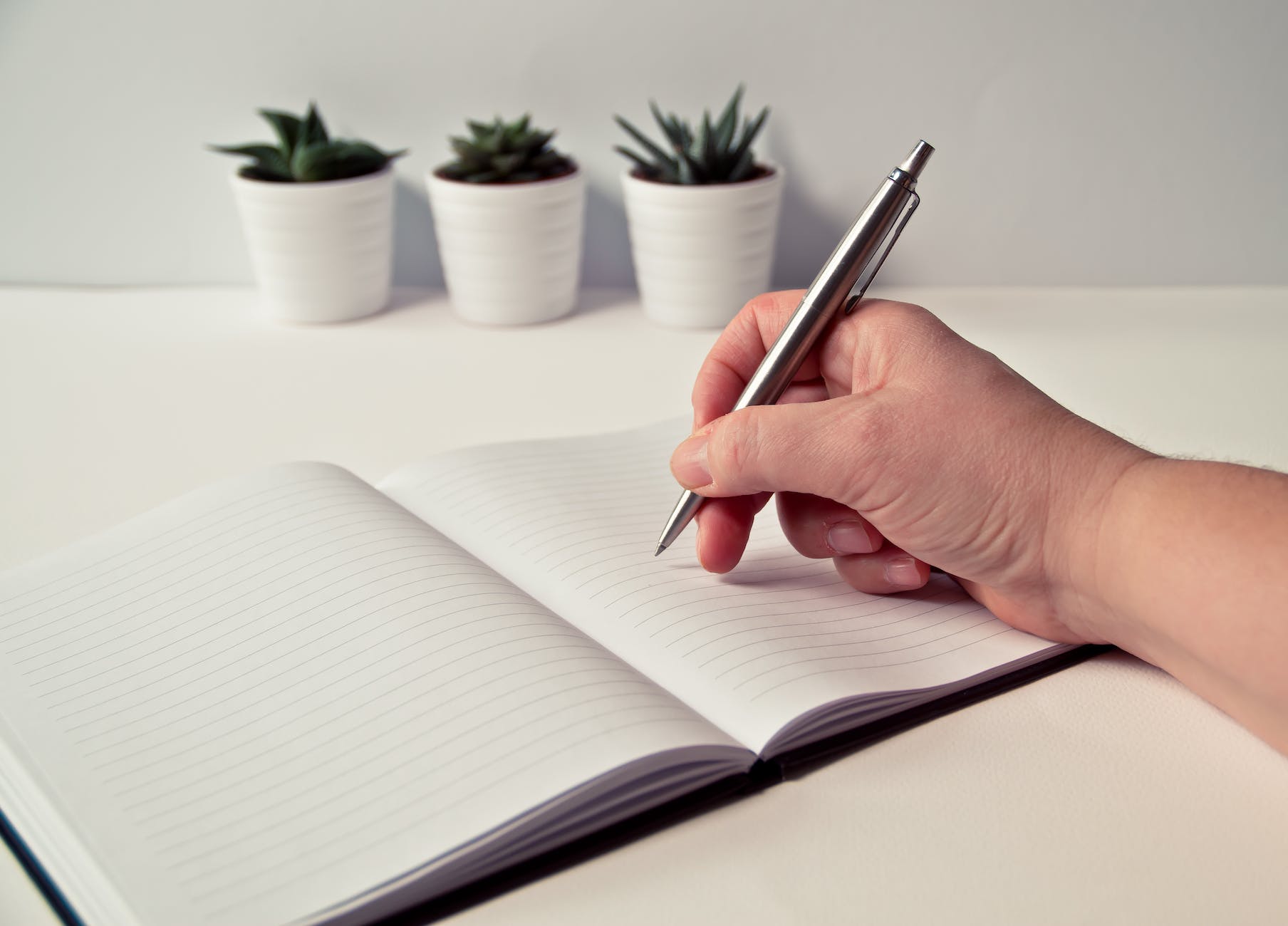
In a world dominated by touchscreens and keyboards, the reason why writing by hand is still important seems to be increasingly forgotten. The physical act of putting pen to paper has a profound impact on our creativity and unleashes untapped potential in our minds.
This year, I have gone back to writing my Morning Pages by hand and it’s made a huge difference to me.
Many famous thinkers and writers throughout history have emphasised the benefits of writing by hand—and, indeed, Julia Cameron herself made it very clear that Morning Pages should be handwritten, even if I forgot about that for a while. The act of handwriting activates various cognitive processes and creates a unique connection between the brain and the hand. The tactile experience of writing seems to anchor the information deeper in our memory, promoting a deeper understanding of the material.
In a world where information overload is the norm, it becomes a valuable skill to retain and truly understand what we encounter. Handwriting provides a pathway to better learning as it allows us to grasp concepts more effectively and subsequently stimulates our creativity.
J.K. Rowling wrote the first drafts of Harry Potter by hand. This way of writing allowed her to give free rein to her creativity without the constraints of a blinking cursor. Rowling herself has spoken about the liberating experience of writing by hand, explaining that it allowed her to explore creative tangents and unexpected plot twists.
The cognitive processes triggered by the physicality of handwriting have the potential to fuel our creative minds and push us beyond the boundaries of conventional thinking. Handwriting improves memory, fosters deep understanding and unleashes creative potential. This practise can be a powerful tool to manage the complexity of our information-driven world.
Part of the problem I struggled with is that in the digital age, speed often takes precedence over thought. Clicking buttons can feel like a race against time, where our thoughts have to keep up with the incessant flow of information. However, when we focus on the deliberate pace of handwriting, a profound shift occurs.
Writing by hand encourages a slower, more contemplative approach to thinking. It makes us savour every word, every sentence as we put our ideas down on paper. The physical effort required to form letters and words engages our senses in a way that typing does not. This deliberate rhythm can be a balm for an overstimulated mind and provides a sanctuary for deep thinking in a world where speed is often more important than substance.
Take the example of Virginia Woolf, who filled countless notebooks with her handwritten thoughts. Her methodical approach to writing allowed her to immerse herself in the nuances of her characters and narratives, creating literary works that stand the test of time. This is in stark contrast to the speed of digital communication, where brevity often trumps depth.
Writing my Morning Pages by hand has taught me to trust the pace at which ideas flow. When I used to type them, my mind would race ahead and I’d find myself faced with pages of pretty nonsensical stream of consciousness. By gently slowing down with handwritten pages, my ideas have more time to take shape before flowing onto the page.
I have realised that the deliberate pace of handwriting creates a connection between mind and paper that is difficult to achieve in the digital world. By slowing down the pace, we give our thoughts the space they need to develop and mature.
In a society that celebrates constant productivity, the value of well thought-out, well-developed concepts cannot be overestimated. The deliberate pace of handwriting encourages deep thinking and provides a counterbalance to the hectic pace of digital communication.
I see the sensory experience of handwriting as a rebellion against the sterility of digital tools. The feel of paper under our fingertips, the scratch of the pen on the page — these sensations engage our senses in a way that a keyboard and a screen cannot.
Sure, I love technology as much as the next person, but I’m learning to connect more with a form of digital minimalism, where I rely on the best of digital and the best of analogue without assuming that a digital version of something is always preferable.
Why is this tactile experience of the analogue so important? When we write by hand, we activate not only the visual sense, but also the tactile and kinaesthetic senses. This multi-sensory engagement leaves a deeper and more lasting impression on our memory.
In addition, the tactile experience of writing by hand also has therapeutic benefits. It can be a mindful exercise that anchors us in the present moment and offers a break from the constant digital deluge. In a world full of distractions, the act of writing by hand becomes a meditative exercise that allows us to switch off from the chaos and reconnect with our thoughts.
Digital minimalism is a subtle rebellion against a world that tells us that digital is the only way forward.
The practise of writing by hand is not a relic of the past, but a key to unlocking creativity in the present. From improving memory and fostering deep understanding to promoting conscious thinking and engaging multiple senses, handwriting offers a multitude of benefits.
In a world increasingly dominated by digital technologies, rediscovering the power of writing on paper can be a revolutionary act, freeing our minds to explore unexplored realms of imagination. So, in the midst of the digital rush, take a moment to savour the simplicity and richness of writing by hand — your creativity will thank you.

In The Path of Mindful Living: A 21-Day Mindfulness Companion, I lead you through a series of self-guided mindfulness exercises and show you how to bring mindfulness into your daily life. Readers of my blog can download the workbook and pullout charts for only £6.
