We have all fallen into the trap of longing for the perfect car, the dream house, or the ideal partner and believing that these external factors will bring us lasting joy and satisfaction. The truth, however, is much more nuanced. What we’re really looking for isn’t the tangible object itself, but the inner state and the feelings we associate with it. This realisation can really have a big impact on our pursuit of happiness.
According to psychologist Daniel Gilbert, our expectations of how certain possessions or achievements will make us feel often lead to a psychological phenomenon known as ‘impact bias’. This bias causes us to overestimate the emotional impact of future events, including the acquisition of material possessions.
Our emotional reactions to external stimuli are often short-lived. The initial excitement of a new car or a bigger house gradually fades, and we look for the next purchase to fill the void.
Why is this important? In a world where we are bombarded by advertising and societal norms that equate success with material wealth, it’s important to re-evaluate our desires and challenge the narrative that possessions alone can ensure our happiness. This shift in perspective invites us to explore the profound impact of inner states and mindsets on our overall wellbeing.
When we obsess over external objects, we inadvertently overlook the impermanence of the joy they bring us. The point isn’t to deny the value of material comfort, but to recognise that possessions alone cannot sustain our inner happiness.
Think of a time when you acquired something you longed for — perhaps a new gadget or an expensive pair of shoes. Initially, the excitement and joy may have been very real, but over time these feelings have probably diminished. This phenomenon isn’t uncommon; it’s a common experience that highlights the transience of external pleasure.
Imagine someone who worked tirelessly to afford their fantasy house. The day the keys are handed over is a moment of unrivalled bliss. But as the months go by, the novelty of the house wears off and the initial euphoria gives way to the realisation that the external object of the house was no guarantee of lasting happiness.
This realisation isn’t to diminish the importance of achievements or possessions, but to emphasise that they should be seen as a complement to our inner state and not a substitute for it. By understanding this, we can recalibrate our approach to desires and create a foundation for a more lasting sense of contentment.
The pursuit of possessions for lasting happiness is an illusion. While external achievements can bring temporary joy, it’s important to recognise their transience and seek a more sustainable source of contentment within.
Positive psychology studies emphasise the link between emotional well-being and life satisfaction. The pursuit of positive emotions, meaningful relationships and a sense of purpose is consistently associated with higher overall levels of happiness. This isn’t to dismiss the role of external achievements, but to emphasise that they’re most fulfilling when they align with our inner state.
Imagine someone who has shifted their focus from the acquisition of material goods to activities that bring them joy and a sense of fulfilment. Meaningful relationships, gratitude and personal growth became the guiding principles of their life. Over time, this shift in focus led to a more sustainable and deeper sense of satisfaction. They begin to see challenges as opportunities for growth, setbacks as lessons and every moment as a chance to feel gratitude. This shift in perspective not only improves their general wellbeing, but also influences the way they coped with life’s ups and downs.
This shift isn’t about giving up on external goals, but understanding that striving for an ideal future should include both tangible achievements and cultivating a positive inner state. By recognising the intricate relationship between these elements, we lay the foundation for a more balanced and fulfilling life.
Prioritising inner states and emotional wellbeing is not about rejecting external achievements, but recognising their synergy with our overall happiness. Building a life based on positive emotions and meaningful connections contributes to a more fulfilling and lasting sense of satisfaction.
Why should we consider a shift in mindset as the cornerstone of our pursuit of happiness? The answer lies in the transformative power of our perspectives and beliefs in shaping our reality.
Adopting a growth mindset, where challenges are seen as learning and development opportunities, is associated with greater resilience and life satisfaction. This shift in mindset is an active choice that can be cultivated through mindfulness, self-reflection and deliberate practises.
Changing our mindset is not a passive reaction to circumstances, but an active choice that shapes our experience of happiness. By adopting a positive and growth-orientated perspective, we empower ourselves to navigate life with resilience and satisfaction.
Our journey to understanding the true nature of our desires debunks the illusion of lasting happiness through possessions. By prioritising inner states and emotional wellbeing and adopting a shift in mindset, we pave the way for lasting fulfilment. The ideal future is not a mere collection of objects, but a harmonious blend of outer achievements and a rich inner landscape. So as we head for life’s goals, let us not lose sight of the profound impact our inner state and mindset can have on shaping a life that goes beyond the fleeting pleasure of possessions.
It’s a commonly held saying in academia that a good journal article will eventually be published in the right journal. The infamous publish-or-perish culture has led to a world of relentless hustle in which academics — particularly those precariously balanced at the base of the long, shaky ladder to professorship — compete to publish more and better work. Academic publishing has exploded as the quest for validation has intensified, so that most published academic journal articles are never read.
Yet despite this massive growth in academic publishing, it is still a competitive game, and one that early career scholars are trained to navigate and understand. The dictum that ‘a good journal article will eventually find its right journal’ is, in some ways, a limp platitude conveyed through the encouragement of supervisors to help the researcher keep the faith. If the article is ‘good’ — and the unexamined assumption is that every article by a researcher is ‘good’ — then it is only a matter of time before the ‘right journal’ is found. In this context, ‘right journal’ usually means ‘less impactful and prestigous journal’, one with less rigorous editorial standards, higher acceptance rates and ultimately a smaller readership.
In many ways, it’s a good strategy to not give up and keep submitting to journal after journal, even if rejections keep coming, especially considering that a vibrant market of dubious, if not downright predatory, publishers has emerged to scoop up the articles that didn’t make it into quality publications. There’s a certain stoicism to it all: sticking to what you believe in, accepting that you can’t control whether an article is accepted or not, and hoping for a better and more positive outcome in the future.
But what about the articles that are never published in the end? What about the scientists who end up going under rather than publishing? What do we do with these cases that do not correspond to the reality represented by the bromide theory that a good article will always find its place?
In many academic fields, particularly in the arts and humanities, the number of recent PhD graduates is far higher than the number of permanent academic positions available, and the chances of finding a position are vanishingly small. In these cases, can we still assume that all good applicants will find the right job? Again, it’s about encouraging someone to storm. You just have to hang in there a bit longer, but we know that statistically that’s not going to be the case for everyone, and in academia that’s true in all walks of life. There are some people who don’t get a journal article accepted, who don’t get an academic job, things that they were told over and over again will happen if they just wait.
I am thinking of an episode of a BBC nature programme, maybe Planet Earth, but definitely voiced by David Attenborough, where a community of walruses banish some of the male walruses to the edge of the community, they will not meet, they will get just enough food to survive as long as they are content to live on an ice floe on the edge of the community. This is an example of how this particular animal community functions and deals with limited resources, and therefore may not translate directly to the human experience, but it is one of many examples of zero-sum games that surround us everywhere.
Positive psychology tells us that there are no zero-sum games, that one person’s success does not mean that another person cannot also be successful. The advice given to young academics is that if you can just weather the storm, you will achieve your goal. But there is something of a paradox when it comes to our understanding of these so-called zero-sum games.
In the business world, companies compete for market share. There are a few factors at the company’s disposal to try to increase their market share, but they will, sooner or later, come up against the hard wall of mathematical certainty that will require something to be created out of thin air. Let’s see how this works through a thought experiment. Imagine two people are selling an identical product in a completely isolated community of exactly 100 people (let’s say a village with a total population of 102, including the two entrepreneurs).
They might agree that 50 customers is enough for each of them, and that by splitting the customer base evenly they can generate the necessary income. However, it is very likely that sooner or later the light bulb of ambition will come on for one or both of the entrepreneurs and they will think: ‘I can make more money if I have 55 customers, or 75 customers, or 95 customers.’ What doesn’t change is the total number of potential customers available. So if the more ambitious entrepreneur wants to increase their market share, they need to focus on differentiation and make their product seem like the more attractive option. Remember that the two products are absolutely identical, so the differentiation has to be done in a different way. Perhaps the entrepreneur has discovered that if he has 75 customers but charges them a lower price, he still makes more money than before by lowering the price and increasing the volume — the variable at play here is cost. Or the entrepreneur may turn to intangible factors such as persuasion and influence to make his product seem like the more desirable option. Or perhaps the entrepreneur engages in shady practises by lying about his or his competitor’s product, threatening the competition or forcing customers to choose his product over the other.
What this thought experiment doesn’t allow for is the expansion of the market beyond 100 potential customers, and there’s a reason for that: relentless expansion is exactly how humans have tried to overcome zero-sum games since the industrial revolution, Ponzi schemes of growth that feed back into systems that then require further exponential growth to be sustained in the future.
In the past, people have used various strategies to expand markets and create new opportunities. Technological advances, new scientific discoveries, and economic paradigm shifts have repeatedly moved societies forward and enabled them to break free from the constraints of the zero-sum game, creating new and more opportunities for growth. The industrial revolution of the nineteenth century marked a turning point where innovations in manufacturing, transport, and communication dramatically expanded the scope of economic opportunity.
However, this relentless pursuit of growth has led to some very serious problems. Growth has become a prerequisite for maintaining the stability of the system, and economic structures have become designed to require constant expansion in order to sustain themselves, leading to resource depletion, environmental degradation, and increased inequality. As these systems become larger and more interconnected, they are required to expand faster and faster to avoid collapse, leading to some of the biggest challenges facing our world today: overconsumption, environmental degradation, and increasing economic inequality.
In the context of our thought experiment, expanding the market beyond 100 potential customers (e.g. by finding a new community of potential customers that the entrepreneurs were previously unaware of) could be a temporary solution, but it also raises the question of the long-term sustainability of such a strategy — what happens when there are no new undiscovered neighbouring villages with potential new customers? Can the market continuously expand to accommodate more potential customers for our two entrepreneurs, or will it reach a saturation point at some point?
And this thought experiment hasn’t even considered the countless other factors that motivate both the entrepreneurs and the potential customers to act within the system in ways that may seem irrational, but from their personal human perspective are absolutely rational in trying to secure the greatest personal good for themselves while reducing the chances of negative repercussions or pain.
Relentless expansion is a hallmark of human progress and has been used to disguise or deny many forms of zero-sum games where one person must lose in order for another person to gain. Economic inequality is the most obvious and pressing example, but this also applies to opportunities in the labour market, where one applicant’s success means a missed opportunity for another, to healthcare, where allocation of resources in one place can mean a lack of resources in another, and for land use and housing, where gentrification and rising property values may benefit some residents but displace others, leading to an increasing expansion of urban and suburban centres and fewer opportunities for younger people to own property than was the case in their parents’ generation.
One of the reasons this problem is so complex to illustrate is that it involves large numbers and patterns of human behaviour rather than individual transactions. In the area of employment, job opportunities are finite until the market expands, but then the market must continually expand to create job opportunities for the new generation of job seekers that were initially created to expand the market.
Fordism, named after the American industrialist Henry Ford, is a socio-economic system characterised by mass production in which the workers who make the product earn so much money that they can afford the product themselves, thanks to the assembly line method that reduces costs and increases productivity. This concept — that you can afford a car, a hat, or a table if you work in a factory that makes cars, hats or tables — while commonplace today, was a groundbreaking departure from prevailing economic practises until the early twentieth century. Modern society enabled the division of labour, where workers specialised in specific tasks, which ultimately contributed to a huge increase in efficiency and output, and therefore a reduction in costs.
But this apparent success of Fordism is another example of a self-reproducing zero-sum system. Mass production required mass consumption to sustain itself, and the relentless expansion associated with Fordism perpetuated the idea that continued economic growth was not only desirable, but necessary for the well-being of society. In this system, labour became increasingly specialised in repetitive tasks, leading to a sense of alienation and dissatisfaction, and although the economic and social situation of many people improved after the industrial revolution, this came at an invisible cost.
Although the economic and social situation of many people improved after the industrial revolution and the advent of Fordism, these gains were not equally distributed. The zero-sum nature of the system meant that progress for some came at the expense of others, and as we have seen in our own time, the pursuit of continuous economic growth was fuelled by a collective mentality that prioritised material accumulation as a sign of social progress. This relentless pursuit of growth sometimes overshadowed the importance of other essential elements of wellbeing, such as work-life balance and social cohesion.
Unlike economic systems, personal relationships involve a range of observable but fiendishly complex and often invisible factors, making them a complex and highly nuanced area of experience. In many ways, however, the reality of human relationships is even more complex. Human relationships are influenced by a variety of factors, including personal values, interests and life circumstances.
Unlike economic transactions, relationships are not tied to finite resources, and the possibilities for meaningful relationships are seemingly limitless. However, this complexity also makes relationships susceptible to the nuances of individual personalities, societal expectations and cultural influences. In the context of relationships, the concept of the zero-sum game takes on a different dimension. The idea that finding a life partner is a competition in which one person’s happiness comes at the expense of another’s happiness is overly simplistic. While it is true that not every connection leads to a lifelong partnership, the richness of human experience allows for diverse and meaningful connections that contribute to personal growth and fulfilment.
The invisible costs associated with personal relationships can manifest in the form of emotional challenges, misunderstandings or unfulfilled expectations. However, much like the complexities of economic systems, the intricacies of human relationships also hold the potential for growth, learning and shared experiences that contribute to the richness of life. It is important to recognise that, similar to economic systems, societal narratives and cultural expectations shape our ideas of what constitutes an ideal relationship.
The pursuit of continuous growth and progress, whether in economic development or personal relationships, can sometimes overshadow the importance of other essential elements of wellbeing.
In the realm of relationships, as in the broader social context, balance and appreciation for the multidimensionality of human experience is critical. The pursuit of happiness and fulfilment should not be seen as a zero-sum game, but rather as an exploration of the myriad opportunities for connection, understanding and shared joy that enrich our lives. Just as economic models must evolve for sustainable progress, our view of relationships can benefit from a holistic understanding that embraces the diverse and intricate human relationships.
The dictum that a good journal article will eventually find its right journal is reassuring, but sometimes leads to settling for lower impact journals, perpetuating a zero-sum game in the pursuit of academic success. Similarly, economic systems and the relentless pursuit of growth epitomised by Fordism have often obscured or denied the zero-sum games within them.
The invisible costs of economic progress, such as environmental degradation, resource depletion, and increasing inequality, highlight the complexity and challenges associated with constant expansion. The parallels also extend to personal relationships, where the pursuit of happiness and fulfilment is often portrayed as a competition, eclipsing the diverse and meaningful relationships that contribute to the richness of human experience.
Recognising this zero-sum dynamic leads to a call for a more balanced and holistic approach. As we navigate the complexities of science, business and personal relationships, a nuanced understanding of success and fulfilment is critical. Just as the pursuit of perpetual growth in economic systems can lead to undesirable consequences, an overemphasis on competition and scarcity in personal relationships can obscure the true potential for connection, understanding and shared joy. Finding a balance that prioritises wellbeing, sustainability and inclusivity is key to fostering a future where success is achieved not at the expense of others, but in harmony with the interconnected fabric of our shared human experience.
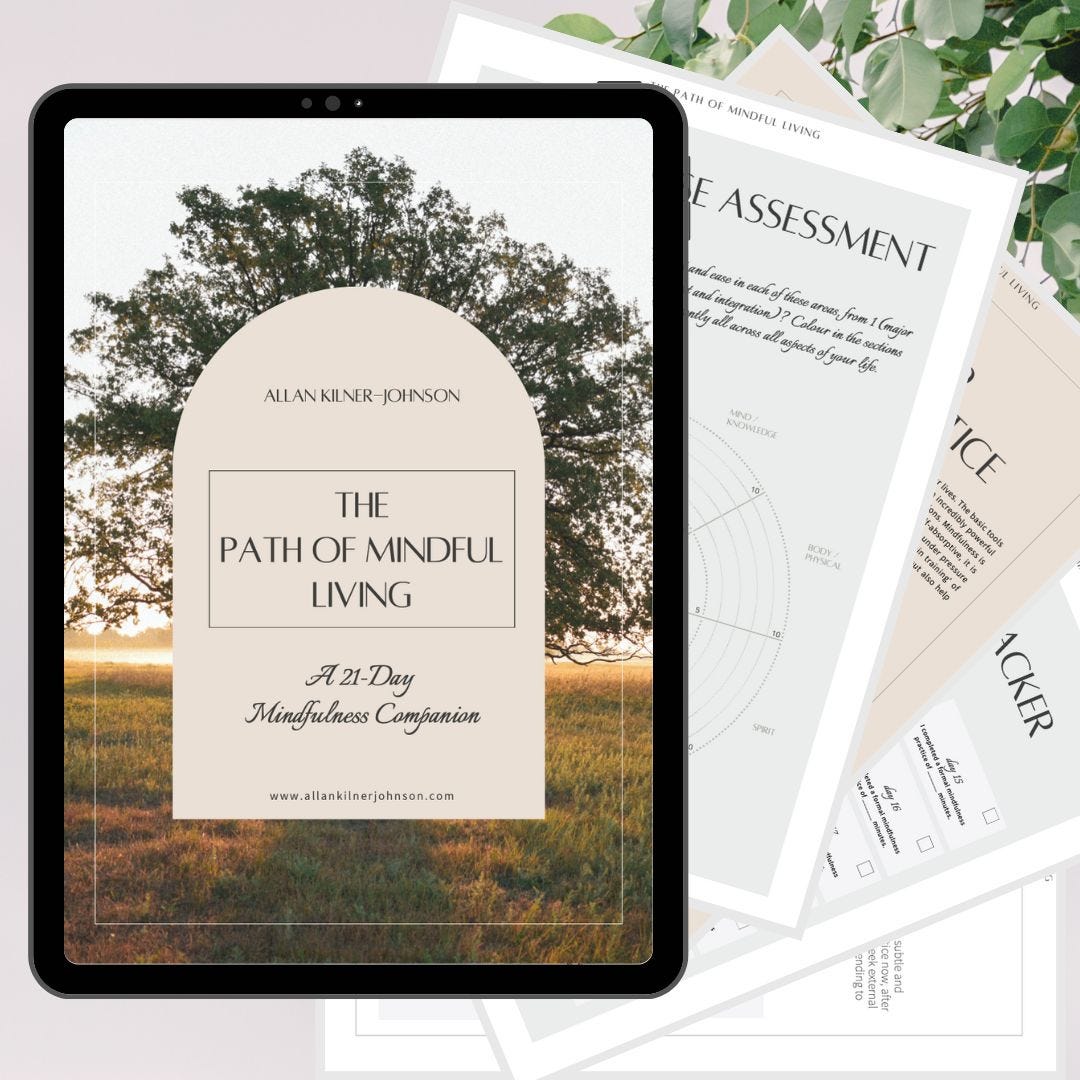
In The Path of Mindful Living: A 21-Day Mindfulness Companion, I lead you through a series of self-guided mindfulness exercises and show you how to bring mindfulness into your daily life. Readers of my blogcan download the workbook and pullout charts for only £6.
Imposter syndrome refers to the belief that a person is not as intelligent or successful as they are perceived to be by others. Imposter syndrome often affects people who are very successful or high achievers in their field of work. People who have high levels of internalised imposter feelings may feel that they have cheated in some way to get where they are in lifeor that they are only considered competent in a job or relationship because of luck or external factors. These feelings can lead to anxiety, an overwhelming desire to please others, and a constant fear of being found out.
The term was first coined by Suzanne Imes and Pauline Clance 50 years ago, but seems to have become more widespread in recent years. A person suffering from imposter syndrome is usually unable to internalise their achievements and feels that they are actually just a ‘fraud’ or ‘imposter’ and do not deserve their success. Although people with imposter syndrome know they are intelligent and capable, they feel they are a fraud and do not deserve their success.
There seems to be an evolutionary explanation for imposter syndrome. To the human mind, a social risk such as shame or embarrassment is perceived in the same way as a physical risk, because for our earliest ancestors, exclusion from the tribe was tantamount to death. So humans have an innate tendency to be alert to social judgements and threats of shame, and, in many ways, the imposter syndrome is a form of self-protection.
However, this does not mean that we have to be guided by mental models developed for the hunter-gatherer age. Imposter syndrome makes us more cautious, less willing to take risks, and more inclined to stay in our comfort zone. This is good to a certain extent, but in many cases imposter syndrome can become a limiting belief that prevents us from doing things that might challenge us and help us grow. It becomes problematic when our self-protective mechanisms become so extreme that they actually put us at risk of failure and self-sabotage.
Instead of resisting the experience of imposter syndrome, we need to learn to accept it. When we experience imposter syndrome, we can mitigate our experience by recognising that it is part of a larger process, that we are vulnerable, and that as human beings we are particularly vulnerable to anxiety. When we suffer from imposter syndrome, we need to expand to a larger reality by accessing the inner strength and resources we can draw from to feel more confident, manage our fears and expand our comfort zone. As human beings, we need to be able to make mistakes and be imperfect because that is the only way we can learn and grow. When we are able to remember our humanity and our ability to bounce back, we can begin to take responsibility for our experiences.
To break the cycle of imposter syndrome, we need to introduce new beliefs and new ways of thinking. It is important to recognise that imposter syndrome is a perception, a story and a belief we tell ourselves about the world. Imposter syndrome is an illusion, a drive triggered by fear and self-doubt, and it is temporary. When we experience imposter syndrome, we need to take a step back, take a breath, reflect and engage with our bodies. We do not have to believe our thoughts and stories unquestioningly. Instead, we can explore the nature of our mind and realise that the moment we question our automatic reactions, we make space for something else. Once we recognise imposter syndrome for what it is, we can begin to let go of our negative relationship to it.
The key to being less vulnerable to imposter syndrome is to become aware of the beliefs and stories we tell ourselves about ourselves and our world. Part of the illusion that imposter syndrome creates is that we downplay all the smaller achievements we make every day. When we suffer from imposter syndrome, we do not allow ourselves to acknowledge our own achievements because we simply do not believe them. We ignore the small acts of courage and strength we perform every day and fail to recognise the extent to which we help others. It is not always the big, obvious achievements that matter most. Very often it is the small, everyday successes that show us that we are constantly growing and developing. We can begin to break the cycle of imposter syndrome by looking for evidence of our competence and intelligence, even in the smallest things. When imposter syndrome sets in, acknowledge the invisible accomplishments that others do not see.
Imposter syndrome is a self-protective mechanism, but we can change it. When we expand to a greater reality of our own achievements, we have the opportunity to replace the imposter story with new stories that empower us. We can use the power of these new stories to support, protect and nurture us. We can encourage ourselves with stories of our courage, resilience, kindness and authenticity. These are the stories that help us cultivate the self-compassion, self-confidence and courage we need to overcome imposter syndrome.
Download your free 21-day course in The Path of Mindfulness. In this life-changing 21-day mindfulness journey, Dr Allan Kilner-Johnson guides you through a series of self-guided mindfulness exercises and shows you how and when to bring mindfulness into your daily life.
For many of us, it can be difficult to accept the parts of ourselves that we do not like. We are often at war with ourselves, constantly fighting with the voices in our head. Maybe we struggle with the way we look, maybe we struggle with the way we act, maybe we struggle with the way we think.
Issues around self-acceptance are complex. They arise from our own experiences, our judgements of ourselves and the way we compare ourselves to other people. If we have been wounded, suffered trauma, or been treated badly, we easily get stuck in the past or judge ourselves harshly. This can lead to an inner critic that is constantly with us, telling us that we are not good enough and not worthy of love.
The way we treat ourselves has a big impact on the way we treat other people. If we constantly blame ourselves, it is unlikely that we will treat other people with compassion and respect. If we compare ourselves to other people, we will see ourselves as losers.
The goal is to be with yourself, accept yourself and be yourself. To be a different kind of person, to have a more positive attitude, to have a more compassionate attitude, to have a more loving relationship with yourself. It’s important to acknowledge that accepting yourself can be difficult if you do not know how. Here are five simple ways to start:
1. Appreciate your uniqueness.
Like each of us, you are unique. You are one of a kind. Your life matters and it impacts the lives of others. This may seem like a very basic idea, but it is an idea that is not always easy to live by. We may know this on an intellectual level, but the message does not always penetrate to the deeper level of our minds. At a deep level we can feel disconnected and isolated. We can feel that we do not belong. When we do not feel like we belong, we find it difficult to feel connected and valued.
How can we accept ourselves? There is no magic formula. However, there are some very useful principles to keep in mind. First of all, we should remember that we are all still developing. This means that we are not perfect. Nor will we ever be. We are all imperfect, and trying to change that is a fruitless endeavour. We do not have to be perfect to accept ourselves. On the contrary, if we accept ourselves, we are more likely to want to improve. If we accept ourselves at the core, we can also accept the fact that we are constantly growing and developing and that our lives have value. When we accept ourselves, we are able to start from a place of appreciation.
2. Stop comparing yourself to others.
It is natural for us to compare ourselves to other people. We compare our appearance, intelligence, personality, skills and abilities. We compare our social status and position in life. We compare our talents, our success and our failures. We compare everything! You are you, and no one is like you. No matter how similar two people are, they are never exactly the same. They have their own thoughts, feelings, habits, behaviours and beliefs. Even if you have a twin, he or she will be different from you, even if those differences are small. And if you are the only person in the world, you still have your own unique personality, thoughts, feelings, habits, behaviours and beliefs.
3. Focus on what you have, not on what you do not have.
The more we focus on what we do not have, the more unhappy, ungrateful, and dissatisfied we become. We believe that happiness and contentment come from outside ourselves. We believe that we must have certain things to be happy and that we must meet certain standards before we can be content or happy. In fact, this is not true. Happiness and contentment come from within. It comes from our thoughts, feelings, and perceptions of the world.
The more we focus on what we do not have, the unhappier we will be. The more we focus on what we do not have, the less able we are to accept ourselves. Our self-esteem is closely linked to our ability to appreciate and accept ourselves. The more we focus on our strengths and our good points, the more we will feel good about ourselves. The more we can accept ourselves as human beings, with all our positive and negative qualities, the more we will be able to love ourselves.
4. Give yourself some breathing space.
One of the biggest challenges in life is to give ourselves the space to be ourselves. We are so busy trying to please others, live up to our responsibilities and achieve everything else in life that we forget to take care of ourselves. We forget to allow ourselves to feel and express our feelings. We may even deny our feelings and refuse to acknowledge that we have feelings at all. If this is the case, you may find it difficult to accept yourself and your feelings.
You may also find it difficult to accept your own needs and desires. We are often very hard on ourselves. If we do not give ourselves enough space, then we do not allow ourselves to be ourselves. We do not allow ourselves to be human. We do not allow ourselves to make mistakes. We do not allow ourselves to have emotions. We do not allow ourselves to fall short of our own expectations. We do not allow ourselves to have feelings of anger, anxiety or fear. We do not allow ourselves to be vulnerable. If we do not allow ourselves to be human, then it can be difficult to accept ourselves in our full humanity.
5. Focus on what is important to you.
Once we have accepted ourselves, we can begin to live a life that is in line with our values and principles. We can begin to focus on what is important to us. We can begin to focus on what we want instead of everything we think we should want. The more we focus on what is important to us, the more we will be able to accept ourselves. We will accept who we are, and we will accept what we have. We will accept our past, and we will accept our present and our future.
The more we accept ourselves, the more we can love ourselves and the more we can love others. When it comes to happiness and success in life, it is important to remember that there is no right and wrong. There is no should or should not and no right or wrong ways to be happy and successful. If we want to be happy and successful, we have to find the right path for us. We have to find a way that is in line with what is important to us and with what makes us feel good. This is the best path we can take. This is the only way that will work for us.
Download your free 21-day course in The Path of Mindfulness. In this life-changing 21-day mindfulness journey, Dr Allan Kilner-Johnson guides you through a series of self-guided mindfulness exercises and shows you how and when to bring mindfulness into your daily life.
The most common concern I hear from students is usually expressed in one of two ways. The first is, “I can’t meditate. I just can’t.” The second is a variation on the first theme, which is the idea that meditation is something you have to do every day for 30 minutes in a quiet room. In the same way that hiking can be as simple as walking up a hill to appreciate the view, or as complicated as a multi-day expedition across the Rockies, meditation can be quiet and passive, or active and challenging. In the broadest sense, meditation is a way to focus your attention, and when you can focus your attention on a single thing, you can develop that ability to an almost superhuman degree. In fact, the goal of meditation is not to make your mind completely empty. The goal is to establish and maintain a relationship between your mind and your heart so that the two work together in tandem. When this happens, you are able to make better decisions and live a more mindful and meaningful life.
When we begin one of the spiritual practices such as meditation or embark on a spiritual path, we may notice a change in our perception of the world around us. It is easy to interpret these changes as a loss of interest in the material world. However, there is a very important difference between materialism and material value. Materialism is attachment to material possessions, whereas material value is the idea that we can derive value from our relationship with the material world. Many people have a very fragile relationship with the material world. We can have a material relationship that is defined by attachment, or we can have a material relationship with a value system that is positive and sustaining. Material value is based on the idea that we can find value in the material world. When we are able to look past the distractions of the material world and focus our attention more on the things that really matter, we are able to find a deeper relationship with the material world that is full of supporting value.
When it comes to the spiritual path, we are often given the idea that we must detach ourselves from the world around us. The problem with this idea is that it creates a conflict between the material world and our spiritual practice. When we begin to develop a spiritual practice, we often become aware of the limitations of our body or the limitations of the material world. This conflict often leads to a kind of spiritual burn-out, where the student stops developing their inner wisdom and instead starts developing their inner intolerance toward the world around them. In meditation we are not encouraged to disconnect from the world around us. Instead, we are encouraged to connect with our inner guidance and find a deeper relationship with the universe. We can love our family, enjoy our hobbies and interests, and even enjoy being busy or working hard. When we open ourselves to our inner guidance and a deeper truth, we are able to find a deeper relationship with the material world. By being in touch with our inner guidance, we can find a deeper relationship with the material world. This deeper relationship is full of supportive values, and these values can help us to live a more fulfilling, meaningful, and purposeful life.
The most valuable thing we possess is time. The more time we can spend in a conscious state, the more conscious time we can enjoy. The more conscious time we can enjoy, the more value we can create in our lives. When we are in a conscious state, we are able to make conscious choices, understand the choices we make and live a more conscious life. When we are not in a conscious state, we are not able to make conscious choices, understand the choices we make and live a more conscious life.
We have so much to gain by developing a stronger relationship with our inner guidance and listening to our inner wisdom. We can create a more fulfilling, meaningful, and purposeful life for ourselves. We can overcome our limitations and find the power to change. We can find peace, happiness, and fulfilment when we let our inner wisdom guide us. But we can also lose so much if we neglect our inner wisdom. We can lose our peace, happiness, and fulfilment. We can lose the ability to live our lives in alignment with the truth that we are. We can lose our dreams, our purpose, and our sense of purpose. We can lose ourselves in the world and lose the opportunity to find the deeper meaning and significance we are searching for. The more we are in touch with our inner guidance, the more we understand the impact of our thoughts and feelings on our lives. The more we understand the impact of our thoughts and emotions on our lives, the more we are able to change the things that make us unhappy, stressed or unfulfilled. The more we are able to change the things that make us feel unhappy, stressed and unfulfilled, the happier, more peaceful and fulfilled we are.
Time is a precious commodity. We need to make a conscious decision to be in touch with our inner guidance. This is the most powerful choice we can make. When we are in touch with our inner guidance, we are able to create a more conscious life, a more fulfilling life and a life that is in harmony with the truth that we are.
Download your free 21-day course in The Path of Mindfulness. In this life-changing 21-day mindfulness journey, Dr Allan Kilner-Johnson guides you through a series of self-guided mindfulness exercises and shows you how and when to bring mindfulness into your daily life.