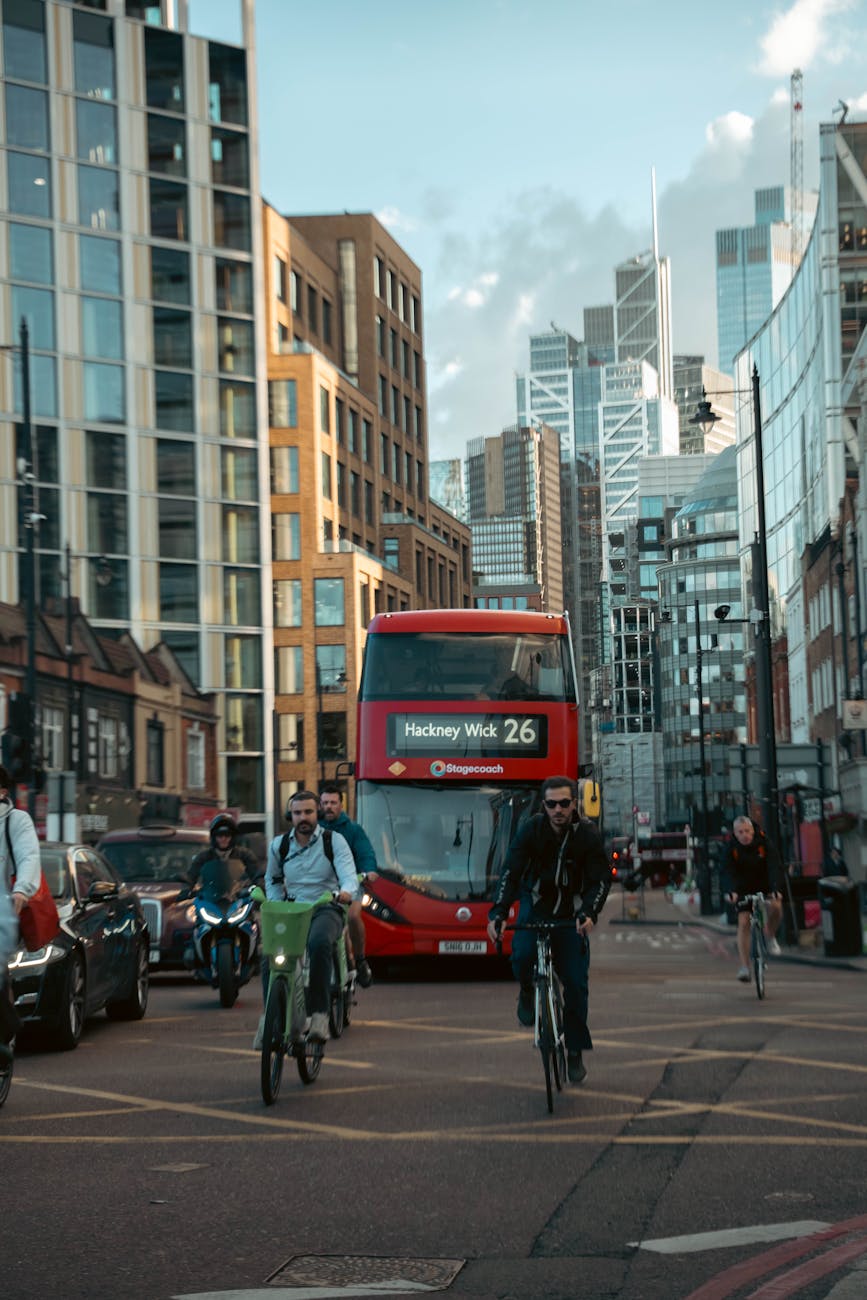
Living in a city like London trains the nervous system in a particular way. Even when we love urban life—its density, its cultural richness, its chance encounters—it asks us to metabolise a constant low-level stimulation: noise, movement, decision-making, comparison.
Over the past few weeks, I’ve been thinking about this more deliberately. I’ve recently moved into a flat in a beautiful 1920s building. It’s filled with heaps of character, and I know that I’ll be very happy here, but it’s also a significant change.I’ve spent the past decade living in new-build flats, the kind with sleek appliances, underfloor heating, and a comforting sameness to all the others. But my new flat, even before my furniture was moved in and the boxes filled every spare corner, was noticeably maximalist: crown moulding, dado rails, radiators, and, perhaps most notably, the constant sounds of neighbours on all sides.
This move has coincided with a renewed reflection on minimalism as a practice of attention, that is less about owning fewer objects (though that can help), and more about creating pockets of stillness within environments that are, by default, overstimulating.
Minimalism has been thoroughly Instagrammed. White walls, pale wood, a single ceramic cup placed just so. There is nothing wrong with this, but it risks missing the deeper point. And my old flat was certainly minimalist in the aesthetic sense.
Writers like Cal Newport in Digital Minimalism and Jenny Odell in How to Do Nothing have both argued, in different ways, that minimalism is not about subtraction for its own sake, but about protecting what matters in a culture designed to fragment attention. Similarly, the Japanese concept of ma—often translated as ‘negative space’—suggests that meaning arises not from what is present alone, but from the intervals of emptiness around it that give it shape.
Big cities are where this discernment is most tested. Urban life rewards responsiveness: quick replies, constant availability, social agility. For many creatives and sensitive thinkers, this can become exhausting. We learn to override subtle signals—fatigue, saturation, the need for withdrawal—because the environment rarely validates them.
Over the years—through my own practice, teaching, and coaching—I’ve noticed that these pockets of stillness tend to form around four dimensions:
- Spatial stillness: a chair by a window, a desk cleared of visual noise, a room that signals ‘nothing is required of you here.’
- Temporal stillness: protected times in the week that are not optimised, monetised, or rushed.
- Relational stillness: fewer, deeper conversations; rhythms of contact that don’t require constant performance.
- Inner stillness: practices that allow attention to settle without forcing it: meditation, journalling, slow reading.
One theme that runs through my recent work is the idea that many creatives are finely tuned. They notice more. They process more. They feel more. Without the right structures, this depth becomes a liability. This is why I resist advice that tells people simply to “push through” or “build resilience.” Resilience matters, but so do the structures of support and nurturance around you.
A few practical reflections that may be useful:
- Reduce friction at points of transition. The moments between activities are where overstimulation accumulates. Even five minutes of pause between tasks can change the tone of a day.
- Let one room be functionally “unproductive.” A space that is not for work, storage, or optimisation becomes a psychological refuge.
- Limit inputs before increasing outputs. Reading less, scrolling less, listening less can paradoxically make creative work richer.
- Choose rhythms over goals. A daily walk, a weekly reflective session, a regular co-working rhythm—these stabilise attention over time.
None of this requires perfection. It requires kindness toward your own nervous system.
If this resonates, there are several ways to explore these ideas in a supported, communal way over the coming weeks.
- Integrative Meditation
12 January | 7.30–8.30 PM GMT | £4
A calm, grounded session designed to help attention settle without force.
👉 Register here: https://www.meetup.com/the-art-of-creative-practice/events/311944273/ - Creative Flow Co-Working Session: Anchoring Into Your Why
19 January | 10 AM–12 PM GMT | FREE
A gentle structure for focused work, reflection, and shared momentum.
👉 Register here: https://www.meetup.com/the-art-of-creative-practice/events/312077760/ - Highly Sensitive Creatives: Energy, Boundaries, and Creative Rhythm
27 January | 7.30–9.00 PM GMT | £12
A deeper exploration of how sensitivity operates, and how to design life around it rather than against it.
👉 Register here: https://www.meetup.com/the-art-of-creative-practice/events/312712764/
For those wanting more personalised support, I also offer 1-1 coaching, focused on helping creatives and thinkers build sustainable structures for meaningful work and life. You’re welcome to book a free 15-minute clarity call here: https://allanjohnson.co.uk/coaching/
Pockets of stillness don’t remove us from life; they allow us to participate more fully, with less quiet self-erasure. In a culture that rewards constant motion, stillness becomes a form of discernment. And discernment, I increasingly believe, is one of the most important creative capacities we have.