
The Many Benefits of Meditation

When you meditate, you learn to become more aware of your thoughts, feelings, and behaviours, observing them more clearly and becoming more aware of the further thoughts, feelings, and behaviours that may arise in you as a result. There are many different meditation techniques. Some techniques help you to observe your thoughts or emotions, others help you to better understand your reactions, and still others help you to become aware of the power of the mind and the reactions of the mind. Some meditation techniques simply help you to relax and become aware of what is going on inside you. With all these techniques the same thing happens: you learn to observe what is happening in the present moment and what is going on inside you, and you can learn to accept yourself and your reactions as they arise in you. When we are aware of our automatic reactions, we have the opportunity to create new ways of being and new ways of reacting that bring more compassion and love into our lives.

You have probably heard that meditation can make you more relaxed and bring about a sense of peace and well-being within you, that it helps you sleep better, or that it makes you more productive. Research has shown that meditation can help reduce stress and improve your concentration, focus and memory, and that the practise of meditation can help you become more aware of your thoughts, feelings and reactions and how these thoughts, feelings and reactions can affect your physical body. If you have suffered from depression or are currently depressed, meditation can help you develop new ways of being and perceiving the world around you. If you struggle with addictions, meditation can help you to live in the present moment and learn to let go of old patterns and find new ways of being. Meditation can help you become more aware of your moods and learn to respond to them more positively. For example, if you struggle with feelings of guilt and shame, meditation can help you become more aware of your thoughts and feelings and learn to have compassion for yourself and develop a better understanding of the moods you experience and how those moods affect your actions. (If you are interested, I will be releasing an online course this summer that covers all the details of the scientific research on mindfulness and meditation).

Meditation is about learning to control and focus your attention. When you meditate, you have the opportunity to become more aware of and observe your thoughts, feelings and behaviours. You can learn to accept them when they arise and be with them by observing the thoughts and feelings and accepting them as they are. You can also learn to be more compassionate and understanding, and you can learn to be kinder to yourself. Through meditation you learn to live moment to moment, you learn to observe your thoughts, feelings, and behaviours, and you learn to understand that while these thoughts, feelings, and behaviours may have influenced the past, they no longer have the power to influence the present or the future. Past perceptions and destructive ways of thinking and behaving, even those we have developed over many years, can be changed.

Meditation requires practise. It takes time to learn the techniques and you will often need to return to meditation to practise and gain the skills you need to become more aware of your thoughts, feelings and behaviours. You may feel that you are only aiming for one change through meditation, but you will find that you are making several changes through meditation. For example, you may learn to do more for the people you love, you may learn to act more positively, or you may become more aware of how your body is affected by your thoughts and feelings. You can also learn to handle certain situations better; you can reduce some of the negative effects of your thoughts and emotions and you can understand how powerful the mind is. Through meditation we can learn to let go of old habits and become more aware of our thoughts, feelings and behaviours and the way these thoughts, feelings and behaviours can affect our physical body and our emotional, mental, and spiritual well-being. We can learn to let go of the way we have been reacting to these thoughts and feelings. We can learn to let go of the way we have judged ourselves and others and learn to bring more compassion and more love into our lives.

How to Create Your Perfect Meditation Space

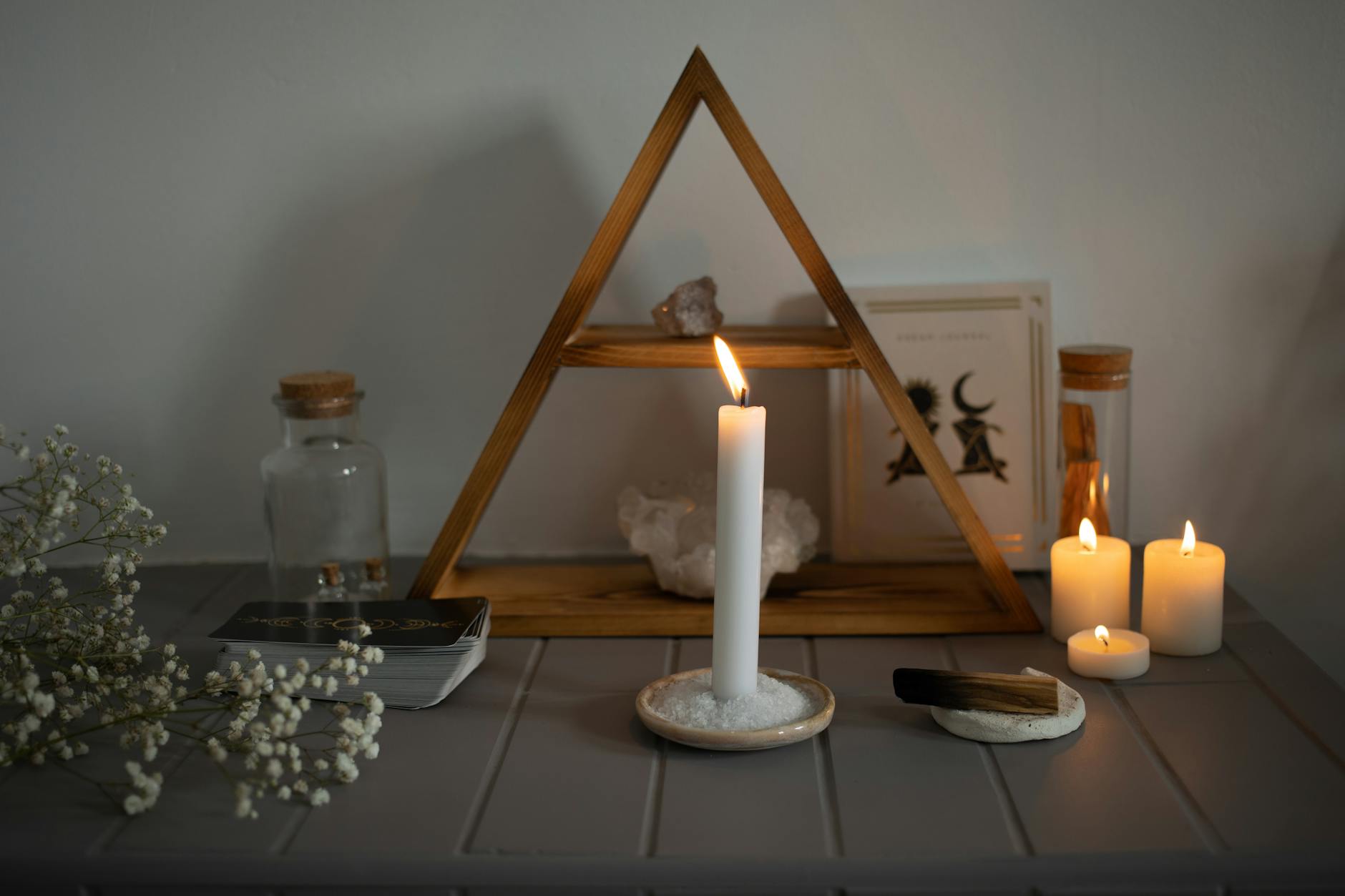
Meditation spaces are not always rooms in the true sense of the word; often they are just quiet corners in your house or flat where you can retreat to reflect, relax, and meditate. Meditation spaces are places where you can unwind at the end of a stressful day and collect your thoughts the beginning of a busy week. This can be in your living room or bedroom, in your garden, or on the beach. In the midst of modern life, the ability to create space for meditation can be the key to positive change. When we are able to create a space for ourselves – a quiet space, a space to gather our thoughts, a space to relax – we become more balanced, more at peace, and better able to stay in the present moment.

It is important to slow down and take time to collect your thoughts and relax your mind.
Finding and creating a quiet space for meditation is an essential part of meditation and key to a positive lifestyle. Make sure you have enough space around you. You do not want to feel too crowded. The space should be conducive to meditation and provide you with the conditions that supportive for your complete relaxation.

No matter how small your home is, it is possible to set up a meditation space where you can find peace and quiet. If you have a garden, a good place to meditate would be on the patio or in the garden. If you live in a flat, studio, or small house, a quiet corner or even the bathroom can work perfectly. Some people prefer a meditation space in the kitchen or in their bedroom. The most important thing is to find a space that suits you and your need for a peaceful meditation experience and for a quiet and relaxed environment.

It is also important to look for a space that is free from clutter such as papers, books, or other items that might distract you. The purpose of meditation is to develop calmness and relaxation, which allows us to be mindful of our thoughts, emotions and physical sensations, so clear the space around you and make it as clutter-free as possible. Make sure your meditation space is a comfortable temperature. Your body temperature drops when you meditate and you need to avoid drafts as they can make your meditation unpleasant. When you meditate, find a light environment that suits your needs. If you find the light too bright, try candlelight.

Your meditation room does not need much in the way of furniture. You can use a small cushion or chair to sit on while you meditate. If you sit on a chair, make sure it is comfortable and you can easily sit upright. If you choose to meditate on the floor, make sure you have appropriate padding to support you. One of the main reasons people choose meditation cushions is because they allow you to sit upright and keep your back straight, which makes meditation easier. There are conventional meditation cushions and stools, but all you really need is a throw pillow that raises your hips above your knees for a more comfortable sitting posture. The cushion should be comfortable and supportive, not too soft to give you the support you need, but not too firm or hard either. There are many people who prefer to meditate lying on the floor, bed or couch and they find this position much more comfortable and relaxing. Experiment with different positions and find out which one works best for you.

You do not need anything to meditate, but to make your meditation space your own, you might want to invest in candles or incense, or perhaps a potted plant or some flowers. Some people like to use incense because it creates the right atmosphere and helps them relax. Whatever you choose, make sure it suits you and does not just look nice. You can make your space as simple as you like, but if you set it up to suit you and your needs, you’ll be more likely to use it.

Whether you prefer to meditate in the early morning or in the middle of the night, you need to set up your meditation space so that you can really feel comfortable there. If you meditate in the evening or at night, prepare your body by spending some time in the shower or bath This will help you relax and be ready for the meditation experience. It also helps you to relieve the stress of the day so that you can enter your meditation room with a calm and relaxed state of mind. Before you sit down, go slowly and pause a few times to allow your body and mind to adjust to the new environment. This will help you to experience the moment with a minimum of inner turmoil. It will help you prepare your mind, bringing your body and mind into harmony.


Download your free 21-day course in The Path of Mindfulness. In this life-changing 21-day mindfulness journey, Dr Allan Kilner-Johnson guides you through a series of self-guided mindfulness exercises and shows you how and when to bring mindfulness into your daily life. 

Calming Stress Through Meditation

Photo by Kat Smith on Pexels.com

Stress is endemic in our modern world. It determines the way we work and live, the way we eat and sleep, the way we walk and sit, the way we breathe and rush from one activity to the next. Stress has become such a part of our modern existence that it almost feels natural. But when people are stressed, their bodies break down, their joints and muscles tighten, their heartbeat speeds up, and their blood pressure rises. While some forms of short-term stress can motivate and encourage us, long-term chronic stress is not good for our bodies or our minds.

The fight or flight response is a natural reaction that occurs when the body perceives a threat to its survival, a threat to its physical well-being or to its psyche. The body responds to the perceived threat, often by increasing heart rate and blood flow. This reaction is unconscious and occurs without the body being aware of what is happening. The fight or flight response is a reaction pattern that has been passed down through countless generations and is essential for survival. Our genetic code is the way it is because it helped our ancestors survive.

But the fight or flight response is only really useful when it is working properly. When the body is too stressed or overreacts, it can lead to physical symptoms such as headaches, palpitations and insomnia. In addition, stress can lead to anxiety and depression. To reduce stress and anxiety, people can adopt practises that help reduce perceived threat, such as meditation and yoga. These practises help prevent the fight or flight response, which can help improve mental health.

Mindfulness meditation and yoga are great ways to control the fight or flight response and can actually improve the body’s natural ability to deal with stress and anxiety. Mindfulness meditation can be a great way to address the fight or flight response and thus gain control over your emotions. In mindfulness meditation, you focus on your breath to calm yourself while being aware of your emotions. Many people find that this is a good way to recognise the physical symptoms of their emotions, such as tension or stress.

In the General Adaptation Syndrome model developed by Hans Selye, there are three phases that people go through when they are stressed. The first phase is the alarm response, in which the body perceives a threat to its survival. Blood chemistry changes, and heart rate and blood pressure increase. The second phase is the acute stress response, and the third phase is the exhaustion phase. This is the moment when the body begins to break down due to the stress response and is no longer able to withstand further stress.

Meditation is a practise of awareness, and the ability to be aware of the physical changes that occur when a person is stressed and begin to lower a person’s stress levels. Meditation helps to relax the body, calm the mind, and create balance within the body. By calming the mind, the things that are seen as threats (that is, the things that cause stress) become easier to manage. But reducing stress is not the end of the exercise. Since stress can make one vulnerable to illness, reducing stress can help the person stay healthy.

Daily life is a constant flow of information that washes over us and stops only when we consciously want it to. The mind detaches from the world around it, withdrawing from the outside world and withdrawing from itself. Our thoughts and feelings become more abstract, while our experiences become less concrete. The self is cut off from the ‘everyday’ of the outside world and our experiences become detached from the self. The next thing we know, we feel completely overwhelmed by stress and cannot see a way out. One of the most important things we can do to find a way out of the stress and anxiety trap is to become more aware of our daily experiences. Mindfulness meditation is a way to understand the mind and our own experiences. By learning to be more mindful and aware of the thoughts and feelings that arise within us, we can find a way out of the stress and anxiety cycle.


Download your free 21-day course in The Path of Mindfulness. In this life-changing 21-day mindfulness journey, Dr Allan Kilner-Johnson guides you through a series of self-guided mindfulness exercises and shows you how and when to bring mindfulness into your daily life. 

Finding the Voice of the Self: Psychosynthesis and Intuition

One of the central tools of psychosynthesis is the exploration and integration of a person’s subpersonalities. To ensure its survival, the ego has developed a complex network of subpersonalities that enables it to fulfil its specific needs. The subpersonalities are the functions of our ego that are specific to a particular individual and serve to maintain our sense of self and the identity of the ego. They are the masks and protective disguises that the ego uses to create a sense of identity. As an individual progresses in psychosynthesis, they are able to integrate their various subpersonalities so that they are no longer divided into separate and competing parts, but form a unified functioning system.

But who is the conductor of this orchestra of subpersonalities within each of us? How are we able to connect with the sense of Self that exists at our true core? This inner knowing is what we call intuition. It takes place in stillness and in the presence of inspiration that comes from another level, often through asking and waiting. The ability to feel this oneness with the Self develops through constant exploration of one’s inner world and through a process of introspection that enables one to recognise the various masks and disguises of the subpersonalities, the various roles and self-images that the ego plays. To bridge this gap, mind and heart must be ready and there must be at least a beginning of trust in one’s own ability to “know”. We can develop intuition and a sense of the presence of the Self by simply sitting quietly and observing what is present in the mind and heart.

Intuition does not have to be taught, it has to be allowed. It is an ability that has always been dormant within us, waiting for us to turn towards it, just as a flower turns towards the sun. To develop intuition, it is helpful to be mindful, to sit still and observe what is there. We can begin with a small willingness to “know” more of the truth, light and wisdom when it comes to our own lives and the lives of those we love. We can begin to welcome in the removal of obstacles that cloud our understanding or affect our perception of truth. We can begin to trust ourselves and the truth more as we notice our thoughts and feelings, as we pay attention to what is happening in the world and to those around us. We can begin to observe our everyday activities and recognise the masks and disguises that our ego plays up.

The desire to get in touch with a greater clarity opens the doors to inner knowing, especially if this desire is accompanied by a willingness to receive and pay attention to what we hear or see. There are people who “know” things but do not believe what their inner senses tell them. They judge and reject what they feel or believe. This decision closes the doors to higher perception because it gives more power to fear: the fear of being wrong, the fear of being different, the fear of having to change one’s life because of what one hears. To open the doors to intuition and keep them open, we must be willing to hear and know, and we must be willing to trust.

Trust is not an easy thing, because it often requires a re-evaluation of how we have lived our lives. It may be that life has forced us to become more practical, more focused on the daily tasks of living and caring for others. Or it may be that we have made mistakes in the past when it came to who or what we trust. It may also be that we have forgotten that we have the capacity to feel more, sense more or be more open to life on all levels. Trust does not only involve the willingness to receive something from another level of our being. It also involves the willingness to believe in our own ability to flow with life and to change what needs to be changed on the outside or on the inside to do so.

The more we stay true to ourselves, the more our lives begin to change, the more we open up to ourselves and the more we open up to truth. The more we stay true to ourselves, the more our lives begin to change, the more we open up to ourselves and the more we open up to the truth.

Especially today, when we as a collective humanity are faced with so many major problems and so many actions are being taken that can have profound effects on all of humanity, it is crucial that we reclaim our capacity to know and trust, from which intuition springs. Otherwise we find ourselves in the precarious position of not knowing what or who to believe, not knowing what direction to take to improve the world and alleviate the immense suffering that currently exists. Without access to the deeper intuitive sense that is a part of us, we live at the mercy of public opinion rather than in the presence of truth. We have not forgotten the power of intuition, the power of what we feel to be true. We have only forgotten the depth of our own intuition. We have only forgotten that we have the capacity to feel more, to sense more or to be more open to life on all levels.

It is time to allow our inner senses to awaken and become the beings that we are. The times we live in demand this of us, and for each of us, the heart demands this of us so that we can begin to solve the problems and challenges that are immediately before us. We do not have to go to remote places to develop this ability further. We can begin to develop intuition in our daily lives by paying attention to the inner guidance that can guide us through our daily actions and decisions. We can begin to trust our intuition, our inner knowing, and if we are willing to open ourselves to the truth, intuition can be a powerful guide to making the right choices. The world is full of signs that tell us what to do. Signs that tell us to be healthy, to care for the environment, to be in harmony with ourselves, with society and with nature. We can begin to trust the signs that are there, to listen to what we believe to be true, to pay attention to what we feel in the body and to remember that there is much we do not need to understand or know in order to make good choices for ourselves and our loved ones.

Recognising the gifts of intuition may not happen immediately, but it will happen. The more we begin to open our hearts, the more we can listen to the voice of the heart and the more we can be guided by it. We can make the decision at any time to listen to the heart and return to the Self. With this simple action, we break through the ego’s defences and act with and for the soul.


Download your free 21-day course in The Path of Mindfulness. In this life-changing 21-day mindfulness journey, Dr Allan Kilner-Johnson guides you through a series of self-guided mindfulness exercises and shows you how and when to bring mindfulness into your daily life. 

Creativity and the Mindful Mindset

When I moved into my new house over the summer, deep at the bottom of a box that hadn’t been unpacked during my two previous moves was my old, beloved copy of Julia Cameron’s The Artist’s Way.  If you haven’t read The Artist’s Way yet, you simply must.  It is a beautiful, suggestive book that offers some incredibly valuable advice and exercises for reclaiming your inner artist by recognising and then disidentifying from your inner critic.  

The book’s sudden reappearance during our move seemed consequential in every way.  It was almost exactly twenty years since I first began reading The Artist’s Way, and the rediscovery of my old torn copy of the book offered a very tangible reminder that mindfulness and other contemplative practices aren’t meant to dampen creative expression, but, rather, to open up and allow more direct access to creative potential.   

As The Artist’s Way makes clear, everyone has the ability to be creative and, once you learn how to unleash your inner creativity, you’ll be able to tap into it.  One of the most useful tools that I have found to connect to my own creativity is regular formal seated meditation and equally regular informal mindful practices throughout the day.  By developing a daily mindfulness practice we can connect more fully and more authentically with own inner artist and by first turning inward we are then able to turn outwards again to manifest our creative ideas, plans, and visions.

There are several things that you can to you in order to further develop the relationship between your mindful practice and your creative output:

  • Begin a journal—if you haven’t done so already, begin here! 
  • Use a reflective meditation to sit with the notion of creativity and what that word and concept means to you.
  • Use drawing, doodling, sculpting, or any art practice as a form of active mediation by connecting your breath to each movement 
  • Notice the details.
  • Draw upon a different medium to move through creative blocks.
  • As you dance to music that inspires you, pay particular attention to each part of your body working in unison.
  • Choose to avoid energy drains like social media, apps, and tv programmes which don’t inspire you. 
  • Explore.
  • Don’t rush outputs: give yourself enough time on projects to allow them to fully emerge.
  • Show gratitude for the simple forms of inspiration like a sunset, a flower, or a piece of music. 
  • Choose to avoid judging others.
  • Use your meditation practice to develop the relaxation that will enable your best creative thinking.
  • Trust the small steps to build into something bigger. 
  • Imagine a problem that you face from a different perspective.  How do you see the problem differently?
  • Stay curious and ask ‘what if?’