Morning Rituals for a More Grounded Day

The early bird 40% off offer for The Artist’s Way Circle: A 12-Week Creative Journey closes at midnight tonight. In this powerful small-group experience, we will work through Julia Cameron’s classic book together, sharing insights, deepening our practice, and building a creative community that makes the journey feel less solitary and more alive.


For me, mornings have become less about rushing into productivity and more about creating a small pocket of time that feels set apart, a threshold into the day. This is, after all, what Julia Cameron invites us to do in The Artist’s Way: show up to the blank page before we show up to anyone else.

A ritual isn’t a routine; it is a way of marking time as meaningful. When I light a candle before writing, or make my coffee slowly in my V60 instead of rushing, I am reminding myself that this time is not just another item to cross off a list, it is where my life begins for the day. Mircea Eliade, in The Sacred and the Profane, writes about ritual as a way of stepping into ‘sacred time’, a space where the ordinary becomes charged with significance. For me, this might mean lighting a special candle that reminds me of that changing of the seasons going on at the moment, or pausing for a moment on the balcony to notice the light on the plants before I open my laptop. These small gestures are a way of crossing the threshold deliberately, rather than being dragged into the day half-awake.

Groundedness begins in the body. No amount of list-making and project management will make a difference if I wake up already scattered and tense. The first thing I try to do now is move. I have been trying to get into running again, which I alternate with indoor rowing (my preferred cardio of choice). And after years of not making progress or any form of commitment to resistance machines at the gym, I’ve taken up strength training with two simple dumbbells, which has been an absolutely fantastic development in my fitness journey–the trainers on FIIT have revolutionised my entire outlook on dumbbells. This comes alongside my yoga practice, which has been with me for nearly 25 years. The point is less about physical fitness (although, as I get older, I am becoming increasingly aware of the need to build lasting wellness) and more about arriving in my body. As Bessel van der Kolk reminds us in The Body Keeps the Score, our sense of safety and clarity begins somatically, not intellectually. If I can bring my nervous system into a calmer, more coherent state first thing, the rest of the day feels less like a battle.

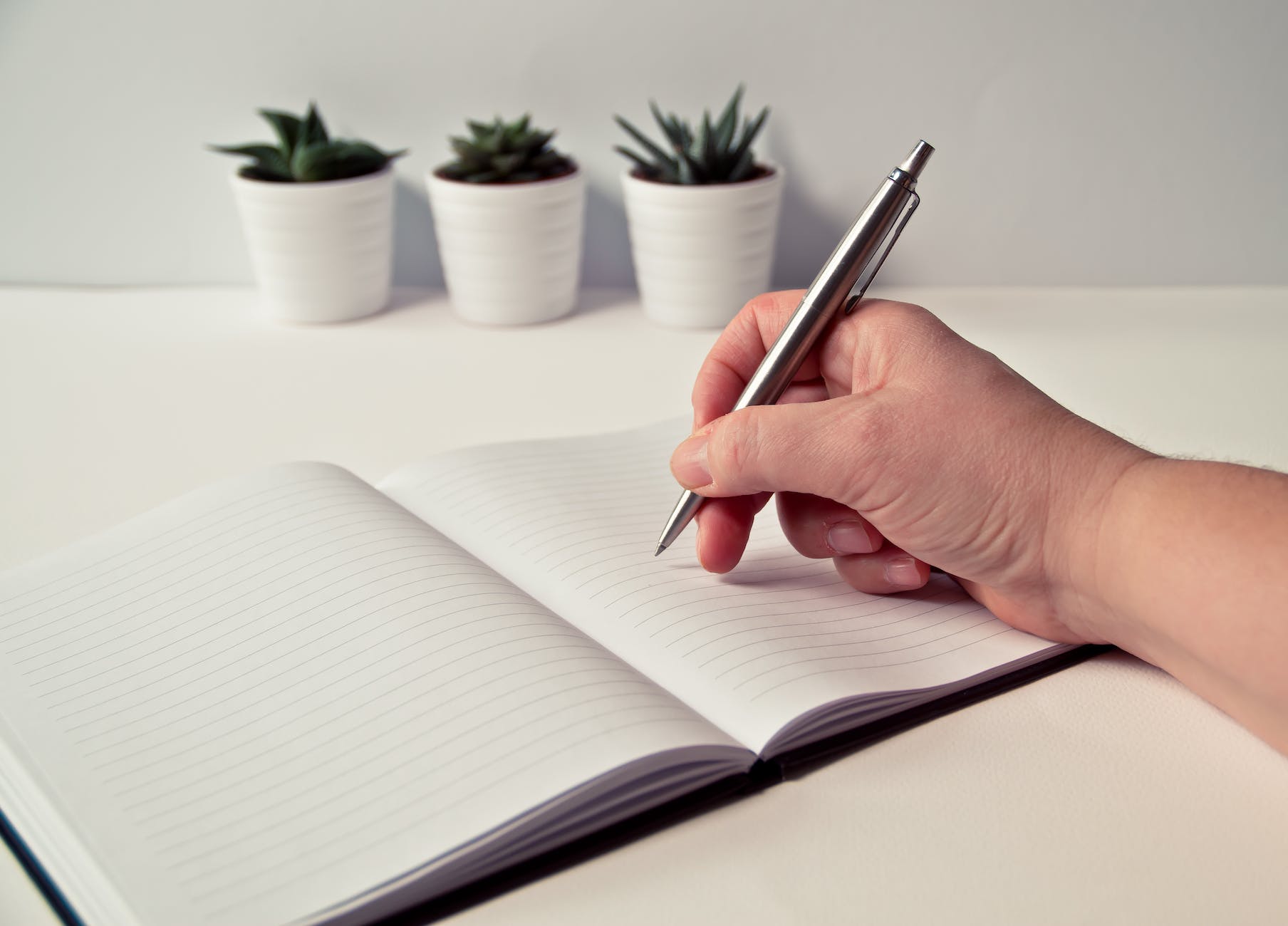
Creativity thrives in spaciousness, not in haste. This is where Morning Pages come in—Julia Cameron’s influential practice of writing three longhand pages first thing in the morning. They are not intended to be polished or even interesting; they are more like clearing mental static, a way to compost the thoughts that would otherwise clutter the mind all day. I find that pairing them with something tactile—a favourite notebook, a good pen—enhances the ritual. (In The Artist’s Way Circle, we’ll not only practice Morning Pages but also discuss what they unlock: the surprising insights that surface when we permit ourselves to be imperfectly present.)

Not every ritual has to be still. A ten-minute stroll before sitting down to write can be as clarifying as a meditation cushion. The Go Jauntly app has been such a fantastic presence for me. Thich Nhat Hanh speaks beautifully about walking meditation as a way to arrive in the present moment, and I find that even putting on a playlist and tidying the kitchen can create that same bridging effect between sleep and wakefulness. The point is to let the mind settle before reaching for the phone, before taking on the noise of the world.

During my sabbatical, I’ve been focusing on testing and adjusting my daily habits so that when I return to a busy routine of teaching and administration in the new year, I will have a clear understanding of what best supports my growth and development. Protecting the first hour of the day is, I’ve come to see, an act of self-respect. Seneca reminds us that we are often more careful with money than with time, though time is the one thing we can never get back. I’ve started following a ‘no-scroll rule’ in the first hour of the day, and replaced it with going straight to the gym.

The key is not to design the perfect morning but to make a start, consistently. There have been mornings where the ritual falls apart—when I oversleep, or skip the gym entirely—but I’m learning that a ritual that only works on perfect days isn’t really a ritual at all. The point is to keep coming back. James Clear’s Atomic Habits puts it simply: habits compound over time. A short, wobbly practice is better than a grand plan you never do.

This time of year feels like an invitation to recommit. I’ve always felt that September carries more of a ‘new year’ energy than January—it must be the academic calendar still in my bones. This month, I’m choosing to double down on the things that anchor me: lighting a candle before email, a few minutes of breathing exercises, and breakfast that feels nourishing rather than hasty. I’d love for you to consider what this season might invite for you.

Ultimately, a grounded morning is an act of creative resistance. In a culture that would have us wake up and immediately start scrolling, choosing ritual is choosing presence. So tonight, ask yourself: how do you want your mornings to feel for the next twelve weeks? And if you are ready to experiment—with ritual, with creativity, with spaciousness—I’d love for you to join us in The Artist’s Way Circle. The early-bird 40% discount closes at midnight tonight, and there are just a few spots left. Your mornings—and your creative life—might look completely different on the other side.

More to Explore

Journaling as a Thinking Process

I’m the kind of person who really loves the -ember months, you know: September, October, November, December, spooky season, PSLs, sweater weather, cosy throws, piles of books and cups of tea. Even as an adult, I still treat myself to shopping for back-to-school supplies, my set of new pens, a beautiful notebook, a pad of notecards. And as is so often the case this time of year, I’ve been thinking a lot about writing lately—not the big writing projects, not my next book that has been hovering in draft form for too long, but the more intimate, private act of journaling. The kind of writing that doesn’t begin with an audience in mind, but with a simple intention: to notice, to clarify, to think. Writing to get cosy with.

This practice has been quietly foundational for me. Some days it is a place to record the traces of a dream before the day sweeps it away. Other days, it’s a notebook page where I sketch out the shape of an idea, a plan, a dream that feels still just beyond reach. And sometimes, if I’m honest, it’s little more than the banal recounting of my to-do list, things I need to buy, or minor annoyances still weighing on me. But even in those moments, journaling does something important. It reminds me that thought is not just an invisible current in the mind; it is something that can be externalised, shaped, and returned to.

The philosopher Hannah Arendt wrote that thinking itself is a kind of dialogue, an inner conversation between me and myself. Journaling, in that sense, is a way of giving that dialogue a more durable form. It’s a way of ensuring that fleeting insights don’t evaporate, but have the chance to develop into something more sustained.

There’s a temptation to imagine journals only as records of the past, those childhood diaries with locks and keys, filled with secrets that we might cringe to reread, or those teenage of angst and whingeing. I have many examples of both. But even in those examples, a journal is still always a tool for invention. The monks who kept commonplace books weren’t merely keeping records; they were building repertoires of thought that could be recombined in new and surprising ways.

When I journal, I notice that same shift. I might begin with the day’s details—what I’m reading, what I need to do next—but somewhere in the act of writing, connections spark. A line from Woolf collides with something I overheard on the bus. A fragment of a lecture I once gave resurfaces beside a description of the changing light on my balcony garden (sadly now largely barren as I prepare to leave this flat after several years). The page becomes less about recording and more about thinking with.

This is one of the reasons I encourage students and coaching clients alike to develop their own journaling practices. It’s not about producing beautiful prose; it’s about cultivating a space where the mind can stretch into unexpected directions.

At the moment, my own journaling practice feels especially necessary. September has always been a transitional month for me: the academic year begins again, new projects gather momentum, and the end of summer invites reflection on what has—or hasn’t—shifted over the past few months.

Recently, I’ve been writing in the mornings with coffee that I’ve started brewing with increasing precision with a V60 and scale, sometimes before the world is properly awake. I’ve found that this time of year asks me to slow down, even when everything around me is speeding up. My journal becomes a place where I can give shape to that paradox.

In these quiet pages, I notice the themes that recur: what it means to balance leadership and teaching; how to weave contemplative practices into daily life; where writing itself is pulling me next. These aren’t polished arguments—they’re more like fragments waiting to be assembled. But without journaling, they might never find their way into language at all.

Several thinkers have shaped the way I understand journaling as a thinking practice. Julia Cameron, of course, is central: her practice of ‘morning pages’ in The Artist’s Way remains one of the most accessible and transformative ways to encounter journaling. She invites us to write three pages, longhand, every morning, without editing or censoring. The point is not literary craft but mental hygiene, clearing away the clutter that keeps us from more original insights.

Another companion is John Dewey, whose philosophy of education placed such emphasis on reflection. Dewey argued that genuine learning happens when experience is turned over in the mind, tested, connected. Journaling is, in many ways, the simplest technology for making that reflection visible.

And then there is Joan Didion, who once said, ‘I write entirely to find out what I’m thinking.’ That sentence could be the motto both for journaling as a practice, and for my entire life.

One of the questions people often ask me is: What happens to all this writing? Do you go back and read it? Do you publish it?

The truth is that most of it remains private, and that’s part of the point. Of course, there are occasional fragments that spark something bigger, and find their way into a draft or an article. But there is something liberating about knowing the page doesn’t demand performance. More often, I find that themes crystallised in my journals resurface later as a sort of inspired spark in a lecture, a coaching session, or a blog post. The journal becomes a kind of compost heap for thought, where scraps and off-cuts break down into fertile soil, ‘breeding / Lilacs out of the dead land, mixing / Memory and desire’ to quite Eliot’s eminently autumnal Waste Land.

If you’re curious about beginning—or rekindling—a journaling practice, here are a few approaches that I’ve found useful:

  1. Set a container. Whether it’s Cameron’s three pages or simply ten minutes with a timer, give yourself a boundary. Paradoxically, limits make the practice feel more spacious.
  2. Write by hand if possible. The slowness of handwriting often brings a different quality of attention. That said, typing can work too—especially if it helps you keep pace with fast-moving thoughts.
  3. Don’t censor. The journal isn’t for anyone else’s eyes. Let yourself be clumsy, repetitive, contradictory. That’s where the interesting material often hides.
  4. Return to your entries selectively. You don’t need to reread everything. But every so often, leaf back through your notebook. Notice what recurs. Pay attention to what surprises you.
  5. Link journaling to other practices. For me, journaling often dovetails with meditation or with my reading life. It’s less a stand-alone ritual and more a node in a larger web of reflection.

If journaling is, at its heart, a practice of listening—both to the self and to the world—then it naturally lends itself to creative community. That’s why I’m so looking forward to starting a new Artist’s Way Circle on 23 September.

For twelve weeks, we’ll walk together through Cameron’s classic text, supporting one another as we experiment with morning pages, artist dates, and the many other tools she offers for creative recovery. Journaling will be our daily companion, but the circle itself will be a space for sharing insights, frustrations, and breakthroughs along the way.

If you’ve been feeling the tug to reconnect with your creative self—or if you simply want to explore how journaling might change the way you think—I’d love for you to join us. You can find the details here.

Ultimately, journaling reminds me that thought is not finished before it appears on the page. Writing is not simply a vehicle for communication, but a method of discovery in its own right. In a world that often prizes speed, certainty, and polished outputs, there’s something quietly radical about sitting down with a notebook and allowing thought to unfold in its own time.

For me, it remains one of the simplest and most profound ways to live more reflectively, more attentively—and perhaps even more creatively.


More to Explore

Digital Minimalism and Why I Write My Morning Pages By Hand

In a world dominated by touchscreens and keyboards, the reason why writing by hand is still important seems to be increasingly forgotten. The physical act of putting pen to paper has a profound impact on our creativity and unleashes untapped potential in our minds.

This year, I have gone back to writing my Morning Pages by hand and it’s made a huge difference to me.

Many famous thinkers and writers throughout history have emphasised the benefits of writing by hand—and, indeed, Julia Cameron herself made it very clear that Morning Pages should be handwritten, even if I forgot about that for a while. The act of handwriting activates various cognitive processes and creates a unique connection between the brain and the hand. The tactile experience of writing seems to anchor the information deeper in our memory, promoting a deeper understanding of the material.

In a world where information overload is the norm, it becomes a valuable skill to retain and truly understand what we encounter. Handwriting provides a pathway to better learning as it allows us to grasp concepts more effectively and subsequently stimulates our creativity.

J.K. Rowling wrote the first drafts of Harry Potter by hand. This way of writing allowed her to give free rein to her creativity without the constraints of a blinking cursor. Rowling herself has spoken about the liberating experience of writing by hand, explaining that it allowed her to explore creative tangents and unexpected plot twists.

The cognitive processes triggered by the physicality of handwriting have the potential to fuel our creative minds and push us beyond the boundaries of conventional thinking. Handwriting improves memory, fosters deep understanding and unleashes creative potential. This practise can be a powerful tool to manage the complexity of our information-driven world.

Part of the problem I struggled with is that in the digital age, speed often takes precedence over thought. Clicking buttons can feel like a race against time, where our thoughts have to keep up with the incessant flow of information. However, when we focus on the deliberate pace of handwriting, a profound shift occurs.

Writing by hand encourages a slower, more contemplative approach to thinking. It makes us savour every word, every sentence as we put our ideas down on paper. The physical effort required to form letters and words engages our senses in a way that typing does not. This deliberate rhythm can be a balm for an overstimulated mind and provides a sanctuary for deep thinking in a world where speed is often more important than substance.

Take the example of Virginia Woolf, who filled countless notebooks with her handwritten thoughts. Her methodical approach to writing allowed her to immerse herself in the nuances of her characters and narratives, creating literary works that stand the test of time. This is in stark contrast to the speed of digital communication, where brevity often trumps depth.

Writing my Morning Pages by hand has taught me to trust the pace at which ideas flow. When I used to type them, my mind would race ahead and I’d find myself faced with pages of pretty nonsensical stream of consciousness. By gently slowing down with handwritten pages, my ideas have more time to take shape before flowing onto the page.

I have realised that the deliberate pace of handwriting creates a connection between mind and paper that is difficult to achieve in the digital world. By slowing down the pace, we give our thoughts the space they need to develop and mature.

In a society that celebrates constant productivity, the value of well thought-out, well-developed concepts cannot be overestimated. The deliberate pace of handwriting encourages deep thinking and provides a counterbalance to the hectic pace of digital communication.

I see the sensory experience of handwriting as a rebellion against the sterility of digital tools. The feel of paper under our fingertips, the scratch of the pen on the page — these sensations engage our senses in a way that a keyboard and a screen cannot.

Sure, I love technology as much as the next person, but I’m learning to connect more with a form of digital minimalism, where I rely on the best of digital and the best of analogue without assuming that a digital version of something is always preferable.

Why is this tactile experience of the analogue so important? When we write by hand, we activate not only the visual sense, but also the tactile and kinaesthetic senses. This multi-sensory engagement leaves a deeper and more lasting impression on our memory.

In addition, the tactile experience of writing by hand also has therapeutic benefits. It can be a mindful exercise that anchors us in the present moment and offers a break from the constant digital deluge. In a world full of distractions, the act of writing by hand becomes a meditative exercise that allows us to switch off from the chaos and reconnect with our thoughts.

Digital minimalism is a subtle rebellion against a world that tells us that digital is the only way forward.

The practise of writing by hand is not a relic of the past, but a key to unlocking creativity in the present. From improving memory and fostering deep understanding to promoting conscious thinking and engaging multiple senses, handwriting offers a multitude of benefits.

In a world increasingly dominated by digital technologies, rediscovering the power of writing on paper can be a revolutionary act, freeing our minds to explore unexplored realms of imagination. So, in the midst of the digital rush, take a moment to savour the simplicity and richness of writing by hand — your creativity will thank you.


In The Path of Mindful Living: A 21-Day Mindfulness Companion, I lead you through a series of self-guided mindfulness exercises and show you how to bring mindfulness into your daily life. Readers of my blog can download the workbook and pullout charts for only £6.