Why Slowness Is a Radical Act in Scholarship and Life

As I near the end of my sabbatical—a season shaped by long writing days, quiet walks, and a study of mail-order esoteric courses in early twentieth-century America—I’ve been thinking a great deal about pace. Not productivity, not efficiency, but the rhythm of attention itself: how we move through our days, what we notice, and what we let notice us.

Over the past months, I’ve been immersed in the strange, fascinating world of early twentieth-century mail-order esoteric courses. The book I’ve been writing on this traces how these correspondence schools turned spiritual transformation into a kind of mediated intimacy, bringing occult wisdom into the homes of readers far from established centres of learning. It’s a history of aspiration and longing, but also of slowness. Students would wait weeks for lessons to arrive, copy out exercises by hand, and post back reflections to a distant mentor. Transformation was not instant. In that waiting, something profound happened: learning became devotional.

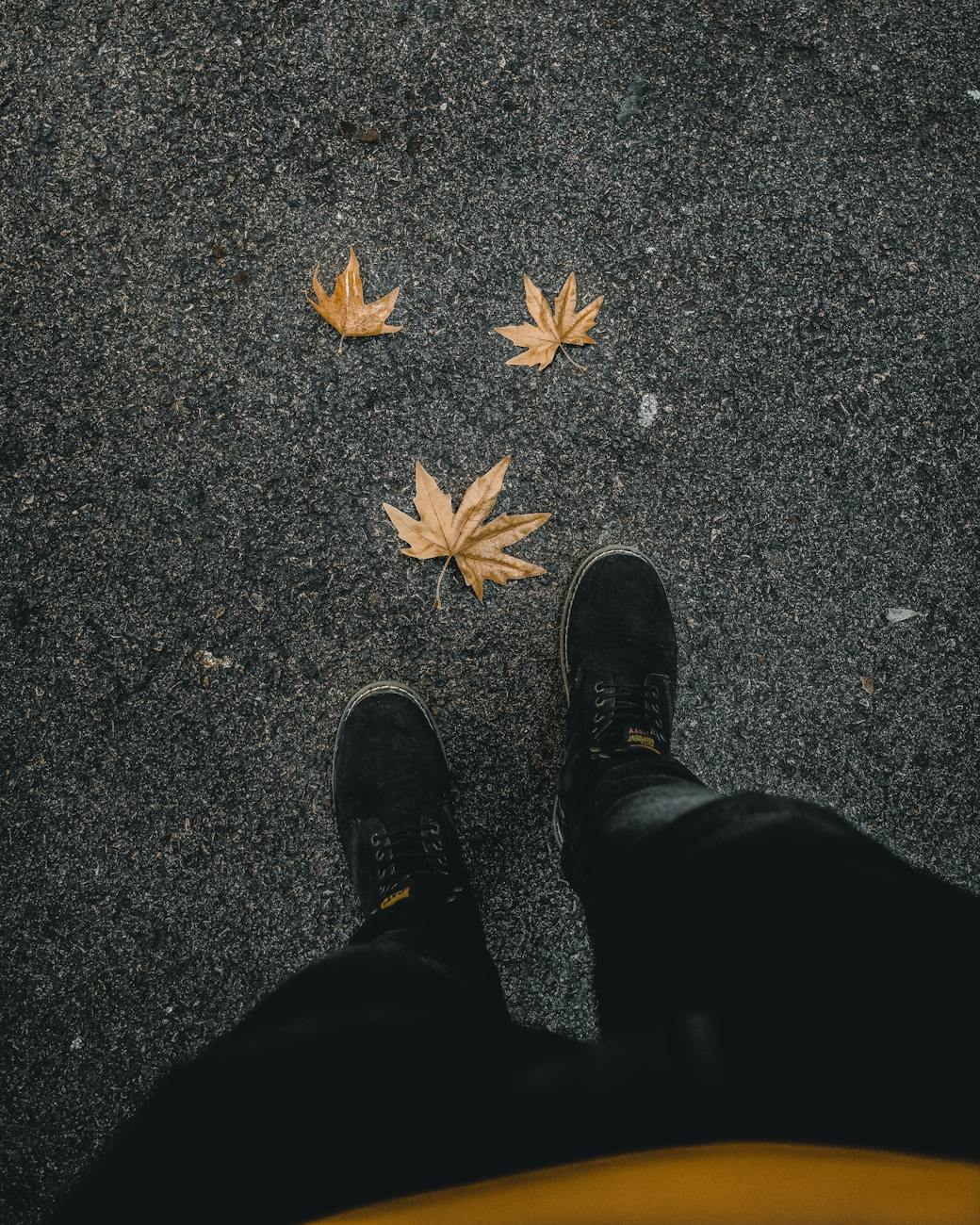
That realization has accompanied me through this autumn, which we celebrated with our small Samhain ritual—watching Hocus Pocus I & II by candlelight, gathering fallen leaves, and covering them with ink and pressing them onto paper to make monoprints. There was a childlike magic in it: the squelch of the sticky ink, the soft squeaky rolling of the brayer, the moment when the paper lifted to reveal the print. It struck me how close this is to scholarship at its best: slow, embodied, receptive. The act of noticing—whether in art, research, or life—cannot be rushed.

Our institutions, however, are built on speed. Academia, once imagined as a monastery of thought, now too often resembles an airport: loud, transactional, and defined by transit rather than presence. We are rewarded for throughput—papers, metrics, outputs—while the invisible labor of thinking, gestating, waiting is quietly devalued.

Philosopher Byung-Chul Han calls this “the burnout society”: a culture of hyperactivity that mistakes motion for meaning. Similarly, Jenny Odell’s How to Do Nothing (2019) reminds us that attention is not a private resource but an ecological one. How we attend to the world shapes the world itself, and to be slow is, in this sense, to resist.

Slowness allows the possibility of depth. When I teach, I often tell students that thinking is not something we do; it’s something we undergo. Insight arrives in its own time, not on schedule. When we move too fast, we interrupt the very process that might save us—from shallowness, from reactivity, from the illusion that our worth depends on our output.

This past year has been less about producing words and more about unlearning the compulsion to be constantly doing something. Writing about mail-order mysticism has only intensified that awareness. Students were told that true understanding could not be forced; each lesson would reveal itself “in due time.”

That phrase—in due time—has become a quiet mantra for me.

There were days this autumn when the words wouldn’t come, when the archival material felt stubbornly opaque. But I began to notice something else happening beneath the surface: a subtle attunement to pattern, rhythm, and resonance. I realised that my task wasn’t to force insight but to cultivate the conditions in which it might emerge.

The same principle lies at the heart of A Course in Miracles, which I’ll be exploring in my upcoming workshop, Practical Miracles: Practicing the Course Beyond the Book (Saturday, November 8th, 2–5pm GMT). In our fast-moving world, even spirituality can become hurried: one more thing to optimise, one more practice to master. But true practice, like true scholarship, begins with slowing down. It’s the decision to notice what’s really happening in the moment you’re already in.

During the workshop, we’ll work with simple, repeatable tools for applying this awareness in daily life: at work, in relationships, and especially in moments of frustration or overwhelm. If that sounds abstract, think again of the leaf print: the slowness of laying down ink, the patience of pressing, the surprise of revelation. That’s what a miracle is—a new image of reality emerging from the same material, seen through the quiet lens of love.

As I prepare to return from sabbatical to the rhythm of teaching and service, I’m reflecting on how to carry this slowness with me. I suspect the answer isn’t in withdrawing from the world but in moving through it differently: walking rather than rushing, listening rather than reacting, leaving unscheduled time for what Thomas Merton called “the hidden wholeness.”Slowness doesn’t mean stagnation. It means aligning with the tempo of reality itself, which, as nature reminds us, is cyclical, not linear. Leaves fall; the soil rests; then, without effort, new life begins. Our task is not to speed the process but to be faithful to it.

If we can do that—in writing, in teaching, in love—we might rediscover a form of productivity that isn’t extractive but regenerative. A scholarship that nourishes rather than depletes. A spirituality that unfolds rather than performs. This, to me, is what makes slowness radical: it reclaims our humanity. It reminds us that attention is sacred, that thought takes time, and that the most transformative acts are often the quietest ones.

If that resonates, I’d love you to join me for Practical Miracles: Practicing the Course Beyond the Book this Saturday. Together, we’ll explore how to live from a place of peace and guidance, even when life moves quickly. Because ultimately, the miracle isn’t found in escaping the world’s pace—it’s found in learning to move through it with grace.

You can learn more and register through the Living A Course in Miracles group on Meetup. And if you’re drawn to the work but cost is a barrier, please reach out. We’ll find a way.

Embracing Craft in Academia: Reflections on Sabbatical

Academia, for all its bureaucratic scaffolding and metricisation (neither of which, in spite of what many would have us believe, is newly arrived on the scene), has always seemed to me less an outcome and more a craft. The language we use is linear and progressive—impact, output, key performance indicators—but the experience is slower and quieter. What looks from the outside like a trajectory of advancement often feels, from the inside, like the painstaking rhythms of practice: revisiting texts, refining an argument, shaping a paragraph until it carries its own weight.

Beginning a period of sabbatical this month has sharpened this distinction for me. Having the time to work on my next book, on liberal theology in early-20th-century America, is an extraordinary privilege, of course, but also a perturbing reminder that the rhythms of academic life are neither fixed nor inevitable. After a six-year term as an associate dean, when my diary wasn’t my own and a truly uninterrupted hour for writing was out of the question, I now find myself in a space where mornings are less prescribed, afternoons more open, and evenings less weighed down by the day’s unanswered emails.

This shift has interrupted the treadmill to which I had grown accustomed: no more weekly meetings or administrative reports, fewer obligations to the tempo of the institution. The contrast is striking. Career logic dictates constant forward motion, progression, and visibility. Sabbatical interrupts that, slowing time to the pace of craft: immersion, attention, revision. After years of deliberately (and at times aggressively) climbing a ladder, it feels now like I am stepping back into the workshop of what I have actually been trained to do: pore over the historical record to better understand what modernist literature means, and, in doing so, cultivate my own scholarly sensibilities in order to train students to do the same.

The language of career encourages us to think in terms of advancement, but the language of craft invites us to think in terms of depth. Career implies a vertical climb: promotion, recognition, and external markers of success. Craft, by contrast, is iterative and circular: you return to the same problems with new tools, you revisit the same materials with a slightly steadier hand. In my ways, this sabbatical is feeling like an unmistakable return, and whether or not my hand is indeed steadier, it is at the very least different to when I began my career.

Pierre Bourdieu’s account of ‘academic capital’ in Homo Academicus explains much about why universities are structured to reward careerist accumulation: advancement depends on how well one plays the game, converting intellectual labour into recognisable forms of capital. But Richard Sennett’s celebration of craft in The Craftsman reminds us that the deeper meaning of scholarly work is found elsewhere: in the long hours of slow reading, the shaping of sentences, the iterative labour of interpretation. Bourdieu undoubtedly shows us the internal logic of the field, but to treat scholarship as craft is to resist the abstraction of labour into capital and to remain grounded in the work itself, the feel of words under the hand, the quiet satisfaction of making something well.

Craft is built not through dramatic leaps but through the slow accumulation of skill over time. Looking back, I see this clearly in my own trajectory. As an undergraduate, I was awkward but diligent; I once arrived late to an exam with an analogue alarm clock whose battery had died, holding it up as evidence. From those unpolished beginnings to my current role as teacher and writer, what has mattered is not sudden transformation but steady honing.

This accumulation resists the logic of outputs. Like any craft, academic practice is tethered to the materiality of tools, spaces, and habits. The scholar’s equivalents of the potter’s wheel or carpenter’s chisel are the library, the notebook, and the annotated text (I’ve also grown accustomed to my ReMarkable tablet but still feel uneasy when I see my disused notebooks glaring back at me from the shelf). 

My own sabbatical days so far have been marked by relocating books and rediscovering notes I had once scribbled in margins, while rearranging my desk into something that feels more like a workshop than an office. Bruno Latour reminds us in Reassembling the Social that tools are never neutral; they co-constitute practice. Academic work, though often presented as disembodied thought (the ‘output’, the ‘paper’, the ‘impact’), is always materially situated. The desk, the chair, the pen, the screen: they are part of the making.

The pressures of modern academia can make it dangerously easy to forget the craft beneath the career, but the dangers of modern academia can make it just as tempting to ignore the career beneath the craft, an evasion that only feeds the very thing we hoped to resist.

I know this from experience. Six years in middle leadership brought tremendous satisfaction but also a creeping drift away from the hands-on craft of my own research. Strategy and oversight are necessary, but they can displace the intimate contact with sources and sentences that drew me to academia in the first place. Sabbatical is, in that sense, a time to retool: to remember the making at the heart of the work. As Stefan Collini asked in What Are Universities For?, what are we serving if we forget the scholarly craft that justifies the institution itself?

My hope for this sabbatical is to deepen the craft. A book will come out of it, but as a tool rather than a product. I want to give myself permission to linger in primary texts, to sketch ideas without rushing to publication, to think slowly. Projects on attachment and literature, and on contemplative approaches to pedagogy beckon, but I want to approach them less as tasks to be completed than as materials to be worked with patiently.

To see scholarship as craft is to reclaim its artistry from the machinery of career. Universities will continue to speak the language of metrics, rankings, and progression, an essential role, because it is this machinery that maintains the workshop in which scholarship can take place. But we don’t have to speak in the same register. To resist or even repudiate the machine is not to undermine the institution but to create the very conditions in which scholarship can breathe: the space for slow thought, patient practice, and the kind of intellectual labour that no metric can capture.

The machinery of career will always hum in the background, but we needn’t let its clatter drown out the quieter sound of practice itself. If these reflections resonate, I explore them further in The Art of Academic Practice on Substack, a space for thinking together about how scholarship might remain both sustainable and alive.

Research Workflow for Academics: The Best of Digital and Analogue Working Together

research workflow


In his presentation at the ‘Humanities Computing: Formal Methods, Experimental Practice’ symposium at King’s College London in 2000, John Unsworth described the seven ‘scholarly primitives’, that is, the ‘basic functions common to scholarly activity across disciplines, over time, and independent of theoretical orientation’:

  • Discovering
  • Annotating
  • Comparing
  • Referring
  • Sampling
  • Illustrating
  • Representing

A similar taxonomy was described by Ernest Boyer in Scholarship Reconsidered: Priorities of the Professoriate.  Boyer’s model of scholarship refers to four interrelated areas of practice: ‘the scholarship of discovery; the scholarship of integration; the scholarship of application; and the scholarship of teaching.’  While the nature of scholarly work hasn’t changed much since Unsworth’s and Boyer’s observations, the way in which we go about it and the goals that we hope to meet by completing it certainly have.

The workflow that I use for my academic research draws upon Boyer’s model of scholarship and Unsworth’s scholarly primitives, and aims to both isolate the individual components of scholarly work while recognising the inherent relationship and necessary overlap between these components.  In order to meet these aims, I needed a workflow that fulfilled several requirements:

  1. Assign tasks to the platform best designed for that task.  Evernote is excellent for taking notes, for example, but doesn’t stand up well to PDF management.
  2. Integrate analogue components at suitable points. I love notebooks and pens so this is largely a personal preference, but considerable research shows longhand writing aids in memory and comprehension.
  3. Create a frictionless system that allows for collaboration. When working with collaborators or research assistants, the workflow can be opened up at strategic points, while still offering privacy.
  4. Exist in the cloud. My academic writing takes place in my office, at home, and on the road; it happens on computers, iPads, and iPhones. I need to be able to reach everything securely in the cloud and across multiple platforms.
  5. Look visually appealing, and capture content in a visually appealing way. This isn’t just about aesthetics.  Visual appeal is a significant aspect of the success of digital spaces.

As it turns out, these five objectives are often at odds with one another.  Creating a frictionless system (#3) is easiest if only one programme is used, but then there will likely be tasks that are not suited to that programme (#1) (this is often the issue when all aspects of research and writing live exclusively in Scrivener or Evernote).  If the workflow exists securely in the cloud (#4), then it seems counterintuitive to involve analogue components (#2).

The workflow that I use takes the best of digital and analogue research and puts it into an adaptable, frictionless, and appealing system.  I begin by uploading articles to Papers and cleaning up metadata.  As I read the article in Papers, I highlight important passages, but keep my written notes and commentary separately in longhand form in my notebook.  With a clever shortcut in Papers (⌃⇧C), I can copy the full citation, all highlighted text, and associated page numbers of these highlights.  This is then pasted into a new Evernote note along with the link to the article in Papers (Edit > Copy As > Papers Link).  In both Papers and Evernote I rely on the same tagging conventions.

The outputs of this workflow are important: 1) PDFs continue to livein  Papers where they can be organised, tagged, and read in the most efficient way, 2) notes live in Evernote where they add to a growing commonplace book of research, and 3) commentary and ideas for future research live in a notebook where I can reflect upon them at a later point.  Of course, any workflow should stay flexible–already I am considering moving from Word to Scrivener for drafting, and from Papers to Mendeley for PDF management–but no matter how this workflow continues to evolve, it will always accept the distinctiveness of each component of scholarly work while acknowledging the necessary overlapping between these components.