Sourdough as Slow Philosophy

Bread is one of the oldest human technologies, and once or twice a week when I feed my starter, I get to feel the quiet intimacy of participating in something ancient. The jar on the counter, alive with invisible life, asks nothing more than regular attention. A little flour, a little water, a little faith. The process become philosophical, a daily practice in patience and presence, and sourdough, for me, is not simply food; it is a mode of inquiry. It asks how transformation occurs, and at what pace we should approach that transformation.

Every sourdough baker learns early on that control is an illusion. The starter has moods, the dough responds differently each day, and the line between perfect proof and an epic collapse is razor-thin. In this small domestic theatre, the dough resists command, growing best when treated with care, not coercion. Byung-Chul Han’s The Burnout Society warns of the violence of acceleration, how the modern subject, obsessed with optimisation, loses the capacity for duration. But sourdough refuses this logic. It can’t be rushed, not by willpower, not by technology. The microbes moved at their own pace, and perhaps I have begun to as well.

Fermentation, after all, is transformation through decay. It is the art of letting things break down in order that something new may emerge. There is philosophy in this: a recognition that change requires dissolution. The sour tang of the starter, the slow bubbling, and the mingling of bacteria and yeast are all material lessons in collaboration and renewal. Our ecological lives, too, depend on unseen networks, on the fermentation of shared experience.

In a world addicted to instant results, fermentation becomes an act of quiet resistance. We live amid the tyranny of instant coffee, instant messages, instant gratification. Sourdough asks us to wait. It requires a slowness that verges on contemplation. Carlo Petrini’s Slow Food Movement began as a protest against fast food, but its real gift was philosophical: a reclamation of pleasure, locality, and rhythm. Baking, like slow thought, teaches that nourishment and wisdom arise through attention. To bake for oneself, or better, to bake for another, is to rejoin an economy of care rather than consumption. When I share a loaf, still warm from the oven, I’m reminded that slowness is also a form of generosity.

The sourdough jar reveals how we attend to it. Some days, the starter is buoyant, light, eager; on others, sluggish and heavy. It reflects not just temperature but temperament. My own perfectionism has often met its match in the unpredictable nature of fermentation. The failed loaves — dense, burnt, deflated — have taught me more than the flawless ones, and sourdough offers its own alchemical education. The process cannot be hurried; it thrives on warmth, patience, and rhythm.

When I take a loaf from the oven, I feel a satisfaction that the intellectual world rarely grants: here is a thing complete, made by hand, known through touch. The world slows, if only for a moment, and becomes sufficient.

Sourdough, then, becomes a teacher of right timing, a philosophy that ferments rather than forces. Its lessons are certainly not confined to the kitchen. I’ve begun to notice similar rhythms in my creative work, where projects now follow seasons rather than sprints. After years of academic urgency, I’m learning the value of waiting and of letting ideas ‘prove’. What emerges, when it finally does, carries more depth, less strain. Slow philosophy isn’t simply slow thinking but slow being: a willingness to inhabit processes rather than rush through them. Education itself could learn from this pedagogy of fermentation, where growth happens unseen, between the visible milestones.

To bake bread is to remember that life itself is leavened by care. The simplest rituals, when done attentively, become meditations on being alive. Whether it’s bread, gardening, sewing, or journaling, each act can be a form of everyday metaphysics where philosophy meets fingertips. The smell of bread cooling on the counter, the sound of the crust cracking as it releases its final breath, is a small hymn to time.


UPCOMING EVENTS

If this resonates, you might enjoy joining one of my upcoming gatherings:

More to Explore

How Your Perception Creates Your World

What makes a great novel? Is it, as we generally assume, something about the novel itself, that it has been expertly crafted, that the language is transcendent, that the spirit of the characters seems to touch a deep human soul level?

Or, a possibility that we speak of less often, is the novel great because of the greatness of the reader? Does the reader bring a sense of greatness to the work and therefore does it take a great reader to ultimately create a great novel?

While reviews in the Sunday papers and the proliferation of literary criticism suggests we believe the former, I don’t think we need to completely discredit the significance of the latter, that is, the role that the quality of readership plays in shaping a novel.

We often talk about how the greatest novels pay dividends and give the reader more and more depth and insight each time they revisit them. What’s important to recognise here is that the novel isn’t hasn’t changed. It’s very rare that the text of a novel is actually changed after first publication, and these emendations are usually quite small and usually take place during the author’s lifetime. When we return to a novel, the only thing that has actually changed is the reader and what that reader brings with them.

There is an old Zen saying that you can never step into the same river twice. We often assume this is the case because the river is always flowing. The water which makes up the river is in constant motion and without water there would be no river. And of course, over longer periods of time, the path of river itself moves in different ways, carving new troughs through the land, finding new plains, valleys, and gradients as it sculpts its way through the world around it.

What is much less often recognised in this Zen anecdote is that, like the river, we too are constantly changing. We can never step into the same river twice, not only because the water in the river is different, but because we’re different from the last time we stepped into the river.

We therefore also never read the same novel twice. Not because the novel itself has changed in any way. But because the reader has changed their frame of reference, their understanding of human expression and feeling, the particular interests and passions they’re confronted with at that moment. All of this will have changed and evolved since the last time the novel was read.

So we can certainly talk about the greatness of a novel, and we also talk about how we cultivate the greatness of readership, the sensibility with which we approach a particular novel and find a cinematic and transcendent experience in it.

Consider for a moment the world of wine. By tacit social agreement, we have turned something as simple as fermented grape juice into an art form worthy of connoisseurship. But it’s widely known that there are studies that show that even professional wine critics are unable to distinguish between good wines and cheap supermarket wines in blind tastings. A language of its own has developed around wine, focusing on the texture, flavour, and tannins that make each individual wine a unique treat for the palate — at least that’s what the professional wine critics tell us.

But of course, blind tastings show that much of this is a socially constructed meaning. We want to believe in the artistry and craft of winemaking. For those closest to it, it’s clearly a vocation, a passion. It provides countless jobs, from the producers to the salespeople to the sommeliers and the restaurants who advise on which bottle will go best with your meal.

But we also want to believe in the language of wine, because it elevates something commonplace. We recognise the unique way in which alcohol can change our memory for better or worse, if we acknowledge that this is something special. Over the centuries, this has developed into something of an art form. Not only does it rationalise the process of intoxication, but it also helps us to explain intoxication and turn it into an art.

This is a great example of the negotiation of social meaning. We give meaning to everything that surrounds us.

When we look into the room in which we now find ourselves, we have given meaning to this pen, this chair, this bookshelf. This is not just our own unexamined meaning, of course, but also the negotiation of meaning with others at a particular point in our growth and development. We have been told what a pen is and what a pen does, and we have stuck to that. So when we see an object that we think is a pen, we name it as such.

We are constantly giving meaning to everything around us. We negotiate and agree meanings with others, and therein lies much of the value and importance of social exchange.

For many philosophers and thinkers, Plato in particular, this realisation led to the belief that there must be some kind of celestial ideal of the pen. There must be a point of origin for what this pen is if we are to negotiate it socially with others.

Like clockwork, the online debate pops up every Christmas about whether Die Hard is a Christmas film. Each year there are countless memes and messages in which people forensically examine all mentions of Christmas, all holiday allusions, the narrative arch. There’s something fun and light about these conversations, and there’s no denying that many people enjoy the Christmas tradition of watching Die Hard. But in many ways, we are asking the wrong question here.

It’s not about whether Die Hard is a Christmas film; it’s about what constitutes a Christmas film in the first place. If a Christmas film is just a film set on or around Christmas then Die Hard is certainly such a film. If a Christmas film is a film set around Christmas that has a redemptive narrative of love and charity and hope and family, and maybe Die Hard is not one.

In this vast network of social negotiation of meaning, we often lose sight of the a priori questions that we take for granted. Things that probably need to be explored first.

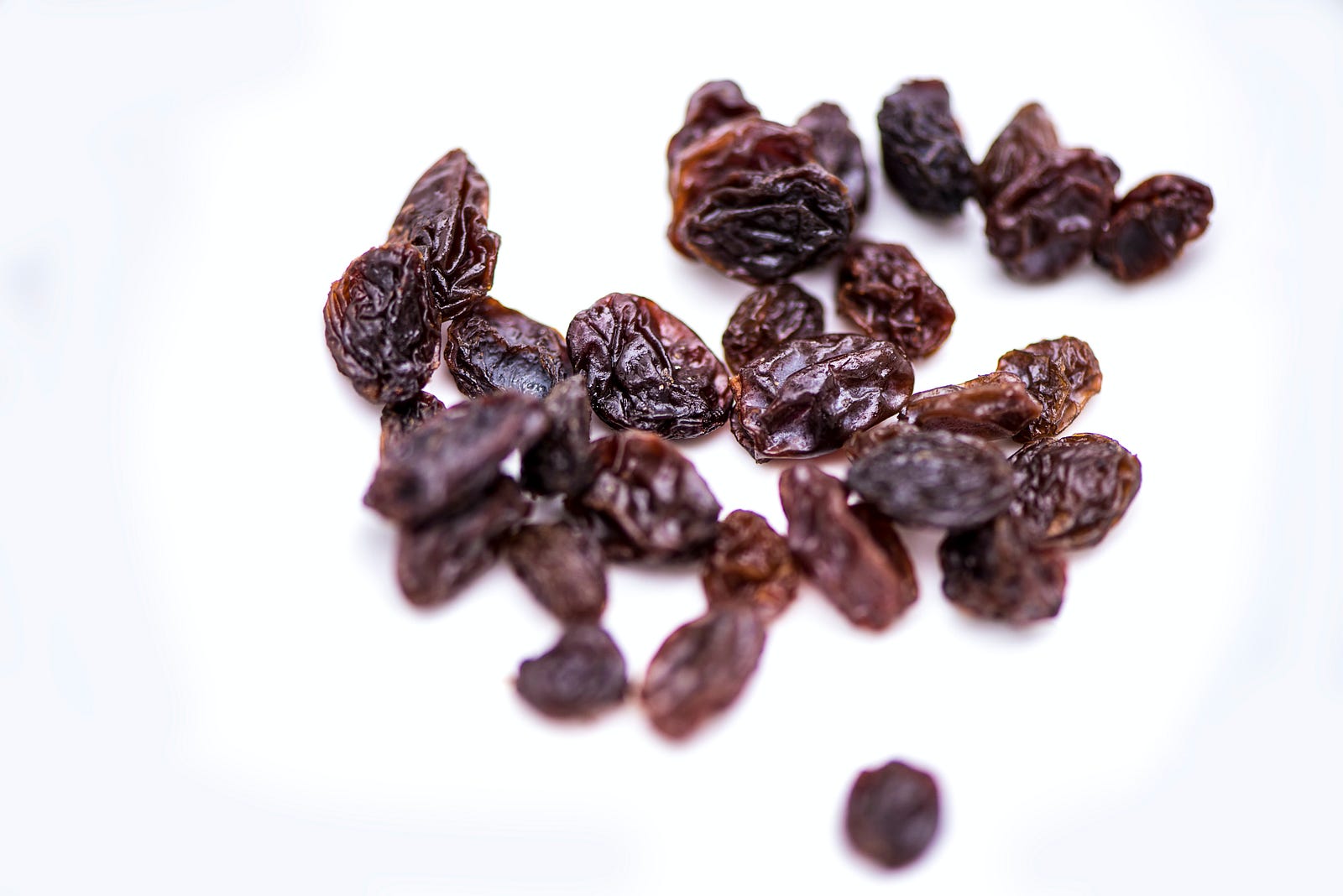
This is one of the reasons that the standard curriculum for Mindfulness-Based Stress Reduction (MBSR) begins with what is popularly referred to as the raisin exercise. Students are given a raisin and instructed to observe it intently, pay attention to the colour and texture, feel the size and weight, and only then, after paying attention to the external qualities for some time, put it in their mouths and make the same slow, methodical assessment of its taste, texture, and sensations in the mouth. When we move inwardly towards the external object.

The purpose of this mindfulness exercise is twofold. Firstly, it trains us to slow down and notice that we are letting go of the automatic thought patterns that can very often shape and control our sense of reality and the world around us. But even more subtly, and something MBSR teachers talk about less often, is that it offers an early invitation to examine the quintessence of an object, something we rarely think about.

We have the socially constructed meaning of ‘raisin’ as a tasty but not entirely interesting, vaguely healthy but not very satisfying snack, but where does this meaning come from? And do we need to continue ascribing this socially agreed upon meaning to it? During the raisin exercise, students often find a new joy and appreciation for the raisin rather than mindlessly eating a handful of the wrinkly little morsels. We appreciate the flavour, the rich caramelly bite that is the meaning of the raisin exercise to develop the ability to make such an exploration of consciousness in other realms.

We can unthinkingly call a novel great or terrible, a wine delicious or despicable, Die Hard a Christmas film or an action fest.

But we forget that there is a level of meaning-making that exists before all of these assessments, that they exist in a spectrum of negotiation of meaning of which we are a part, and that we continue to contribute to every time we agree that this Côtes du Rhône was worth £50, and that Die Hard is the film for Christmas Eve.

There’s nothing wrong with that, but when we realise how unsettling that realisation can be for us, we realise how significant it might actually be.