Why We Need Beauty in Everyday Life

Beauty has become strangely suspect in our society today as too indulgent, too easily confused with luxury, escapism, or branding, or too uncaring in a world filled with sadness and despair. We talk about beauty as if it were optional, as if it were something to be enjoyed after the serious work is done. But I’m increasingly convinced that beauty is not a reward at the end of the process. It is one of the conditions that makes a life—or a creative practice—habitable in the first place.

This isn’t a new argument. Elaine Scarry, in On Beauty and Being Just, writes that beauty presses us toward attentiveness, generosity, and care. The great philosopher and novelist Iris Murdoch described moral life as a training of attention, where learning to see clearly—lovingly, even—was inseparable from ethical development. Beauty, in this lineage, is not decoration. It is an education of perception.

What is new, perhaps, is how thoroughly beauty has been crowded out of everyday life by urgency, performance, and abstraction. We live inside systems that prize speed over texture, output over craft, visibility over depth. In those conditions, beauty gets reduced to a moodboard or a purchase, rather than something slowly made, tended, and lived with.

I’ve been thinking about this a lot recently, partly because of a bit change in my own life. For the first time ever, I now have a dedicated studio space. Writing has always been my primary genre, and I’ve long had a study for reading and writing. But this is different. The studio space (perhaps a grand phrase for a nook in my hallway) is dedicated specifically to other forms of making. There, I’ve been deepening into my bookbinding practice and working with printmaking as an adjacent art form. I recently had a first go at basketweaving, with the very practical intention of making baskets to organise my supplies. The baskets are imperfect, slightly unruly, unmistakably beginner objects. And I love them.

None of this is productive in the way productivity culture understands the term. But all of it has made my days feel more coherent, and, ultimately, more inhabitable. Beauty, here, isn’t about refinement or taste. It’s about the relationality of being in contact with materials, rhythms, and limitations that writing alone doesn’t always provide.

William Morris famously argued that we should have nothing in our homes that we do not know to be useful or believe to be beautiful. That line gets quoted endlessly, often stripped of its political teeth. Morris wasn’t advocating for aesthetic minimalism; he was protesting industrial alienation. Beauty, for him, was bound up with labour, dignity, and the refusal of shoddy work—both material and spiritual.

In our own moment, the danger is not mass production alone, but abstraction. So much of our creative life now happens at one remove: ideas about ideas, plans for work, identity statements about what kind of person we are or hope to be. Beauty interrupts that abstraction. It brings us back into contact. This matters for creativity because creativity does not thrive on pressure alone. It thrives on nourishment. And nourishment is often sensory, spatial, temporal. The feel of tools. The pleasure of order that isn’t obsessive. The satisfaction of materials finding their place.

I see this again and again in my work with writers, artists, and academics. Their creative lives have been stripped of beauty in the name of seriousness. Desks become battlegrounds. Time becomes an enemy. Work becomes a referendum on self-worth.

Under those conditions, abundance sounds either naïve or manipulative—another thing to perform, another mindset to adopt correctly. But abundance, as I understand it, has very little to do with positivity or belief. It has to do with noticing what is already available and learning how to stay in relationship with it.

Beauty helps with that. Beauty slows us down just enough to notice. It widens attention without demanding that we be exceptional. It restores a sense that life—and work—can be met, rather than conquered.

This is one of the underlying currents running through my latest work, and it’s very much present in the upcoming 5 Days of Creative Abundance programme I’m hosting in March. The series isn’t about doing more or trying harder. It’s about restoring conditions in which creativity can move again—conditions that include time, permission, structure, and yes, beauty.

Across the five sessions, we’ll be exploring how creativity becomes knotted up with pressure and identity performance, and how to loosen that knot without abandoning seriousness or commitment. We’ll look at how to make time more porous, how to let work approach you rather than always forcing it, and how to keep creative energy circulating so it doesn’t feel so easily depleted. Underlying all of this is a simple proposition: creativity does better when it feels welcomed into your life, rather than squeezed into it.

When you care about how things feel, how spaces hold you, how materials respond, you are already practising a different relationship to your work. One that is less extractive. Less adversarial. More sustainable.

If that resonates, the Creative Abundance programme might be a good place to explore it further. The sessions are short, live, and recorded if you can’t make them in real time. They’re designed to meet people who are tired of hype, allergic to rigidity, and still deeply committed to their work.

Beauty won’t solve everything. But without it, we ask our creative lives to run on willpower alone. And willpower, as many of us know by now, is a brittle fuel.

Sometimes what we need is not a new strategy, but a more liveable ecology. A desk that invites us back. A practice that feels companionable. A sense that what we are doing belongs to a life, not just a ledger of outputs.

Beauty helps us remember that. And remembering, in this case, is not nostalgic. It’s practical.

If you’d like to spend a week exploring what abundance might look like when it’s grounded in attention, care, and lived experience, I’d love to have you join us in March.


Upcoming Events

Creative Flow Co-Working Session: Deepening Your Craft

16 February | 10 AM-12 PM GMT | FREE

Register here: https://www.meetup.com/the-art-of-creative-practice/events/312151262/

Beyond Time Management: A More Natural Way to Organise Creative Work

24 February | 7.30-9.00 PM GMT | £12

Register here: https://www.meetup.com/the-art-of-creative-practice/events/313062163/

5 Days of Creative Abundance

9-13 March | 7.30-8.00 PM GMT | £29

Register here: https://www.meetup.com/the-art-of-creative-practice/events/313206797/

The Writer’s Flow Circle: A 12-Week Group Coaching Circle

Beginning Monday 23 March | 7.30-9.00 PM UK time | £180

Register here: https://www.meetup.com/the-art-of-creative-practice/events/313207235/

More to Explore

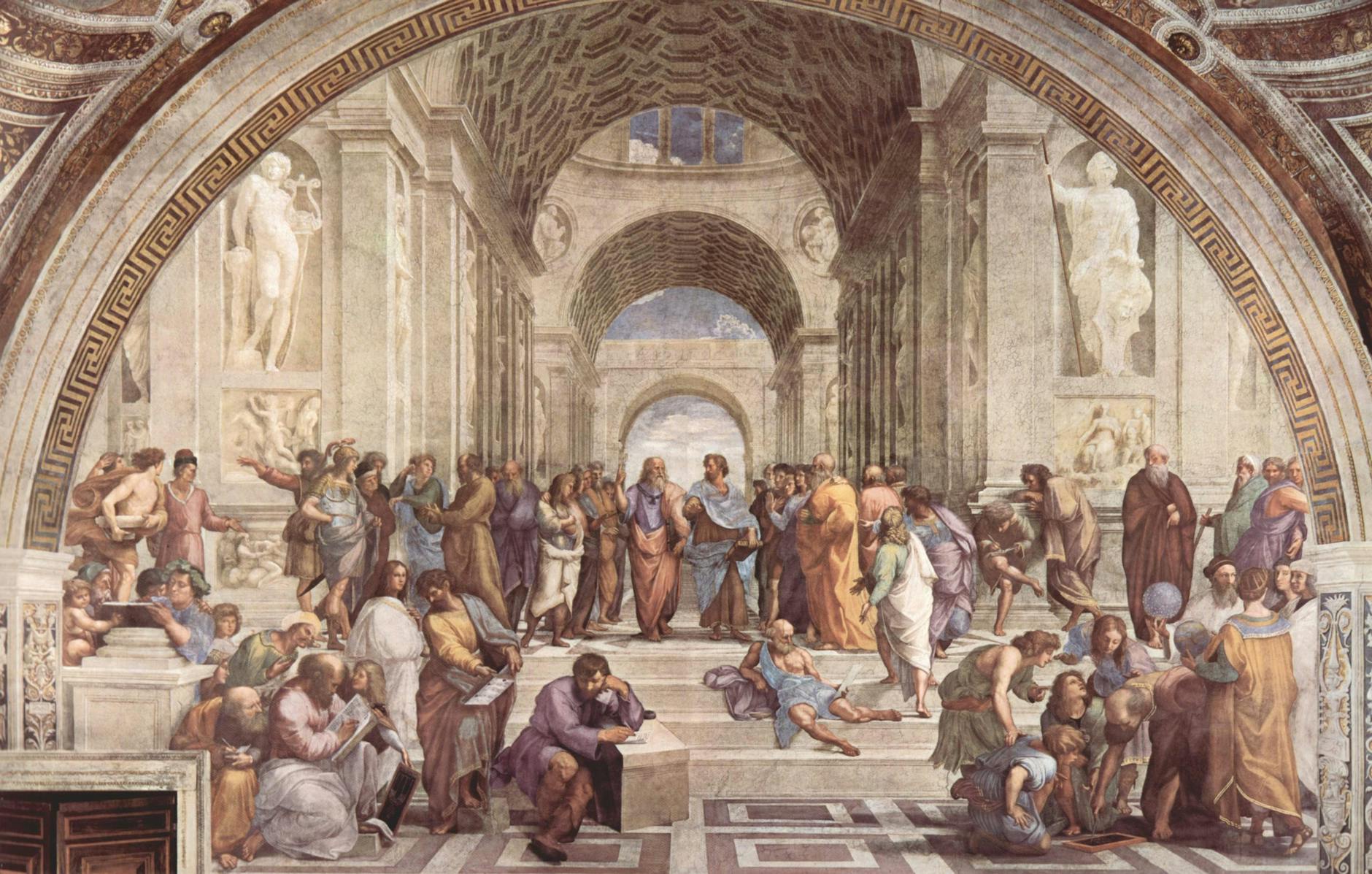
The Way We Live Matters More Than The Way We Think

It’s easy to forget that philosophy was never meant to be a spectator sport.

Long before it became something we studied, it was something people did. Philosophy began as a way of arranging a day, training attention, shaping character, and orienting oneself toward what mattered in life. It didn’t live in texts, but in habits: how one woke, walked, ate, spoke, listened, and rested.

In other words, philosophy was practical.

This has been on my mind a lot recently, perhaps unsurprisingly. I’ve just come to the end of my sabbatical and I’m now taking on responsibility for running the MA in English Literature and the MA in Creative Writing at the University of Surrey. This transition made me acutely aware of how much of our thinking is shaped not by what we claim to believe, but by what we repeatedly do.

One of the great misunderstandings of modern intellectual life is the assumption that clarity comes first, and practice follows: if only we had the right theory, the right worldview, the right explanation, then our lives would fall into place.

But lived experience tends to run the other way around.

As Pierre Hadot points out in Philosophy as a Way of Life, ancient philosophy was grounded in spiritual exercises, that is, concrete practices designed to transform perception and conduct. Stoicism wasn’t a set of ideas about fate or reason; it was a disciplined training of attention. Epicureanism wasn’t a theory of pleasure, but a daily practice of simplicity, friendship, and fear reduction. Even Plato’s dialogues, for all their abstraction, were designed to do something to the reader: to unsettle, provoke, and reorient.

Closer to our own time, thinkers as varied as Simone Weil, Iris Murdoch, and Michel de Certeau have reminded us that attention, habit, and repetition shape the moral and imaginative texture of a life long before explicit reflection enters the scene. We do not first decide what matters and then act accordingly; rather, what we attend to, rehearse, and ritualise slowly teaches us what matters.

This is why everyday rituals are philosophical, whether we acknowledge them as such or not.

By “rituals,” I don’t mean anything grand or mystical—though they can be. I mean the small, repeated actions that quietly structure our inner lives: how we begin the morning, how we transition into work, how we respond to resistance, how we close a day. These acts rarely feel important, but they are formative.

A life without intentional ritual isn’t neutral; it is simply shaped by default rituals of the world outside: algorithms, inboxes, urgency, comparison, and distraction.

During my sabbatical, this became unavoidably clear. Writing a book is less an act of inspiration than one of sustained fidelity: returning to the page when enthusiasm fades, when doubts arise, when the work resists being done. What carried me through wasn’t motivation, but a set of simple, repeatable practices and routines that made thinking possible at all. A system.

This is where much contemporary advice culture goes astray. We are encouraged to optimise outputs while leaving the deeper structure of our lives untouched. But philosophy—real philosophy—asks a more demanding question: What kind of person is this way of living making me into?

This is also why I’m increasingly wary of purely instrumental approaches to creativity. Writing, thinking, and teaching are not just tasks to be managed; they are forms of life. How we organise our time, relate to resistance, and hold ourselves in periods of uncertainty is not secondary to the work—it is the work.

Much of my recent teaching, coaching, and writing has been circling this insight from different angles: that sustainable creativity requires a different relationship to time, effort, and selfhood than the one most of us have inherited.

This integrative dimension is central to my current work, including the practices I’ll be sharing in upcoming sessions. Whether through meditation, reflective co-working, or rethinking how we organise creative labour, the aim is the same: to help people cultivate forms of attention that make meaningful work—and a more humane life—possible.

If this resonates, you might be interested in the following upcoming offerings:

Integrative Meditation
2 February | 7.30–8.30 PM GMT | £4
A guided session focused on attention, integration, and gentle inner alignment.
Register here:
https://www.meetup.com/the-art-of-creative-practice/events/312077761/

Creative Flow Co-Working Session: Reframing Resistance
9 February | 10 AM–12 PM GMT | FREE
A shared, reflective working space for engaging resistance as information rather than failure.
Register here:
https://www.meetup.com/the-art-of-creative-practice/events/312151261/

Beyond Time Management: A More Natural Way to Organise Creative Work
24 February | 7.30–9.00 PM GMT | £12
An exploration of rhythms, seasons, and structures for sustained creative practice.
Register here:
https://www.meetup.com/the-art-of-creative-practice/events/313062163/

Perhaps the most important thing philosophy can do for us now is remind us that a life is not shaped primarily by what we profess, but by what we practice. Everyday rituals—chosen with care—become a quiet form of resistance against fragmentation, haste, and superficiality.

And in a culture saturated with noise and abstraction, this return to lived, embodied wisdom may be one of the most radical gestures still available to us.

How to Carry Inner Stillness into Outer Action

Photo by Aron Visuals on Pexels.com

I’ve been thinking a lot lately about the word ‘equinamity’: what it really means, why we use it so infrequently, and how we can translate the inner stillness of equinamity into outer action.

It’s an old question, of course. The contemplative traditions are full of cautions against mistaking withdrawal for wisdom, or serenity for disengagement. And yet, in many contemporary spiritual and creative cultures, stillness is subtly framed as an end in itself, or something to be achieved, protected, even defended against the messiness of life.

My own experience suggests something more demanding, and ultimately more generous: stillness is not a place we go, but a quality we carry. Its real test is not how calm we feel on the cushion, but how we move when the world asks something of us.

Equanimity is often misunderstood as emotional neutrality or the ability to remain unruffled, untouched. But in its deeper sense (and here the Stoics, Buddhist psychology, and contemporary contemplative science quietly agree), equanimity is not about less feeling. It’s about more capacity. As William James observed in The Varieties of Religious Experience, maturity of spirit does not erase emotion; it reorganises it. Similarly, in Buddhist psychology, upekkhā (equanimity) is not indifference but balance—the ability to stay present without being commandeered by reactivity.

What matters, then, is not whether we feel disturbance, but whether disturbance determines our next move.

This distinction has felt particularly alive to me recently as I return to university teaching after a sabbatical and time away from campus to focus on my thinking and writing. Much of that time was spent working on my latest book, a project that demanded long stretches of solitude, patience, and sustained inward listening. Sabbaticals are often imagined as pauses from “real work,” but for me this one clarified something essential: inner stillness only becomes trustworthy when it is tested by responsibility.

There is a moment in many contemplative narratives that matters more than the awakening itself: the return. The Buddha leaves the Bodhi tree. Dante descends the mountain of Purgatory. The mystic goes back to the village.

For me, that return has taken the form of stepping into a new academic role at my university, taking over the MA programmes in English Literature and Creative Writing. I feel a genuine sense of excitement about this transition because it asks for a different quality of presence.

Teaching, at its best, is a relational practice. It requires attunement, adaptability, and a willingness to meet uncertainty without control. In that sense, it is one of the most honest laboratories for equanimity I know. You cannot curate the room. You cannot pre-empt every emotional current. You can only show up with clarity, boundaries, and a willingness to respond rather than react.

In my coaching and teaching work, I often encounter the fear that: If I slow down, I’ll lose momentum. If I soften, I’ll stop functioning. But stillness, when cultivated well, does not reduce effectiveness but it refines it.

Contemporary neuroscience supports this. Practices that strengthen interoceptive awareness and emotional regulation do not dampen motivation; they improve decision-making under pressure. This is where equanimity becomes practical. It shows up as:

  • the ability to pause before replying to a difficult email
  • the capacity to hold creative uncertainty without collapsing into self-judgement
  • the willingness to set boundaries without aggression or apology

These are not abstract ideals. They are trainable skills—and they matter enormously for creatives, academics, and highly sensitive people navigating complex systems.

Writers and artists, in particular, are vulnerable to confusing intensity with truth. We can mistake emotional activation for insight, urgency for necessity. Yet some of the most durable work I know emerges from a place of deep inner steadiness. Equanimity allows us to stay with the work long enough for it to become true, not just expressive.

This insight informs much of what I explore in my current writing and teaching: how attachment dynamics, attention, and inner regulation shape not only what we create, but how we live alongside our creations. Creative formation, like spiritual formation, is less about transcendence than about reliability—becoming someone who can be trusted with complexity.

If stillness is to move with us, it must be practiced in motion. This is why I’m increasingly interested in integrative approaches that bridge meditation, creative rhythm, and everyday action.

Over the coming weeks, I’m hosting a small number of workshops through The Art of Creative Practice that explore exactly this terrain:

For those seeking more sustained, individual support, my 1-1 creativity coaching spaces are currently fully booked until March. If you’d like to join the waiting list, you’re very welcome to get in touch at allan_johnson@mac.com.

Equanimity is not a spiritual personality trait. It is a practice of continuity: learning how to carry what we touch in silence into the noise of relationship, work, and responsibility.

As I step back into the classroom, into institutional life, and into new forms of creative leadership, I’m reminded that the real measure of stillness is not how protected it feels—but how generously it participates.

Stillness that cannot move will eventually calcify. But stillness that walks with us becomes wisdom.

And wisdom, as ever, is something we learn in company.

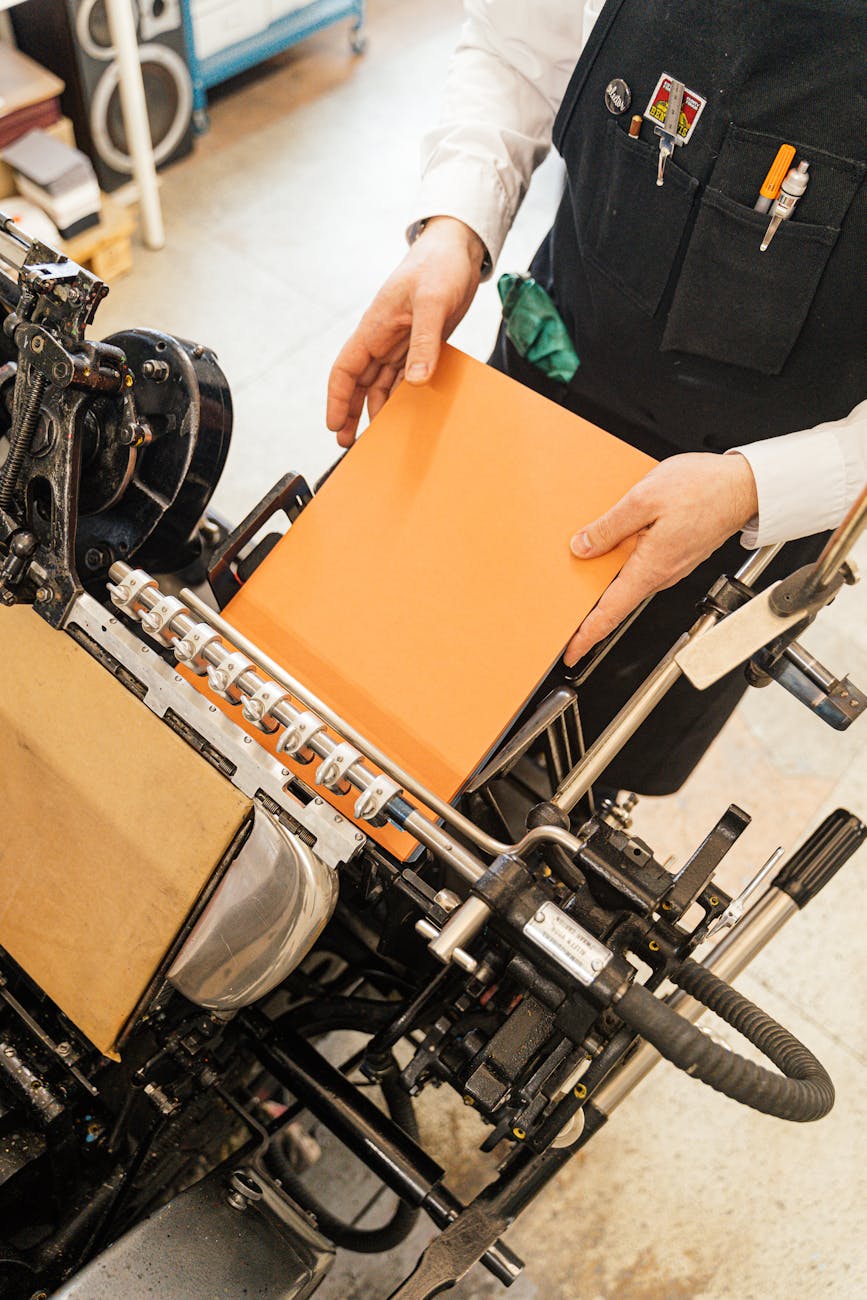
What Bookbinding Taught Me About Patience and Care

Photo by Antoni Shkraba Studio on Pexels.com

There is something about the craft of bookbinding. It re-educates the hands, and through them, the nervous system. It returns time to its proper scale.

I’ve been thinking about this more since settling into my new flat, which—by a small but meaningful stroke of grace—includes a dedicated studio space. For the first time in years, my tools don’t need to be packed away between sessions. Paper can sit under weights overnight without being disturbed, and work can pause without being dismantled.

Already this matters more than I expected. Bookbinding, after all, resists the logic of efficiency. Adhesive must dry. Grain direction must be respected. Linen thread must be drawn tight but not too tight. You cannot rush a spine without paying for it later. The work teaches you—firmly but kindly—that attention cannot be compressed.

Simone Weil famously wrote that “attention is the rarest and purest form of generosity.” Bookbinding operationalises this insight. You can’t bind a book while thinking three steps ahead. If your attention wanders while folding signatures, the error will propagate. If you rush the punching of sewing stations, the whole text block will pull askew. You can’t persuade paper fibres to behave differently through force of will; you must cooperate with them.

In this sense, bookbinding has become a counter-practice to much of contemporary creative life. Online, speed is rewarded. Visibility is currency. Iteration is encouraged, but only when it looks like momentum. The slowness of binding—a practice that may take days or weeks before anything finished appears—feels almost monastic by comparison.

And yet, paradoxically, it has made me more productive, not less.

One of the biggest misconceptions about patience is that it means waiting. In practice, patience is active–it’s a verb (metaphorically at least) because you are always doing something: sharpening a blade, squaring a stack, testing tension, laying out the next stage so it will be ready when the moment comes.

This mirrors something I see repeatedly in coaching work, particularly with highly sensitive or intellectually driven creatives. There is often an underlying anxiety that if one is not producing, one is stagnating. But many forms of growth happen beneath the threshold of visible output.

Since moving into the new flat and setting up the studio, I’ve noticed a subtle shift in how I approach my other work—writing, teaching, contemplative practice. I’m more willing to let something rest unfinished.

There is also, I think, an ethical dimension to working with materials in this way. Richard Sennett, in The Craftsman, describes craftsmanship as a dialogue between hand and material, where resistance becomes instructive rather than frustrating. This is not mastery-as-domination, but mastery-as-listening.

In bookbinding, materials remember what you do to them. Paper creased carelessly will never quite forgive you. Cloth stretched unevenly will telegraph the mistake forever. This permanence sharpens responsibility. You learn to slow down not because slowness is virtuous, but because it is necessary.

This has felt especially grounding during a period of personal transition. A new home, even a welcome one, requires recalibration. New light patterns. New noises. New routines. The studio has become a place where that recalibration can happen somatically, not just cognitively. Through repeated, careful gestures, the body relearns safety.

It’s hard not to notice the symbolic resonance here. Books are already threshold objects—containers of thought, memory, and voice. Binding them by hand heightens this awareness. You become acutely conscious of the labour that precedes reading, of the infrastructure that makes inwardness portable.

All of this feeds into a broader theme that’s been shaping my work lately: the power of small, well-held experiments. Not performative reinventions, but modest shifts in practice that reorient attention.

Perhaps the deepest lesson bookbinding has taught me is that care compounds. What feels like slowness at the outset becomes reliability later. Structures hold. Work lasts. You spend less time repairing what was rushed.

This is true of creative practice, of relationships, of inner life. Patience is not something we adopt once and for all; it is something we rehearse through forms that demand it of us.

For now, I’m grateful for a studio that allows this rehearsal to continue—quietly, materially, without display. And I’m grateful, too, for the conversations that extend from it: in workshops, in coaching, in shared spaces of attention.


Upcoming Events

Integrative Meditation

  • 19 January | 7.30-8.30 PM GMT | £4

Creative Flow Co-Working Session: The Power of Tiny Experiments

Highly Sensitive Creatives: Energy, Boundaries, and Creative Rhythm


More to Explore

Four Dimensions of Stillness for Creatives

Living in a city like London trains the nervous system in a particular way. Even when we love urban life—its density, its cultural richness, its chance encounters—it asks us to metabolise a constant low-level stimulation: noise, movement, decision-making, comparison.

Over the past few weeks, I’ve been thinking about this more deliberately. I’ve recently moved into a flat in a beautiful 1920s building. It’s filled with heaps of character, and I know that I’ll be very happy here, but it’s also a significant change.I’ve spent the past decade living in new-build flats, the kind with sleek appliances, underfloor heating, and a comforting sameness to all the others. But my new flat, even before my furniture was moved in and the boxes filled every spare corner, was noticeably maximalist: crown moulding, dado rails, radiators, and, perhaps most notably, the constant sounds of neighbours on all sides.

This move has coincided with a renewed reflection on minimalism as a practice of attention, that is less about owning fewer objects (though that can help), and more about creating pockets of stillness within environments that are, by default, overstimulating.

Minimalism has been thoroughly Instagrammed. White walls, pale wood, a single ceramic cup placed just so. There is nothing wrong with this, but it risks missing the deeper point. And my old flat was certainly minimalist in the aesthetic sense.

Writers like Cal Newport in Digital Minimalism and Jenny Odell in How to Do Nothing have both argued, in different ways, that minimalism is not about subtraction for its own sake, but about protecting what matters in a culture designed to fragment attention. Similarly, the Japanese concept of ma—often translated as ‘negative space’—suggests that meaning arises not from what is present alone, but from the intervals of emptiness around it that give it shape.

Big cities are where this discernment is most tested. Urban life rewards responsiveness: quick replies, constant availability, social agility. For many creatives and sensitive thinkers, this can become exhausting. We learn to override subtle signals—fatigue, saturation, the need for withdrawal—because the environment rarely validates them.

Over the years—through my own practice, teaching, and coaching—I’ve noticed that these pockets of stillness tend to form around four dimensions:

  • Spatial stillness: a chair by a window, a desk cleared of visual noise, a room that signals ‘nothing is required of you here.’
  • Temporal stillness: protected times in the week that are not optimised, monetised, or rushed.
  • Relational stillness: fewer, deeper conversations; rhythms of contact that don’t require constant performance.
  • Inner stillness: practices that allow attention to settle without forcing it: meditation, journalling, slow reading.

One theme that runs through my recent work is the idea that many creatives are finely tuned. They notice more. They process more. They feel more. Without the right structures, this depth becomes a liability. This is why I resist advice that tells people simply to “push through” or “build resilience.” Resilience matters, but so do the structures of support and nurturance around you.

A few practical reflections that may be useful:

  • Reduce friction at points of transition. The moments between activities are where overstimulation accumulates. Even five minutes of pause between tasks can change the tone of a day.
  • Let one room be functionally “unproductive.” A space that is not for work, storage, or optimisation becomes a psychological refuge.
  • Limit inputs before increasing outputs. Reading less, scrolling less, listening less can paradoxically make creative work richer.
  • Choose rhythms over goals. A daily walk, a weekly reflective session, a regular co-working rhythm—these stabilise attention over time.

None of this requires perfection. It requires kindness toward your own nervous system.

If this resonates, there are several ways to explore these ideas in a supported, communal way over the coming weeks.

For those wanting more personalised support, I also offer 1-1 coaching, focused on helping creatives and thinkers build sustainable structures for meaningful work and life. You’re welcome to book a free 15-minute clarity call here: https://allanjohnson.co.uk/coaching/

Pockets of stillness don’t remove us from life; they allow us to participate more fully, with less quiet self-erasure. In a culture that rewards constant motion, stillness becomes a form of discernment. And discernment, I increasingly believe, is one of the most important creative capacities we have.


More to Explore