What About the Projects We Keep Putting Off?

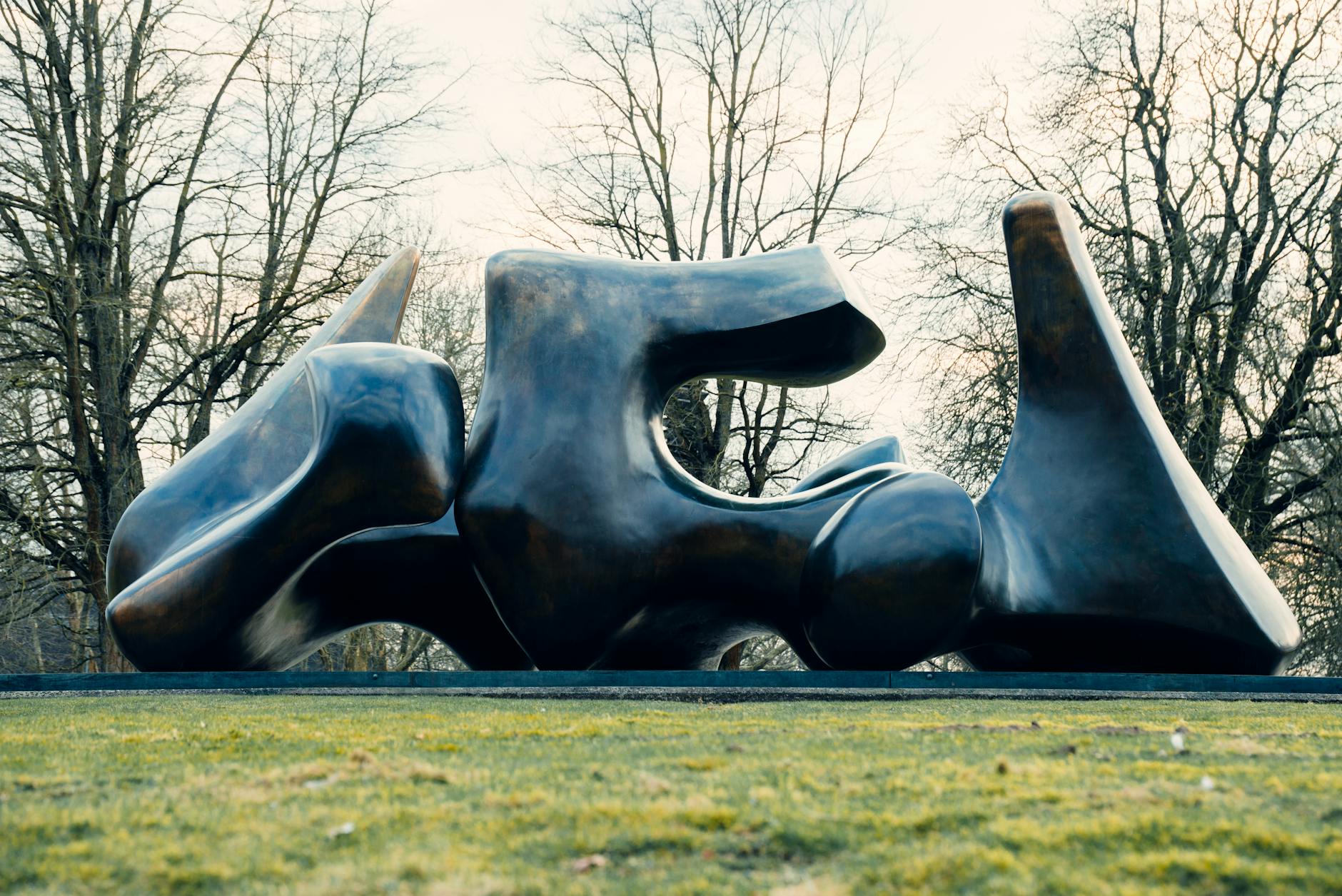
Photo by cottonbro studio on Pexels.com

There is something uncomfortably revealing about the creative projects we keep putting off “for later.” The ones we abandon outright are easier to narrate, to explain away, to file under “not quite right” or “no longer aligned.” But the projects we hold on to with a kind of reverence but never actually commit to have a lot to say about what we truly value.

I’ve been thinking about this a great deal recently, not least because I’ve found myself in the thick of planning and filming new material for The Art of Creative Practice, which, this autumn, will expand into a new interactive community with a dedicated app. It’s a project that, in one sense, has been years in the making through the accumulation of methods, fragments of teaching, and lived experiments in what it might mean to treat creativity as a way of approaching the world. In another sense, it has only just begun, precisely because I’ve stopped waiting for it to become something more perfect, more complete, more defensible.

I’m reminded here of something in Art & Fear by David Bayles and Ted Orland: the idea that most artists are defeated not by a lack of talent, but by the fear of making something imperfect. The projects we keep “for later” are often the ones we’ve invested with the highest symbolic stakes. They are not just projects: they are proxies for who we think we might be, if only we could get them right.

And so we wait…

But waiting, as it turns out, isn’t a neutral act. It shapes the project just as much as doing does. It introduces a kind of conceptual inflation: the longer something is delayed, the more significant it seems to become, and the more it has to carry. No wonder it becomes increasingly difficult to begin.

There’s a tension here that I see often in my coaching work, and that I recognise in myself: the pull between the desire for integrity and the reality of practice. Integrity asks for coherence, for alignment, for something that feels “true.” Practice, on the other hand, is messy, iterative, frequently disappointing. The danger is that we place integrity at the end of the process—something to be achieved once the work is finished—rather than at the beginning, as a commitment to showing up honestly, even (especially) when the work is unfinished.

This is where the projects we defer become instructive. They show us, quite precisely, where our thresholds are. What feels too important to risk? What feels too revealing to share? What feels too central to our identity to be allowed to fail?

In my own case, fully developing an app-based community for The Art of Creative Practice has long occupied that space. It sits at the intersection of so many things I care about: creativity as a spiritual practice, the relationship between inner life and outer action, and increasingly, the connection between creativity and ecology, that is, what it might mean to create in a way that is responsive to, and in relationship with, the more-than-human world.

Over the past months, as I’ve been filming and shaping this new material, I’ve had to let go of a certain fantasy of what the project should be. This feels important to say, because it’s easy to assume that projects like this emerge fully formed, or that there is a moment of clarity in which everything clicks into place. In reality, it’s much closer to what Donald Schön called “reflection-in-action”—a kind of thinking that happens through doing, where the work itself becomes the site of inquiry.

There’s also something relational at play here. One of the reasons I’m building this next phase of The Art of Creative Practice as a dedicated app and year-long journey is precisely to create a more vibrant, dialogical space for this kind of unfolding. The older model—content delivered, consumed, and completed—feels increasingly insufficient for the kind of work I’m interested in. Creativity, especially when understood as a spiritual or ecological practice, is not something we do alone. It is shaped through conversation, through encounter, through the subtle feedback loops of community.

More on this in the coming weeks and months, but for now it feels like a significant shift: from holding the project back until it is “ready,” to allowing it to develop in public, in relation.

If there is a question running through all of this, it might be this: what would it mean to bring one of your “for later” projects slightly closer? Not to complete it, not to perfect it, but simply to reduce the distance between where it is and where you are.

And if perfectionism feels like a particularly strong thread in all of this, I’m running a workshop next week that speaks directly to it:

Overcoming Perfectionism and Taming the Inner Critic
Tuesday 5 May | 7.30–9.00 UK time | £12
Register here: https://www.meetup.com/the-art-of-creative-practice/events/314377652/

We’ll be working with some of these dynamics in a practical, grounded way, looking at how the inner critic operates, and how we might begin to relate to it differently, without needing to silence it entirely.

For now, though, I’m returning to the question I began with. The projects we keep “for later” are not just deferred tasks. They are, in many cases, small maps of our inner landscape. They show us where we hesitate, where we hope, where we protect something that feels, inarticulately, important.

The invitation is not to force those projects into the present, but to become curious about the distance we’ve placed between ourselves and them. To ask, gently but persistently: what am I waiting for?

And perhaps, in some small way, to begin anyway.

Why We Need Beauty in Everyday Life

Beauty has become strangely suspect in our society today as too indulgent, too easily confused with luxury, escapism, or branding, or too uncaring in a world filled with sadness and despair. We talk about beauty as if it were optional, as if it were something to be enjoyed after the serious work is done. But I’m increasingly convinced that beauty is not a reward at the end of the process. It is one of the conditions that makes a life—or a creative practice—habitable in the first place.

This isn’t a new argument. Elaine Scarry, in On Beauty and Being Just, writes that beauty presses us toward attentiveness, generosity, and care. The great philosopher and novelist Iris Murdoch described moral life as a training of attention, where learning to see clearly—lovingly, even—was inseparable from ethical development. Beauty, in this lineage, is not decoration. It is an education of perception.

What is new, perhaps, is how thoroughly beauty has been crowded out of everyday life by urgency, performance, and abstraction. We live inside systems that prize speed over texture, output over craft, visibility over depth. In those conditions, beauty gets reduced to a moodboard or a purchase, rather than something slowly made, tended, and lived with.

I’ve been thinking about this a lot recently, partly because of a bit change in my own life. For the first time ever, I now have a dedicated studio space. Writing has always been my primary genre, and I’ve long had a study for reading and writing. But this is different. The studio space (perhaps a grand phrase for a nook in my hallway) is dedicated specifically to other forms of making. There, I’ve been deepening into my bookbinding practice and working with printmaking as an adjacent art form. I recently had a first go at basketweaving, with the very practical intention of making baskets to organise my supplies. The baskets are imperfect, slightly unruly, unmistakably beginner objects. And I love them.

None of this is productive in the way productivity culture understands the term. But all of it has made my days feel more coherent, and, ultimately, more inhabitable. Beauty, here, isn’t about refinement or taste. It’s about the relationality of being in contact with materials, rhythms, and limitations that writing alone doesn’t always provide.

William Morris famously argued that we should have nothing in our homes that we do not know to be useful or believe to be beautiful. That line gets quoted endlessly, often stripped of its political teeth. Morris wasn’t advocating for aesthetic minimalism; he was protesting industrial alienation. Beauty, for him, was bound up with labour, dignity, and the refusal of shoddy work—both material and spiritual.

In our own moment, the danger is not mass production alone, but abstraction. So much of our creative life now happens at one remove: ideas about ideas, plans for work, identity statements about what kind of person we are or hope to be. Beauty interrupts that abstraction. It brings us back into contact. This matters for creativity because creativity does not thrive on pressure alone. It thrives on nourishment. And nourishment is often sensory, spatial, temporal. The feel of tools. The pleasure of order that isn’t obsessive. The satisfaction of materials finding their place.

I see this again and again in my work with writers, artists, and academics. Their creative lives have been stripped of beauty in the name of seriousness. Desks become battlegrounds. Time becomes an enemy. Work becomes a referendum on self-worth.

Under those conditions, abundance sounds either naïve or manipulative—another thing to perform, another mindset to adopt correctly. But abundance, as I understand it, has very little to do with positivity or belief. It has to do with noticing what is already available and learning how to stay in relationship with it.

Beauty helps with that. Beauty slows us down just enough to notice. It widens attention without demanding that we be exceptional. It restores a sense that life—and work—can be met, rather than conquered.

This is one of the underlying currents running through my latest work, and it’s very much present in the upcoming 5 Days of Creative Abundance programme I’m hosting in March. The series isn’t about doing more or trying harder. It’s about restoring conditions in which creativity can move again—conditions that include time, permission, structure, and yes, beauty.

Across the five sessions, we’ll be exploring how creativity becomes knotted up with pressure and identity performance, and how to loosen that knot without abandoning seriousness or commitment. We’ll look at how to make time more porous, how to let work approach you rather than always forcing it, and how to keep creative energy circulating so it doesn’t feel so easily depleted. Underlying all of this is a simple proposition: creativity does better when it feels welcomed into your life, rather than squeezed into it.

When you care about how things feel, how spaces hold you, how materials respond, you are already practising a different relationship to your work. One that is less extractive. Less adversarial. More sustainable.

If that resonates, the Creative Abundance programme might be a good place to explore it further. The sessions are short, live, and recorded if you can’t make them in real time. They’re designed to meet people who are tired of hype, allergic to rigidity, and still deeply committed to their work.

Beauty won’t solve everything. But without it, we ask our creative lives to run on willpower alone. And willpower, as many of us know by now, is a brittle fuel.

Sometimes what we need is not a new strategy, but a more liveable ecology. A desk that invites us back. A practice that feels companionable. A sense that what we are doing belongs to a life, not just a ledger of outputs.

Beauty helps us remember that. And remembering, in this case, is not nostalgic. It’s practical.

If you’d like to spend a week exploring what abundance might look like when it’s grounded in attention, care, and lived experience, I’d love to have you join us in March.


Upcoming Events

Creative Flow Co-Working Session: Deepening Your Craft

16 February | 10 AM-12 PM GMT | FREE

Register here: https://www.meetup.com/the-art-of-creative-practice/events/312151262/

Beyond Time Management: A More Natural Way to Organise Creative Work

24 February | 7.30-9.00 PM GMT | £12

Register here: https://www.meetup.com/the-art-of-creative-practice/events/313062163/

5 Days of Creative Abundance

9-13 March | 7.30-8.00 PM GMT | £29

Register here: https://www.meetup.com/the-art-of-creative-practice/events/313206797/

The Writer’s Flow Circle: A 12-Week Group Coaching Circle

Beginning Monday 23 March | 7.30-9.00 PM UK time | £180

Register here: https://www.meetup.com/the-art-of-creative-practice/events/313207235/


More to Explore

The Way We Live Matters More Than The Way We Think

It’s easy to forget that philosophy was never meant to be a spectator sport.

Long before it became something we studied, it was something people did. Philosophy began as a way of arranging a day, training attention, shaping character, and orienting oneself toward what mattered in life. It didn’t live in texts, but in habits: how one woke, walked, ate, spoke, listened, and rested.

In other words, philosophy was practical.

This has been on my mind a lot recently, perhaps unsurprisingly. I’ve just come to the end of my sabbatical and I’m now taking on responsibility for running the MA in English Literature and the MA in Creative Writing at the University of Surrey. This transition made me acutely aware of how much of our thinking is shaped not by what we claim to believe, but by what we repeatedly do.

One of the great misunderstandings of modern intellectual life is the assumption that clarity comes first, and practice follows: if only we had the right theory, the right worldview, the right explanation, then our lives would fall into place.

But lived experience tends to run the other way around.

As Pierre Hadot points out in Philosophy as a Way of Life, ancient philosophy was grounded in spiritual exercises, that is, concrete practices designed to transform perception and conduct. Stoicism wasn’t a set of ideas about fate or reason; it was a disciplined training of attention. Epicureanism wasn’t a theory of pleasure, but a daily practice of simplicity, friendship, and fear reduction. Even Plato’s dialogues, for all their abstraction, were designed to do something to the reader: to unsettle, provoke, and reorient.

Closer to our own time, thinkers as varied as Simone Weil, Iris Murdoch, and Michel de Certeau have reminded us that attention, habit, and repetition shape the moral and imaginative texture of a life long before explicit reflection enters the scene. We do not first decide what matters and then act accordingly; rather, what we attend to, rehearse, and ritualise slowly teaches us what matters.

This is why everyday rituals are philosophical, whether we acknowledge them as such or not.

By “rituals,” I don’t mean anything grand or mystical—though they can be. I mean the small, repeated actions that quietly structure our inner lives: how we begin the morning, how we transition into work, how we respond to resistance, how we close a day. These acts rarely feel important, but they are formative.

A life without intentional ritual isn’t neutral; it is simply shaped by default rituals of the world outside: algorithms, inboxes, urgency, comparison, and distraction.

During my sabbatical, this became unavoidably clear. Writing a book is less an act of inspiration than one of sustained fidelity: returning to the page when enthusiasm fades, when doubts arise, when the work resists being done. What carried me through wasn’t motivation, but a set of simple, repeatable practices and routines that made thinking possible at all. A system.

This is where much contemporary advice culture goes astray. We are encouraged to optimise outputs while leaving the deeper structure of our lives untouched. But philosophy—real philosophy—asks a more demanding question: What kind of person is this way of living making me into?

This is also why I’m increasingly wary of purely instrumental approaches to creativity. Writing, thinking, and teaching are not just tasks to be managed; they are forms of life. How we organise our time, relate to resistance, and hold ourselves in periods of uncertainty is not secondary to the work—it is the work.

Much of my recent teaching, coaching, and writing has been circling this insight from different angles: that sustainable creativity requires a different relationship to time, effort, and selfhood than the one most of us have inherited.

This integrative dimension is central to my current work, including the practices I’ll be sharing in upcoming sessions. Whether through meditation, reflective co-working, or rethinking how we organise creative labour, the aim is the same: to help people cultivate forms of attention that make meaningful work—and a more humane life—possible.

If this resonates, you might be interested in the following upcoming offerings:

Integrative Meditation
2 February | 7.30–8.30 PM GMT | £4
A guided session focused on attention, integration, and gentle inner alignment.
Register here:
https://www.meetup.com/the-art-of-creative-practice/events/312077761/

Creative Flow Co-Working Session: Reframing Resistance
9 February | 10 AM–12 PM GMT | FREE
A shared, reflective working space for engaging resistance as information rather than failure.
Register here:
https://www.meetup.com/the-art-of-creative-practice/events/312151261/

Beyond Time Management: A More Natural Way to Organise Creative Work
24 February | 7.30–9.00 PM GMT | £12
An exploration of rhythms, seasons, and structures for sustained creative practice.
Register here:
https://www.meetup.com/the-art-of-creative-practice/events/313062163/

Perhaps the most important thing philosophy can do for us now is remind us that a life is not shaped primarily by what we profess, but by what we practice. Everyday rituals—chosen with care—become a quiet form of resistance against fragmentation, haste, and superficiality.

And in a culture saturated with noise and abstraction, this return to lived, embodied wisdom may be one of the most radical gestures still available to us.

What Bookbinding Taught Me About Patience and Care

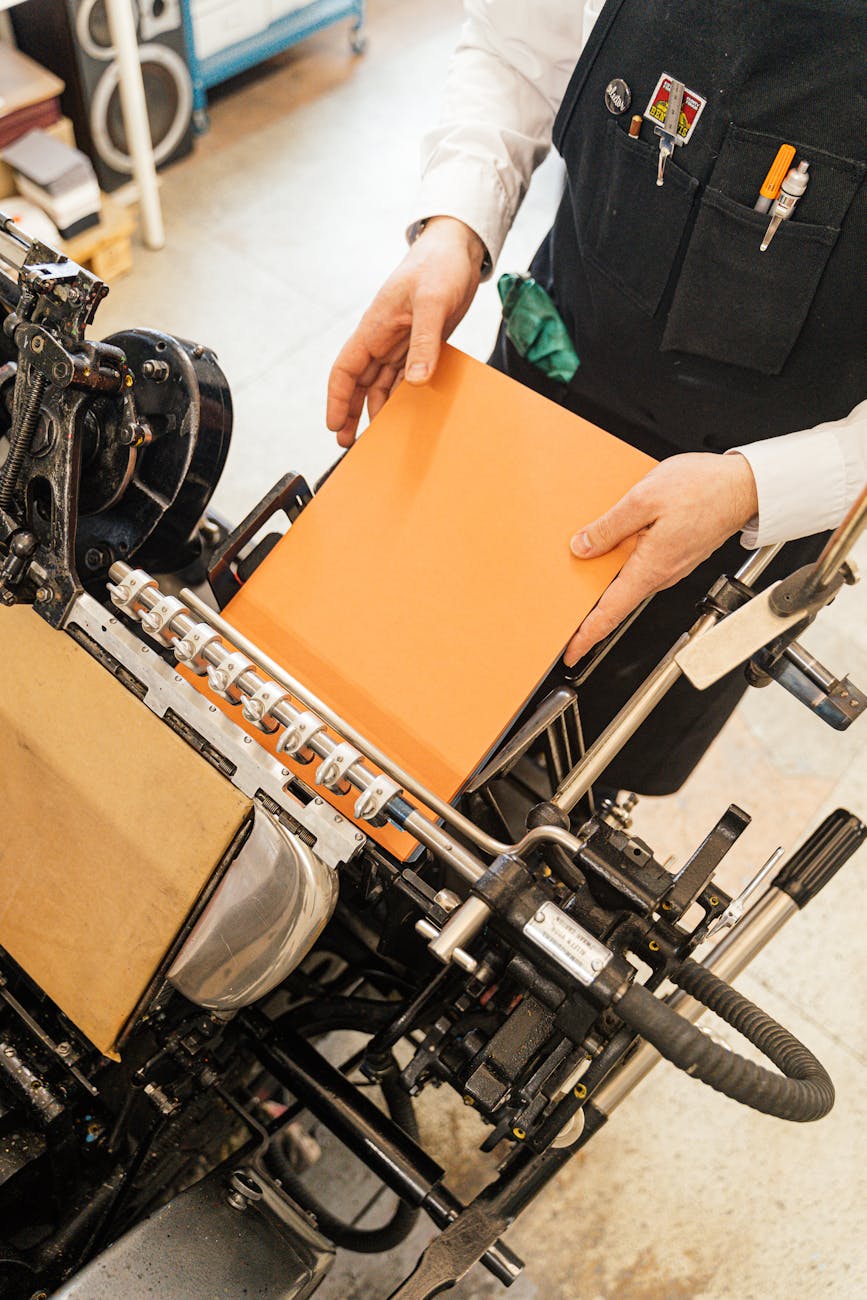
Photo by Antoni Shkraba Studio on Pexels.com

There is something about the craft of bookbinding. It re-educates the hands, and through them, the nervous system. It returns time to its proper scale.

I’ve been thinking about this more since settling into my new flat, which—by a small but meaningful stroke of grace—includes a dedicated studio space. For the first time in years, my tools don’t need to be packed away between sessions. Paper can sit under weights overnight without being disturbed, and work can pause without being dismantled.

Already this matters more than I expected. Bookbinding, after all, resists the logic of efficiency. Adhesive must dry. Grain direction must be respected. Linen thread must be drawn tight but not too tight. You cannot rush a spine without paying for it later. The work teaches you—firmly but kindly—that attention cannot be compressed.

Simone Weil famously wrote that “attention is the rarest and purest form of generosity.” Bookbinding operationalises this insight. You can’t bind a book while thinking three steps ahead. If your attention wanders while folding signatures, the error will propagate. If you rush the punching of sewing stations, the whole text block will pull askew. You can’t persuade paper fibres to behave differently through force of will; you must cooperate with them.

In this sense, bookbinding has become a counter-practice to much of contemporary creative life. Online, speed is rewarded. Visibility is currency. Iteration is encouraged, but only when it looks like momentum. The slowness of binding—a practice that may take days or weeks before anything finished appears—feels almost monastic by comparison.

And yet, paradoxically, it has made me more productive, not less.

One of the biggest misconceptions about patience is that it means waiting. In practice, patience is active–it’s a verb (metaphorically at least) because you are always doing something: sharpening a blade, squaring a stack, testing tension, laying out the next stage so it will be ready when the moment comes.

This mirrors something I see repeatedly in coaching work, particularly with highly sensitive or intellectually driven creatives. There is often an underlying anxiety that if one is not producing, one is stagnating. But many forms of growth happen beneath the threshold of visible output.

Since moving into the new flat and setting up the studio, I’ve noticed a subtle shift in how I approach my other work—writing, teaching, contemplative practice. I’m more willing to let something rest unfinished.

There is also, I think, an ethical dimension to working with materials in this way. Richard Sennett, in The Craftsman, describes craftsmanship as a dialogue between hand and material, where resistance becomes instructive rather than frustrating. This is not mastery-as-domination, but mastery-as-listening.

In bookbinding, materials remember what you do to them. Paper creased carelessly will never quite forgive you. Cloth stretched unevenly will telegraph the mistake forever. This permanence sharpens responsibility. You learn to slow down not because slowness is virtuous, but because it is necessary.

This has felt especially grounding during a period of personal transition. A new home, even a welcome one, requires recalibration. New light patterns. New noises. New routines. The studio has become a place where that recalibration can happen somatically, not just cognitively. Through repeated, careful gestures, the body relearns safety.

It’s hard not to notice the symbolic resonance here. Books are already threshold objects—containers of thought, memory, and voice. Binding them by hand heightens this awareness. You become acutely conscious of the labour that precedes reading, of the infrastructure that makes inwardness portable.

All of this feeds into a broader theme that’s been shaping my work lately: the power of small, well-held experiments. Not performative reinventions, but modest shifts in practice that reorient attention.

Perhaps the deepest lesson bookbinding has taught me is that care compounds. What feels like slowness at the outset becomes reliability later. Structures hold. Work lasts. You spend less time repairing what was rushed.

This is true of creative practice, of relationships, of inner life. Patience is not something we adopt once and for all; it is something we rehearse through forms that demand it of us.

For now, I’m grateful for a studio that allows this rehearsal to continue—quietly, materially, without display. And I’m grateful, too, for the conversations that extend from it: in workshops, in coaching, in shared spaces of attention.


Upcoming Events

Integrative Meditation

  • 19 January | 7.30-8.30 PM GMT | £4

Creative Flow Co-Working Session: The Power of Tiny Experiments

Highly Sensitive Creatives: Energy, Boundaries, and Creative Rhythm


More to Explore

Filling the Well: Notes from Sabbatical

My research sabbatical is coming to an end, and while I have made a lot of good progress on my next book, I’ve also been delighted by the sublter transformations that I’ve encountered. Alongside the core research for my new projects— on occult print culture and the strange fidelities between intimacy and texts—I’ve been tending to what Julia Cameron calls ‘the well,’ that source of creative inspiration. I’ve been learning to slow down enough to explore new skills, curiosities, and dormant longings to surface. Some of these pursuits are practical; some are contemplative; most sit somewhere between the two.

I began to practice bookbinding because I wanted to understand, physically, how a book hangs together. Working on the history of grimoires and the materiality of printed esoterica, I kept returning to the question: what does a book know about itself? Researchers like Owen Davies point toward the intimate entanglement between form and authority; grimoires weren’t just texts but talismanic objects, their legitimacy often communicated through their very construction.

But it wasn’t until I stitched my first pamphlet binding and felt the click of thread against paper that I understood this not just intellectually but bodily. Bookbinding slows you down to a new tempo. You can’t rush glue or the slow process of folding signatures. There’s something beautifully therapeutic about it.

I’ve also been learning how to brew coffee properly, an unexpectedly transformative discipline. It started with a simple desire to make better morning coffee to get me going (how often do we think of coffee just as an efficient way to get caffeine into our bloodstream?), but quickly became an experiment in sensory calibration. James Hoffmann’s work has been a guide and inspiration here. Grind size, water temperature, bloom time: they are all micro-decisions that shape experience. Becoming more attentive to them has become vital to my routine and daily practice. Sometimes the most powerful shift comes not from a grand reinvention but from learning a new ratio, a better rhythm, a different pour.

Then there is printmaking, a new art form that I have started experimenting with more recently. Monoprints, drypoint printing, and marbling all resist control in the most generative ways. They feel like metaphors for this sabbatical as a whole: you set the conditions, choose your pigments, prepare your plate, but the final print is something all its own, often capturing what Bob Ross would call ‘happy little accidents’. Printmaking is a collaboration between matter and intention, process and surrender. Some pieces are simply meant to exist only once, a reassuring thought for someone trained to measure impact in citations, outputs, and REF cycles.

One of the surprising discoveries of sabbatical is how porous the boundaries are between ‘hobby’ and ‘research’, ‘craft’ and ‘scholarship’, ‘practice’ and ‘life’. The old binaries feel increasingly unconvincing. My work on the ethics of mail-order occultism has been deepened by physically making books. My exploration of attachment in modernist literature has been illuminated by tactile processes that centre contact, negotiation, and impression. Even the coffee—humble as it seems—has become a way of thinking about attention as a moral resource.

There is also, I suspect, something about mid-career tenderness here: the desire to re-inhabit one’s own curiosity after years of professional responsibility. Sabbatical hasn’t been a retreat from work but a reorientation toward it. The crafts have been steadying companions, teaching me to show up with less armour and more texture.

This is the energy I’m carrying into 2026, both in my writing and in the programmes I’m designing: embodied creativity, and forms of inner work that feel supportive rather than ascetic. A year of root systems rather than resolutions.


Looking Ahead: An Invitation

If you’re in your own season of reorientation—whether creative, vocational, or relational—I’d love to support you.

Inner Alchemy: Practices for the New Season of You (FREE)
1 December, 7.30–8.30 PM GMT
A gentle, reflective hour to help you re-centre and step into winter with clarity and calm.
https://www.meetup.com/the-art-of-creative-practice/events/311901504

Five-Day Soul Map Challenge (£19)
8–12 December, 8.00–9.00 AM
A structured, powerful week of guided inquiry to help you understand the deeper patterning of your current season and identify the next right steps.


None of these practices—bookbinding, coffee brewing, marbling—were part of my planned sabbatical. They arrived almost incidentally, small doorways into a quieter kind of learning. But they’ve become some of the most meaningful teachers of this season. They’ve encouraged me to be a little less polished, a little more porous, and to remember that knowledge doesn’t only live in the mind.