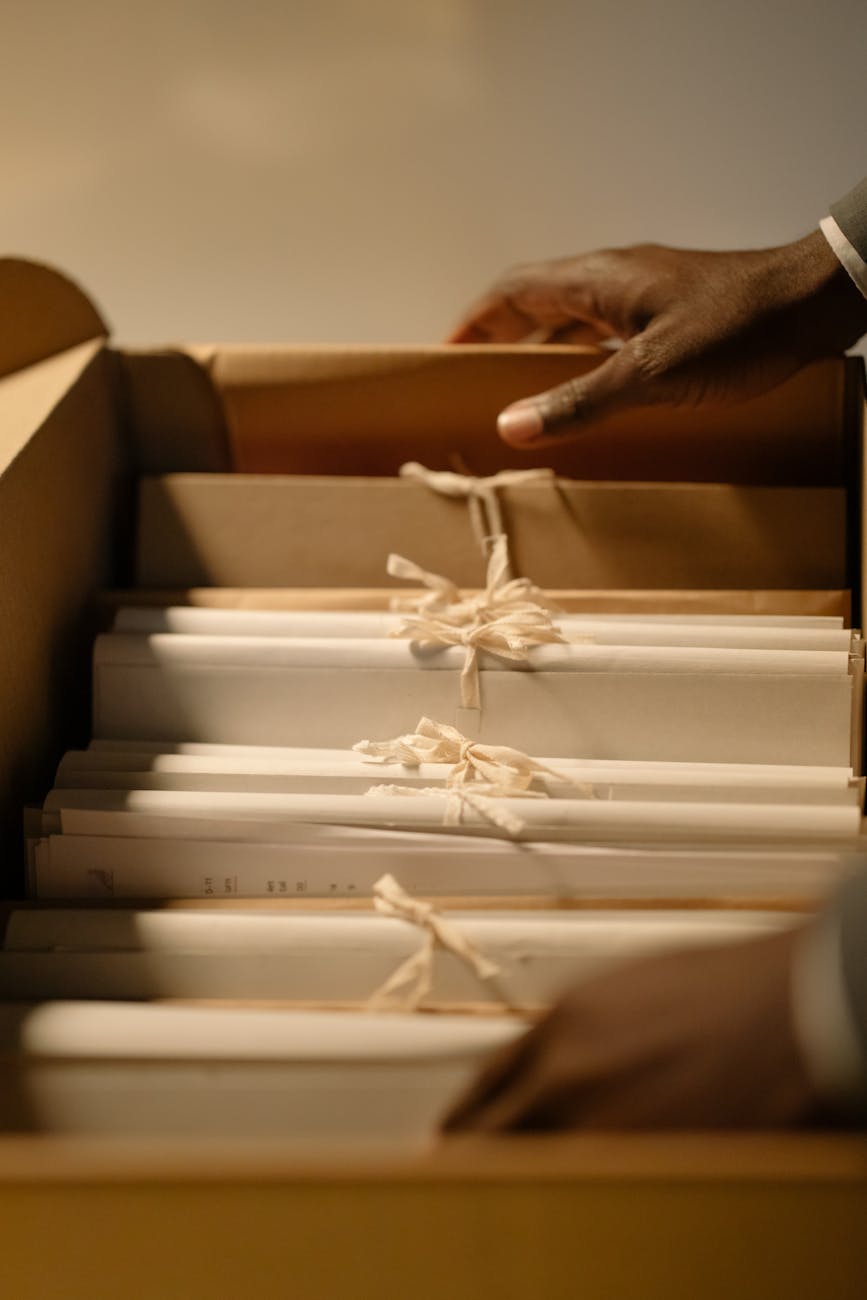
There is something uncomfortably revealing about the creative projects we keep putting off “for later.” The ones we abandon outright are easier to narrate, to explain away, to file under “not quite right” or “no longer aligned.” But the projects we hold on to with a kind of reverence but never actually commit to have a lot to say about what we truly value.
I’ve been thinking about this a great deal recently, not least because I’ve found myself in the thick of planning and filming new material for The Art of Creative Practice, which, this autumn, will expand into a new interactive community with a dedicated app. It’s a project that, in one sense, has been years in the making through the accumulation of methods, fragments of teaching, and lived experiments in what it might mean to treat creativity as a way of approaching the world. In another sense, it has only just begun, precisely because I’ve stopped waiting for it to become something more perfect, more complete, more defensible.
I’m reminded here of something in Art & Fear by David Bayles and Ted Orland: the idea that most artists are defeated not by a lack of talent, but by the fear of making something imperfect. The projects we keep “for later” are often the ones we’ve invested with the highest symbolic stakes. They are not just projects: they are proxies for who we think we might be, if only we could get them right.
And so we wait…
But waiting, as it turns out, isn’t a neutral act. It shapes the project just as much as doing does. It introduces a kind of conceptual inflation: the longer something is delayed, the more significant it seems to become, and the more it has to carry. No wonder it becomes increasingly difficult to begin.
There’s a tension here that I see often in my coaching work, and that I recognise in myself: the pull between the desire for integrity and the reality of practice. Integrity asks for coherence, for alignment, for something that feels “true.” Practice, on the other hand, is messy, iterative, frequently disappointing. The danger is that we place integrity at the end of the process—something to be achieved once the work is finished—rather than at the beginning, as a commitment to showing up honestly, even (especially) when the work is unfinished.
This is where the projects we defer become instructive. They show us, quite precisely, where our thresholds are. What feels too important to risk? What feels too revealing to share? What feels too central to our identity to be allowed to fail?
In my own case, fully developing an app-based community for The Art of Creative Practice has long occupied that space. It sits at the intersection of so many things I care about: creativity as a spiritual practice, the relationship between inner life and outer action, and increasingly, the connection between creativity and ecology, that is, what it might mean to create in a way that is responsive to, and in relationship with, the more-than-human world.
Over the past months, as I’ve been filming and shaping this new material, I’ve had to let go of a certain fantasy of what the project should be. This feels important to say, because it’s easy to assume that projects like this emerge fully formed, or that there is a moment of clarity in which everything clicks into place. In reality, it’s much closer to what Donald Schön called “reflection-in-action”—a kind of thinking that happens through doing, where the work itself becomes the site of inquiry.
There’s also something relational at play here. One of the reasons I’m building this next phase of The Art of Creative Practice as a dedicated app and year-long journey is precisely to create a more vibrant, dialogical space for this kind of unfolding. The older model—content delivered, consumed, and completed—feels increasingly insufficient for the kind of work I’m interested in. Creativity, especially when understood as a spiritual or ecological practice, is not something we do alone. It is shaped through conversation, through encounter, through the subtle feedback loops of community.
More on this in the coming weeks and months, but for now it feels like a significant shift: from holding the project back until it is “ready,” to allowing it to develop in public, in relation.
If there is a question running through all of this, it might be this: what would it mean to bring one of your “for later” projects slightly closer? Not to complete it, not to perfect it, but simply to reduce the distance between where it is and where you are.
And if perfectionism feels like a particularly strong thread in all of this, I’m running a workshop next week that speaks directly to it:
Overcoming Perfectionism and Taming the Inner Critic
Tuesday 5 May | 7.30–9.00 UK time | £12
Register here: https://www.meetup.com/the-art-of-creative-practice/events/314377652/
We’ll be working with some of these dynamics in a practical, grounded way, looking at how the inner critic operates, and how we might begin to relate to it differently, without needing to silence it entirely.
For now, though, I’m returning to the question I began with. The projects we keep “for later” are not just deferred tasks. They are, in many cases, small maps of our inner landscape. They show us where we hesitate, where we hope, where we protect something that feels, inarticulately, important.
The invitation is not to force those projects into the present, but to become curious about the distance we’ve placed between ourselves and them. To ask, gently but persistently: what am I waiting for?
And perhaps, in some small way, to begin anyway.
Discover more from Allan Johnson, PhD
Subscribe to get the latest posts sent to your email.
