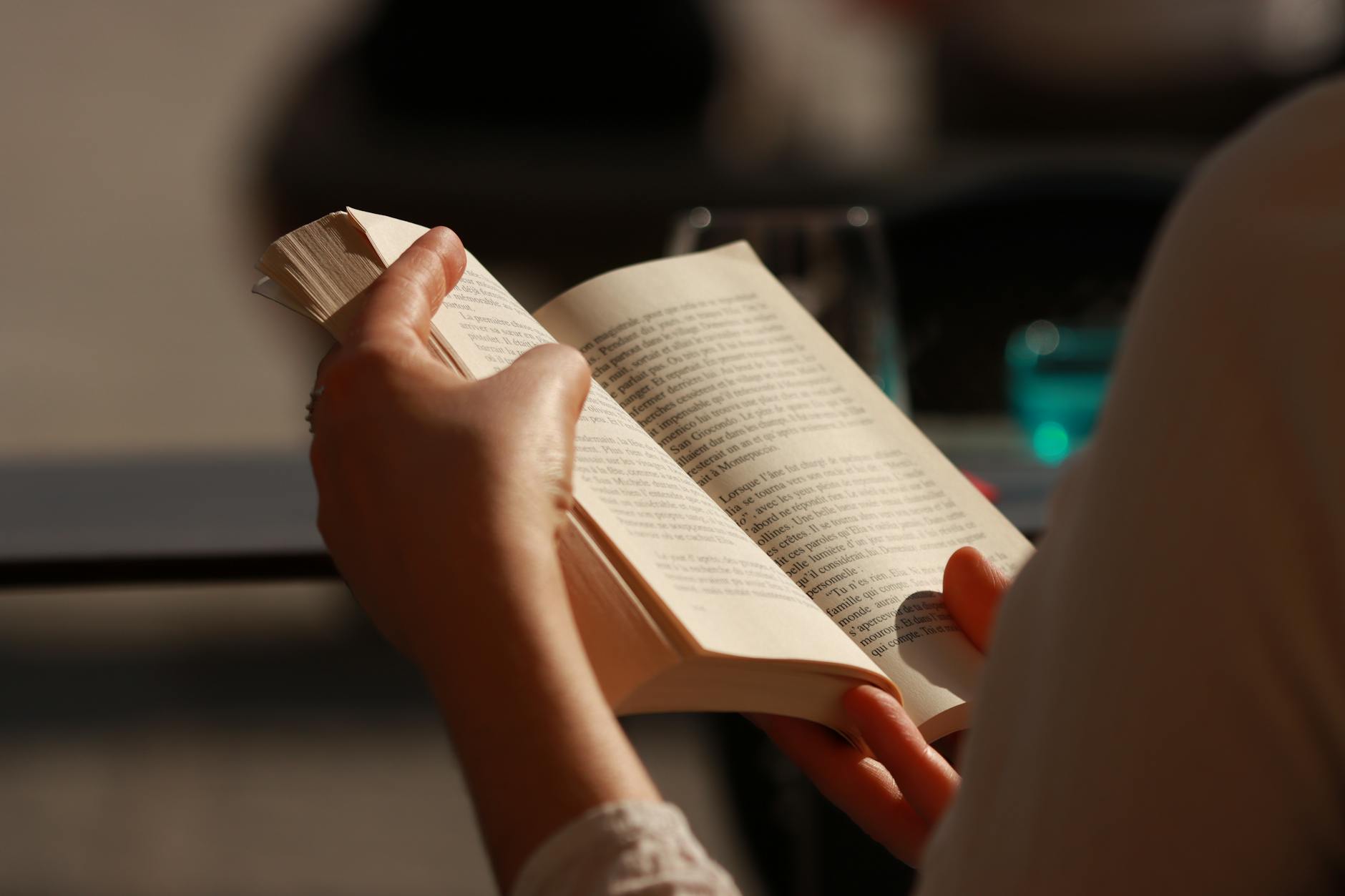
I’ve been thinking a lot lately about what it means to really read something.
Partly this has come from my work running the new Writer’s Flow Circle, which has already been a genuinely energising experience sitting alongside a group of thoughtful, committed writers who are all, in different ways, trying to deepen their relationship to their own work. What’s become clear, very quickly, is that writing problems are almost always reading problems in disguise.
When one of my 1-1 coaching clients says “I feel stuck,” or “I don’t know what I think,” or “I’ve lost confidence in my voice,” what often sits underneath is a fractured reading life: too many inputs, too quickly consumed, with too little time for digestion.
There’s a familiar temptation to read instrumentally, to gather, to assemble, to skim. At times useful, yes. But it can also be subtly corrosive if it becomes the default mode. We live in a culture that rewards speed and visibility. To have read something is often more about being able to reference it than to have truly encountered it.
The philosopher Maryanne Wolf writes about this in Reader, Come Home, where she describes the shift from “deep reading” to what she calls “bi-literate reading”, a split between fast, digital skimming and slower, immersive engagement. The more we train ourselves to skim, the harder it becomes to sustain attention.
This isn’t new, of course. It sits somewhere in the lineage of thinkers like Mortimer Adler in How to Read a Book, and further back in the monastic tradition of lectio divina, the slow, attentive, almost meditative reading of sacred texts
Here are a few practices that are deeply effective:
1. Time-boxed immersion
Rather than vaguely intending to “read more,” set a defined container. Even 25 minutes of uninterrupted reading can be enough to drop beneath the surface.
2. Read before you input
This is a small but hugely significant shift: reading before opening email or social media. The quality of attention is noticeably different.
3. Pair reading with reflection
Not extensive note-taking. Just a few lines afterwards: What stayed with me? What resisted me? What do I want to return to?
4. Re-read without guilt
Depth often comes from returning, not progressing. There’s something very rich and important and valuable in allowing a text to unfold over time.
The more I work with writers, the more I see that reading and writing are not separate activities. They’re two expressions of the same underlying process. When reading becomes shallow, writing often becomes strained; when reading deepens, writing tends to follow, not immediately, but reliably.
If you’ve felt scattered in your reading lately—or if books have started to feel more like obligations than encounters—it might be worth experimenting with a slightly different approach this week. Choose one text. Give it more time than feels necessary. Let it be incomplete. And notice what happens.
If You’d Like to Go Further
If this resonates, there are a few ways to continue the work together.
I’m currently offering free Clarity Calls for those interested in ongoing 1–1 creativity coaching. These are relaxed, exploratory conversations where we look at your current creative process—what’s working, what isn’t, and where you might want to go next.
You can book here: https://allanjohnson.co.uk/coaching/
I’m also running a couple of upcoming sessions that build on these themes:
Weekly Creative Flow Coworking Session: Decluttering Your Creative Mind
Monday 27 April | 10.00–12.00 (UK time) | Free
A gentle, structured space to clear mental noise and reconnect with focused creative work.
Register: https://www.meetup.com/the-art-of-creative-practice/events/313785594/
Overcoming Perfectionism and Taming the Inner Critic
Tuesday 5 May | 7.30–9.00 (UK time) | £12
A deeper dive into the psychological patterns that shape how we read, write, and share our work.
Register: https://www.meetup.com/the-art-of-creative-practice/events/314377652/
And, if you’re in London, I’ll be hosting a series of in-person workshops at Treadwell’s Books over the coming months. Keep an eye out for more details!
More to Explore
Discover more from Allan Johnson, PhD
Subscribe to get the latest posts sent to your email.
