Labor Day is about more than just a long weekend. It’s a moment to pause, step back, and reconnect with what matters most. What better time to begin a practice that reduces stress, boosts focus, and helps you feel more present in your life?
That’s precisely what my course Integrative Meditation | Level 1 is designed to do. And for this weekend only, you can enrol for just £11.99 (regularly £14.99).
Most meditation programs stop at relaxation. Integrative Meditation goes deeper. Drawing from Mindfulness-Based Cognitive Therapy (MBCT), neuroscience, positive psychology, Acceptance and Commitment Therapy (ACT), journaling, and breathwork, this 4-week programme gives you a science-backed framework to rewire your brain and build resilience for the long term.
Here’s what you’ll gain:
Less stress & anxiety: Learn practical tools to calm your mind and regulate your body’s stress response.
Freedom from negative thinking: Break the cycle of self-doubt and transform limiting beliefs into self-compassion.
Sharper focus & productivity: Train your attention, reduce distractions, and get more done with clarity.
Stronger emotional resilience: Quiet the critical inner voice and bounce back from setbacks with greater ease.
A deeper sense of self: Go beyond labels and roles to connect with your authentic purpose and values.
And unlike one-off guided meditations, this course helps you establish a lasting practice—through short knowledge lectures, guided meditations, and reflective journaling you can fit into just 30 minutes a day.
Why Now?
Because the habits you start today will shape your tomorrow. With the long weekend ahead, you can finally give yourself the space to begin a meditation practice that sticks.
For just £11.99 this Labor Day weekend, you’ll get:
6+ hours of on-demand video
42 guided lessons across 4 weeks
9 downloadable resources & 1 article
Lifetime access on all devices
Certificate of completion
Normally £14.99, this offer is only available until Monday night.
Ready to Begin?
Click below to start Integrative Meditation Level 1 for just £11.99 and begin rewiring your mind for peace, focus, and resilience.
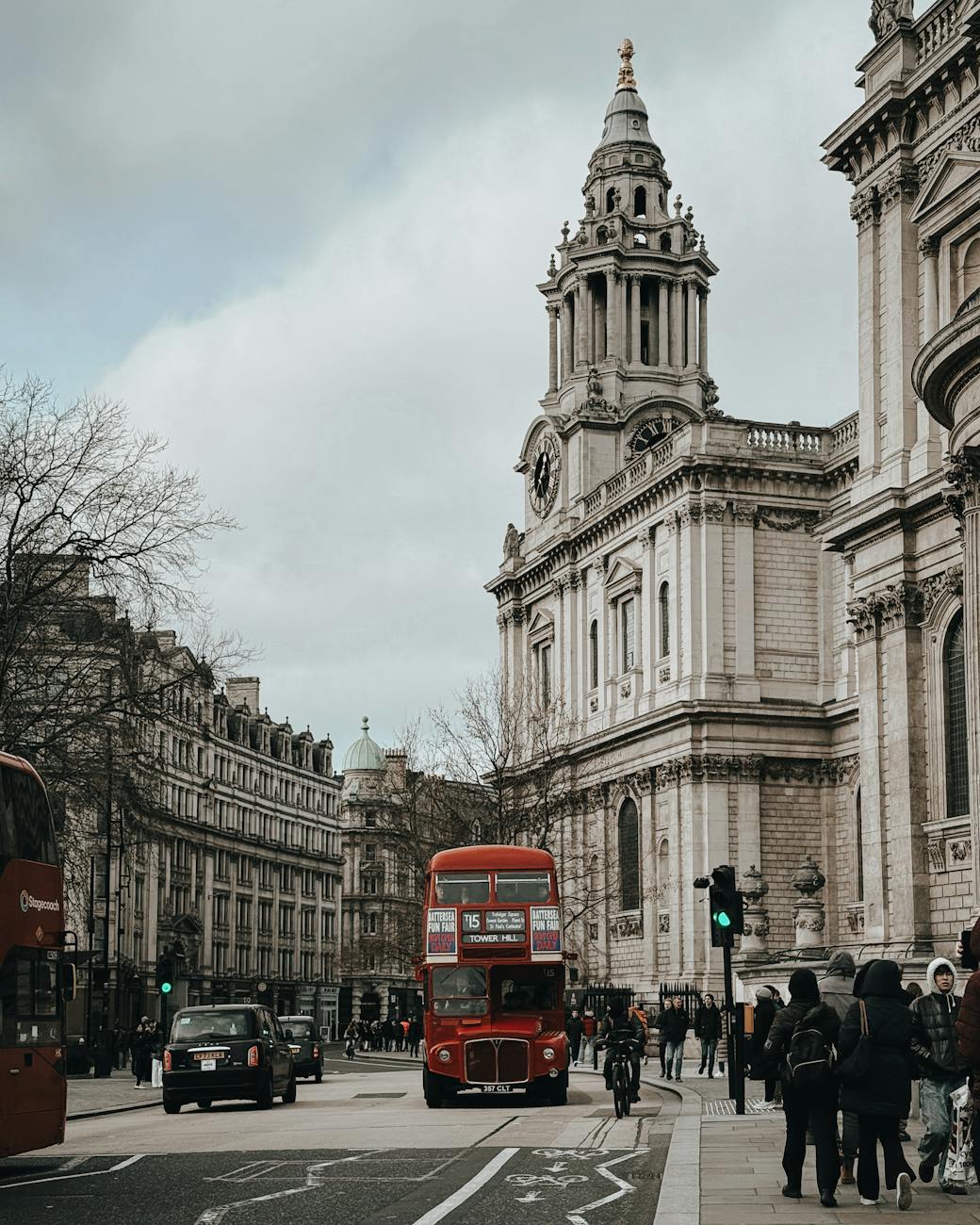
I notice how literature lingers in the pavements in London. I’ve found this more and more the longer I’ve lived here. After all, ‘when a man is tired of London, he is tired of life’, as Samuel Johnson wrote. Even on the most ordinary days, when I’m simply walking to the shops or having a coffee, a remembered passage from Woolf or Dickens reshapes the atmosphere, giving a quiet strangeness to what otherwise might seem familiar. Literary walks don’t need to be formal, nor do they require a tour group—although there is a place for those. Instead, they are an everyday practice of letting what we’ve read colour what we see, and in turn allowing the city to read us back.
Cities are always already read, even before we open a book about them. Our streets teem with signs and symbols: shopfront typography, graffiti tags, the peculiar poetics of street names, layering like muddy sediment the history of an ancient city, each one carrying some buried narrative. Roland Barthes, in Mythologies, reminds us that everyday signs are never innocent, but instead they come loaded with cultural meaning. Michel de Certeau goes further, describing walking itself as a kind of writing: each step a form of mark-making, each turn a marginal note. Perhaps this is why walking has become one of my most reliable contemplative practices; I can never quite shake the sense that London is, in spite of its sublime history, an unfinished text, and that my role as a walker is not only to read but to annotate.
Reading literature set in a city makes us feel less like visitors and more like participants. When I first read Mrs Dalloway, I hadn’t spent much time in London, but the rhythm of Woolf’s sentences gave me an immediate familiarity with the city. Later, when I actually walked those spaces and traced Clarissa’s journey on foot with my students the novel gave me entry points into belonging to a city that didn’t seem materially my own. Literature offers a way of settling without appropriation: it lets us walk streets we may never ‘own’ or even afford to live on, but with a kind of kinship. For me, reading the urban canon—Joyce’s Ulysses for Dublin, Smith’s NW for Willesden—has softened the edges of new places, helping me to live in them with curiosity rather than defensiveness.
Walking with a book’s shadow creates a double vision: the city as it is, and the city as it is imagined. Every time I find myself near Holborn, I see Dickens’s London superimposed on the glassy facades of insurance firms; the ghosts of debtors’ prisons and fog-bound alleys live on in the shadow of a Costa or Pret. And I can’t help but notice how nearly every pub in the vicinity has a plaque reporting that Dickens used to drink there and recounting a famous 17th-century stabbing that took place there. To walk with these texts is to carry a palimpsest in mind, where past and present are layered, sometimes clashing, sometimes harmonising. In my own recent walks, especially since returning to more teaching this year after six years in leadership, I’ve been acutely aware of this doubling. The university campus is also both a physical environment and a palimpsest of earlier student generations—I grow older, but my students, disconcertingly, stay the same age every year. Literature trains us to notice these overlays, and walking keeps the lesson alive.
Literary walking is not only about cities, it is also about the walker. What we bring to the page and to the street matters as much as what the author provides. Some days my walks are brisk and pragmatic; on others, they slow into reverie. I notice how my mood shapes the city I ‘read’, whether the buildings feel inviting or alienating, whether the metaphors I attach are hopeful or heavy. Theorists of psychogeography often emphasise dérive—the unplanned journey or drift—as a mode of breaking free from capitalist rationalisation of space. Yet for me, walking with literature offers a slightly different promise: not only resistance, but companionship. A door knocker shaped like a lion’s head, a tree whose branches look suddenly archetypal, a narrow side alley that seems like it should have its own subplot. Reading tunes our attention and primes us to see texture where before there was only function.
There is also a social dimension to literary walking. Books are companions, but so too are the people we share them with. When I’ve brought novels into reading groups or teaching seminars, I’ve been struck by how each reader brings a different walk through the same text. These conversations remind me that the city is never read alone—it is always interpreted collectively, shaped by a multiplicity of histories. I think of my own upcoming groups—the Living a Course a Course in Miracles study group or the weekly Creative Flow Sessionsthat are beginning this autumn—as spaces where such collective interpretations of experience can flourish, even if not always tethered to literal walking.
In many ways, literary walking is about staying with a place rather than consuming it. When I moved to Hong Kong, I was initially so overcome by the immensity of it that I bought a fancy camera to help me train my vision on the particulars; when I visit Stockholm, my favourite city in the world after London, I find a space that is, inversely, more human-scale. London is a capital somewhere in between, neither entirely comforting to the human spirit or form, nor entirely forbidding. One never tires of London because it takes work, practice, and grit to live in London.
Cities are often perceived as destinations to be ‘done’, sights to be checked off in rapid succession. But literary walking resists that tempo. It asks us to linger, to reread, to take a slower pace. To walk with a book in mind is to inhabit a place rather than extract from it. In this sense, walking becomes a small ecological ethic, a way of living lightly while seeing deeply. The practice is never finished, just as no book is ever fully read. Each walk is another opportunity for literature to accompany us, shaping how we see and how we are perceived.
An Invitation to Walk With Me (Figuratively at least)
What books have changed the way you walk your city? I’d love to hear your reflections—share them in the comments or reply if you’re reading this via newsletter. If you’d like to explore more practices that blend literature, creativity, and contemplative living, you’re warmly invited to join our Weekly Creative Flow Sessions this autumn or the new 18-month reading cycle of A Course in Miracles.
As autumn approaches, I hope your own walks—whether with books, with friends, or simply with yourself—offer you fresh ways of seeing the cities you call home.
I’m reaching out to subscribers first to say that I have a small number of one-to-one coaching spots opening up this autumn. I’d love to see if working together can help you gain clarity, focus, and momentum in your life.
Sometimes the most challenging part is knowing where to start, which is why I’m offering a free 15-minute clarity call, where we can:
Talk through your goals and current challenges
See if coaching or an integrated approach is the right fit for you
Outline practical next steps to start creating real, lasting change
As the leaves turn and the pace of life shifts, autumn is the perfect season to nurture your creative self. Whether you’re a writer, artist, academic, or thinker, this fall I’m offering a range of events designed to support your practice, spark fresh ideas, and help you stay focused and inspired.
🎨 Weekly Creative Flow Sessions – Free Dedicated time to write, draw, or work on your projects alongside other creatives. No pressure, just presence, energy, and support. Quiet, structured sessions to help you start, focus, and finish your creative work in good company. RSVP here
📖 12-Week Artist’s Way Circle Dive deep with Julia Cameron’s classic book, The Artist’s Way, bringing the work to life in community with practical exercises and reflections to reclaim your creative voice. Weekly 90-minute circles for reflection, sharing, and growth. Join here
🧘 Mindfulness for Creatives – Evening Workshop Learn mindfulness techniques specifically for creatives and academics. Cultivate focus, flow, and inspiration in your daily practice in this 2.5-hour workshop filled with science-backed insights and practical exercises and tools. Reserve your spot here
Autumn is a season of new beginnings and renewed energy. Whether you’re seeking free flow time, structured accountability, or a transformative creative journey, there’s a place for you in these sessions. I’d love to see you there—let’s make this autumn a season of inspiration, focus, and creative growth.
Academia, for all its bureaucratic scaffolding and metricisation (neither of which, in spite of what many would have us believe, is newly arrived on the scene), has always seemed to me less an outcome and more a craft. The language we use is linear and progressive—impact, output, key performance indicators—but the experience is slower and quieter. What looks from the outside like a trajectory of advancement often feels, from the inside, like the painstaking rhythms of practice: revisiting texts, refining an argument, shaping a paragraph until it carries its own weight.
Beginning a period of sabbatical this month has sharpened this distinction for me. Having the time to work on my next book, on liberal theology in early-20th-century America, is an extraordinary privilege, of course, but also a perturbing reminder that the rhythms of academic life are neither fixed nor inevitable. After a six-year term as an associate dean, when my diary wasn’t my own and a truly uninterrupted hour for writing was out of the question, I now find myself in a space where mornings are less prescribed, afternoons more open, and evenings less weighed down by the day’s unanswered emails.
This shift has interrupted the treadmill to which I had grown accustomed: no more weekly meetings or administrative reports, fewer obligations to the tempo of the institution. The contrast is striking. Career logic dictates constant forward motion, progression, and visibility. Sabbatical interrupts that, slowing time to the pace of craft: immersion, attention, revision. After years of deliberately (and at times aggressively) climbing a ladder, it feels now like I am stepping back into the workshop of what I have actually been trained to do: pore over the historical record to better understand what modernist literature means, and, in doing so, cultivate my own scholarly sensibilities in order to train students to do the same.
The language of career encourages us to think in terms of advancement, but the language of craft invites us to think in terms of depth. Career implies a vertical climb: promotion, recognition, and external markers of success. Craft, by contrast, is iterative and circular: you return to the same problems with new tools, you revisit the same materials with a slightly steadier hand. In my ways, this sabbatical is feeling like an unmistakable return, and whether or not my hand is indeed steadier, it is at the very least different to when I began my career.
Pierre Bourdieu’s account of ‘academic capital’ in Homo Academicus explains much about why universities are structured to reward careerist accumulation: advancement depends on how well one plays the game, converting intellectual labour into recognisable forms of capital. But Richard Sennett’s celebration of craft in The Craftsman reminds us that the deeper meaning of scholarly work is found elsewhere: in the long hours of slow reading, the shaping of sentences, the iterative labour of interpretation. Bourdieu undoubtedly shows us the internal logic of the field, but to treat scholarship as craft is to resist the abstraction of labour into capital and to remain grounded in the work itself, the feel of words under the hand, the quiet satisfaction of making something well.
Craft is built not through dramatic leaps but through the slow accumulation of skill over time. Looking back, I see this clearly in my own trajectory. As an undergraduate, I was awkward but diligent; I once arrived late to an exam with an analogue alarm clock whose battery had died, holding it up as evidence. From those unpolished beginnings to my current role as teacher and writer, what has mattered is not sudden transformation but steady honing.
This accumulation resists the logic of outputs. Like any craft, academic practice is tethered to the materiality of tools, spaces, and habits. The scholar’s equivalents of the potter’s wheel or carpenter’s chisel are the library, the notebook, and the annotated text (I’ve also grown accustomed to my ReMarkable tablet but still feel uneasy when I see my disused notebooks glaring back at me from the shelf).
My own sabbatical days so far have been marked by relocating books and rediscovering notes I had once scribbled in margins, while rearranging my desk into something that feels more like a workshop than an office.Bruno Latour reminds us in Reassembling the Social that tools are never neutral; they co-constitute practice. Academic work, though often presented as disembodied thought (the ‘output’, the ‘paper’, the ‘impact’), is always materially situated. The desk, the chair, the pen, the screen: they are part of the making.
The pressures of modern academia can make it dangerously easy to forget the craft beneath the career, but the dangers of modern academia can make it just as tempting to ignore the career beneath the craft, an evasion that only feeds the very thing we hoped to resist.
I know this from experience. Six years in middle leadership brought tremendous satisfaction but also a creeping drift away from the hands-on craft of my own research. Strategy and oversight are necessary, but they can displace the intimate contact with sources and sentences that drew me to academia in the first place. Sabbatical is, in that sense, a time to retool: to remember the making at the heart of the work. As Stefan Collini asked in What Are Universities For?, what are we serving if we forget the scholarly craft that justifies the institution itself?
My hope for this sabbatical is to deepen the craft. A book will come out of it, but as a tool rather than a product. I want to give myself permission to linger in primary texts, to sketch ideas without rushing to publication, to think slowly. Projects on attachment and literature, and on contemplative approaches to pedagogy beckon, but I want to approach them less as tasks to be completed than as materials to be worked with patiently.
To see scholarship as craft is to reclaim its artistry from the machinery of career. Universities will continue to speak the language of metrics, rankings, and progression, an essential role, because it is this machinery that maintains the workshop in which scholarship can take place. But we don’t have to speak in the same register. To resist or even repudiate the machine is not to undermine the institution but to create the very conditions in which scholarship can breathe: the space for slow thought, patient practice, and the kind of intellectual labour that no metric can capture.
The machinery of career will always hum in the background, but we needn’t let its clatter drown out the quieter sound of practice itself. If these reflections resonate, I explore them further inThe Art of Academic Practice on Substack, a space for thinking together about how scholarship might remain both sustainable and alive.