Metaconsciousness: Becoming Aware of the Ways We’re Driven

Lately I’ve been thinking about how much of life unfolds beneath the surface of our awareness, not just in the mysterious depths of the unconscious, but also in the quieter, more practical rhythms of habit, mood, and reaction. What if our real work is to notice not just what we’re conscious of, but how consciousness itself is being directed?

That’s what is meant by metaconsciousness, the capacity to recognise when we are being driven by hormones, hunger, fear of rejection, deadlines, the steady dopamine drip of our phones, or the deep psychic grooves of childhood conditioning. In my own experience—especially during the past few months of moving between projects, planning new teaching, and reshaping routines—this awareness has felt like an internal turning point. The challenge isn’t simply to ‘be mindful’, but to discern the layers of agency beneath the surface: Who, exactly, is choosing what I’m doing right now?

When I start to ask that question seriously, it becomes uncomfortable. I notice how much of my day is already spoken for by subtle compulsions masquerading as preferences. Even something as benign as checking email can carry the faint pulse of anxiety, a microdose of control. We like to believe that modern life rewards autonomy and discernment, but in practice it trains us in reactivity, which is, by definition, the opposite of freedom.

From Consciousness to Metaconsciousness

Consciousness, in this view, is not a steady state but a constantly fluctuating field of attention. It’s automatic, embodied, and largely determined by biological imperatives. You feel hunger, so you eat. You feel threatened, so you defend. You feel bored, so you reach for your phone. These are not moral failings; they’re simply how the nervous system evolved to keep us alive.

Metaconsciousness, though, introduces a different quality. It’s what happens when we see that we’re acting automatically and hold that recognition with curiosity rather than judgment. There’s a subtle but profound difference between saying ‘I’m angry’ and ‘I notice that anger is arising’. The first statement identifies with the emotion; the second observes it. And in that observation lies the seed of freedom.

This is why contemplative practice remains, for me, one of the few truly radical technologies of our time. Sitting quietly, noticing the mind’s movements without needing to edit or manage them, slowly reveals how much of what we call “self” is just a cascade of impulses, stories, and inherited scripts. Over time, a new perspective opens—one that isn’t outside the body but is no longer confined by it.

If you’re drawn to exploring this dimension in your own creative or professional life, I’ll be leading an online session called Mindfulness for Creatives: Cultivating Focus, Flow, and Inspiration on 23 October (7.30–9.00pm, UK time). We’ll look at practical tools for noticing when attention narrows or scatters—and how that awareness can restore genuine inspiration.

The Drama of the Driven Life

Of course, once we begin to see how we’re driven, another pattern emerges: the drama of selfhood. Many of us unconsciously replay emotional scripts that were formed long before adulthood, such as seeking validation, fearing abandonment, or rescuing others to avoid our own discomfort. These patterns aren’t evidence of failure but they are evidence that we are living out of old perspectives and potentially trying to replicate old relationships from the past, especially the damaging or traumatic ones.

But they can also be exhausting. In coaching and in my own reflective practice, I’ve seen how deeply these dynamics colour our work, our love, and even our whole sense of purpose. The shift toward metaconsciousness invites us to watch these patterns with compassion and detachment, and to move, in psychological terms, from within the drama to observing it.

This theme forms the heart of my upcoming workshop Stopping the Drama Cycle: A Workshop on Love & Our Limiting Patterns on 3 November (7.00–8.30pm, UK time). It’s an evening devoted to understanding how we get pulled into emotional triangulations—the victim, rescuer, and persecutor roles that Karpman identified—and how to step into a more mature and loving mode of engagement. If you’ve ever felt trapped in repetition, whether in relationships or creative work, this session offers a clear, compassionate way through.

Beyond Insight: Practicing the Miraculous

Metaconsciousness doesn’t stop at awareness; it calls for us to do something with it and act from a deeper centre. For me, this is where A Course in Miracles becomes a training in radical perception. Its central insight, that we can learn to see differently, aligns perfectly with the idea of metaconsciousness: we are not our automatic thoughts, but the awareness capable of choosing love instead of fear.

In Practical Miracles: Practicing the Course Beyond the Book on 8 November (2–5pm, UK time), we’ll explore this integration more experientially. How do we move from intellectual understanding to lived transformation? How do we reframe life’s small irritations as opportunities to practice gentler perception? This isn’t about metaphysical abstraction but about everyday miracle-mindedness: the courage to meet the driven mind with tenderness.

A Season of Turning Inward

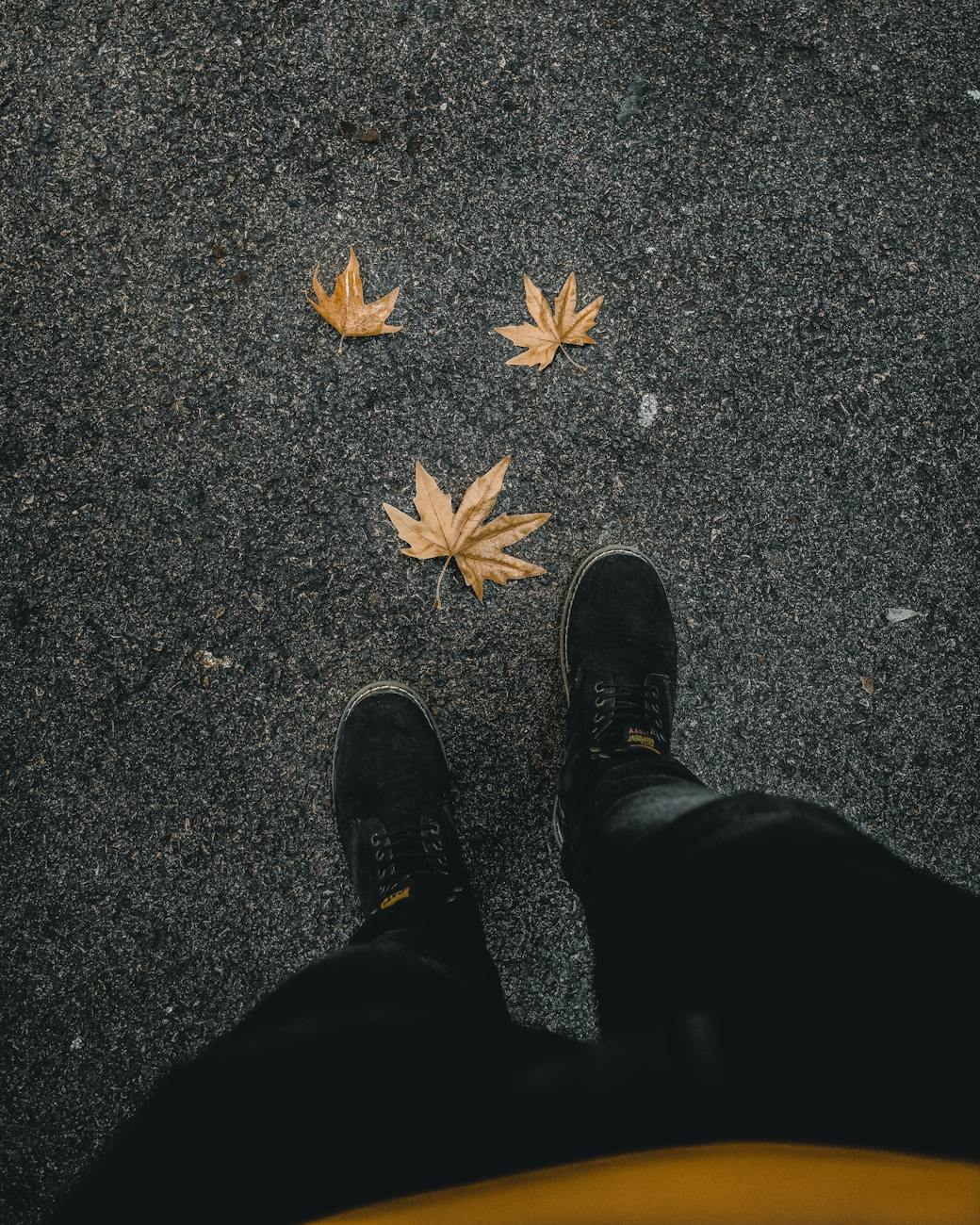
As autumn settles in, I find myself slowing down a bit. The academic year begins; projects find their rhythm; the light changes. Each season asks for its own form of consciousness, and autumn, for me, always invites metaconsciousness. It’s the season of noticing how we’re driven: by deadlines, by expectations, by the desire to finish before winter.

But it’s also the season of release. Of choosing what’s worth carrying forward and what can gently fall away. In this way, the movement from consciousness to metaconsciousness mirrors the movement from doing to being—from the leaf’s impulse to hold the branch to its graceful surrender to air.

If you’ve been following some of my recent writing on what our books say about us or how to develop positive morning rituals, you’ll recognise the same undercurrent: how to live well within limits. To become aware not only of what drives us, but of the stillness beneath those drives.

And that, I suspect, is the quiet art of metaconsciousness. Not transcending the body or renouncing the world, but inhabiting both more fully—knowing that our thoughts and feelings will continue to move like weather, while something deeper watches with patience.

If you’d like to explore that space with others this autumn, I hope you’ll join one—or several—of these gatherings.


Upcoming Workshops

Sourdough as Slow Philosophy

Bread is one of the oldest human technologies, and once or twice a week when I feed my starter, I get to feel the quiet intimacy of participating in something ancient. The jar on the counter, alive with invisible life, asks nothing more than regular attention. A little flour, a little water, a little faith. The process become philosophical, a daily practice in patience and presence, and sourdough, for me, is not simply food; it is a mode of inquiry. It asks how transformation occurs, and at what pace we should approach that transformation.

Every sourdough baker learns early on that control is an illusion. The starter has moods, the dough responds differently each day, and the line between perfect proof and an epic collapse is razor-thin. In this small domestic theatre, the dough resists command, growing best when treated with care, not coercion. Byung-Chul Han’s The Burnout Society warns of the violence of acceleration, how the modern subject, obsessed with optimisation, loses the capacity for duration. But sourdough refuses this logic. It can’t be rushed, not by willpower, not by technology. The microbes moved at their own pace, and perhaps I have begun to as well.

Fermentation, after all, is transformation through decay. It is the art of letting things break down in order that something new may emerge. There is philosophy in this: a recognition that change requires dissolution. The sour tang of the starter, the slow bubbling, and the mingling of bacteria and yeast are all material lessons in collaboration and renewal. Our ecological lives, too, depend on unseen networks, on the fermentation of shared experience.

In a world addicted to instant results, fermentation becomes an act of quiet resistance. We live amid the tyranny of instant coffee, instant messages, instant gratification. Sourdough asks us to wait. It requires a slowness that verges on contemplation. Carlo Petrini’s Slow Food Movement began as a protest against fast food, but its real gift was philosophical: a reclamation of pleasure, locality, and rhythm. Baking, like slow thought, teaches that nourishment and wisdom arise through attention. To bake for oneself, or better, to bake for another, is to rejoin an economy of care rather than consumption. When I share a loaf, still warm from the oven, I’m reminded that slowness is also a form of generosity.

The sourdough jar reveals how we attend to it. Some days, the starter is buoyant, light, eager; on others, sluggish and heavy. It reflects not just temperature but temperament. My own perfectionism has often met its match in the unpredictable nature of fermentation. The failed loaves — dense, burnt, deflated — have taught me more than the flawless ones, and sourdough offers its own alchemical education. The process cannot be hurried; it thrives on warmth, patience, and rhythm.

When I take a loaf from the oven, I feel a satisfaction that the intellectual world rarely grants: here is a thing complete, made by hand, known through touch. The world slows, if only for a moment, and becomes sufficient.

Sourdough, then, becomes a teacher of right timing, a philosophy that ferments rather than forces. Its lessons are certainly not confined to the kitchen. I’ve begun to notice similar rhythms in my creative work, where projects now follow seasons rather than sprints. After years of academic urgency, I’m learning the value of waiting and of letting ideas ‘prove’. What emerges, when it finally does, carries more depth, less strain. Slow philosophy isn’t simply slow thinking but slow being: a willingness to inhabit processes rather than rush through them. Education itself could learn from this pedagogy of fermentation, where growth happens unseen, between the visible milestones.

To bake bread is to remember that life itself is leavened by care. The simplest rituals, when done attentively, become meditations on being alive. Whether it’s bread, gardening, sewing, or journaling, each act can be a form of everyday metaphysics where philosophy meets fingertips. The smell of bread cooling on the counter, the sound of the crust cracking as it releases its final breath, is a small hymn to time.


UPCOMING EVENTS

If this resonates, you might enjoy joining one of my upcoming gatherings:

More to Explore

Book Buying as a Practice of Becoming

As I usually do, I bought a used copy of this month’s selection for my neighbourhood book club: Hotel du Lac, Anita Brookner’s marvellous 1984 Booker Prize-winning novel about making sense of people and the shame we inhabit. The copy I received was a marvellous 1980s edition, its cover gently worn, the paper slightly yellowed with age. Inside was an inscription in assertive biro: To Rita with love, Pete xxx. April 86.

I love finding ephemera like that in used books (once, I found a four-leaf clover that a child had pressed between pages and forgotten in 1972). That simple handwritten note in Hotel du Lac became a fragment of someone else’s life, a small piece of history folded into my own. It reminded me that buying a book is rarely just about acquiring a text — it is, at its best and fullest expression, a gesture of self-formation. Choosing a book can be a conscious act of orienting yourself toward a new way of thinking, a new rhythm of attention, a new life project. In that way, book buying is a practice of becoming.

Every book purchase marks a threshold, a crossing into a new state of thought, feeling, or attention. When I choose a book, I am often choosing not only the ideas it contains but also the possibility of becoming someone who holds those ideas. That threshold might be a commitment to learn something new, to deepen a habit, or to allow oneself to enter an unfamiliar world.

For me, Hotel du Lac became not just a novel but a threshold to conversation — in our book club meeting tonight we will speak about solitude, desire, love, and the quiet transformations of everyday life, I’m sure. The purchase itself became the first step into that dialogue.

Choosing which books to buy is also an ethical act — a choice about the economy of your attention and the kind of knowledge you wish to cultivate. In our age of algorithm-driven recommendations and one-click convenience, the act of selecting a book has become even more deliberate. It is an assertion: of attention, of values, of resistance to the noise of the digital marketplace.

I try to keep this in mind. When I choose a book, I am choosing the kind of life I wish to live. That is why I prefer second-hand bookshops, curated lists, and the serendipity of browsing. The gift of finding a well-loved copy of Hotel du Lac was not just about economy but about entering into a relationship with the book that carries the traces of other readers and a past moment in time.

My first job as a teenager was as a bookseller at Borders Books, and I’ll never forget the linger last hour before closing when the shop was almost empty and I wandered to and fro reshelving books that had been cast aside and getting lost myself in the shelves. There is something profound in the act of browsing: the way attention moves differently among stacks of books, the accidental discoveries, the impulse that turns browsing into a purchase. This ritual carries a rhythm: the searching, the selection, the return home, the opening of the book for the first time. It is a small act of pilgrimage.

This ritual has shifted for me over recent years. I buy more online and second-hand now, but I also savour the moments when I am in a physical shop, taking time to feel the books, the paper, the weight of them in my hands. Buying a book in that way is an act of attention — a slow, deliberate counterpoint to the speed of modern life.

The books we choose to live with often become companions in our ongoing process of becoming. That inscription in Hotel du Lac reminded me of this. A book is not simply an object; it is a living presence. It carries the imprint of its past readers and acquires a new life each time it meets another. In choosing it, we invite it into our own narrative.

Some books grow with us. They take on new meaning as we return to them at different stages of life. They become landmarks in our own inner journeys. It’s for that reason that buying books can be a form of investment in the future self we aspire to become.

When I buy a book, I am buying a possibility: a possibility of becoming a reader who thinks differently, who sees differently, who lives differently. Each purchase is a small apprenticeship in self-making.

Here are some ways to make book buying a mindful practice:

  • Keep a wishlist and revisit it periodically.
  • Choose one book that challenges your usual thinking every month.
  • Seek out books outside your comfort zone.
  • Return to books that have shaped you before.

If we approach book buying as a practice of becoming, every purchase becomes a small act of self-cultivation. This month, my purchase of Hotel du Lac was not just for a book club — it became a quiet practice of curiosity, of connecting with a history, of choosing to open myself to a particular conversation. In this way, every book bought with attention becomes a threshold, an ethical choice, a ritual, a companion, and an investment in becoming.

If you choose to see book buying this way, your library becomes not simply a collection of texts but a landscape of your own growth. What will your next purchase become for you?


Upcoming Events

If this resonates, you might enjoy joining one of my upcoming gatherings:


More to Explore

The Home Library as a Mirror of the Mind

A personal library is never just a collection of books. It is a portrait of the self across time, and you can learn a huge amount about a person by the books that they have chosen to travel with them across that time. One’s own bookshelves are a living archive of who we have been, who we have longed to become, and who we may yet be. The books half-finished or cherished, the books read in the happy moments, the books purchased when we needed a lift. Unlike the tidy impersonality of the public library, the personal library is unruly, inconsistent, and idiosyncratic, its shape dictated less by the systemising logic of the Dewey Decimal System than by the peculiarities of taste, impulse, and circumstance. My shelves–spread across my study at home and my office at the university–when I look at them honestly, resemble a layered self-portrait that is part map, part diary, part dream, and through which I can unmistakably recall key moments in my life. The books that have travelled with me not only capture what I know but also what I have avoided, forgotten, or left unresolved.

Books we keep are often less about what we have read than about what we intend to read or read again. The unread shelf is one of the most intimate mirrors of the mind because it reflects not accomplishment but aspiration. Umberto Eco called this the ‘antilibrary’: the space of books not yet opened, which serve as reminders of all that lies beyond the edge of our present knowing. In Japan, tsundoku is the habit of buying books for the joy of owning them rather than the intention of reading them. When I look at certain volumes—some of which I bought decades ago and still haven’t touched—I feel less guilt than possibility. They are placeholders for a moment that might arrive slowly, or not at all, but whose presence reassures me that my intellectual life is not finished, not fully determined.

Reordering a shelf is often a kind of reordering of thought. Five years ago, I moved into a new office on campus, and, in spite of my best intentions, I still haven’t organised my books like I would have wanted, but that is a project for my sabbatical. And at home, I am preparing to move to a new flat, so I have been spending a fair bit of time sorting through my collection, donating some, moving others to my office, or setting some free into the wild as a Book Fairy. I have moved so many times in adulthood that my collection of books at home is regularly evolving under the simple pressures of space and time, and I’ve had to develop a somewhat loose relationship with those books, knowing that, as with everything, I can’t hold on to them forever. This is the hidden power of the library as a mirror. Our bookshelves are a form of externalised cognition, a way of staging our fears and hopes outside the confines of the mind.

Letting go of books can be difficult because they also hold memory, intimacy, and attachment. Certain volumes are less significant for their content than for the personal histories they embody. I have books given to me by mentors who shaped my early studies, others still carrying the marginalia of my younger, more anxious self. Some are battered, underlined, dog-eared—too fragile to lend but too precious to part with. In their presence, I find a strange companionship. They are transitional objects in Winnicott’s sense: things we hold onto not only for what they teach but for how they carry fragments of relationship and selfhood. These books resist being reduced to anything except being a part of the texture of a life.

As I’m choosing what books to let go of, I recall that the gaps in our libraries are just as telling as the books that line our shelves. If a library is a mirror, it reflects not only presence but absence: the silences we keep, the topics we resist, the voices we have yet to admit. I sometimes notice that my shelves are thin on contemporary fiction, which says something about my longstanding attachment to modernism and its afterlives. Other omissions—books I once borrowed and never replaced, fields I always meant to explore but never did—speak of hesitation, avoidance, or perhaps simply the finitude of time. Jacques Derrida reminds us that every archive preserves by excluding, gathering by leaving out. Our private libraries enact this paradox: they are as revealing in what they omit as in what they display.

There is also something quietly resistant in the very existence of the personal library. In an age of Kindle files and algorithmic recommendations, a wall of physical books feels like a slow, analogue refusal of efficiency. Digital texts are searchable, portable, infinitely replicable, but they lack the unruly density of shelves. But the personal library allows for accidents and rediscoveries, for stumbling across what we had forgotten. I sometimes find myself pulling down a volume at random and finding exactly the thought I did not know I needed. The shelves resist the flatness of digital feeds, offering instead a landscape shaped by serendipity and memory.

Yet even in their solitude, libraries are relational. Our shelves testify not only to solitary identity but to the communities we belong to: friends who recommended titles, colleagues who insisted on ‘essential’ readings, teachers whose voices linger in the texts they assigned (the work of W.G. Sebald falls very much into this category for me, and even though I have copies of all of his works gifted to my by an early mention and although I know that one day I will turn to him with the awe he is so regularly afforded, I know that that time hasn’t quite yet come for me. But it will.).

Quite often, while working in my university office, a visitor pauses before my shelves and points out a title, sparking conversations that might never have arisen otherwise. In this sense, the private library is not wholly private; it is porous, extending outward into dialogue. My own work in groups—whether through coaching or the Artist’s Way Circle I’m running this autumn—often reminds me that what we read, and how we gather around reading, is never a solitary affair. Libraries mirror not only the mind but also the networks of relation that sustain it.

Curating a library, then, is less about control than about cultivating a conversation. Books speak to each other across time and genre, staging unexpected encounters. I love those moments when a novel resonates with a philosopher, or when a fragment of mystical writing suddenly illuminates a passage in Freud. The library, seen this way, is not a static repository but a living dialogue, a set of voices waiting to be overheard. To tend a library is to arrange the conditions under which these conversations might occur.

Ultimately, our personal libraries remind us that identity is always a work-in-progress. Just as we are never finished as thinkers or as people, our shelves are never truly complete. They change as we change, expanding, contracting, reordering, accumulating silences and rediscoveries. To stand before them is to confront not a finished self but a process of becoming. Perhaps this is why libraries are so comforting: they mirror back to us not perfection but movement, reminding us that our lives, like our shelves, are full of possibility still unfolding.

I feel this sense of unfolding strongly at the moment, as I move between projects—teaching, writing, coaching, and group facilitation. My shelves are in transition, just as I am. There are new books arriving on attachment and literature, old companions being re-read, volumes I suspect I will never get to but cannot quite let go of. It feels fitting that, at the same time, I am gathering others into shared explorations of creativity and practice. If you are curious about these conversations, you might want to join me for The Art of Creative Practice—a space where, much like our shelves, we bring together disparate influences and let them speak to one another.

To tend a private library is to tend to the life of the mind. But more than that, it is to honour the shifting textures of memory, aspiration, and relation that define who we are. As you look at your own shelves this week, you might pause to notice not only what they contain but what they reveal—about where you’ve been, where you are, and where you might yet be heading.


Upcoming Workshop: Mindfulness for Creative Practice

Thursday 23 October, 7.30-9.00pm (UK time)

Step away from the noise and distractions of everyday life and reconnect with your creative practice. This 90-minute online workshop is designed for anyone who wants to explore mindfulness as a tool to enhance focus, deepen flow, and spark inspiration.

Drawing on principles from Mindfulness-Based Stress Reduction (MBSR) and Mindfulness-Based Cognitive Therapy (MBCT), the workshop combines evidence-based mindfulness techniques with practical creative exercises. Together, we’ll explore how to:

  • Quiet the inner critic and reduce creative blocks
  • Build sustainable habits that nourish your practice
  • Harness attention and presence to enhance imagination
  • Connect with a supportive community of fellow creatives

Through a blend of guided exercises, reflective practices, and techniques you can return to again and again, you’ll discover how mindfulness can open new pathways into your creative life. Whether your medium is writing, painting, music, research, or design, these methods are adaptable to any form of creative work.

👉 Reserve your spot here

Morning Rituals for a More Grounded Day

The early bird 40% off offer for The Artist’s Way Circle: A 12-Week Creative Journey closes at midnight tonight. In this powerful small-group experience, we will work through Julia Cameron’s classic book together, sharing insights, deepening our practice, and building a creative community that makes the journey feel less solitary and more alive.


For me, mornings have become less about rushing into productivity and more about creating a small pocket of time that feels set apart, a threshold into the day. This is, after all, what Julia Cameron invites us to do in The Artist’s Way: show up to the blank page before we show up to anyone else.

A ritual isn’t a routine; it is a way of marking time as meaningful. When I light a candle before writing, or make my coffee slowly in my V60 instead of rushing, I am reminding myself that this time is not just another item to cross off a list, it is where my life begins for the day. Mircea Eliade, in The Sacred and the Profane, writes about ritual as a way of stepping into ‘sacred time’, a space where the ordinary becomes charged with significance. For me, this might mean lighting a special candle that reminds me of that changing of the seasons going on at the moment, or pausing for a moment on the balcony to notice the light on the plants before I open my laptop. These small gestures are a way of crossing the threshold deliberately, rather than being dragged into the day half-awake.

Groundedness begins in the body. No amount of list-making and project management will make a difference if I wake up already scattered and tense. The first thing I try to do now is move. I have been trying to get into running again, which I alternate with indoor rowing (my preferred cardio of choice). And after years of not making progress or any form of commitment to resistance machines at the gym, I’ve taken up strength training with two simple dumbbells, which has been an absolutely fantastic development in my fitness journey–the trainers on FIIT have revolutionised my entire outlook on dumbbells. This comes alongside my yoga practice, which has been with me for nearly 25 years. The point is less about physical fitness (although, as I get older, I am becoming increasingly aware of the need to build lasting wellness) and more about arriving in my body. As Bessel van der Kolk reminds us in The Body Keeps the Score, our sense of safety and clarity begins somatically, not intellectually. If I can bring my nervous system into a calmer, more coherent state first thing, the rest of the day feels less like a battle.

Creativity thrives in spaciousness, not in haste. This is where Morning Pages come in—Julia Cameron’s influential practice of writing three longhand pages first thing in the morning. They are not intended to be polished or even interesting; they are more like clearing mental static, a way to compost the thoughts that would otherwise clutter the mind all day. I find that pairing them with something tactile—a favourite notebook, a good pen—enhances the ritual. (In The Artist’s Way Circle, we’ll not only practice Morning Pages but also discuss what they unlock: the surprising insights that surface when we permit ourselves to be imperfectly present.)

Not every ritual has to be still. A ten-minute stroll before sitting down to write can be as clarifying as a meditation cushion. The Go Jauntly app has been such a fantastic presence for me. Thich Nhat Hanh speaks beautifully about walking meditation as a way to arrive in the present moment, and I find that even putting on a playlist and tidying the kitchen can create that same bridging effect between sleep and wakefulness. The point is to let the mind settle before reaching for the phone, before taking on the noise of the world.

During my sabbatical, I’ve been focusing on testing and adjusting my daily habits so that when I return to a busy routine of teaching and administration in the new year, I will have a clear understanding of what best supports my growth and development. Protecting the first hour of the day is, I’ve come to see, an act of self-respect. Seneca reminds us that we are often more careful with money than with time, though time is the one thing we can never get back. I’ve started following a ‘no-scroll rule’ in the first hour of the day, and replaced it with going straight to the gym.

The key is not to design the perfect morning but to make a start, consistently. There have been mornings where the ritual falls apart—when I oversleep, or skip the gym entirely—but I’m learning that a ritual that only works on perfect days isn’t really a ritual at all. The point is to keep coming back. James Clear’s Atomic Habits puts it simply: habits compound over time. A short, wobbly practice is better than a grand plan you never do.

This time of year feels like an invitation to recommit. I’ve always felt that September carries more of a ‘new year’ energy than January—it must be the academic calendar still in my bones. This month, I’m choosing to double down on the things that anchor me: lighting a candle before email, a few minutes of breathing exercises, and breakfast that feels nourishing rather than hasty. I’d love for you to consider what this season might invite for you.

Ultimately, a grounded morning is an act of creative resistance. In a culture that would have us wake up and immediately start scrolling, choosing ritual is choosing presence. So tonight, ask yourself: how do you want your mornings to feel for the next twelve weeks? And if you are ready to experiment—with ritual, with creativity, with spaciousness—I’d love for you to join us in The Artist’s Way Circle. The early-bird 40% discount closes at midnight tonight, and there are just a few spots left. Your mornings—and your creative life—might look completely different on the other side.


More to Explore