Filling the Well: Notes from Sabbatical

My research sabbatical is coming to an end, and while I have made a lot of good progress on my next book, I’ve also been delighted by the sublter transformations that I’ve encountered. Alongside the core research for my new projects— on occult print culture and the strange fidelities between intimacy and texts—I’ve been tending to what Julia Cameron calls ‘the well,’ that source of creative inspiration. I’ve been learning to slow down enough to explore new skills, curiosities, and dormant longings to surface. Some of these pursuits are practical; some are contemplative; most sit somewhere between the two.

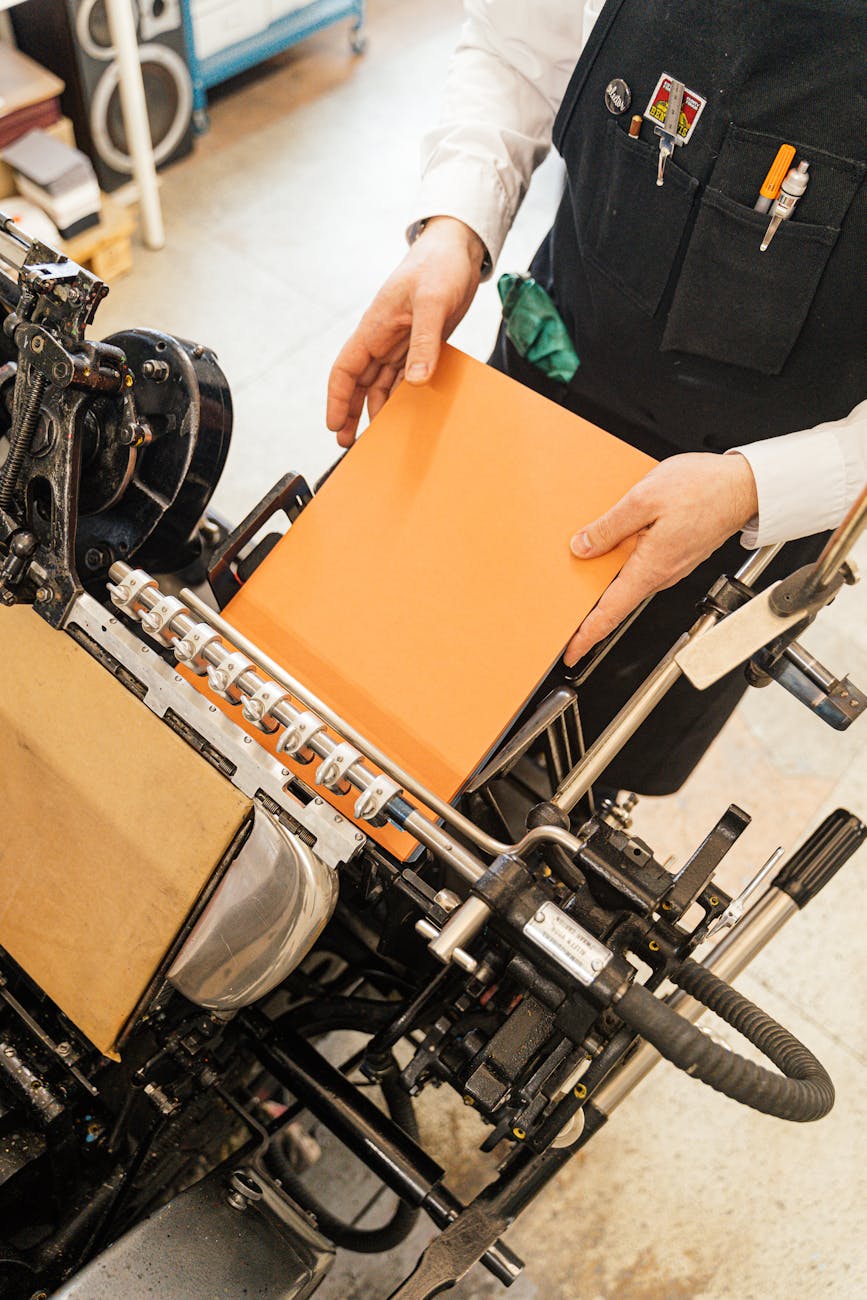
I began to practice bookbinding because I wanted to understand, physically, how a book hangs together. Working on the history of grimoires and the materiality of printed esoterica, I kept returning to the question: what does a book know about itself? Researchers like Owen Davies point toward the intimate entanglement between form and authority; grimoires weren’t just texts but talismanic objects, their legitimacy often communicated through their very construction.

But it wasn’t until I stitched my first pamphlet binding and felt the click of thread against paper that I understood this not just intellectually but bodily. Bookbinding slows you down to a new tempo. You can’t rush glue or the slow process of folding signatures. There’s something beautifully therapeutic about it.

I’ve also been learning how to brew coffee properly, an unexpectedly transformative discipline. It started with a simple desire to make better morning coffee to get me going (how often do we think of coffee just as an efficient way to get caffeine into our bloodstream?), but quickly became an experiment in sensory calibration. James Hoffmann’s work has been a guide and inspiration here. Grind size, water temperature, bloom time: they are all micro-decisions that shape experience. Becoming more attentive to them has become vital to my routine and daily practice. Sometimes the most powerful shift comes not from a grand reinvention but from learning a new ratio, a better rhythm, a different pour.

Then there is printmaking, a new art form that I have started experimenting with more recently. Monoprints, drypoint printing, and marbling all resist control in the most generative ways. They feel like metaphors for this sabbatical as a whole: you set the conditions, choose your pigments, prepare your plate, but the final print is something all its own, often capturing what Bob Ross would call ‘happy little accidents’. Printmaking is a collaboration between matter and intention, process and surrender. Some pieces are simply meant to exist only once, a reassuring thought for someone trained to measure impact in citations, outputs, and REF cycles.

One of the surprising discoveries of sabbatical is how porous the boundaries are between ‘hobby’ and ‘research’, ‘craft’ and ‘scholarship’, ‘practice’ and ‘life’. The old binaries feel increasingly unconvincing. My work on the ethics of mail-order occultism has been deepened by physically making books. My exploration of attachment in modernist literature has been illuminated by tactile processes that centre contact, negotiation, and impression. Even the coffee—humble as it seems—has become a way of thinking about attention as a moral resource.

There is also, I suspect, something about mid-career tenderness here: the desire to re-inhabit one’s own curiosity after years of professional responsibility. Sabbatical hasn’t been a retreat from work but a reorientation toward it. The crafts have been steadying companions, teaching me to show up with less armour and more texture.

This is the energy I’m carrying into 2026, both in my writing and in the programmes I’m designing: embodied creativity, and forms of inner work that feel supportive rather than ascetic. A year of root systems rather than resolutions.


Looking Ahead: An Invitation

If you’re in your own season of reorientation—whether creative, vocational, or relational—I’d love to support you.

Inner Alchemy: Practices for the New Season of You (FREE)
1 December, 7.30–8.30 PM GMT
A gentle, reflective hour to help you re-centre and step into winter with clarity and calm.
https://www.meetup.com/the-art-of-creative-practice/events/311901504

Five-Day Soul Map Challenge (£19)
8–12 December, 8.00–9.00 AM
A structured, powerful week of guided inquiry to help you understand the deeper patterning of your current season and identify the next right steps.


None of these practices—bookbinding, coffee brewing, marbling—were part of my planned sabbatical. They arrived almost incidentally, small doorways into a quieter kind of learning. But they’ve become some of the most meaningful teachers of this season. They’ve encouraged me to be a little less polished, a little more porous, and to remember that knowledge doesn’t only live in the mind.

Ignite Your Imagination: Essential Mindfulness Practices for Creatives

Imagination does not always come galloping through the mind like a wild horse across open ground. More often, it creeps in — hesitant, flickering, partial — like light beneath a half-closed door. For the creative spirit, this can be both a torment and a gift. We long for the fullness of vision, the burning clarity, the intoxicating moment when idea and form lock together and the world briefly makes sense. But more often, we are in the waiting room: alert, uncertain, rehearsing fragments and false starts, hoping for a signal. It is in this threshold space — this in-between — that mindfulness becomes not only helpful but transformative.

Creativity has long been romanticised as divine madness, a burst of genius, a possession. And while there may be truth in that mythology, it is not the whole truth. The more interesting question is not what inspiration is, but how we prepare for it. Not how we command the imagination, but how we create conditions in which it might choose to speak. Mindfulness, in this light, is not a set of breathing techniques or an escape from the demands of artistic work. It is an ethos of attention. A way of being that sharpens the contours of perception and makes the self available to wonder.

To live mindfully as a creative is not to disengage from the world, but to engage it more fully. It is to notice, in radical detail, the colour of morning light on the floorboards, the twitch in a friend’s voice, the quiet violence of a passing thought. This kind of noticing is not simply decorative. It is the material of art. All creative acts begin with attention — not just to what is seen, but to how it is seen. Mindfulness cultivates that how. It refines the inner lens. And with that, the imagination becomes less a distant realm and more a neighbour — elusive, yes, but not unreachable.

The challenge is that modern life trains us out of this kind of perception. We scroll, skim, switch tasks mid-thought. Our nervous systems are fragmented, our minds colonised by speed. In such a climate, the imagination withers — not because it lacks ideas, but because it cannot find stillness. Mindfulness returns us to a slower rhythm, one more akin to the pace at which creative insight naturally moves. The imagination does not shout. It whispers. It offers symbols and sensations before it offers structure. To receive those fragments requires a kind of inner spaciousness that mindfulness can restore.

It is important to say that mindfulness is not a cure for creative block. It is not a pill or a shortcut. It is, in many ways, a deepening of the block. A way of entering it with presence rather than panic. When the artist is blocked, they are often not lacking ideas — they are overfull. Jammed with expectations, self-comparisons, imagined critics, and internalised metrics of worth. The block is often a symptom of too much noise, not too little content. Mindfulness teaches us to sit quietly in that noise until it begins to part. It does not dissolve resistance, but it changes our relationship to it.

At its heart, mindfulness invites us to meet the moment as it is — not as we wish it to be. This is perhaps the most radical act for a creative. Because we are often trained to work from an ideal: the perfect performance, the future masterpiece, the imagined audience who will finally understand. But the work does not emerge from the ideal. It emerges from the real. From the slight tremor in the hand. From the smell of the paper. From the deep breath taken before the brushstroke or the chord or the sentence. When we attend to the real, we begin to loosen our grip on perfection and make space for play — and play is where the imagination feels safest.

There are practices that support this shift — not as formulas, but as invitations. One of the most powerful is the simple act of arriving. Before beginning your creative work, pause. Close your eyes. Feel your feet on the ground. Sense the breath in your body. Let yourself come into presence, not as an act of performance, but as a gesture of receptivity. In doing so, you are not asking the imagination to perform. You are letting it know that you are listening. This small ritual can become an anchor — a way to mark the space between ordinary time and creative time.

Another practice is mindful observation. Take an object — a leaf, a stone, a photograph — and study it without naming it. Let yourself be absorbed by its texture, its edges, the way light moves across it. Notice your mind’s habits — how it wants to interpret, to comment, to categorise. Gently return to the act of seeing. This seemingly simple exercise reawakens the raw materials of creativity: detail, pattern, form, and most of all, wonder. It is wonder, not novelty, that fuels true imagination. And mindfulness is a training in wonder.

Body awareness is equally vital. Creative work is not only intellectual — it is visceral. The body speaks in tone and rhythm and colour, often before the mind knows what it means. Writers sense a sentence’s weight. Dancers feel a phrase in the spine. Painters move through gesture. Musicians enter trance. Mindfulness reconnects us to these signals. A body scan — gently bringing attention to each part of the body — allows us to hear the somatic wisdom beneath the surface. Often, an idea is stuck not in the mind but in the jaw, the shoulders, the chest. When we release these holding patterns, the imagination begins to flow again.

Mindfulness also teaches us how to recover from the inevitable crash after a creative high. Every artist knows the pattern: the flush of energy, the intoxication of vision — followed by doubt, fatigue, the sense that none of it is working. This cycle is not a flaw. It is the natural rhythm of the creative process. Mindfulness helps us ride it without drowning in it. It teaches us to greet the high with gratitude and the low with compassion. Not to cling to either, but to keep returning to the work, with steadiness, even when inspiration recedes.

In a deeper sense, mindfulness reminds us that the imagination is not a separate realm to be accessed, but a mode of being to be remembered. Children live in this mode. They animate the world with story and symbol. They know, without being told, that the line between what is and what could be is porous. Adults, trained in control and outcome, often lose this porousness. But it can be recovered. And mindfulness is one way to trace the path back. It allows us to unhook from habitual thinking and return to what is called “beginner’s mind” — a mind not emptied, but freshly open.

Beginner’s mind is a paradoxical place. It requires discipline to enter, but surrender to remain. For the creative, this is the site of pure potential. It is where the known world dissolves just enough to let the new world appear. But it does not come through force. It comes through presence — through the willingness to stay close to the edge of unknowing, to sketch with the left hand, to listen without deciding. This is not the absence of technique. It is technique softened by trust.

And trust is perhaps the most essential ingredient in creative life. Trust in the process. Trust in the self. Trust that something worthwhile can emerge even from a messy first draft, a broken melody, an unfinished canvas. Mindfulness strengthens this trust, not by feeding confidence, but by cultivating stability. When the mind is steadied, we are less thrown by failure, less addicted to success. We become more willing to explore. And the imagination — that sensitive, skittish creature — comes closer when it senses safety.

Of course, not every moment of creativity will feel mindful. We will still have days when the mind races, when the work feels brittle, when nothing seems to cohere. This is human. Mindfulness does not erase difficulty. It simply offers us a way to meet it without collapsing. To meet it with a little more breath. A little more kindness. A little more space. Over time, this changes not just how we work, but who we become through our work. It reshapes the creative life from a series of outcomes to a deepening relationship — with form, with feeling, with the mystery of making itself.

So light the candle. Take the breath. Touch the clay. Return to the sentence. Let your attention lean in. The imagination is not a bolt of lightning. It is a door. And mindfulness is the key that helps you hear when the latch lifts.


Unlock your potential with mindfulness! Discover how a few mindful moments can help spark breakthrough, overcome blocks, and transform your personal and professional journey. Subscribe to my blog today for more on the art of being present.


If you want to start putting these ideas into action, you can sign up for Integrative Meditation (Level 1). This course represents the culmination of years of learning, practice, and personal growth. Integrative Meditation is a comprehensive framework designed to enhance your mental and emotional well-being. It draws on Mindfulness-Based Cognitive Therapy (MBCT), positive psychology, neuroscience, Acceptance and Commitment Therapy (ACT), journaling, and breathwork to support you in reducing stress, enhancing focus, building emotional resilience, and discovering your true self.

Creativity and the Mindful Mindset

When I moved into my new house over the summer, deep at the bottom of a box that hadn’t been unpacked during my two previous moves was my old, beloved copy of Julia Cameron’s The Artist’s Way.  If you haven’t read The Artist’s Way yet, you simply must.  It is a beautiful, suggestive book that offers some incredibly valuable advice and exercises for reclaiming your inner artist by recognising and then disidentifying from your inner critic.  

The book’s sudden reappearance during our move seemed consequential in every way.  It was almost exactly twenty years since I first began reading The Artist’s Way, and the rediscovery of my old torn copy of the book offered a very tangible reminder that mindfulness and other contemplative practices aren’t meant to dampen creative expression, but, rather, to open up and allow more direct access to creative potential.   

As The Artist’s Way makes clear, everyone has the ability to be creative and, once you learn how to unleash your inner creativity, you’ll be able to tap into it.  One of the most useful tools that I have found to connect to my own creativity is regular formal seated meditation and equally regular informal mindful practices throughout the day.  By developing a daily mindfulness practice we can connect more fully and more authentically with own inner artist and by first turning inward we are then able to turn outwards again to manifest our creative ideas, plans, and visions.

There are several things that you can to you in order to further develop the relationship between your mindful practice and your creative output:

  • Begin a journal—if you haven’t done so already, begin here! 
  • Use a reflective meditation to sit with the notion of creativity and what that word and concept means to you.
  • Use drawing, doodling, sculpting, or any art practice as a form of active mediation by connecting your breath to each movement 
  • Notice the details.
  • Draw upon a different medium to move through creative blocks.
  • As you dance to music that inspires you, pay particular attention to each part of your body working in unison.
  • Choose to avoid energy drains like social media, apps, and tv programmes which don’t inspire you. 
  • Explore.
  • Don’t rush outputs: give yourself enough time on projects to allow them to fully emerge.
  • Show gratitude for the simple forms of inspiration like a sunset, a flower, or a piece of music. 
  • Choose to avoid judging others.
  • Use your meditation practice to develop the relaxation that will enable your best creative thinking.
  • Trust the small steps to build into something bigger. 
  • Imagine a problem that you face from a different perspective.  How do you see the problem differently?
  • Stay curious and ask ‘what if?’