
Mindful Design: Transforming Your Creative Process Through Meditation

Mindful Design: Transforming Your Creative Process Through Meditation

Creativity thrives on a delicate balance of structure and spontaneity, discipline and play, immersion and detachment. In an age of hyperconnectivity, where digital tools facilitate but also fragment our creative process, maintaining this balance has never been more challenging. The practice of mindfulness—cultivating present-moment awareness without judgment—offers a way to recalibrate, enabling designers, writers, artists, and innovators to engage more deeply with their work.

Mindful design is not simply about aesthetics or functionality; it is about intentionality. It invites us to slow down, to listen to our creative impulses, and to transform the process of making into an act of meditation. Whether you are sketching ideas, coding an interface, composing music, or developing a research project, integrating mindfulness into your creative practice can yield profound benefits.

The Creative Mind Under Siege

In the modern creative landscape, distractions are ubiquitous. The constant influx of notifications, emails, and algorithmic stimuli disrupts the sustained focus necessary for original thought. Creativity, at its core, demands deep engagement—what Mihaly Csikszentmihalyi calls ‘flow,’ a state of complete immersion in a task. Yet, achieving flow is increasingly difficult when attention is fragmented.

Research suggests that multitasking diminishes cognitive flexibility, making it harder to generate novel solutions. When the mind is perpetually reactive—switching between tasks, skimming rather than absorbing, producing rather than reflecting—creativity suffers. Mindfulness counters this tendency by fostering sustained attention, emotional resilience, and a heightened sensitivity to the nuances of the creative process.

Meditation as a Creative Catalyst

Meditation does not impose creativity; rather, it clears the space for it to emerge. By training the mind to observe thoughts without attachment, meditation cultivates a state of receptivity—where ideas surface organically, unencumbered by the usual noise of self-doubt and overanalysis. Different meditation techniques can support different stages of the creative process:

  • Focused Attention Meditation: By anchoring awareness to the breath or a single object, this practice strengthens concentration, reducing the mental clutter that impedes deep work.
  • Open Monitoring Meditation: A more expansive approach, this technique encourages an observant, non-reactive stance towards thoughts and sensations. It is particularly useful for ideation, as it allows creative insights to arise without immediate critique.
  • Loving-Kindness Meditation: Often overlooked in discussions of creativity, this practice fosters self-compassion and resilience. Given that fear of failure or imposter syndrome can inhibit innovation, cultivating a kinder internal dialogue can be transformative.
  • Walking or Movement-Based Meditation: Creativity is not confined to the studio or desk. Engaging in mindful walking, yoga, or even rhythmic movement can free the mind from habitual thought patterns, sparking fresh perspectives.

Designing with Presence

Mindful design is about more than the personal benefits of meditation; it is about cultivating a design ethos that values presence, intentionality, and human-centred engagement. This can manifest in several ways:

  • Slowing Down the Process: In a culture that rewards rapid output, taking the time to sit with an idea, refine a concept, or simply pause before executing can result in more thoughtful and resonant work.
  • Material Awareness: Whether working with digital or physical media, mindfulness fosters a deeper connection with materials, textures, and the sensory dimensions of design.
  • Embracing Imperfection: Perfectionism stifles creativity. A mindful approach recognises that iteration, revision, and even failure are integral to the process. By observing rather than clinging to expectations, designers can navigate uncertainty with greater ease.
  • Deep Listening and Collaboration: Creativity does not exist in isolation. Mindfulness enhances our ability to listen—not just to our own intuition but to collaborators, clients, and audiences. A present-centred approach to feedback and discussion leads to more meaningful creative partnerships.

The Future of Mindful Creativity

In an era of automation, AI-generated content, and ever-accelerating production cycles, mindfulness offers a counterpoint—a reminder that creativity is not about efficiency alone but about depth, engagement, and intention. To integrate mindfulness into your creative practice is not to reject technological tools but to use them more consciously, ensuring that they serve rather than dictate your process.

The mindful designer, writer, or artist does not simply produce; they cultivate an ongoing dialogue between presence and creation, allowing their work to emerge from a place of clarity and authenticity. As we rethink our relationship with technology, productivity, and creative expression, mindfulness has the potential to transform not only how we design but why we design.

By reclaiming presence, we reclaim creativity itself.


Unlock Your Creativity with The Artist’s Way: Morning Pages and More

Julia Cameron is a prolific author, artist, and teacher best known for her transformative work in the realm of creativity who has helped millions of people worldwide unlock their creative potential through her innovative techniques and practices.  One of her most influential and widely used techniques, first introduced in The Artist’s Wayis called Morning Pages, a simple but very powerful invitation to write three stream of consciousness pages every morning to get down a jumble of thoughts, plans, worries, and hopes down on paper first thing in the morning. I’ve seen how Morning Pages can reduce anxiety and creates a sense of mental clarity that can positively impact your day. The beauty of Morning Pages lies in its simplicity and accessibility; all it takes to start is a notebook and pen.

While Morning Pages are definitely the most well-known of Cameron’s techniques, The Artist’s Way is rich with other innovative tools and insights designed to help us reclaim our creativity and personal power. I want to dive into some of these lesser known but equally powerful practices from her book, including the Artist Date, Affirmations, Time Travel, Synchronicity, and Creative U-Turns. By integrating these practices into our daily lives, we can expand our creative horizons and find deeper fulfilment in our life and work.

Nurturing Your Creative Self

For Cameron, the second most important tool after Morning Pages is the Artist Date, a weekly solo expedition to explore something that really interests you. It is a commitment to nurture your inner artist by setting aside time each week to do something you enjoy.

The importance of play, exploration and creativity cannot be overstated. Our daily routines often leave little room for spontaneity and fun, both of which are crucial for fostering creativity. As Cameron points out, Artist Dates encourage us to step out of our usual habits and see the world through new eyes, with a sense of wonder and curiosity. Some of the Artist Dates I enjoy are visiting a museum, taking a walk in one of the parks around London, going to a concert on my lunch break, or visiting an art shop to try something new.

Fitting Artist Dates into a busy schedule can definitely be a challenge, but it’s important that you prioritise this time for yourself, even if it’s just an hour a week: start by setting aside an hour each week for your artist states. Think of it as a non-negotiable appointment with your creative self.

Overcoming Creative Blocks

We regularly face blocks that hinder our progress on whatever we are working on. In The Artist’s Way, Cameron offers several tools to help us overcome these blocks and keep our creative energy flowing. One of the most important tools for overcoming creative blocks is the use of affirmations, positive statements that can counteract negative self-talk and limiting mindsets. For example, an affirmation could be: ;’I’m a talented and capable creator’ or ‘my creativity flows effortlessly.’ By repeating affirmations, we can rewire our neural pathways and cultivate a more positive and supportive inner dialogue.

Another important tool in The Artist’s Way called Time Travel, where we use journaling to work through and heal past creative wounds. Many of us carry emotional baggage from past experiences where our creativity was criticised or rejected. By acknowledging these wounds and writing through them, we can begin to free ourselves from their negative effects.

Cameron also introduces the concept of Creative U-turns, moments when we sabotage our own progress, often out of fear of success or failure. It’s important to recognise these patterns and consciously choose to overcome them. For example, if you find yourself putting off a project, you’re excited about, recognise this behaviour as creative U and take action to overcome it by breaking the project down into smaller tasks or setting a fixed deadline.

The Importance of Synchronicity

A key component of The Artist’s Way is synchronicity, or meaningful coincidences, and Cameron emphasises synchronicity as a guiding force in the creative process. When we open ourselves up to creativity, we often notice patterns and coincidences that seem to lead us in the right direction. These moments of synchronicity can be seen as signs that we’re on the right path. Recognising and trusting synchronicities means being open and receptive to the messages the universe sends us. This can be as simple as noticing recurring themes in conversations, books, or experiences that seem to resonate with your creative project. It can also mean paying attention to your gut instincts and intuitive impulses that guide your decisions, those little signals that keep us on the right path.

Cameron shares numerous personal anecdotes about how synchronicity has played a role in her creative journey. I’ve found that it’s been a part of my journey too, in moments when a particular resource or connection I need seems to suddenly appear out of nowhere. When we learn to trust these moments and follow the messages they give us, it can lead to unexpected and positive outcomes to enhance our awareness of synchronicity can be useful to keep a journal of coincidences and intuitive insights as they emerge, reflecting on these entries regularly, we can begin to see how they connect with our creative journey. And the more we practise recognising synchronicity, the more we can tune into its presence in our life.

Building Community

Creativity thrives in a supportive environment, while individual practises like morning pages and artist dates are essential. Having a community of people to share with also provides invaluable encouragement and feedback. Cameron emphasises the importance of community and nurturing our creative spirits. Finding or starting a supportive group can take several forms. You could join a local writing group, meditation class, or a creative workshop. There are also online forums where you can share and network with other creatives around the world. Sharing your work with others and getting feedback is a really good way to grow as a creative—constructive feedback can help you hone your craft and boost your confidence and motivation. Being part of a community also provides an opportunity to collaborate, learn from others and be inspired.

Living the Artist’s Way

Integrating the practises from The Artist’s Way into your daily life is a gradual process that requires commitment and consistency. But the rewards of a more creative and fulfilling life are well worth the effort. Start with a morning routine that includes morning pages. This exercise sets you up positively for the day and clears your mind so you can approach your creative work with a fresh perspective. Combine this with weekly artist appointments to ensure you’re regularly engaging in activities that inspire and rejuvenate you. It can be challenging to balance creativity and other life commitments, but it’s important that you prioritise your own creative pursuits.

Start small and build consistency over time. The key is to create a sustainable routine that supports your creative growth without overwhelming you. The Artist’s Way provides a comprehensive 12-week framework for unlocking your creative potential, and there’s much more you can learn from the book. The impact of these exercises is profound, and as you embark on this journey, remember that creativity isn’t a destination, but a continual process of growth and exploration.


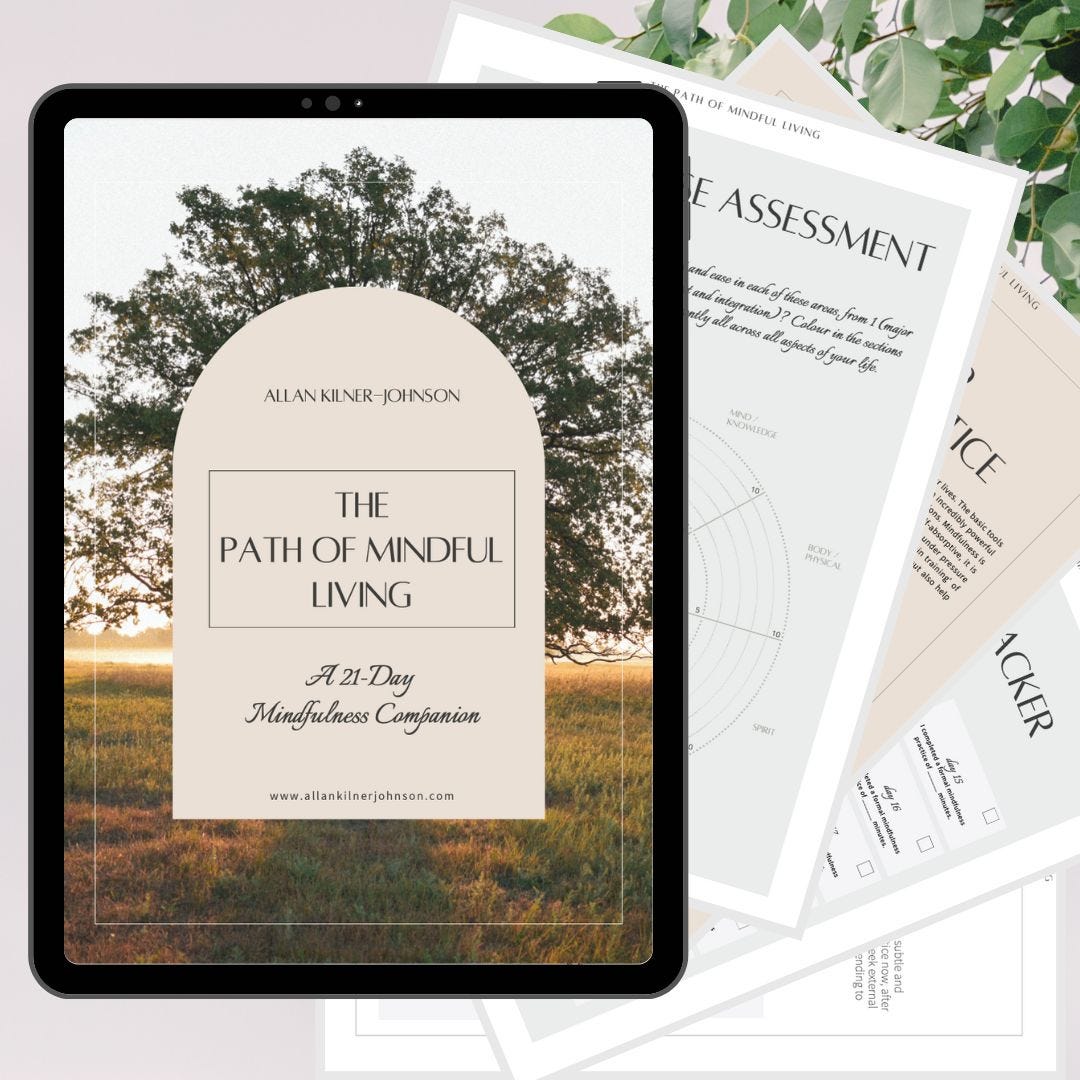
In The Path of Mindful Living: A 21-Day Mindfulness Companion, I lead you through a series of self-guided mindfulness exercises and show you how to bring mindfulness into your daily life. Readers of Integrative Creativity can download the workbook and pullout charts for only £6


Psychologist Carl Rogers’ Three-Step Formula to Finding Joy Every Day

What does it mean to live the ‘good life’? Is it about having a big house, the right job, the freedom of time and the energy to pursue your own goals? Our culture gives us many misleading messages about how to find happiness. More often than not, the things we think will make us happy once we get them that turn out to be false promises. We tend to subconsciously believe that happiness is only something that is possible in the future: we can only be happy when we’ve got that promotion, when we’ve gone on holiday, when we’ve completed that creative project. However, the influential American psychologist Carl Rogers encourages us to look at the good life in a slightly different way.

Rogers was a pioneering American psychologist and one of the founders of humanistic psychology, a school of thought that emerged in the mid-20th century. Humanistic psychology emphasises people’s inherent striving for self-actualization and creativity. Born in 1902, Rogers developed his theories at a time when behaviourism and psychoanalysis were the predominant paradigms in psychology. He believed that these approaches were too deterministic and didn’t take into account the subjective experience of the individual.

Rogers’ most important contribution is the development of client-centred therapy, also known as person-centred therapy. This approach is based on the idea that individuals have extensive resources at their disposal to understand themselves and change their self-concepts, attitudes, and behaviours. The role of the therapist is to create a supportive environment in which the client can discover these resources. Rogers set out his views on what constitutes the good life in his influential book On Becoming a Person. In it, he identifies three indicators of a good life, or more specifically, three steps in a process of how to achieve a good life.

An increasing openness to experience

The first step Rogers describes in finding the good life is cultivating an increasing openness to experience. As we explore new opportunities and possibilities, learn new things and create new projects, we realise how limiting and static vision of the future had been. It’s not that future plans are inherently bad; rather, our future plans tend to create a single monolithic vision of what happiness can look like for us. This singular focus can blind us to the myriad ways we can experience joy and fulfilment in the present moment.

Openness to experience means allowing the full range of our thoughts and feelings without denying or distorting them. It means being receptive to new experiences and perspectives and being willing to change and grow. This openness allows us to recognise the subtlety of sensations and feelings that arise in different contexts. By becoming more open, we begin to realise that the good life isn’t a destination, but a journey that requires constant learning and adaptation.

Increasingly existential living

The second step on the journey to the good life that Rogers points out is the increasing awareness of the existential nature of our lives. This concept may seem abstract, but it essentially means that we become more aware of the nature of our experiences. It’s about recognising how our inner emotional world interacts with our outer environment and understanding that we play a role in shaping both.

Existentialisation refers to the process of becoming more attuned to our existence and taking more responsibility for our lives. This involves recognising our freedom of choice and the responsibility that comes with it. It’s about understanding that we aren’t passive recipients of our circumstances, but active creators of our experiences. By expanding our awareness and taking responsibility for our actions, we begin to live more authentically and meaningfully.

Increasing trust in our own body

The third and final indicator of a good life, according to Rogers, is a growing trust in our own bodies. This doesn’t only mean our physical body, which is of course an important part, but also all functions and aspects of the body, such as our gut feeling, intuitive insights, and the feeling of physical affirmation.

Rogers emphasises how important it is to listen to our bodies and trust the signals it sends us. This includes recognising whether we’re rejecting something because it’s unfamiliar to us or whether we’re rejecting it because it’s really bad for us. It also means recognising the subtle difference between knowledge and belief, intellect and wisdom, and faith and blind trust. By trusting our bodies, we become more sensitive to our needs and desires and can make choices that are in alignment with our true selves.


These three characteristics of the good life — openness to experience, expansion and existentialisation, and trust in our bodies— have no final end point or destination. They are an expression of a continuous process that unfolds over time. The more open we become to experience, the more aware we become of our existence and the more trust we have in our bodies, the more we embark on a journey of self-discovery and growth.

Spiritual practises such as meditation, yoga, tai chi, and ritual can be incredibly important tools on this journey. Working with therapists, coaches, and spiritual teachers can also provide valuable support and guidance. The good life is not about accumulating material possessions or achieving external success. Instead, it is an alchemical state of being, a dynamic process in which we learn to shape our experience of the world so that it is authentic and fulfilling.

Rogers’ perspective on the good life challenges us to look beyond societal expectations and external achievements. By increasing our openness to experience, expanding our awareness of our existence and trusting our own bodies, we can cultivate a richer, more meaningful life. The good life is not a static destination, but an ongoing journey of self-discovery and growth guided by our inner wisdom and supported by our outer practises.


In The Path of Mindful Living: A 21-Day Mindfulness Companion, I lead you through a series of self-guided mindfulness exercises and show you how to bring mindfulness into your daily life. 

Readers of Integrative Creativity can download the workbook and pullout charts for only £6

How I’m Reading 100 Books in 2024

Reading has always been more than just a pastime for me — it’s my passion and my whole world. To misquote Barbie‘s Ken: my job is books. But perhaps somewhat surprisingly, in the hustle and bustle of my day job as an English literature academic, the sheer joy of reading for pleasure has fallen by the wayside. In order to get back to the joys of simply reading for pleasure I have set myself a challenge to read 100 books in 2024.

I read a lot as it is, but as there is so much more out there that I want to consume and enjoy I am challenging myself to read a lot this year. Nearly twice as much as I read last year. And, just to be clear, the 100 books are those that I am reading for pleasure–not the many more books that I will also be reading just for work.

I’m feeling pretty confident that I can meet this challenge because I already have a lot of strategies that have always helped me read a huge amount for my job. While these tips and tricks have been helpful to me as an English academic over the years, this year I am repurposing them for my own benefit to make sure that I am reading the stuff that I want to read for pleasure this year.

Here are some tips on how you can read 100 books (or 52, or 25, or 12, or whatever!) in 2024:

  • Keeping a TBR List: In order to navigate all the fantastic books that you have in store for you, keeping track of your To-Be-Read (TBR) list is paramount. My strategy is to use Goodreads as a comprehensive tool to keep track of the books I want to read, am currently immersed in, and have completed. This not only simplifies the reading process, but also provides a rewarding visualisation of progress and turns the literary journey into a tangible adventure.
  • Multitasking the reading experience: The key to an enriching reading experience lies in variety and having several books on the go at once ensures flexibility: if I don’t like one book, there’s another waiting for me. As I take a cross-platform approach, I juggle between a printed book, a Kindle and an audiobook. This ensures that, whatever the mood or situation, I always have a literary companion at hand to transport me to other worlds.
  • Notes as a ritual of immersion: For a devoted bibliophile, reading goes beyond the act itself. It becomes an immersive ritual where you internalise the essence of each book. My simple note-taking system consists of underlining or highlighting key passages and then summarising the book in my Goodreads reviews to create a tangible connection with the material. It’s a practise that goes beyond just finishing a book; it’s about creating a record of what you’ve completed
  • Giving up the unappealing: One of the liberating facets of my reading challenge is that I allow myself the freedom to give up on a book after the first 50 pages if it doesn’t captivate me. Life is too short to force yourself through something that you don’t vibe with. This ensures that each book contributes to the pleasure of reading rather than becoming a chore.
  • Visibility and accountability: When you resolve to read a hundred books in a year, visibility becomes a powerful accountability tool. Platforms like Goodreads are no longer just personal logbooks, but become public statements of commitment. This visibility acts as a subtle motivator, a gentle reminder that the literary journey is shared and that milestones should be celebrated together.

For me the challenge of reading 100 books in one year is not just about sheer quantity, but about rediscovering the joy of reading for pleasure. You can track my progress and share your own reading adventures on Goodreads — a virtual place where fellow literature lovers come together to celebrate the magic of books!


In The Path of Mindful Living: A 21-Day Mindfulness Companion, I lead you through a series of self-guided mindfulness exercises and show you how to bring mindfulness into your daily life. Readers of my blog can download the workbook and pullout charts for only £6.

5 Steps to Develop a Daily Meditation Practice: Tips from an Integrative Coach and Meditation Teacher

Meditation has been practised for thousands of years and is becoming increasingly popular in today’s society as a means of reducing stress, increasing concentration and improving general well-being. However, establishing a consistent meditation practise can be challenging, especially for beginners. As an integrative coach and meditation teacher, I have worked with many people to develop a daily meditation practise, and I have found that there are five essential steps to successfully building this habit.

Step 1: Set an Intention

The first step in developing a daily meditation practise is to set an intention. This involves identifying the reason for your meditation and setting a clear, specific goal for your practise. Without a clear intention, it can be difficult to stay motivated and focused on your meditation practise.

To set an intention, take some time to think about why you want to meditate. Do you want to reduce stress? Improve concentration? Increase self-awareness? Once you have found your reason for meditating, set a clear, specific goal for your practise. For example, you might decide to meditate for 10 minutes every morning before you start your day.

Setting an intention can also mean creating a ritual or ceremony around your meditation practise. For example, you could light a candle or burn incense before you meditate to signal the start of your practise. This can help create a sense of sacredness and importance around your practise, making it easier to maintain over time.

Step 2: Choose a Time and Place

The second step in developing a daily meditation practise is to choose a set time and place for your practise. This helps to develop a routine and makes it easier to maintain the practise over a longer period of time.

When choosing a time for your practise, consider your schedule and choose a time that works best for you. Some people prefer to meditate first thing in the morning, while others find it helpful to meditate during their lunch break or in the evening before going to bed. The key is to choose a time that is realistic and sustainable for you.

When choosing a place for your practise, pick a quiet, comfortable space that is suitable for meditation. This could be a spare room in your home, a quiet corner in your office or a park bench in a nearby park. Whatever place you choose, make sure it is one where you feel calm and relaxed.

Step 3: Start Small and Build Consistency

The third step in developing a daily meditation practise is to start small and develop consistency over time. It is better to meditate for a few minutes every day than for an hour once a week.

Start with a realistic goal, such as five minutes of meditation a day, and increase the duration of your practise over time. This encourages consistency and makes it easier to stick with the practise in the long term.

To encourage consistency, set reminders or use a meditation app to track your progress. You could also consider keeping a diary to reflect on your experience and document your progress over time.

Step 4: Experiment with Different Techniques

The fourth step in developing a daily meditation practise is to experiment with different techniques. There are many different meditation techniques and it is important to find one that suits you.

Some popular meditation techniques are mindfulness meditation, loving kindness meditation and body scan meditation. Each of these techniques requires you to focus your attention in a different way, and it is important to experiment to find the technique that suits you best.

Try different techniques and see how they feel. You may find that you enjoy one technique more than others, or you may find that different techniques work better at different times of the day or in different situations.

Step 5: Seek Support and Accountability

The fifth and final step in developing a daily meditation practise is to seek support and accountability. Meditation can be a solitary practise, but it is important to seek support and accountability to stay motivated and consistent.

One way to seek support is to join an online meditation community or attend a local meditation group. These communities provide a space where you can connect with others who are also meditating, share your experiences and receive guidance and support.

Another way to find support is to find an accountability partner. This can be a friend, family member or colleague who is also interested in developing a daily meditation practise. You can regularly update each other, share your progress and encourage and support each other.

There are also many meditation apps that offer guided meditations, progress tracking and other features to help you stay on track with your practise. Some of the most popular apps include Headspace, Calm and Insight Timer.

In summary, developing a daily meditation practise requires intention, consistency and support. By setting a clear intention, choosing a consistent time and place, starting small and building consistency, experimenting with different techniques, and seeking support and accountability, you can develop a regular meditation habit that will promote your overall well-being. Remember that developing a daily meditation practise is a journey, and it is important to be patient and compassionate with yourself along the way. There may be days when your practise feels difficult or uncomfortable, and that is okay. What matters is that you stay true to your intention and continue to show up for your practise every day. Meditation is an effective way to reduce stress, increase concentration and improve your overall well-being. By following these five steps, you can develop a daily meditation practise that will benefit your physical, mental and emotional health.


In The Path of Mindful Living: A 21-Day Mindfulness Companion, I lead you through a series of self-guided mindfulness exercises and show you how to bring mindfulness into your daily life. Readers of my blog can download the workbook and pullout charts for only £6.