Preserving Ideas

Last weekend I spent a few hours wandering through the Small Publishers Fair in London, where tables of hand-bound chapbooks, risograph zines, and small press essays lined Conway Hall like devotional offerings to the printed word. There was something really wonderful about it: a room buzzing not with algorithmic chatter, but with paper, ink, and the human hand.

Lately, this question of preserving ideas has been preoccupying me. As I’ve been working on my forthcoming projects—both scholarly and personal—I’ve found myself turning again to the physicality of books, not just as containers of knowledge but as archives of consciousness. The handmade box-making I’ve been experimenting with at home (a small project that began as a way to store my growing stack of old notebooks) has become a kind of meditative practice: measuring, cutting, folding, gluing, all in careful rhythm. It’s taught me something about form and memory—about how enclosure can protect, but also invite reverence.

Walter Benjamin once wrote that every book has a double life: one as a vessel of ideas, and another as an artefact that carries the traces of its readers. Marginalia, stains, folded corners all become evidence of encounter. When I teach or write about modernism, I’m always struck by how that movement both exalted and feared this materiality. Woolf, Joyce, and their contemporaries wanted language to transcend its own physical limits, yet they depended utterly on print.

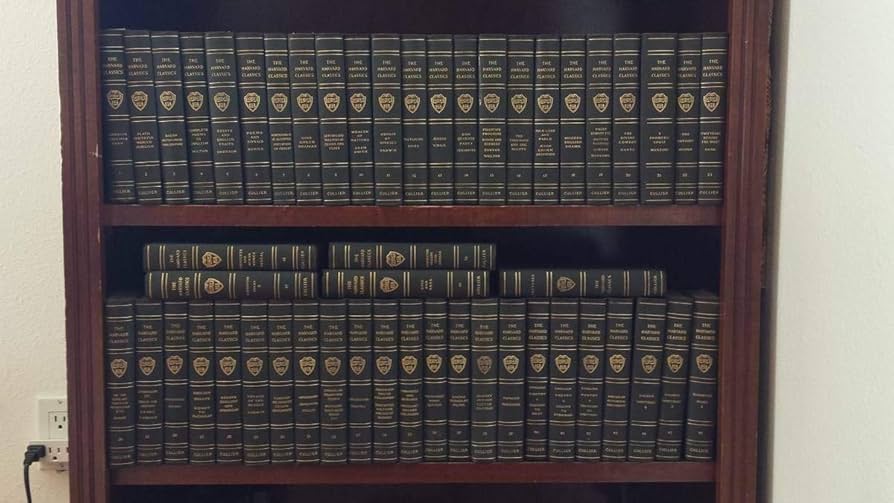
My own shelves are full of books that now hold more of me than of their authors, filling with underlinings, exclamation marks, and the occasional coffee ring or grease smear. They are records not only of what I’ve read, but of who I was when I read it. In a sense, they preserve moments of thought—snapshots of consciousness mid-formation. To lose those, or to surrender entirely to digital ephemerality, would be to lose something essential about how we think in time.

There’s a similar intimacy in the act of making. When I’m gluing the corners of a handmade box or rolling out pastry dough, I notice how my thinking slows, finds rhythm in repetition. Craft requires patience, but it also invites reflection—it’s an embodied philosophy. David Pye, in The Nature and Art of Workmanship, distinguishes between the “workmanship of risk” (where every action could alter the outcome) and the “workmanship of certainty” (where machines guarantee precision). The handmade book, like the handwritten note, belongs to the first category: it lives in the space of risk, imperfection, and care.

In an era of constant digital revision, the printed page still says: this is what I thought, then. It invites us into a conversation with our past selves. Even my old notebooks, boxed and labelled, feel like small dialogues across time—some pages embarrassedly naive, others startlingly prescient.

There’s a line from Italo Calvino that I often come back to: The classics are those books that exert a peculiar influence, both when they refuse to go away and when they hide in the folds of memory. I think the same could be said of our own notes, letters, recipes, and marginalia. They refuse to go away; they wait patiently for us to rediscover them.

At the Small Publishers Fair, I was reminded how vibrant this world of small-scale making still is. Stalls dedicated to poetry, philosophy, and experimental art books, each one a testament to the persistence of the tactile imagination. Many of the presses represented there are acts of devotion, sustained by people who believe that ideas deserve bodies. To hold one of their books is to participate in a lineage of care: the slow publishing ethos that values depth over reach.

In the evenings lately, with autumn deepening and the smell of spiced raisins still in the kitchen, I’ve found myself reflecting on what it means to live archivally, or, to put it another way, to be a steward of one’s own thought. It’s a gentle calling, really: to keep what matters, let go of what doesn’t, and tend the rest with attention.

So whether you’re keeping a commonplace book, baking from a family recipe, or printing a limited-run essay for a small press, you are participating in this broader human act of preservation. You’re ensuring that thought continues to have texture—that it lives in the world not just as code or content, but as something we can touch, smell, and remember.

And maybe that’s what the physical book still teaches us, in its quiet way: that ideas, like relationships, need form to flourish. They ask for bodies, boxes, bindings, and for the gentle friction of being held.


UPCOMING EVENTS

If this resonates, you might enjoy joining one of my upcoming gatherings:

Book Buying as a Practice of Becoming

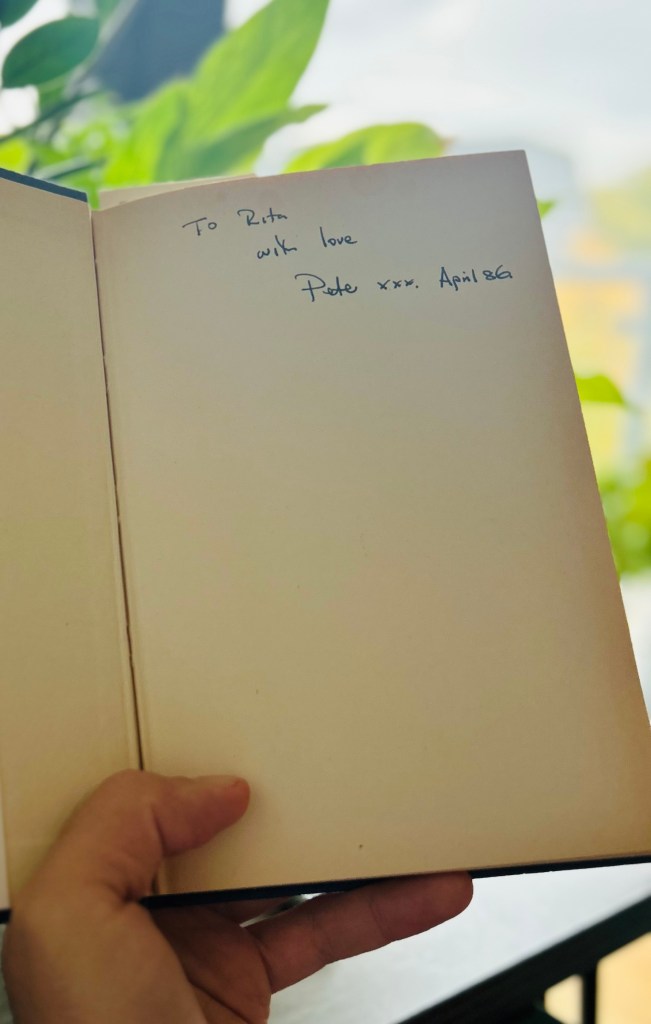
As I usually do, I bought a used copy of this month’s selection for my neighbourhood book club: Hotel du Lac, Anita Brookner’s marvellous 1984 Booker Prize-winning novel about making sense of people and the shame we inhabit. The copy I received was a marvellous 1980s edition, its cover gently worn, the paper slightly yellowed with age. Inside was an inscription in assertive biro: To Rita with love, Pete xxx. April 86.

I love finding ephemera like that in used books (once, I found a four-leaf clover that a child had pressed between pages and forgotten in 1972). That simple handwritten note in Hotel du Lac became a fragment of someone else’s life, a small piece of history folded into my own. It reminded me that buying a book is rarely just about acquiring a text — it is, at its best and fullest expression, a gesture of self-formation. Choosing a book can be a conscious act of orienting yourself toward a new way of thinking, a new rhythm of attention, a new life project. In that way, book buying is a practice of becoming.

Every book purchase marks a threshold, a crossing into a new state of thought, feeling, or attention. When I choose a book, I am often choosing not only the ideas it contains but also the possibility of becoming someone who holds those ideas. That threshold might be a commitment to learn something new, to deepen a habit, or to allow oneself to enter an unfamiliar world.

For me, Hotel du Lac became not just a novel but a threshold to conversation — in our book club meeting tonight we will speak about solitude, desire, love, and the quiet transformations of everyday life, I’m sure. The purchase itself became the first step into that dialogue.

Choosing which books to buy is also an ethical act — a choice about the economy of your attention and the kind of knowledge you wish to cultivate. In our age of algorithm-driven recommendations and one-click convenience, the act of selecting a book has become even more deliberate. It is an assertion: of attention, of values, of resistance to the noise of the digital marketplace.

I try to keep this in mind. When I choose a book, I am choosing the kind of life I wish to live. That is why I prefer second-hand bookshops, curated lists, and the serendipity of browsing. The gift of finding a well-loved copy of Hotel du Lac was not just about economy but about entering into a relationship with the book that carries the traces of other readers and a past moment in time.

My first job as a teenager was as a bookseller at Borders Books, and I’ll never forget the linger last hour before closing when the shop was almost empty and I wandered to and fro reshelving books that had been cast aside and getting lost myself in the shelves. There is something profound in the act of browsing: the way attention moves differently among stacks of books, the accidental discoveries, the impulse that turns browsing into a purchase. This ritual carries a rhythm: the searching, the selection, the return home, the opening of the book for the first time. It is a small act of pilgrimage.

This ritual has shifted for me over recent years. I buy more online and second-hand now, but I also savour the moments when I am in a physical shop, taking time to feel the books, the paper, the weight of them in my hands. Buying a book in that way is an act of attention — a slow, deliberate counterpoint to the speed of modern life.

The books we choose to live with often become companions in our ongoing process of becoming. That inscription in Hotel du Lac reminded me of this. A book is not simply an object; it is a living presence. It carries the imprint of its past readers and acquires a new life each time it meets another. In choosing it, we invite it into our own narrative.

Some books grow with us. They take on new meaning as we return to them at different stages of life. They become landmarks in our own inner journeys. It’s for that reason that buying books can be a form of investment in the future self we aspire to become.

When I buy a book, I am buying a possibility: a possibility of becoming a reader who thinks differently, who sees differently, who lives differently. Each purchase is a small apprenticeship in self-making.

Here are some ways to make book buying a mindful practice:

  • Keep a wishlist and revisit it periodically.
  • Choose one book that challenges your usual thinking every month.
  • Seek out books outside your comfort zone.
  • Return to books that have shaped you before.

If we approach book buying as a practice of becoming, every purchase becomes a small act of self-cultivation. This month, my purchase of Hotel du Lac was not just for a book club — it became a quiet practice of curiosity, of connecting with a history, of choosing to open myself to a particular conversation. In this way, every book bought with attention becomes a threshold, an ethical choice, a ritual, a companion, and an investment in becoming.

If you choose to see book buying this way, your library becomes not simply a collection of texts but a landscape of your own growth. What will your next purchase become for you?


Upcoming Events

If this resonates, you might enjoy joining one of my upcoming gatherings:


More to Explore

Literary Walks: How Reading Cities Shapes the Way We Live in Them

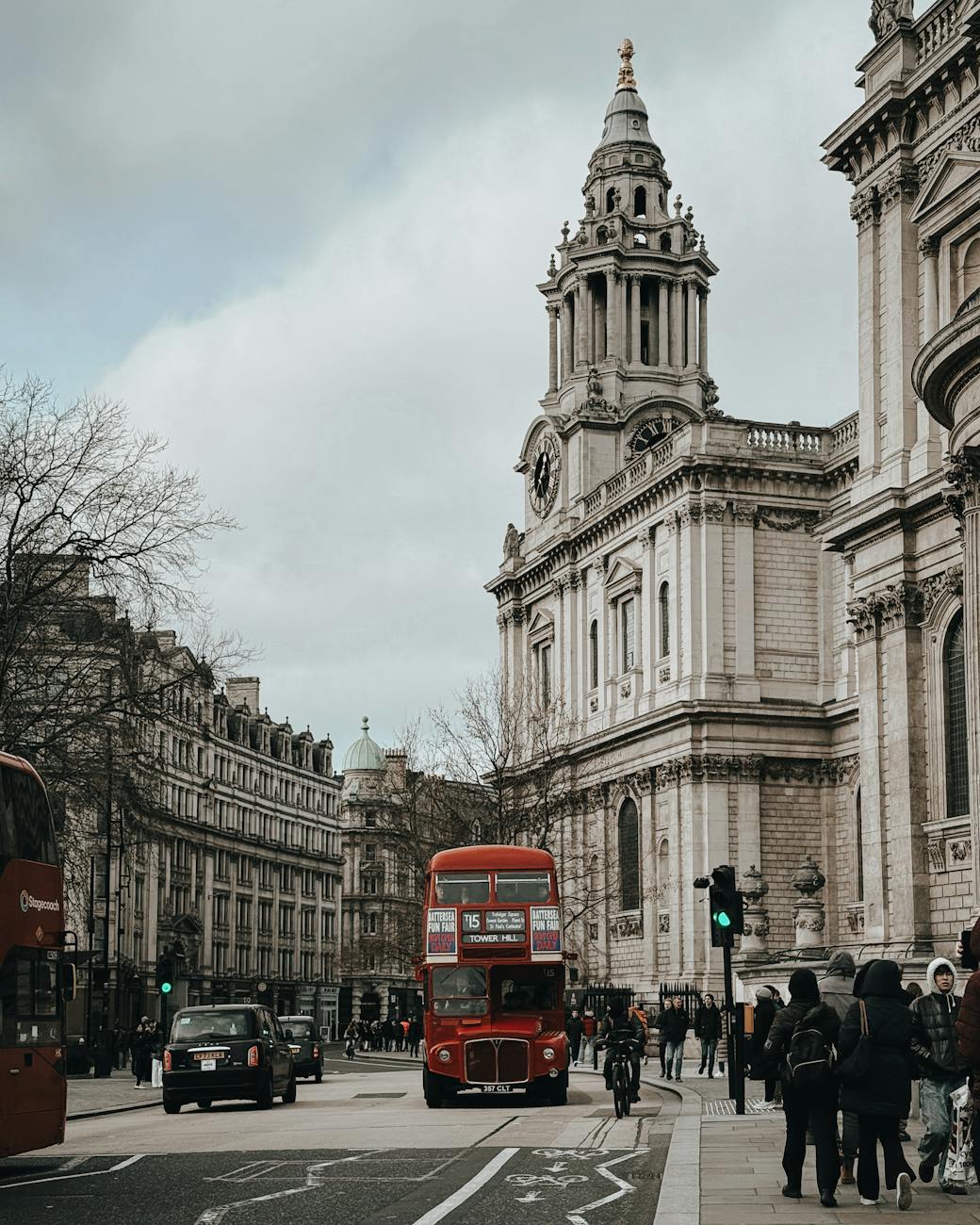
I notice how literature lingers in the pavements in London. I’ve found this more and more the longer I’ve lived here. After all, ‘when a man is tired of London, he is tired of life’, as Samuel Johnson wrote. Even on the most ordinary days, when I’m simply walking to the shops or having a coffee, a remembered passage from Woolf or Dickens reshapes the atmosphere, giving a quiet strangeness to what otherwise might seem familiar. Literary walks don’t need to be formal, nor do they require a tour group—although there is a place for those. Instead, they are an everyday practice of letting what we’ve read colour what we see, and in turn allowing the city to read us back.

Cities are always already read, even before we open a book about them. Our streets teem with signs and symbols: shopfront typography, graffiti tags, the peculiar poetics of street names, layering like muddy sediment the history of an ancient city, each one carrying some buried narrative. Roland Barthes, in Mythologies, reminds us that everyday signs are never innocent, but instead they come loaded with cultural meaning. Michel de Certeau goes further, describing walking itself as a kind of writing: each step a form of mark-making, each turn a marginal note. Perhaps this is why walking has become one of my most reliable contemplative practices; I can never quite shake the sense that London is, in spite of its sublime history, an unfinished text, and that my role as a walker is not only to read but to annotate.

Reading literature set in a city makes us feel less like visitors and more like participants. When I first read Mrs Dalloway, I hadn’t spent much time in London, but the rhythm of Woolf’s sentences gave me an immediate familiarity with the city. Later, when I actually walked those spaces and traced Clarissa’s journey on foot with my students the novel gave me entry points into belonging to a city that didn’t seem materially my own. Literature offers a way of settling without appropriation: it lets us walk streets we may never ‘own’ or even afford to live on, but with a kind of kinship. For me, reading the urban canon—Joyce’s Ulysses for Dublin, Smith’s NW for Willesden—has softened the edges of new places, helping me to live in them with curiosity rather than defensiveness.

Walking with a book’s shadow creates a double vision: the city as it is, and the city as it is imagined. Every time I find myself near Holborn, I see Dickens’s London superimposed on the glassy facades of insurance firms; the ghosts of debtors’ prisons and fog-bound alleys live on in the shadow of a Costa or Pret. And I can’t help but notice how nearly every pub in the vicinity has a plaque reporting that Dickens used to drink there and recounting a famous 17th-century stabbing that took place there. To walk with these texts is to carry a palimpsest in mind, where past and present are layered, sometimes clashing, sometimes harmonising. In my own recent walks, especially since returning to more teaching this year after six years in leadership, I’ve been acutely aware of this doubling. The university campus is also both a physical environment and a palimpsest of earlier student generations—I grow older, but my students, disconcertingly, stay the same age every year. Literature trains us to notice these overlays, and walking keeps the lesson alive.

Literary walking is not only about cities, it is also about the walker. What we bring to the page and to the street matters as much as what the author provides. Some days my walks are brisk and pragmatic; on others, they slow into reverie. I notice how my mood shapes the city I ‘read’, whether the buildings feel inviting or alienating, whether the metaphors I attach are hopeful or heavy. Theorists of psychogeography often emphasise dérive—the unplanned journey or drift—as a mode of breaking free from capitalist rationalisation of space. Yet for me, walking with literature offers a slightly different promise: not only resistance, but companionship. A door knocker shaped like a lion’s head, a tree whose branches look suddenly archetypal, a narrow side alley that seems like it should have its own subplot. Reading tunes our attention and primes us to see texture where before there was only function. 

There is also a social dimension to literary walking. Books are companions, but so too are the people we share them with. When I’ve brought novels into reading groups or teaching seminars, I’ve been struck by how each reader brings a different walk through the same text. These conversations remind me that the city is never read alone—it is always interpreted collectively, shaped by a multiplicity of histories. I think of my own upcoming groups—the Living a Course a Course in Miracles study group or the weekly Creative Flow Sessions that are beginning this autumn—as spaces where such collective interpretations of experience can flourish, even if not always tethered to literal walking.

In many ways, literary walking is about staying with a place rather than consuming it. When I moved to Hong Kong, I was initially so overcome by the immensity of it that I bought a fancy camera to help me train my vision on the particulars; when I visit Stockholm, my favourite city in the world after London, I find a space that is, inversely, more human-scale. London is a capital somewhere in between, neither entirely comforting to the human spirit or form, nor entirely forbidding. One never tires of London because it takes work, practice, and grit to live in London. 

Cities are often perceived as destinations to be ‘done’, sights to be checked off in rapid succession. But literary walking resists that tempo. It asks us to linger, to reread, to take a slower pace. To walk with a book in mind is to inhabit a place rather than extract from it. In this sense, walking becomes a small ecological ethic, a way of living lightly while seeing deeply. The practice is never finished, just as no book is ever fully read. Each walk is another opportunity for literature to accompany us, shaping how we see and how we are perceived.


An Invitation to Walk With Me (Figuratively at least)

What books have changed the way you walk your city? I’d love to hear your reflections—share them in the comments or reply if you’re reading this via newsletter. If you’d like to explore more practices that blend literature, creativity, and contemplative living, you’re warmly invited to join our Weekly Creative Flow Sessions  this autumn or the new 18-month reading cycle of A Course in Miracles.

As autumn approaches, I hope your own walks—whether with books, with friends, or simply with yourself—offer you fresh ways of seeing the cities you call home.


How I’m Reading 100 Books in 2024

Reading has always been more than just a pastime for me — it’s my passion and my whole world. To misquote Barbie‘s Ken: my job is books. But perhaps somewhat surprisingly, in the hustle and bustle of my day job as an English literature academic, the sheer joy of reading for pleasure has fallen by the wayside. In order to get back to the joys of simply reading for pleasure I have set myself a challenge to read 100 books in 2024.

I read a lot as it is, but as there is so much more out there that I want to consume and enjoy I am challenging myself to read a lot this year. Nearly twice as much as I read last year. And, just to be clear, the 100 books are those that I am reading for pleasure–not the many more books that I will also be reading just for work.

I’m feeling pretty confident that I can meet this challenge because I already have a lot of strategies that have always helped me read a huge amount for my job. While these tips and tricks have been helpful to me as an English academic over the years, this year I am repurposing them for my own benefit to make sure that I am reading the stuff that I want to read for pleasure this year.

Here are some tips on how you can read 100 books (or 52, or 25, or 12, or whatever!) in 2024:

  • Keeping a TBR List: In order to navigate all the fantastic books that you have in store for you, keeping track of your To-Be-Read (TBR) list is paramount. My strategy is to use Goodreads as a comprehensive tool to keep track of the books I want to read, am currently immersed in, and have completed. This not only simplifies the reading process, but also provides a rewarding visualisation of progress and turns the literary journey into a tangible adventure.
  • Multitasking the reading experience: The key to an enriching reading experience lies in variety and having several books on the go at once ensures flexibility: if I don’t like one book, there’s another waiting for me. As I take a cross-platform approach, I juggle between a printed book, a Kindle and an audiobook. This ensures that, whatever the mood or situation, I always have a literary companion at hand to transport me to other worlds.
  • Notes as a ritual of immersion: For a devoted bibliophile, reading goes beyond the act itself. It becomes an immersive ritual where you internalise the essence of each book. My simple note-taking system consists of underlining or highlighting key passages and then summarising the book in my Goodreads reviews to create a tangible connection with the material. It’s a practise that goes beyond just finishing a book; it’s about creating a record of what you’ve completed
  • Giving up the unappealing: One of the liberating facets of my reading challenge is that I allow myself the freedom to give up on a book after the first 50 pages if it doesn’t captivate me. Life is too short to force yourself through something that you don’t vibe with. This ensures that each book contributes to the pleasure of reading rather than becoming a chore.
  • Visibility and accountability: When you resolve to read a hundred books in a year, visibility becomes a powerful accountability tool. Platforms like Goodreads are no longer just personal logbooks, but become public statements of commitment. This visibility acts as a subtle motivator, a gentle reminder that the literary journey is shared and that milestones should be celebrated together.

For me the challenge of reading 100 books in one year is not just about sheer quantity, but about rediscovering the joy of reading for pleasure. You can track my progress and share your own reading adventures on Goodreads — a virtual place where fellow literature lovers come together to celebrate the magic of books!


In The Path of Mindful Living: A 21-Day Mindfulness Companion, I lead you through a series of self-guided mindfulness exercises and show you how to bring mindfulness into your daily life. Readers of my blog can download the workbook and pullout charts for only £6.

7 Questions to Help Students Use and Understand Secondary Sources

May 2009: Academic Writing & ESL Resources Display
(Photo credit: tclibrary)

The university-level study of English is paradoxically both an individual and collaborative effort, with students developing their own analytical skills while simultaneously learning to think in collaborative ways with tutors and fellow students.  What this paradox demonstrates, of course, is that communicating with those around you plays a significant role in the development of ideas, including communicating with the critical body of material surrounding the topic (even if the line of communication is, in this case, distinctly one-way).

Academic writing, even at the most introductory level, is not created in a vacuum. Indeed, any piece of writing that students produce will be be a conglomeration of voices—some contemporary, some more distant—and their success in that writing will be dependent upon how well they harness this mass.

Continue reading “7 Questions to Help Students Use and Understand Secondary Sources”