
Embracing Presence: A Path to Mindfulness and Fulfilment

Have you ever had the feeling that life is passing you by? As if you were constantly stuck in the past or worried about the future? What if the real key to happiness and fulfilment lies in something as simple as connecting with the present moment and being fully present? Many spiritual and mindfulness practises emphasise the importance of living in the now, as this can help to reduce stress and anxiety, increase appreciation for the simple pleasures of life and improve overall wellbeing. By cultivating a sense of mindfulness and focussing our attention on the present, we can experience a greater sense of peace and contentment, allowing us to make the most of each moment as it unfolds.

When we talk about presence, we mean the opposite of being in the future or in the past. Much of our waking life is dominated by our worries about the past and our fears about the future. What gets lost in between is the present moment. Dwelling on the past often leads to regret, while worrying about the future often leads to anxiety. It is important to realise that living in the present does not mean ignoring the lessons of the past or neglecting the future. Rather, it is about finding a balance between learning from the experiences of the past and carefully preparing for what is to come while fully enjoying the beauty and possibilities of the present. This mindset can lead to a deep sense of gratitude, mindfulness and a deeper connection with the world around us.

The present moment is the only time we have control over. We have no control over the past and we cannot fully control the future — although we can influence it through our actions in the present. Therefore, the present is the most valuable and important time to focus on. When we are fully in the present, we can make the most of every experience, connect more deeply with others and appreciate the beauty that surrounds us. When we focus on the present, we can also better manage our thoughts and emotions, leading to a greater sense of inner peace and contentment. When we embrace the present moment, we can make conscious choices and take intentional action to shape our future in a way that aligns with our values and goals.

Writer and Zen practitioner Natalie Goldberg sums up the essence of presence beautifully with her quote: ‘Every moment is enormous, and it’s all we have.’ We rarely think about the fact that all that really exists is this one moment of awareness. This quote from Goldberg captures the true essence of presence and why it is so important. Presence allows us to appreciate each moment as it unfolds and to fully engage with the richness of our experience and the interconnectedness of all things. When we embrace presence, we can also enjoy the beauty of simple things and feel gratitude for the ordinary, developing a deeper sense of fulfilment and satisfaction in our daily lives. When we embrace the practise of presence, we become attuned to our surroundings and develop a greater sense of empathy and understanding for others. It also provides us with the clarity to make conscious choices and respond thoughtfully to the ebbs and flows of life, rather than being consumed by worries about the future or regrets about the past. In essence, presence is not just a state of being, but a gateway to a more mindful, purposeful and enriched existence.

Imagine spending time with a close friend or loved one, knowing that this may be the last time you will see them face-to-face. How would your behaviour change in this conversation? If you knew this was your last conversation, your attention to every detail and nuance in the moment would increase. This increased attention is a new form of presence where every detail and nuance is noticed, appreciated and valued. You may find that you enjoy the way their eyes sparkle when they smile or the tone of their laughter. Every gesture and expression becomes precious and imprinted in your memory with unrivalled clarity. The words exchanged carry a weight that transcends the ordinary and takes on an almost tangible meaning. In this state of heightened presence, time seems to slow down, allowing you to savour and appreciate every moment. The shared experiences, the dreams and the unspoken realisations are distilled into a precious essence and form a tapestry of memories that will endure beyond the boundaries of time.

A very good friend of mine, who later became an important artist, told me something that has stayed with me since we were teenagers. She said, ‘whenever something really special happens in your life, stop for a moment and recognise it.’ This simple practise of taking a moment and saying, ‘this is a really special moment, a really special time,’ is something I still do regularly. Anchoring the uniqueness of the present moment in my consciousness is a powerful practise. Reflecting on the individual details of the experience, the emotions felt and the impact of the moment has allowed me to cultivate gratitude and deep appreciation for the richness of life. It is fascinating how these small pauses can add depth and meaning to our daily lives and fill it with a sense of wonder and joy. Each time I engage in this practise, I find myself embracing the beauty of the present moment and understanding the significance of these unique experiences that form the tapestry of my life.

When we talk about the present, past and future in English, we engage in a complex interplay of linguistic constructions that profoundly affect our understanding of time. Unlike some other languages, English does not have a true future tense. Instead, we rely on auxiliary verbs and other linguistic devices to convey actions or events that have not yet occurred. This approach not only reflects the flexibility and adaptability of the English language, but also emphasises the intricate relationship between language and temporal perception. Think of phrases like ‘I will go to the store later today’ or ‘I am meeting my friends for dinner tonight.’ Through these expressions, we manifest a cognitive shift towards prospective thinking by subtly directing our awareness towards future events. This linguistic nuance embedded in our everyday communication plays an important role in the way we conceptualise time. It often causes us to anticipate and plan for the future rather than fully engaging with the present moment.

Poets have long been fascinated by the role of language in shaping our understanding of time. They seek to capture the fleeting moments and evoke deep emotions with their words. One such tradition that has been particularly successful in this endeavour is the haiku, a poetic form that beautifully captures the essence of the present moment. Originating in Japan, haiku are revered for their concise and evocative style, often depicting scenes from nature or daily life in just a few lines. This form of poetry emphasises simplicity, brevity and mindfulness and encourages both the poet and the reader to appreciate the subtle beauty of the here and now. Influenced by Zen Buddhism, the haiku form emphasises that being fully aware and present in each moment is not only an artistic endeavour, but also a deeply spiritual practise. Zen philosophy teaches that the present moment is the only reality we truly have, and it exhorts us to let go of distractions, judgements and worries and instead embrace the fullness of each passing moment. By encouraging us to look inward, observe without judgement and immerse ourselves fully in the present, haiku poetry offers a powerful reflection of Zen philosophy and challenges us to cultivate a heightened awareness of the world around us.

How often do we assume that we will only be happy if something happens in the future? Phrases like ‘I wish I had…’ or ‘I will be happy if…’ postpone the possibility of happiness and joy to an indefinite point in the future. Instead of focusing only on the future, we should transform our hopes and dreams for tomorrow into something like ‘I am grateful for’ and ‘I am content now’. By shifting our mindset to gratitude and contentment, we can find happiness in the present moment instead of always waiting for a future event. By returning to the present in each moment, we are not shirking responsibility for the future, but fully embracing it and enriching our lives in every moment, especially the moment we actually have control over. Gratitude and contentment in the present allows us to live a more fulfilling life, appreciating the beauty of each moment and finding joy in everyday experiences.

By remembering that the past is gone and the future is to come, we can focus on the present moment and our awareness of it. This practise allows us to cultivate a sense of mindfulness and appreciate the beauty of each moment. When we embrace the present moment, we can savour the small pleasures of life, be it the warmth of the sun on our skin, the laughter of a loved one or the stillness of nature. By being fully present in our lives, we can also deepen our connections with others, build meaningful relationships and enrich the tapestry of our existence. Let’s continue our journey to live more in the present and appreciate the richness this brings to our lives and the lives of those around us.


Subscribe to my free newsletter for more tools, guided meditations, and productivity insights.

If you want to start putting these ideas into action, you can sign up for Integrative Meditation (Level 1). This course represents the culmination of years of learning, practice, and personal growth. Integrative Meditation is a comprehensive framework designed to enhance your mental and emotional well-being. It draws on Mindfulness-Based Cognitive Therapy (MBCT), positive psychology, neuroscience, Acceptance and Commitment Therapy (ACT), journaling, and breathwork to support you in reducing stress, enhancing focus, building emotional resilience, and discovering your true self.

Overcoming Negativity Bias and Resistance: Cultivating a Sustainable Meditation Practice

Imagine you receive an email from your boss asking you to come in or give them a call. You may feel worried or anxious and think, “What is this about? Is it something bad?” These thoughts can trigger feelings of fear, dread and anxiety, which can lead to outward behaviours such as increased heart rate, sweating or blushing. Imagine the thoughts and feelings that arise and the physical sensations in your body — discomfort or uncertainty. You may also consciously react with anger because you are expecting bad news.

Notice what happened in this thought experiment: you did not know what the boss wanted, but our minds generated automatic reactions. The lack of clarity from the boss created a feeling of uncertainty and triggered a cascade of thoughts and emotions. These emotions in turn influenced our behaviour and led to a mixture of reactions that we struggled to control. As we observed this automatic flow from thoughts to emotions to behaviours, we realised that some of our actions were out of our control, while others could be consciously controlled. This realisation clarified the intricate connection between our thoughts, feelings and actions and shed light on the way our reactions are shaped by internal and external stimuli.

Humans have a negative bias that has developed over tens of thousands of years of evolution, causing us to see the more negative option as true. This bias is a defence mechanism that prepares us for the worst-case scenario. It is deeply rooted in our subconscious and guides our thoughts and actions in various areas of life. This bias likely arose from the need to be constantly alert to potential dangers in order to ensure our survival in a world full of uncertainties, and is now reinforced by the dissemination of negative information in the media and society, shaping our perceptions and reactions to the world around us. However, if we are aware of these biases, we can consciously challenge them and balance them with positive perspectives, fostering a more realistic and resilient mindset.

In the 21st century, however, we no longer need to be guided by these automatic evolutionary reactions. A regular meditation practise helps us to detach from these deeply programmed reactions by noticing when our mind is on autopilot. When we develop mindfulness, we can observe our thoughts and emotions without automatically reacting to them. This allows us to make conscious choices and respond to situations in a more aware and considered way. Over time, the practise of meditation can bring about significant changes in our neural pathways, leading to better emotional regulation and a greater sense of inner peace. In addition, mindfulness can help us become more aware of our automatic reactions and habitual patterns. In this way, we can free ourselves from unconscious reactions and live with more awareness and authenticity.

So when we focus on centring ourselves in the present, we become more receptive to the sensations in our body, the sounds around us and the subtle changes in our environment. Through this heightened awareness, we are able to notice when our thoughts wander, gently acknowledge them and bring our attention back to the present moment and the rhythm of our breath. Each cycle of this practise serves as an exercise to strengthen our mental resilience, much like an extra repetition on a strength machine or an extra mile on the treadmill. The tools of integrative meditation act as catalysts for change, gradually reshaping our neural pathways and redefining the way our minds work. By becoming more aware of our thoughts and emotions, we begin to decode their patterns and gain insight into the inner workings of our mind, leading to a deeper understanding of ourselves and our thought processes.

Meditation is a transformative journey that goes beyond the designated time slot. It becomes an integral part of our daily routine and influences our thoughts, actions and overall well-being. Much like the careful tending of a garden, our meditation practise requires patience, dedication and nurturing. If we continue to invest time and energy into this practise, we will witness its gradual development, much like the growth of a garden over time. Just as a gardener tends to the various aspects of his garden, we nurture our meditation practise, encourage its development and reap the rewards of our persistent care and attention.

When we start something new, we go through a motivational cycle. In the beginning, we are excited and enthusiastic, full of hope and ambition, eager to master new challenges and seize new opportunities. Over time, however, it is natural for motivation to wane as the novelty wears off and we look for something new to reignite our passion and interest. This is a common phenomenon that many people face, and it often serves as a reminder to look for new sources of inspiration and fulfilment in our pursuits.

Perhaps you are noticing a resistance to your meditation practise today. Are you bored? Are you frustrated because you have to keep focussing on the object of meditation? As you deepen your meditation practise, it is normal to encounter these challenges. It can be beneficial to recognise these moments of resistance as opportunities for growth. You could experiment with different meditation techniques or incorporate a change of scenery to revitalise your practise. Remember that every moment of resistance is an opportunity to strengthen your mindfulness muscles and deepen your meditation experience. Keep exploring and stay open to developing your practise.

Simply recognise these feelings without judging them. Recognise that each emotion has a purpose and a message to convey. Take the time to sit with these feelings and allow yourself to fully experience them without feeling the need to react immediately. This mindful approach can lead to a better understanding of your emotions and give you a sense of inner peace.

These resistances often reflect how we react to challenges in our daily lives. When we are faced with adversity, our inner strength and bravery are tested and through these challenges we discover the depths of our resilience. Whether it’s a personal struggle, a professional setback or a social issue, our ability to face and overcome obstacles shapes our character and determines our path. Any resistance we encounter serves as a mirror that reflects our reactions, our coping mechanisms and our ability to grow. These moments of resistance are not only obstacles, but also opportunities for self-knowledge and empowerment.

When you begin a meditation practise, simply be aware of these obstacles. Pay attention when they arise and understand that they are natural. The first step is to notice them when they arise. It is important to face these obstacles with patience and understanding. By recognising their existence, we create the space for self-reflection and growth. As you dive deeper into your meditation practise, you may find that these obstacles reveal valuable insights about your thought patterns and emotional responses. Embracing these insights can lead to profound changes that allow you to develop a more positive and compassionate attitude. Remember that this is a journey of self-discovery and that every obstacle is an opportunity for personal development and inner resilience.


Subscribe to my free newsletter for more tools, guided meditations, and productivity insights.

If you want to start putting these ideas into action, you can sign up for Integrative Meditation (Level 1). This course represents the culmination of years of learning, practice, and personal growth. Integrative Meditation is a comprehensive framework designed to enhance your mental and emotional well-being. It draws on Mindfulness-Based Cognitive Therapy (MBCT), positive psychology, neuroscience, Acceptance and Commitment Therapy (ACT), journaling, and breathwork to support you in reducing stress, enhancing focus, building emotional resilience, and discovering your true self.

Cultivating Present Moment Awareness: Your Journey to Mindful Living

My approach to meditation is deeply rooted in the belief that we can enrich our understanding of mind and psychology by incorporating a variety of contemporary approaches and influences on meditation. This holistic approach allows us to cultivate a greater sense of contentment, joy, pleasure, and connectedness in our daily lives. By embracing various meditation techniques and principles, we can tap into a deep well of strength and establish a regular and consistent meditation practise that serves as a source of inner strength and calm.

I want you to start by imagining a really happy memory from your life— perhaps a holiday with family or friends, or a great experience you had with a partner, child, or parent. Think of one of those truly happy, transcendent moments that keep popping up in our lives, moments that we savour and are grateful for when they happen. Maybe it was a sunny day at the beach, with the waves lapping gently against the shore and a cool breeze caressing your skin. Or maybe it was a special occasion, like a birthday party full of laughter and joy, surrounded by the people you love. These moments are like treasures that we carry with us, brightening our days and reminding us of the beauty and happiness that life has to offer.

As you recall this memory, I want you to become aware of all the sensory details, all the things you perceive in this scene as you let it reappear in your mind’s eye. Try to imagine the colours, the sounds and the scents that surround you at that moment. Feel the temperature on your skin and the feelings that were stirred up inside you. Let the scene play out like a vivid film in your mind’s eye and explore every detail and feeling associated with it. Now pay attention to where your thoughts are. Is it running into the future, into a time after this event? Is it going back to something that happened before that time? Or does it really only seem to focus on that one big, happy, transcendent moment?

It’s probably focussing primarily on that one moment, because that’s what these big, happy moments do for us. They create a sense of ‘present moment awareness’, a sense that we really are in this moment. The past does exist and the future will inevitably come, but neither seems that important in this moment. This is something I call ‘time-orientation’. Our mind tends to spend a lot of time in places that are not the present. It often dwells on the past, going over memories, stories, limiting beliefs and moments of shame or embarrassment. This leads to a mindset of rumination where we replay past events. In contrast, when we experience these profound moments, it is as if time stands still and we can only focus on the beauty and joy of that particular moment. It is as if the rest of the world fades away and we are completely immersed in the blissful present. This heightened awareness and connection to the present moment can bring about a deep appreciation for the simple yet extraordinary things that happen in our daily lives and remind us to cherish every moment.

I won’t deny that the past has happened or that bad things have happened. But maybe our minds spend a little too much time there. Memories, both good and bad, can have a powerful impact on our thoughts, shaping our present and influencing our future. It is important to acknowledge the past, learn from it and then gently release it from our thoughts. Similarly, our minds can also focus excessively on the future, on things that have not yet happened. This is where anxiety arises as we visualise things that could or might happen. The unknown can be scary, but finding a balance between recognising the future and living in the present can help to lighten the burden of worry and anxiety.

Our orientation to time plays an important role in shaping our thoughts and emotions. It constantly pulls us into the past, where we brood, or into the future, where we are afraid. It is a common human experience to dwell on past mistakes or worry about the future, but these tendencies can often overshadow the richness of the present moment. When we constantly project our thoughts backwards or forwards, we miss out on the opportunities and experiences that are available in the present. By consciously focussing our attention on the here and now, we have the opportunity to fully engage with our surroundings, connect with others and enjoy the beauty of the present moment.

One of the most important tools we use to create a stronger connection to the awareness of the present moment is the so- called meditation object. A meditation object is anything that we use to focus and centre our mind — a tool that we draw upon. This can be a sound, a body sensation, a mantra or a visualisation. In this module, we will focus on the breath. When we focus on the breath, we pay attention to the rising and falling of the chest, the sensation of air flowing in and out through the nostrils, and the rhythm of inhaling and exhaling. This practise can help us to develop a sense of calm and presence as we focus our attention on the natural and constant rhythm of our breathing. By refining our ability to stay present with the breath, we develop a valuable skill that we can use in various aspects of our lives to promote mindfulness and emotional regulation.

The breath is often the best and simplest meditation object. When we focus on the sensation of the breath, we start where we are most physically aware of it. The first step is to notice how the breath moves through the nostrils, how the chest expands or how the belly rises and falls. This will serve as a starting point for the mind to return to when it begins to wander. As we continue to practise, we may find that our awareness of the breath deepens and we can observe the subtle changes in its rhythm and temperature. We may also become more sensitive to the connection between our breath and our emotional state, noticing how it can become shallow and hurried in times of stress and slow and deep in moments of calm. By regularly meditating on the breath, we can cultivate a greater sense of presence and peace and gradually train our mind to become more focussed and aware both on and off the cushion.


Start experiencing the transformative power of Integrative Meditation today!

This course represents the culmination of years of learning, practice, and personal growth. Integrative Meditation is a comprehensive framework designed to enhance your mental and emotional well-being. It draws on Mindfulness-Based Cognitive Therapy (MBCT), positive psychology, neuroscience, Acceptance and Commitment Therapy (ACT), journaling, and breathwork to support you in reducing stress, enhancing focus, building emotional resilience, and discovering your true self.

Enrol Now and start your journey towards a transformed, healthier, and happier you.

Unravelling the Mind: Exploring the Intersection of Contemplative Practises and Psychoanalytic Theory


Imagine the mind as an intricate tapestry, woven from the threads of consciousness and the hidden fibres of the unconscious. In this tapestry, ancient contemplative practises and the more recent theories of psychoanalysis find common ground — a meeting place of wisdom and inquiry. It’s a fascinating meeting place where the whisper of mindfulness echoes through the corridors of the unconscious, where symbols and dreams intertwine in a dance of deep meaning.

In the realm of contemplative studies, from the tranquil gardens of Zen Buddhism to the vibrant traditions of yoga, people have sought self-knowledge for centuries. In recent decades, psychoanalysts, armed with work of Freud and enriched by thinkers who followed him including Carl Jung and Roberto Assagioli, have ventured into the uncharted territories of the human mind. The question arises: what happens when these two paths, one deeply rooted in ancient wisdom and the other in modern psychology, meet? How can the practise of mindfulness be reconciled with the cryptic language of the unconscious?

Contemplative practises, rooted in ancient traditions across cultures, and psychoanalytic theory, born in the fervent intellectual soil of the late 19th century, have one thing in common: an exploration of the hidden depths of the human mind.

To understand the interaction between contemplative practises and psychoanalytic theory, we must first explore the deep roots of contemplation. Across cultures and centuries, from Vipassana meditation in ancient India to Zen practises in Japan, contemplative traditions have embraced the art of self-awareness. Rooted in philosophy and spirituality, these practises invite individuals to embark on an inward journey, a journey that goes beyond the superficial layers of consciousness.

At the heart of contemplative practises is the cultivation of mindfulness — a state of heightened awareness in which one observes thoughts and feelings without judgement. This mindfulness, an essential component of contemplation, paves the way for self-reflection and allows individuals to explore the complex fabric of their mind.

As we delve deeper into these practises, we encounter echoes of psychoanalytic concepts that resonate at their core. Psychoanalysis ventures into the unexplored territories of the unconscious. Freud’s groundbreaking work illuminated the existence of hidden desires, fears and motivations that govern human behaviour. Concepts such as the id, the ego, and the superego, which resemble the archaic gods within the human being, represent the complex interplay between conscious and unconscious forces.

Furthermore, psychoanalysis is concerned with the symbolic language of dreams, in which the unconscious communicates its deepest secrets. Dreams, like contemplative experiences, serve as windows to the unconscious and reveal the multiple layers of human consciousness. This is where contemplative practises and psychoanalytic theory intersect — the exploration of symbolism, the decoding of hidden meanings and the unravelling of the human psyche.

At the intersection of contemplative practises and psychoanalytic theory lies a fascinating convergence: the interplay of mindfulness and the unconscious. Mindfulness, as cultivated through contemplative practises, involves observing thoughts and sensations with unceasing attention. This heightened attention, similar to the psychoanalytic concept of free association, allows individuals to penetrate the depths of their unconscious thoughts without the constraints of conscious censorship.

In this overlap, contemplative practises offer a unique lens through which to explore psychoanalytic concepts. Mindful observation of thoughts and emotions without judgement is consistent with Freud’s concept of free association, where individuals express unfiltered thoughts and allow the unconscious to surface. Mindfulness reflects in its essence the psychoanalytic endeavour to reveal the hidden layers of the mind and to transcend the boundaries of language and rationality.

However, this convergence does not come without challenges. The theoretical integration of contemplative practises and psychoanalytic concepts raises questions about cultural nuances, conceptual differences, and the evolution of both fields. Can ancient contemplative wisdom co-exist harmoniously with the rigorously structured framework of psychoanalytic theory? Can the language of mindfulness communicate eloquently with the symbolic lexicon of the unconscious?

But in addressing these challenges, a world of possibilities opens up to us. The integration of contemplative practises into psychoanalytic theory offers a transformative paradigm that goes beyond the boundaries of traditional therapeutic approaches. It invites us to imagine a future in which the interdisciplinary synergy between ancient wisdom and modern psychology illuminates new ways of understanding the human mind.

In terms of theoretical implications, the intersection of contemplative practises and psychoanalytic theory offers a profound shift in our understanding of consciousness. Contemplative practises, with their emphasis on mindfulness, challenge the conventional boundaries of conscious experience. In the state of mindfulness, the individual traverses the realms of subjective and objective experience, blurring the boundaries between the observer and the observed.

This dissolution of boundaries finds resonance with psychoanalytic concepts such as the dissolution of the ego. As the individual engages in contemplative practises, the ego — the conscious perception of the self — gradually recedes, allowing the unconscious facets of the psyche to emerge. In this dissolution, the dichotomy between the conscious and the unconscious dissolves, leading to a holistic understanding of the human mind.

Furthermore, the integration of contemplative practises challenges the deterministic foundations of traditional psychoanalysis. Freudian concepts, such as the influence of early childhood experiences on adult behaviour, take on new dimensions when viewed through the lens of mindfulness. Contemplative practises enable individuals to observe their conditioned responses and automatic thoughts, and offer the possibility of overcoming the limitations of past experiences. This liberation from determinism, a hallmark of contemplative practises, leads to a paradigm shift in psychoanalytic thinking and invites a re-evaluation of established theories.

Another fascinating overlap between contemplative practises and psychoanalytic theory occurs in the realm of symbolism. In psychoanalysis, dreams serve as portals to the unconscious, laden with symbols and metaphors that convey hidden meanings. The symbolic language of dreams, meticulously analysed by psychoanalysts, reflects the intricate symbolism embedded in contemplative experiences.

In mindfulness practise, individuals often encounter vivid images and symbols that rise from the depths of their unconscious. These symbols, which are similar to the dream motifs analysed in psychoanalysis, have deep meaning. For example, a recurring image of water in contemplative experiences can symbolise the unconscious mind, which stands for the fluidity of thoughts and feelings. Similarly, symbols such as trees or mountains can represent inner strength and stability, reflecting the psychological landscape of the individual.

The convergence of these symbolic languages offers a rich field for exploration. Psychoanalysts familiar with dream interpretation can draw parallels between dream symbols and contemplative imagery, deciphering the common archetypes and motifs that permeate the human unconscious. This interdisciplinary dialogue enriches both fields and offers new ways of understanding the symbolic dimensions of the human psyche.

As contemplative practises are incorporated into psychoanalytic theory, the development of psychoanalytic theory takes a transformative course. Traditional psychoanalytic approaches rooted in verbal communication and introspection are expanding to include non-verbal expressions. Contemplative practises that include movement-based techniques such as yoga and tai chi are opening up new avenues of self-expression and self-exploration.

By incorporating these embodied practises into psychoanalytic therapy, psychoanalysts can explore the somatic dimensions of the unconscious. The body, a reservoir of unexpressed emotions and trauma, becomes a canvas for exploration. Through mindful movement and breathwork, people can release pent-up emotions stored in their muscles and tissues, allowing for catharsis and emotional healing. This integration of contemplative practises elevates psychoanalytic therapy into a holistic realm that encompasses not only verbal narratives but also the language of the body.

Moreover, contemplative practises introduce a temporal dimension into psychoanalytic theory. In mindfulness meditation, awareness of the present moment is heightened and the boundaries of past and future are overcome. This emphasis on the present challenges the traditional psychoanalytic framework in which the past is of paramount importance. Contemplative practises invite psychoanalysts to explore the therapeutic potential of the present moment and promote acceptance and self-compassion.

At the intersection of contemplative practises and psychoanalytic theory, an ethical imperative emerges— the call to cultivate compassion and empathy in the therapeutic relationship. Contemplative practises rooted in compassion-based traditions such as Buddhism emphasise the cultivation of loving kindness and empathy towards self and others. This cultivation of compassion is consistent with the basic principles of psychoanalytic therapy, in which the therapeutic relationship serves as a crucible for healing and transformation.

To the extent that psychoanalysts integrate contemplative practises into their therapeutic approaches, the focus shifts from purely intellectual understanding to embodied empathy. Through mindfulness, therapists tune into the emotional nuances of their clients and resonate with their inner experiences. This empathic resonance, fostered through contemplative practises, creates a sacred space where clients feel truly seen and heard, enabling a deep therapeutic relationship.

The cultivation of compassion in contemplative practises goes beyond the therapeutic dyad to encompass social dimensions. In an interconnected world characterised by divisions and conflicts, the integration of contemplative wisdom into psychoanalytic theory offers a beacon of hope. Psychoanalysts equipped with the tools of mindfulness and empathy can contribute to the collective healing of humanity and promote understanding and reconciliation.

As we traverse the unexplored horizons of the human psyche, the intersection of contemplative practises and psychoanalytic theory illuminates new paths of understanding. In this interdisciplinary dialogue, ancient wisdom and modern psychology meet to offer a holistic perspective on the complexity of the human mind. The dissolution of boundaries between mindfulness and the unconscious, the exploration of symbolic languages, the development of psychoanalytic theory and the ethical imperative of compassion — all these facets weave a rich tapestry of exploration and discovery.

In the words of the great minds who have explored these areas, from Freud to the contemplative masters of our time, we find echoes of a profound truth — the human mind, with all its complexities and mysteries, remains an inexhaustible source of fascination. As we continue to explore this intersection, we unravel the mystery of our own existence, one contemplative moment at a time.

In the convergence of contemplative practises and psychoanalytic theory, we find not only a theoretical integration, but also a profound invitation — a summons to embark on a transformative journey inward. This journey, informed by self-reflection, empathy and mindfulness, transcends disciplinary boundaries and invites us to explore the depths of our own consciousness. In answering this call, we unravel the intricacies of the human mind and engage with the enigma that is our existence. In this exploration, we discover not only the hidden depths of the psyche, but also the limitless potential for growth, healing and deep self-discovery.

5 Steps to Develop a Daily Meditation Practice: Tips from an Integrative Coach and Meditation Teacher

Meditation has been practised for thousands of years and is becoming increasingly popular in today’s society as a means of reducing stress, increasing concentration and improving general well-being. However, establishing a consistent meditation practise can be challenging, especially for beginners. As an integrative coach and meditation teacher, I have worked with many people to develop a daily meditation practise, and I have found that there are five essential steps to successfully building this habit.

Step 1: Set an Intention

The first step in developing a daily meditation practise is to set an intention. This involves identifying the reason for your meditation and setting a clear, specific goal for your practise. Without a clear intention, it can be difficult to stay motivated and focused on your meditation practise.

To set an intention, take some time to think about why you want to meditate. Do you want to reduce stress? Improve concentration? Increase self-awareness? Once you have found your reason for meditating, set a clear, specific goal for your practise. For example, you might decide to meditate for 10 minutes every morning before you start your day.

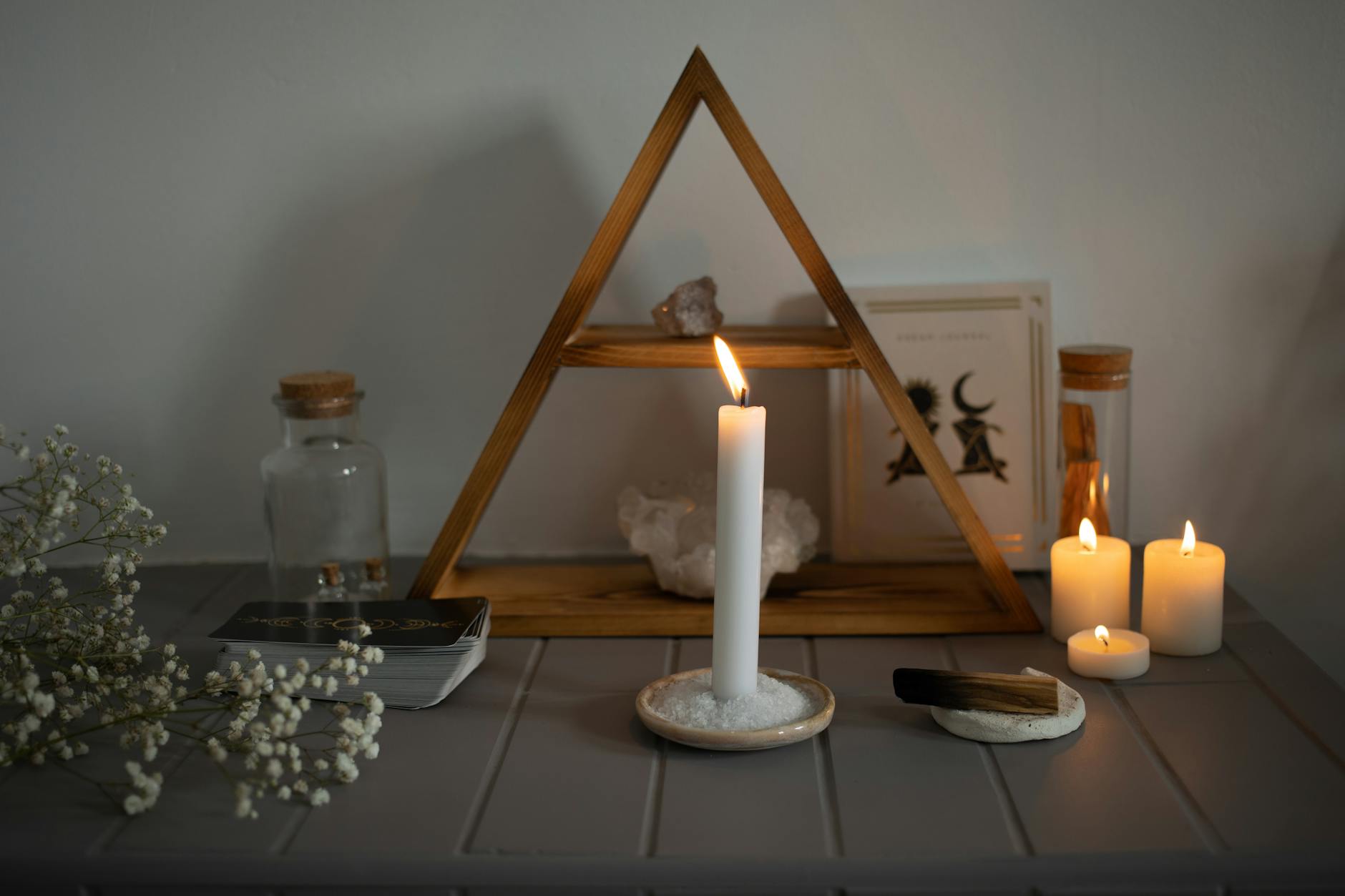
Setting an intention can also mean creating a ritual or ceremony around your meditation practise. For example, you could light a candle or burn incense before you meditate to signal the start of your practise. This can help create a sense of sacredness and importance around your practise, making it easier to maintain over time.

Step 2: Choose a Time and Place

The second step in developing a daily meditation practise is to choose a set time and place for your practise. This helps to develop a routine and makes it easier to maintain the practise over a longer period of time.

When choosing a time for your practise, consider your schedule and choose a time that works best for you. Some people prefer to meditate first thing in the morning, while others find it helpful to meditate during their lunch break or in the evening before going to bed. The key is to choose a time that is realistic and sustainable for you.

When choosing a place for your practise, pick a quiet, comfortable space that is suitable for meditation. This could be a spare room in your home, a quiet corner in your office or a park bench in a nearby park. Whatever place you choose, make sure it is one where you feel calm and relaxed.

Step 3: Start Small and Build Consistency

The third step in developing a daily meditation practise is to start small and develop consistency over time. It is better to meditate for a few minutes every day than for an hour once a week.

Start with a realistic goal, such as five minutes of meditation a day, and increase the duration of your practise over time. This encourages consistency and makes it easier to stick with the practise in the long term.

To encourage consistency, set reminders or use a meditation app to track your progress. You could also consider keeping a diary to reflect on your experience and document your progress over time.

Step 4: Experiment with Different Techniques

The fourth step in developing a daily meditation practise is to experiment with different techniques. There are many different meditation techniques and it is important to find one that suits you.

Some popular meditation techniques are mindfulness meditation, loving kindness meditation and body scan meditation. Each of these techniques requires you to focus your attention in a different way, and it is important to experiment to find the technique that suits you best.

Try different techniques and see how they feel. You may find that you enjoy one technique more than others, or you may find that different techniques work better at different times of the day or in different situations.

Step 5: Seek Support and Accountability

The fifth and final step in developing a daily meditation practise is to seek support and accountability. Meditation can be a solitary practise, but it is important to seek support and accountability to stay motivated and consistent.

One way to seek support is to join an online meditation community or attend a local meditation group. These communities provide a space where you can connect with others who are also meditating, share your experiences and receive guidance and support.

Another way to find support is to find an accountability partner. This can be a friend, family member or colleague who is also interested in developing a daily meditation practise. You can regularly update each other, share your progress and encourage and support each other.

There are also many meditation apps that offer guided meditations, progress tracking and other features to help you stay on track with your practise. Some of the most popular apps include Headspace, Calm and Insight Timer.

In summary, developing a daily meditation practise requires intention, consistency and support. By setting a clear intention, choosing a consistent time and place, starting small and building consistency, experimenting with different techniques, and seeking support and accountability, you can develop a regular meditation habit that will promote your overall well-being. Remember that developing a daily meditation practise is a journey, and it is important to be patient and compassionate with yourself along the way. There may be days when your practise feels difficult or uncomfortable, and that is okay. What matters is that you stay true to your intention and continue to show up for your practise every day. Meditation is an effective way to reduce stress, increase concentration and improve your overall well-being. By following these five steps, you can develop a daily meditation practise that will benefit your physical, mental and emotional health.


In The Path of Mindful Living: A 21-Day Mindfulness Companion, I lead you through a series of self-guided mindfulness exercises and show you how to bring mindfulness into your daily life. Readers of my blog can download the workbook and pullout charts for only £6.