It’s easy to forget that philosophy was never meant to be a spectator sport.
Long before it became something we studied, it was something people did. Philosophy began as a way of arranging a day, training attention, shaping character, and orienting oneself toward what mattered in life. It didn’t live in texts, but in habits: how one woke, walked, ate, spoke, listened, and rested.
In other words, philosophy was practical.
This has been on my mind a lot recently, perhaps unsurprisingly. I’ve just come to the end of my sabbatical and I’m now taking on responsibility for running the MA in English Literature and the MA in Creative Writing at the University of Surrey. This transition made me acutely aware of how much of our thinking is shaped not by what we claim to believe, but by what we repeatedly do.
One of the great misunderstandings of modern intellectual life is the assumption that clarity comes first, and practice follows: if only we had the right theory, the right worldview, the right explanation, then our lives would fall into place.
But lived experience tends to run the other way around.
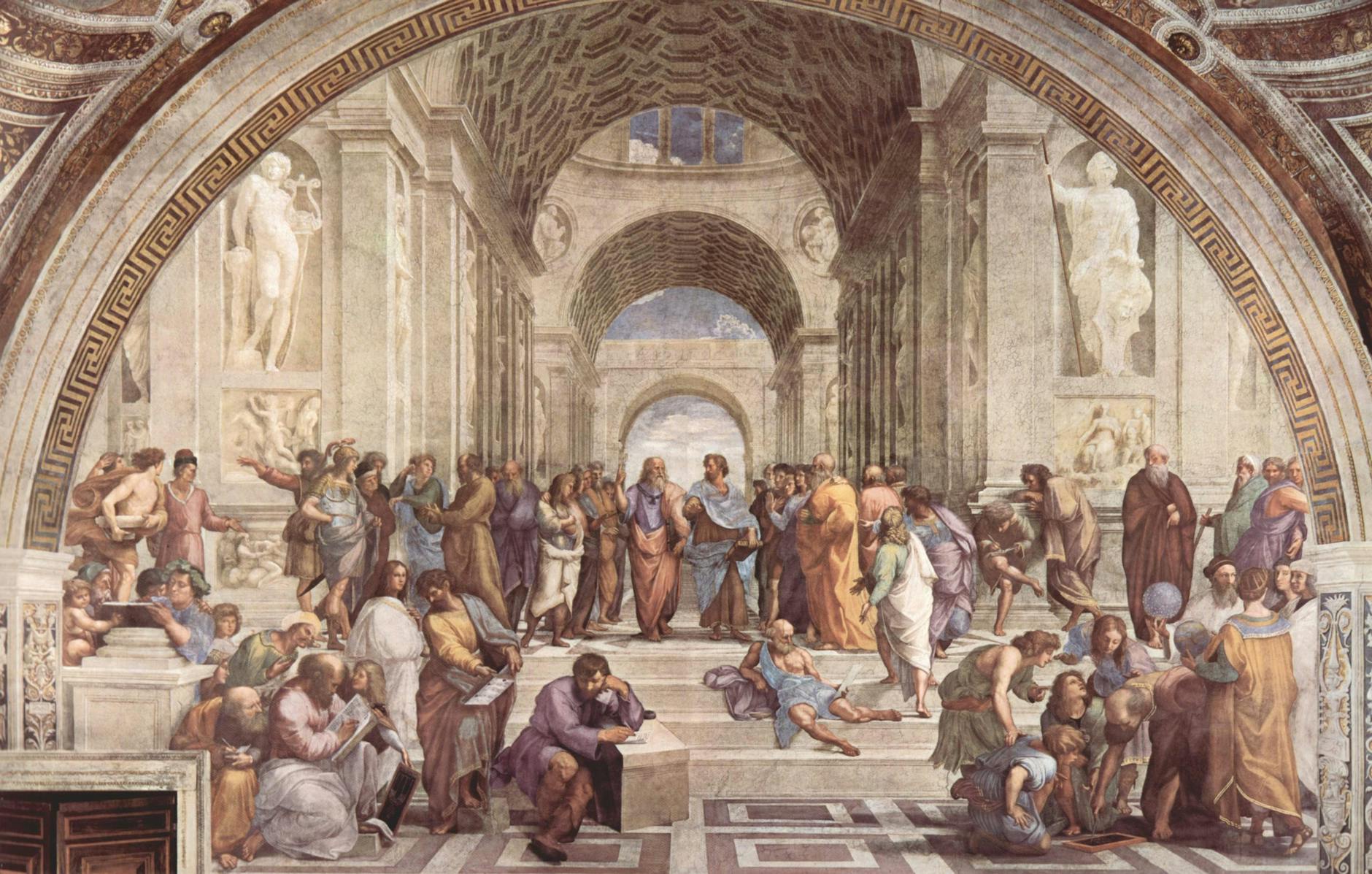
As Pierre Hadot points out in Philosophy as a Way of Life, ancient philosophy was grounded in spiritual exercises, that is, concrete practices designed to transform perception and conduct. Stoicism wasn’t a set of ideas about fate or reason; it was a disciplined training of attention. Epicureanism wasn’t a theory of pleasure, but a daily practice of simplicity, friendship, and fear reduction. Even Plato’s dialogues, for all their abstraction, were designed to do something to the reader: to unsettle, provoke, and reorient.
Closer to our own time, thinkers as varied as Simone Weil, Iris Murdoch, and Michel de Certeau have reminded us that attention, habit, and repetition shape the moral and imaginative texture of a life long before explicit reflection enters the scene. We do not first decide what matters and then act accordingly; rather, what we attend to, rehearse, and ritualise slowly teaches us what matters.
This is why everyday rituals are philosophical, whether we acknowledge them as such or not.
By “rituals,” I don’t mean anything grand or mystical—though they can be. I mean the small, repeated actions that quietly structure our inner lives: how we begin the morning, how we transition into work, how we respond to resistance, how we close a day. These acts rarely feel important, but they are formative.
A life without intentional ritual isn’t neutral; it is simply shaped by default rituals of the world outside: algorithms, inboxes, urgency, comparison, and distraction.
During my sabbatical, this became unavoidably clear. Writing a book is less an act of inspiration than one of sustained fidelity: returning to the page when enthusiasm fades, when doubts arise, when the work resists being done. What carried me through wasn’t motivation, but a set of simple, repeatable practices and routines that made thinking possible at all. A system.
This is where much contemporary advice culture goes astray. We are encouraged to optimise outputs while leaving the deeper structure of our lives untouched. But philosophy—real philosophy—asks a more demanding question: What kind of person is this way of living making me into?
This is also why I’m increasingly wary of purely instrumental approaches to creativity. Writing, thinking, and teaching are not just tasks to be managed; they are forms of life. How we organise our time, relate to resistance, and hold ourselves in periods of uncertainty is not secondary to the work—it is the work.
Much of my recent teaching, coaching, and writing has been circling this insight from different angles: that sustainable creativity requires a different relationship to time, effort, and selfhood than the one most of us have inherited.
This integrative dimension is central to my current work, including the practices I’ll be sharing in upcoming sessions. Whether through meditation, reflective co-working, or rethinking how we organise creative labour, the aim is the same: to help people cultivate forms of attention that make meaningful work—and a more humane life—possible.
If this resonates, you might be interested in the following upcoming offerings:
Integrative Meditation
2 February | 7.30–8.30 PM GMT | £4
A guided session focused on attention, integration, and gentle inner alignment.
Register here:
https://www.meetup.com/the-art-of-creative-practice/events/312077761/
Creative Flow Co-Working Session: Reframing Resistance
9 February | 10 AM–12 PM GMT | FREE
A shared, reflective working space for engaging resistance as information rather than failure.
Register here:
https://www.meetup.com/the-art-of-creative-practice/events/312151261/
Beyond Time Management: A More Natural Way to Organise Creative Work
24 February | 7.30–9.00 PM GMT | £12
An exploration of rhythms, seasons, and structures for sustained creative practice.
Register here:
https://www.meetup.com/the-art-of-creative-practice/events/313062163/
Perhaps the most important thing philosophy can do for us now is remind us that a life is not shaped primarily by what we profess, but by what we practice. Everyday rituals—chosen with care—become a quiet form of resistance against fragmentation, haste, and superficiality.
And in a culture saturated with noise and abstraction, this return to lived, embodied wisdom may be one of the most radical gestures still available to us.
