
Mindfulness for Writers: Find Clarity and Inspiration in Your Craft

For many writers, silence—full of potential and hesitation—can feel simultaneously rich and unbearable. We long to write, to shape thought into language, to move the idea from the interior chamber of the self into some shared terrain. And yet we resist. We distract ourselves. We rehearse the moment of beginning without quite entering it. The cursor blinks. The mind loops. The feeling grows that something must be resolved—cleared, conquered—before the writing can begin.

Mindfulness offers another way.

To write mindfully is not to wait for the perfect conditions, but to enter the imperfect ones with attention and care. It is to befriend the silence, rather than avoid it. It is to recognise that clarity does not descend fully formed from on high, but arises gradually through relationship—with language, with mood, with the flickering mind itself. At its heart, writing is an act of intimacy: with our own thoughts, with the complexities of truth, with the reader we may never meet. And like all acts of intimacy, it benefits from presence. It flourishes in the absence of harshness, when control gives way to curiosity.

The mythology around writing tends to encourage the opposite. We are taught, implicitly or otherwise, that inspiration is rare and capricious, that a successful writer must discipline themselves ruthlessly, that the creative mind is both gift and burden. From this perspective, the writer’s job becomes one of wrangling: taming the wild impulse, dragging the idea across the threshold of productivity, pushing through inertia with sheer will. But this model creates a peculiar estrangement. The act of writing becomes adversarial. We are no longer in dialogue with our thoughts but in conflict with them. The page becomes a site of pressure rather than possibility.

Mindfulness undoes this subtle violence. It invites us to return to the writing process not as a battleground, but as a place of noticing. We begin to pay attention not only to what we want to say, but to what is happening as we try to say it. We notice the quickening of the breath when a sentence feels too vulnerable. We notice the flicker of doubt when the prose doesn’t match the inner image. We notice the impulse to check email, scroll, tidy the desk—anything but face the discomfort of uncertainty.

And then, rather than judge ourselves for these things, we soften. We stay. We write from within the mess rather than waiting for the mess to resolve.

This kind of writing is slower, yes. But it is also truer. When we learn to tolerate the moment of unclarity—when we stop fleeing the fog and start writing from within it—something begins to shift. The words that emerge may be halting, but they are honest. The rhythm that arises may be uneven, but it carries the weight of attention. And from this attention, something unexpected can unfold. We find ourselves saying what we didn’t know we knew. We surprise ourselves. We write not to assert, but to discover.

In this way, mindfulness is not simply a technique for calming the nervous system. It is a stance. It is a way of approaching the creative process with respect—for ourselves, for the material, for the reader. It acknowledges that the mind, left to its own devices, will often resist the work it most wants to do. Not out of laziness, but out of fear. The fear of not being good enough, not being original, not being able to finish. These fears are ancient and deeply human. But they are not the end of the story.

Through mindfulness, we begin to recognise these internal dramas for what they are: patterns, not truths. A thought is just a thought. A mood is just a weather system. They pass. And if we can learn to observe them rather than obey them, we free ourselves from their grip. We become less entangled. We make space for the writing to emerge on its own terms.

Of course, this requires a kind of humility. The mindful writer does not approach the page with the assumption of mastery. They approach with openness. They are willing to be surprised, to be wrong, to revise not just sentences but assumptions. They listen. And this listening begins long before the first word appears. It begins in the body—the breath, the posture, the quiet scan of inner state. How am I today? What is present in me right now? Not: what do I want to write about, but: where am I writing from?

This simple pause—this moment of turning inward—can change everything. It can prevent the unconscious projection of stress onto the writing task. It can reveal the source of resistance. It can allow a more grounded voice to emerge, one less driven by ego and more attuned to truth. In this way, writing becomes a form of meditation. Each sentence is a return. Each revision is a reckoning. Each paragraph is a field of attention.

This does not mean the process becomes easy. Writing mindfully is not a shortcut to flow. On the contrary, it often requires more patience, more willingness to linger with discomfort. But it also brings a deeper reward. The writing begins to feel less like a performance and more like a practice. We are not trying to impress. We are trying to see clearly.

And that clarity—when it comes—is not just about language. It is about alignment. The writer begins to feel aligned with their own voice, their own rhythm, their own pace. They stop comparing themselves to imagined others. They stop chasing an abstract standard. They begin to trust their process, even when it feels slow or strange. They begin to recognise that inspiration is not a bolt from the blue but a byproduct of attention. That the well of creativity refills not through pressure, but through presence.

In this spirit, many writers find it helpful to create small rituals that anchor them in mindfulness. Not elaborate routines, but subtle cues—a brief pause before beginning, a few breaths with the eyes closed, a wordless acknowledgment of the moment. These rituals are not about superstition. They are about orientation. They remind the writer that this work, however ordinary, is sacred in its own way. That to sit down and listen inwardly, day after day, is an act of both courage and care.

Sometimes, of course, the writing does not come. The mind is scattered. The ideas are half-formed. The inner critic is loud. Mindfulness does not banish these moments. But it changes our relationship to them. Instead of pushing through or giving up, we stay curious. We ask different questions: What is happening here? What am I afraid of? What part of me is not yet ready to write? And sometimes, the most important work a writer can do is not to write, but to listen. To let the stillness speak. To honour the pause, not as failure, but as part of the rhythm.

In the long view, what mindfulness gives to writing is not just clarity and inspiration, but resilience. It teaches us how to return. To begin again, without shame. To meet the page as it is, and ourselves as we are. This is not merely a mental skill; it is a spiritual one. It asks us to drop the mask. To write not from performance, but from presence. And in doing so, we make room for something deeper to come through.

Writing, in this mode, becomes less about control and more about conversation. A dialogue between self and world, between language and silence. We no longer need to force meaning; we allow it to emerge. And when it does, it carries the subtle texture of truth—not just what is said, but how it is said. Not just insight, but tone. That particular cadence of voice that can only arise when the writer is fully present to their own experience.

And so the invitation is simple: write as you are. Let the writing be an act of awareness. Let the process teach you something about your own mind. Let it be less about making a point and more about making contact—with yourself, with the page, with the invisible reader who may be longing for the very thing you are about to say.

Let writing become a place of return.

Let it be a home.


Unlock your potential with mindfulness! Discover how a few mindful moments can help spark breakthrough, overcome blocks, and transform your personal and professional journey. Subscribe to my blog today for more on the art of being present.


If you want to start putting these ideas into action, you can sign up for Integrative Meditation (Level 1). This course represents the culmination of years of learning, practice, and personal growth. Integrative Meditation is a comprehensive framework designed to enhance your mental and emotional well-being. It draws on Mindfulness-Based Cognitive Therapy (MBCT), positive psychology, neuroscience, Acceptance and Commitment Therapy (ACT), journaling, and breathwork to support you in reducing stress, enhancing focus, building emotional resilience, and discovering your true self.

Balancing Spirit and Self: Authentic Growth for Creative Minds

The term ‘spiritual bypass’ was coined in 1984 by the American psychologist John Welwood to describe the use of spiritual beliefs or practises to avoid dealing with painful feelings, unresolved wounds and unmet basic psychological needs. Our society values individualism and personal growth and supports the exploration of unique spiritual paths that deviate from established orthodox standards and yet contribute to authentic personal empowerment. 

Personal spiritual practises can help us to think outside the box and ultimately provide a sense of freedom and authenticity in one’s spiritual existence. But turning to meditation, yoga, ritual, journaling, or any other form of spiritual practise as a form of superficial growth neglects real development and ultimately hides or represses even more the aspects of ourselves that most need to be changed and resolved.

When we are spiritually bypassing, we avoid personal problems by using spirituality to escape emotional pain or difficult situations. Or when we over-emphasise positive thinking and ignore negative emotions or experiences, we begin to detach from reality and disconnect from the problems and responsibilities, such as someone who meditates to escape their anger instead of dealing with the cause of their anger, or someone who uses affirmations to ignore feelings of sadness or grief. 

Spiritual practises such as meditation or affirmations can be incredibly powerful opportunities for real personal growth, but we must be careful not to use our spiritual practises to hide from what we need to bring to light.

In our personal spiritual practise, the ego is quick to try to take control, using the appearance of spiritual development to boost its self-esteem or to avoid being confronted with personal flaws. We can recognise that the ego has begun to take control when someone begins to proclaim that they are more ‘enlightened’ than others, when they use spirituality to justify or ignore their own negative behaviour, or when they use spiritual practises to avoid life’s challenges. 

Recognising when this is the case for us is especially important for creatives because spiritual avoidance can actually hinder your creative and personal growth because avoiding emotional depth and intensity can limit our creative expression and authenticity.

On our spiritual path, we must continue to cultivate self-knowledge and discernment. We gain self-knowledge not only through our usual spiritual practises such as meditation, journaling or ritual, but also by seeking feedback from trusted peers and taking perspectives from others who can point out our avoidance patterns, such as therapists or counsellors. In this way, we can allow vulnerability and authenticity by allowing ourselves to experience and express all emotions rather than using spirituality to avoid them.

Likewise, discernment plays a crucial role in distinguishing between genuine spiritual growth and avoidance behaviours disguised as spiritual practises. This involves a deep, introspective examination of one’s own motivations and the ability to recognise when spirituality is being used to avoid unresolved emotional issues. 

Discernment requires honesty and self-awareness and allows individuals to see through the facade of spiritual superiority or forced positivity that often accompanies spiritual evasion. By cultivating discernment, one can navigate the spiritual path with integrity and ensure that spiritual practises are integrated into personal development rather than serving as an escape from it. This balanced approach fosters authentic growth and helps individuals address underlying psychological and emotional wounds, leading to a more holistic and grounded spirituality.

To avoid spiritual bypassing, the first crucial step is cultivating self-awareness and honesty. This includes regularly reflecting on your spiritual practises and motivations. Do you utilise meditation, yoga or ritual to truly connect with your inner self, or do you use these practises to escape unpleasant feelings and situations? Journaling can help you document your thoughts, feelings, and spiritual experiences. 

By honestly addressing your emotional state and recognising any tendency to avoid pain, you can begin to connect your spiritual practises to your personal growth. Mindfulness meditation, which focuses on attention to the present moment and non-judgmental observation of thoughts and feelings, can also help you stay grounded and avoid the avoidance behaviours typical of spiritual bypassing.

Another effective strategy to avoid spiritual bypassing is to seek support from professionals and peers. Therapists and counsellors who are trained in integrating spirituality and psychology can provide you with valuable insights and tools to address unresolved emotional issues. They can help you recognise patterns of avoidance and work through underlying emotional wounds. 

It is also beneficial to discuss your spiritual path with trusted teachers and guides  who can give you honest feedback. Sometimes others can recognise our avoidance patterns more clearly than we can ourselves. Participating in group discussions or spiritual communities where members value personal growth alongside spiritual development can create a supportive environment that encourages authenticity and vulnerability.

Finally, it is important to maintain a balance between spiritual practises and real-life commitments to avoid spiritual bypassing. It is important to remember that spirituality should enhance your ability to engage with the world, not serve to escape from it. Grounding practises such as physical exercise, spending time in nature, or engaging in community service can help you stay connected to reality. 

Check in regularly to see if your spiritual activities are improving your ability to deal with life’s challenges or if they are becoming a way to avoid them. By ensuring that your spiritual practises are integrated into your daily life and responsibilities, you create a holistic approach that promotes true personal and spiritual growth. This balance not only prevents spiritual bypassing, but also enriches your overall well-being and creativity.

Spiritual bypassing is a very common problem that hinders spiritual and personal growth as well as creative development. And recognising and addressing the spiritual bypass is crucial for creative people embarking on the path of authentic spiritual and personal growth, while overcoming the challenges that come with it. True spiritual and creative growth involves addressing and healing our soul wounds, utilising grounding practises such as exercise or walks in nature, and taking a holistic approach to our spirituality and creativity that allows input from experienced spiritual teachers.

Unlock Your Creativity with The Artist’s Way: Morning Pages and More

Julia Cameron is a prolific author, artist, and teacher best known for her transformative work in the realm of creativity who has helped millions of people worldwide unlock their creative potential through her innovative techniques and practices.  One of her most influential and widely used techniques, first introduced in The Artist’s Wayis called Morning Pages, a simple but very powerful invitation to write three stream of consciousness pages every morning to get down a jumble of thoughts, plans, worries, and hopes down on paper first thing in the morning. I’ve seen how Morning Pages can reduce anxiety and creates a sense of mental clarity that can positively impact your day. The beauty of Morning Pages lies in its simplicity and accessibility; all it takes to start is a notebook and pen.

While Morning Pages are definitely the most well-known of Cameron’s techniques, The Artist’s Way is rich with other innovative tools and insights designed to help us reclaim our creativity and personal power. I want to dive into some of these lesser known but equally powerful practices from her book, including the Artist Date, Affirmations, Time Travel, Synchronicity, and Creative U-Turns. By integrating these practices into our daily lives, we can expand our creative horizons and find deeper fulfilment in our life and work.

Nurturing Your Creative Self

For Cameron, the second most important tool after Morning Pages is the Artist Date, a weekly solo expedition to explore something that really interests you. It is a commitment to nurture your inner artist by setting aside time each week to do something you enjoy.

The importance of play, exploration and creativity cannot be overstated. Our daily routines often leave little room for spontaneity and fun, both of which are crucial for fostering creativity. As Cameron points out, Artist Dates encourage us to step out of our usual habits and see the world through new eyes, with a sense of wonder and curiosity. Some of the Artist Dates I enjoy are visiting a museum, taking a walk in one of the parks around London, going to a concert on my lunch break, or visiting an art shop to try something new.

Fitting Artist Dates into a busy schedule can definitely be a challenge, but it’s important that you prioritise this time for yourself, even if it’s just an hour a week: start by setting aside an hour each week for your artist states. Think of it as a non-negotiable appointment with your creative self.

Overcoming Creative Blocks

We regularly face blocks that hinder our progress on whatever we are working on. In The Artist’s Way, Cameron offers several tools to help us overcome these blocks and keep our creative energy flowing. One of the most important tools for overcoming creative blocks is the use of affirmations, positive statements that can counteract negative self-talk and limiting mindsets. For example, an affirmation could be: ;’I’m a talented and capable creator’ or ‘my creativity flows effortlessly.’ By repeating affirmations, we can rewire our neural pathways and cultivate a more positive and supportive inner dialogue.

Another important tool in The Artist’s Way called Time Travel, where we use journaling to work through and heal past creative wounds. Many of us carry emotional baggage from past experiences where our creativity was criticised or rejected. By acknowledging these wounds and writing through them, we can begin to free ourselves from their negative effects.

Cameron also introduces the concept of Creative U-turns, moments when we sabotage our own progress, often out of fear of success or failure. It’s important to recognise these patterns and consciously choose to overcome them. For example, if you find yourself putting off a project, you’re excited about, recognise this behaviour as creative U and take action to overcome it by breaking the project down into smaller tasks or setting a fixed deadline.

The Importance of Synchronicity

A key component of The Artist’s Way is synchronicity, or meaningful coincidences, and Cameron emphasises synchronicity as a guiding force in the creative process. When we open ourselves up to creativity, we often notice patterns and coincidences that seem to lead us in the right direction. These moments of synchronicity can be seen as signs that we’re on the right path. Recognising and trusting synchronicities means being open and receptive to the messages the universe sends us. This can be as simple as noticing recurring themes in conversations, books, or experiences that seem to resonate with your creative project. It can also mean paying attention to your gut instincts and intuitive impulses that guide your decisions, those little signals that keep us on the right path.

Cameron shares numerous personal anecdotes about how synchronicity has played a role in her creative journey. I’ve found that it’s been a part of my journey too, in moments when a particular resource or connection I need seems to suddenly appear out of nowhere. When we learn to trust these moments and follow the messages they give us, it can lead to unexpected and positive outcomes to enhance our awareness of synchronicity can be useful to keep a journal of coincidences and intuitive insights as they emerge, reflecting on these entries regularly, we can begin to see how they connect with our creative journey. And the more we practise recognising synchronicity, the more we can tune into its presence in our life.

Building Community

Creativity thrives in a supportive environment, while individual practises like morning pages and artist dates are essential. Having a community of people to share with also provides invaluable encouragement and feedback. Cameron emphasises the importance of community and nurturing our creative spirits. Finding or starting a supportive group can take several forms. You could join a local writing group, meditation class, or a creative workshop. There are also online forums where you can share and network with other creatives around the world. Sharing your work with others and getting feedback is a really good way to grow as a creative—constructive feedback can help you hone your craft and boost your confidence and motivation. Being part of a community also provides an opportunity to collaborate, learn from others and be inspired.

Living the Artist’s Way

Integrating the practises from The Artist’s Way into your daily life is a gradual process that requires commitment and consistency. But the rewards of a more creative and fulfilling life are well worth the effort. Start with a morning routine that includes morning pages. This exercise sets you up positively for the day and clears your mind so you can approach your creative work with a fresh perspective. Combine this with weekly artist appointments to ensure you’re regularly engaging in activities that inspire and rejuvenate you. It can be challenging to balance creativity and other life commitments, but it’s important that you prioritise your own creative pursuits.

Start small and build consistency over time. The key is to create a sustainable routine that supports your creative growth without overwhelming you. The Artist’s Way provides a comprehensive 12-week framework for unlocking your creative potential, and there’s much more you can learn from the book. The impact of these exercises is profound, and as you embark on this journey, remember that creativity isn’t a destination, but a continual process of growth and exploration.


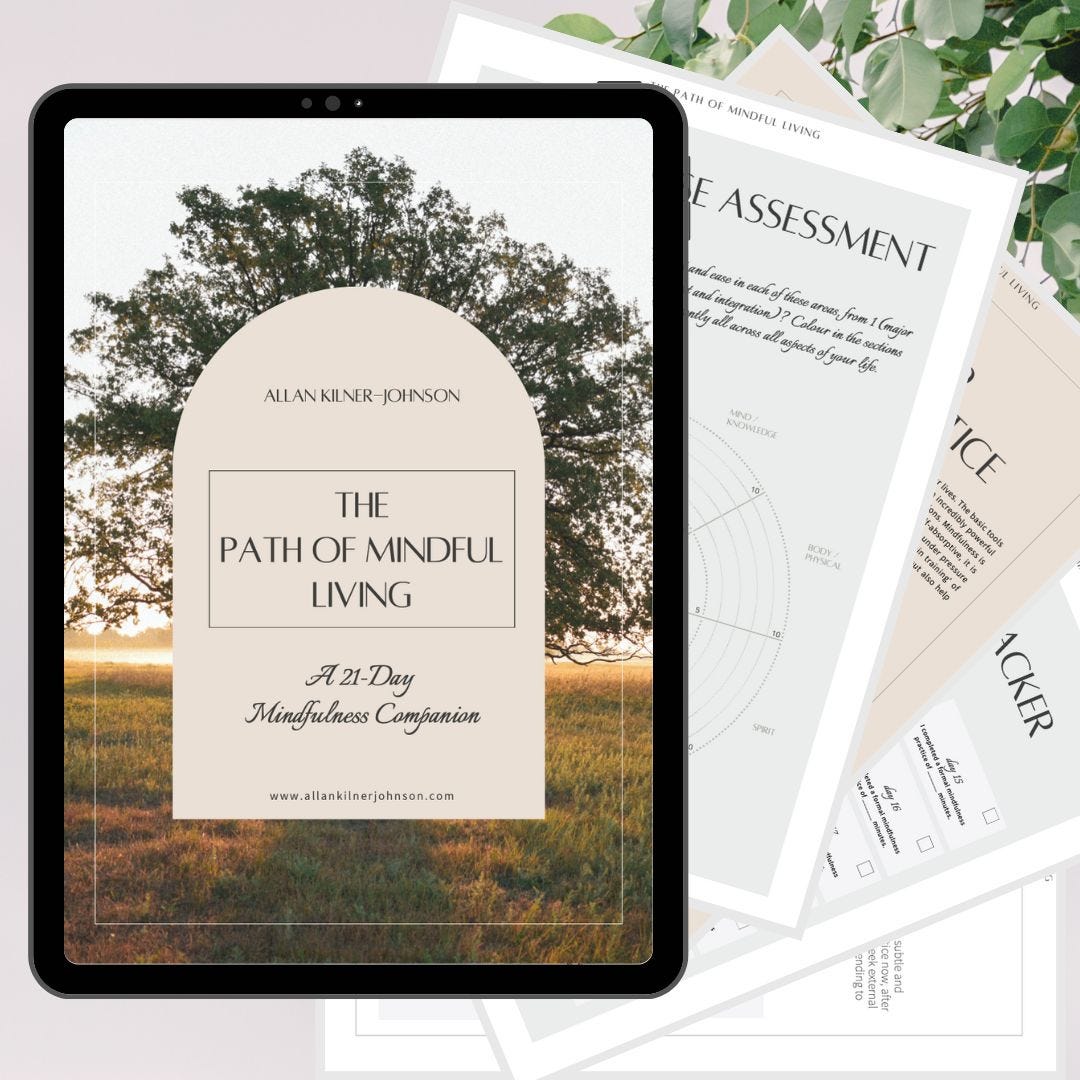
In The Path of Mindful Living: A 21-Day Mindfulness Companion, I lead you through a series of self-guided mindfulness exercises and show you how to bring mindfulness into your daily life. Readers of Integrative Creativity can download the workbook and pullout charts for only £6


How I’m Reading 100 Books in 2024

Reading has always been more than just a pastime for me — it’s my passion and my whole world. To misquote Barbie‘s Ken: my job is books. But perhaps somewhat surprisingly, in the hustle and bustle of my day job as an English literature academic, the sheer joy of reading for pleasure has fallen by the wayside. In order to get back to the joys of simply reading for pleasure I have set myself a challenge to read 100 books in 2024.

I read a lot as it is, but as there is so much more out there that I want to consume and enjoy I am challenging myself to read a lot this year. Nearly twice as much as I read last year. And, just to be clear, the 100 books are those that I am reading for pleasure–not the many more books that I will also be reading just for work.

I’m feeling pretty confident that I can meet this challenge because I already have a lot of strategies that have always helped me read a huge amount for my job. While these tips and tricks have been helpful to me as an English academic over the years, this year I am repurposing them for my own benefit to make sure that I am reading the stuff that I want to read for pleasure this year.

Here are some tips on how you can read 100 books (or 52, or 25, or 12, or whatever!) in 2024:

  • Keeping a TBR List: In order to navigate all the fantastic books that you have in store for you, keeping track of your To-Be-Read (TBR) list is paramount. My strategy is to use Goodreads as a comprehensive tool to keep track of the books I want to read, am currently immersed in, and have completed. This not only simplifies the reading process, but also provides a rewarding visualisation of progress and turns the literary journey into a tangible adventure.
  • Multitasking the reading experience: The key to an enriching reading experience lies in variety and having several books on the go at once ensures flexibility: if I don’t like one book, there’s another waiting for me. As I take a cross-platform approach, I juggle between a printed book, a Kindle and an audiobook. This ensures that, whatever the mood or situation, I always have a literary companion at hand to transport me to other worlds.
  • Notes as a ritual of immersion: For a devoted bibliophile, reading goes beyond the act itself. It becomes an immersive ritual where you internalise the essence of each book. My simple note-taking system consists of underlining or highlighting key passages and then summarising the book in my Goodreads reviews to create a tangible connection with the material. It’s a practise that goes beyond just finishing a book; it’s about creating a record of what you’ve completed
  • Giving up the unappealing: One of the liberating facets of my reading challenge is that I allow myself the freedom to give up on a book after the first 50 pages if it doesn’t captivate me. Life is too short to force yourself through something that you don’t vibe with. This ensures that each book contributes to the pleasure of reading rather than becoming a chore.
  • Visibility and accountability: When you resolve to read a hundred books in a year, visibility becomes a powerful accountability tool. Platforms like Goodreads are no longer just personal logbooks, but become public statements of commitment. This visibility acts as a subtle motivator, a gentle reminder that the literary journey is shared and that milestones should be celebrated together.

For me the challenge of reading 100 books in one year is not just about sheer quantity, but about rediscovering the joy of reading for pleasure. You can track my progress and share your own reading adventures on Goodreads — a virtual place where fellow literature lovers come together to celebrate the magic of books!


In The Path of Mindful Living: A 21-Day Mindfulness Companion, I lead you through a series of self-guided mindfulness exercises and show you how to bring mindfulness into your daily life. Readers of my blog can download the workbook and pullout charts for only £6.

Igniting your Creativity

Discovering your inner creativity begins with looking inside yourself. It is about understanding your feelings, your emotions, your past experiences, and your patterns of behaviour. As you learn to tune out the voice of self-doubt and listen instead to the voice of your inner wisdom, you begin to find your true voice and express yourself as you wish.

It is not always easy to let go of the fear of judgement and failure. However, when you are creative in the way you want to be, you will feel the sense of fulfilment that comes from knowing you are ‘doing something’ rather than ‘doing nothing’ and focusing on something that is meaningful to you. You begin to live your life according to your own ideas rather than those of others. You begin to find your voice and let go of the voice of self-doubt within you. By expressing your creativity in the way that feels right for you, you get more in touch with your inner wisdom, become more self-aware and gain more confidence.

There are so many ways to express your creativity: painting, sculpture, breadmaking, housekeeping, writing, dancing, design, photography, sketching, furniture making, journaling, scrapbook, modelling, cooking, acting, and jewellery making. These creative activities teach you the courage to let go of fear and self-doubt and, instead, to listen to the voice of your inner wisdom, define your values, set goals and start living your life on your own terms.

If you have not thought much about developing your creativity, getting started can be the hardest part. Often it is the thought of starting something that stops us from starting at all. Starting on something new does not mean that you can not make any more mistakes. It is about stepping out of your comfort zone and going your own way and realising that it is okay to make mistakes along the way. In fact, it is okay to make mistakes. It is about learning from your mistakes, paying attention to what is happening around you, how you feel, what is important to you and what you need to do to get what you want. It’s about stepping into your power and living your life on your own terms

Here are some things to think about:

  • What is your passion?
  • How would you like to be remembered?
  • What would the world look like if everyone had the courage to live life on their own terms? 

Answer these questions openly and honestly. Take your time, write down the answers, and let your ideas flow. When you have finished, take a moment to read your responses. How do you feel when you look at what you’ve written? Do you feel excited? Do you feel encouraged? Do you feel motivated? If you have any of these feelings, then you have already taken a positive step towards becoming a more creative person.

There are so many ways to be creative. Think of the things you like to do and the things you do regularly. Are there ways you could be more creative in any of these areas? Is there something you hear on the radio or see on TV that you could create or do yourself? Is there something you already do that you could change or do differently? Is there someone you know who you could help to develop their creativity? Is there something you could do to make yourself feel more alive, excited, or energised? Explore these feelings and consider what steps you could take to become more creative in the way you want.

Today is a new day to be creative! Now that you have taken some time to self-reflect, you are in a position to shape your life according to your own ideas. Make it your mission to be creative every day. Choose a project, take some time for yourself, and do something you enjoy! Let go of the fear of failure and instead enjoy the moment. Express yourself. Be creative. Become the person you want to become. If you have not already, take some time to write down your creativity goals that will help you take action and start making positive changes in your life.

Take the time to listen to your own heart, discover your own truths, express yourself in the way that feels right for you, act and do something. Be creative in the way you choose and take the time to follow your own path. Through creativity you learn to live your life on your own terms, to trust yourself and let go of fear, to listen to your inner voice and come into your power.


Join 587 other subscribers