What Bookbinding Taught Me About Patience and Care

Photo by Antoni Shkraba Studio on Pexels.com

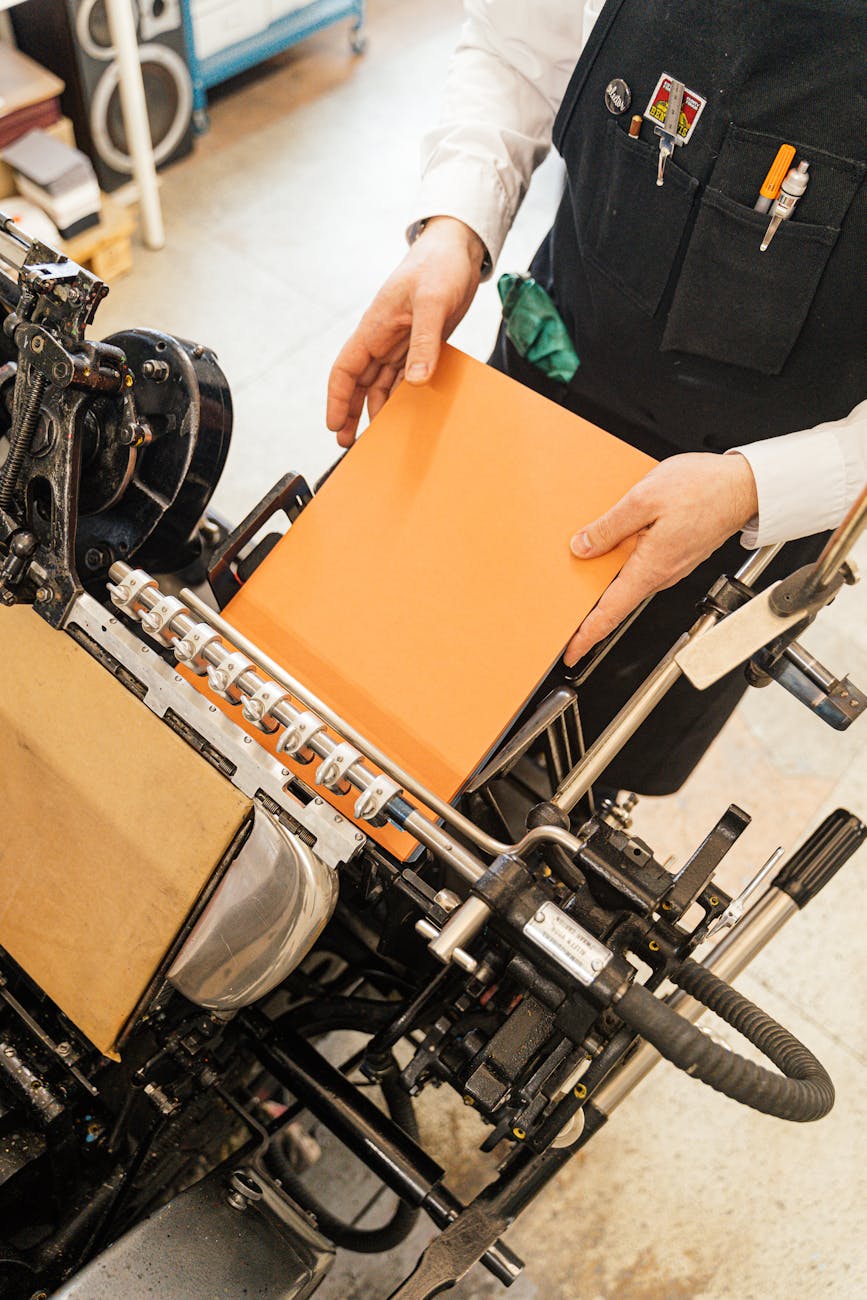
There is something about the craft of bookbinding. It re-educates the hands, and through them, the nervous system. It returns time to its proper scale.

I’ve been thinking about this more since settling into my new flat, which—by a small but meaningful stroke of grace—includes a dedicated studio space. For the first time in years, my tools don’t need to be packed away between sessions. Paper can sit under weights overnight without being disturbed, and work can pause without being dismantled.

Already this matters more than I expected. Bookbinding, after all, resists the logic of efficiency. Adhesive must dry. Grain direction must be respected. Linen thread must be drawn tight but not too tight. You cannot rush a spine without paying for it later. The work teaches you—firmly but kindly—that attention cannot be compressed.

Simone Weil famously wrote that “attention is the rarest and purest form of generosity.” Bookbinding operationalises this insight. You can’t bind a book while thinking three steps ahead. If your attention wanders while folding signatures, the error will propagate. If you rush the punching of sewing stations, the whole text block will pull askew. You can’t persuade paper fibres to behave differently through force of will; you must cooperate with them.

In this sense, bookbinding has become a counter-practice to much of contemporary creative life. Online, speed is rewarded. Visibility is currency. Iteration is encouraged, but only when it looks like momentum. The slowness of binding—a practice that may take days or weeks before anything finished appears—feels almost monastic by comparison.

And yet, paradoxically, it has made me more productive, not less.

One of the biggest misconceptions about patience is that it means waiting. In practice, patience is active–it’s a verb (metaphorically at least) because you are always doing something: sharpening a blade, squaring a stack, testing tension, laying out the next stage so it will be ready when the moment comes.

This mirrors something I see repeatedly in coaching work, particularly with highly sensitive or intellectually driven creatives. There is often an underlying anxiety that if one is not producing, one is stagnating. But many forms of growth happen beneath the threshold of visible output.

Since moving into the new flat and setting up the studio, I’ve noticed a subtle shift in how I approach my other work—writing, teaching, contemplative practice. I’m more willing to let something rest unfinished.

There is also, I think, an ethical dimension to working with materials in this way. Richard Sennett, in The Craftsman, describes craftsmanship as a dialogue between hand and material, where resistance becomes instructive rather than frustrating. This is not mastery-as-domination, but mastery-as-listening.

In bookbinding, materials remember what you do to them. Paper creased carelessly will never quite forgive you. Cloth stretched unevenly will telegraph the mistake forever. This permanence sharpens responsibility. You learn to slow down not because slowness is virtuous, but because it is necessary.

This has felt especially grounding during a period of personal transition. A new home, even a welcome one, requires recalibration. New light patterns. New noises. New routines. The studio has become a place where that recalibration can happen somatically, not just cognitively. Through repeated, careful gestures, the body relearns safety.

It’s hard not to notice the symbolic resonance here. Books are already threshold objects—containers of thought, memory, and voice. Binding them by hand heightens this awareness. You become acutely conscious of the labour that precedes reading, of the infrastructure that makes inwardness portable.

All of this feeds into a broader theme that’s been shaping my work lately: the power of small, well-held experiments. Not performative reinventions, but modest shifts in practice that reorient attention.

Perhaps the deepest lesson bookbinding has taught me is that care compounds. What feels like slowness at the outset becomes reliability later. Structures hold. Work lasts. You spend less time repairing what was rushed.

This is true of creative practice, of relationships, of inner life. Patience is not something we adopt once and for all; it is something we rehearse through forms that demand it of us.

For now, I’m grateful for a studio that allows this rehearsal to continue—quietly, materially, without display. And I’m grateful, too, for the conversations that extend from it: in workshops, in coaching, in shared spaces of attention.


Upcoming Events

Integrative Meditation

  • 19 January | 7.30-8.30 PM GMT | £4

Creative Flow Co-Working Session: The Power of Tiny Experiments

Highly Sensitive Creatives: Energy, Boundaries, and Creative Rhythm


More to Explore

Four Dimensions of Stillness for Creatives

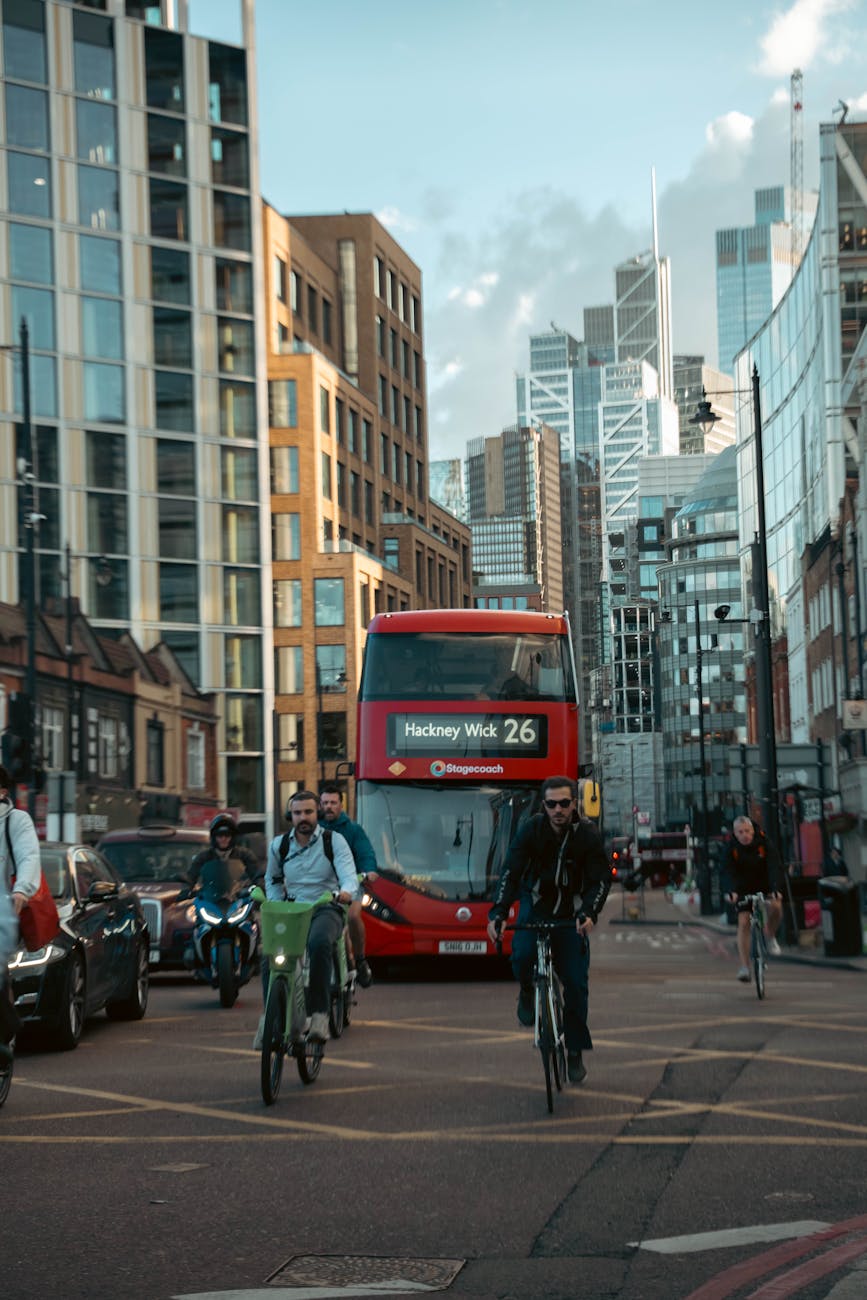
Living in a city like London trains the nervous system in a particular way. Even when we love urban life—its density, its cultural richness, its chance encounters—it asks us to metabolise a constant low-level stimulation: noise, movement, decision-making, comparison.

Over the past few weeks, I’ve been thinking about this more deliberately. I’ve recently moved into a flat in a beautiful 1920s building. It’s filled with heaps of character, and I know that I’ll be very happy here, but it’s also a significant change.I’ve spent the past decade living in new-build flats, the kind with sleek appliances, underfloor heating, and a comforting sameness to all the others. But my new flat, even before my furniture was moved in and the boxes filled every spare corner, was noticeably maximalist: crown moulding, dado rails, radiators, and, perhaps most notably, the constant sounds of neighbours on all sides.

This move has coincided with a renewed reflection on minimalism as a practice of attention, that is less about owning fewer objects (though that can help), and more about creating pockets of stillness within environments that are, by default, overstimulating.

Minimalism has been thoroughly Instagrammed. White walls, pale wood, a single ceramic cup placed just so. There is nothing wrong with this, but it risks missing the deeper point. And my old flat was certainly minimalist in the aesthetic sense.

Writers like Cal Newport in Digital Minimalism and Jenny Odell in How to Do Nothing have both argued, in different ways, that minimalism is not about subtraction for its own sake, but about protecting what matters in a culture designed to fragment attention. Similarly, the Japanese concept of ma—often translated as ‘negative space’—suggests that meaning arises not from what is present alone, but from the intervals of emptiness around it that give it shape.

Big cities are where this discernment is most tested. Urban life rewards responsiveness: quick replies, constant availability, social agility. For many creatives and sensitive thinkers, this can become exhausting. We learn to override subtle signals—fatigue, saturation, the need for withdrawal—because the environment rarely validates them.

Over the years—through my own practice, teaching, and coaching—I’ve noticed that these pockets of stillness tend to form around four dimensions:

  • Spatial stillness: a chair by a window, a desk cleared of visual noise, a room that signals ‘nothing is required of you here.’
  • Temporal stillness: protected times in the week that are not optimised, monetised, or rushed.
  • Relational stillness: fewer, deeper conversations; rhythms of contact that don’t require constant performance.
  • Inner stillness: practices that allow attention to settle without forcing it: meditation, journalling, slow reading.

One theme that runs through my recent work is the idea that many creatives are finely tuned. They notice more. They process more. They feel more. Without the right structures, this depth becomes a liability. This is why I resist advice that tells people simply to “push through” or “build resilience.” Resilience matters, but so do the structures of support and nurturance around you.

A few practical reflections that may be useful:

  • Reduce friction at points of transition. The moments between activities are where overstimulation accumulates. Even five minutes of pause between tasks can change the tone of a day.
  • Let one room be functionally “unproductive.” A space that is not for work, storage, or optimisation becomes a psychological refuge.
  • Limit inputs before increasing outputs. Reading less, scrolling less, listening less can paradoxically make creative work richer.
  • Choose rhythms over goals. A daily walk, a weekly reflective session, a regular co-working rhythm—these stabilise attention over time.

None of this requires perfection. It requires kindness toward your own nervous system.

If this resonates, there are several ways to explore these ideas in a supported, communal way over the coming weeks.

For those wanting more personalised support, I also offer 1-1 coaching, focused on helping creatives and thinkers build sustainable structures for meaningful work and life. You’re welcome to book a free 15-minute clarity call here: https://allanjohnson.co.uk/coaching/

Pockets of stillness don’t remove us from life; they allow us to participate more fully, with less quiet self-erasure. In a culture that rewards constant motion, stillness becomes a form of discernment. And discernment, I increasingly believe, is one of the most important creative capacities we have.


More to Explore

Understanding Metaconsciousness for Personal Growth

Photo by meo on Pexels.com

At this time of year, I always notice a subtle change in the quality of my attention. The external world doesn’t necessarily slow down, but something inwardly does. Even the light feels different. Darker, yes, but also more permeable. I’ve been feeling that contrast keenly over the last few weeks, particularly as I prepare for the turn into a new year.

It’s also been on my mind recently while reading Kate Atkinson’s Festive Spirits for my local book club’s Christmas meeting. Atkinson’s stories, playful and unsettling in equal measure, brush up against the unseen dimensions of experience without making grand metaphysical claims. They hover at the threshold. That, in its own way, is where much of my thinking about superconsciousness currently lives: not as an abstract spiritual pinnacle, but as a working edge of awareness that we keep rediscovering in different vocabularies.

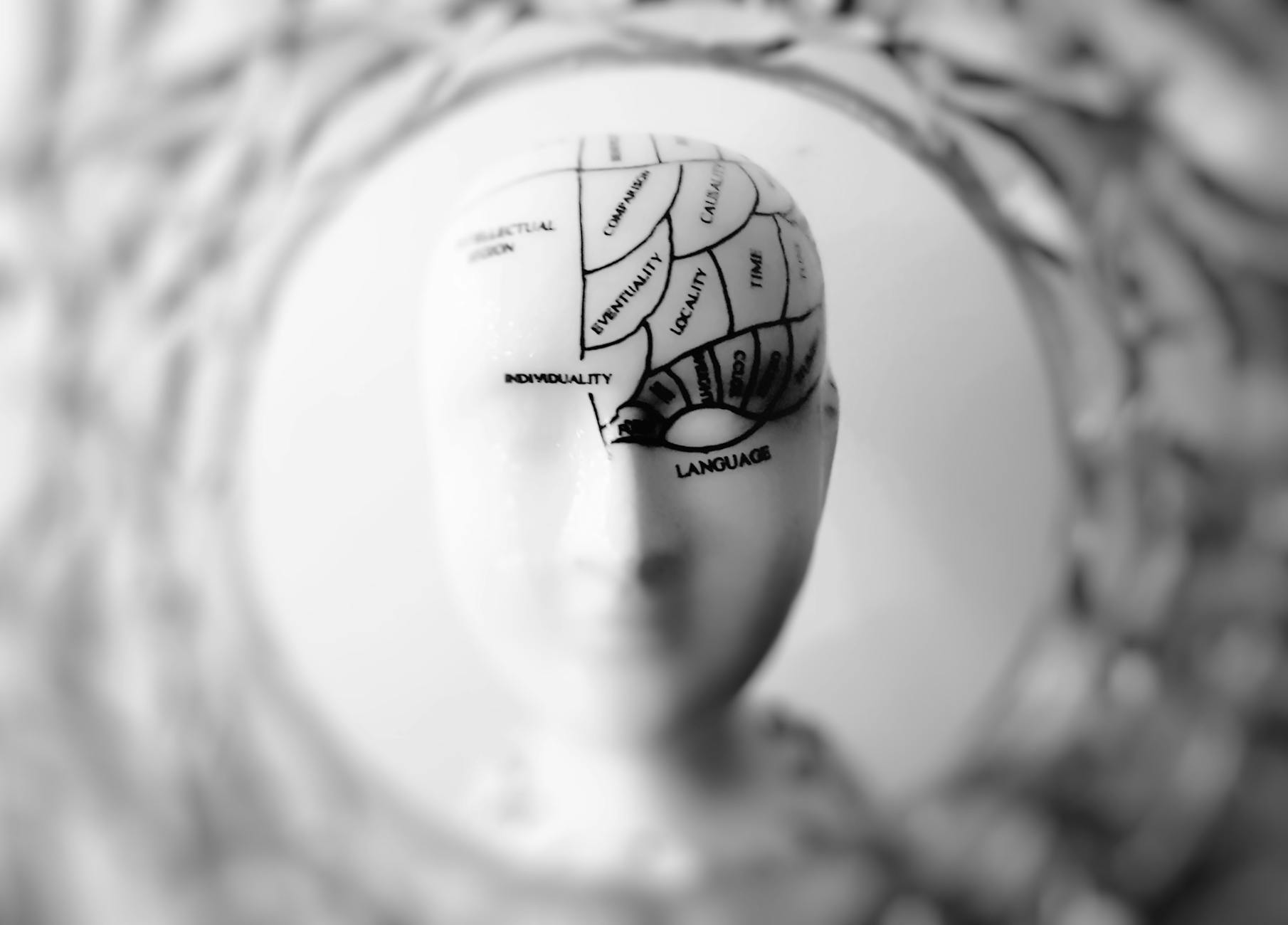
In my last book and in much of my recent teaching, I’ve returned again and again to the idea that a large proportion of what we call “consciousness” is, in fact, automatic. It is hormonal, patterned, reactive, efficient. William James hinted at this more than a century ago when he described habit as the “enormous fly-wheel of society.” Freud, in his own way, mapped the vast subterranean machinery of the psyche. Contemporary neuroscience has largely confirmed what contemplative traditions have long suggested: most of what we do, think, and feel happens before we decide.

This is where the idea of metaconsciousness becomes so important, the capacity to notice that we are being moved by processes that are not, in any simple sense, “us.” It is the moment when you realise you are mid-reaction and something in you steps back just enough to witness it. Not to suppress it. Not to spiritualise it. Just to see.

But superconsciousness, as I’m increasingly working with it, points to something slightly different again. It is not merely awareness of the machinery. It is awareness that is not exclusively organised by the machinery at all. It gestures toward a dimension of mind that is less bound to survival, identity maintenance, or historical conditioning. Roberto Assagioli—whose work in psychosynthesis continues to shape my own—described the superconscious as the source of creativity, meaning, ethical insight, and transpersonal experience. Not an escape from the human, but its latent extension.

One of the things I’ve become more cautious about over the years is how easily “human potential” gets packaged as something to be maximised, extracted, or branded. The language of fulfilment can slide so quickly into performance metrics. Abraham Maslow’s later writings—often neglected in organisational culture—are far more subtle than his pyramid suggests. Self-actualisation, for Maslow, was never a static achievement, but an ongoing alignment with what is most alive and truthful in us.

Superconsciousness names a direction of travel, not a finish line.

In my own life, this shows up less in fireworks and more in micro-adjustments: choosing not to override tiredness with willpower; noticing when the body says no long before the intellect catches up; letting an idea take months instead of forcing it into productivity. It shows up in teaching too—in learning when not to fill the silence, when to let a group sit with not-knowing.

Even reading Festive Spirits this December has felt like a small act of this alignment. In between sessions, planning for the new year, and working with clients, sitting with a beautifully written short story by the fire (or, more accurately, a very convincing YouTube fire) has felt like a reminder that imagination itself is a superconscious faculty. We don’t manufacture it. We host it.

There is a tendency to associate higher states of awareness with peak experiences: mystical visions, altered states, moments of transcendence. And certainly, those exist. But what interests me far more now is how the superconscious expresses itself in the ordinary:

  • In ethical instincts that arise before rational justification
  • In sudden creative insight that reorganises months of confused thinking
  • In moments of compassion that interrupt long-established narratives about self and other
  • In the quiet certainty that a particular season of life has ended—even when nothing dramatic has occurred

This is not about becoming perfect. It is about becoming less confined.

I notice that many of the people I work with—particularly academics, creatives, and reflective professionals—are weary not because they lack insight, but because their insight has nowhere to land. They understand their patterns. They often know exactly where those patterns came from. But knowing is not the same as reorganising the centre of gravity from which one lives.

Superconsciousness, in this sense, is not an abstract spiritual add-on. It is deeply practical. It changes: how decisions are made, what counts as success, how time is experienced, where authority is located.

And perhaps most importantly, it reshapes the relationship between effort and surrender. Not everything meaningful can be solved through optimisation.

As this year draws to a close, I find myself more attuned than usual to thresholds between exhaustion and renewal, between endings and beginnings, between old strategies and new capacities for trust. This is exactly the territory that both my coaching work and my group workshops increasingly inhabit: not self-improvement as escalation, but re-orientation.

If this reflection resonates, there are a few gentle ways to continue the conversation:


🌿 1–1 Coaching

If you’re navigating a threshold of your own—professionally, creatively, or existentially—I offer integrative 1–1 coaching rooted in psychosynthesis, contemplative practice, and depth psychology.

You’re very welcome to book a free 15-minute Clarity Call here:
👉 https://allanjohnson.co.uk/coaching/


✨ Reflect & Reset: Quarterly Planning Workshop

5 January | 7.30–9.00 PM GMT | £10
A spacious, grounded evening to review the last season and consciously set the next one—without forcing premature certainty.
Register here:
👉 https://www.meetup.com/the-art-of-creative-practice/events/311948616


🧘 Integrative Meditation

12 January | 7.30–8.30 PM GMT | £4
A guided practice evening bringing together somatic awareness, imagination, and reflective presence.
Register here:
👉 https://www.meetup.com/the-art-of-creative-practice/events/311944273


Superconsciousness, for me, is no longer a speculative peak. It is a daily negotiation between who I have been conditioned to be, who I consciously try to be, and who sometimes appears unannounced in moments of clarity, creativity, or courage. It does not always feel elevated. Often it feels quiet. Sometimes inconvenient. Occasionally unmistakably right.

And perhaps that, more than anything, is the true measure of human potential: not how high we rise, but how deeply we learn to listen.


More to Explore

700 Members and Counting: Celebrating Our Creative Community and What Lies Ahead

As autumn settles in, the nights are growing long and dark, and there’s a certain stillness in the air that invites reflection. I’m delighted to share that the Art of Creative Practice Meetup group has now passed 700 members in just two months (we also have a 4.9 star rating with 83 reviews, and I am so grateful to everyone who has shared their comments and reviews)! What a privilege it has been walking this journey with all of you! If you haven’t had a chance to join one of our meetups yet, please do because we look forward to meeting you and getting a chance to welcome you to our community!

For me, this season is also one of personal transition. I’m preparing to move to a new flat next year, a beautiful historic 1930s building I’m excited about, even if I never enjoy the actual moving process. I’m taking a few days away this week to recharge, but all of our usual events will continue as normal, including the Course in Miracles Study Group on Sunday night and our weekly co-working sessions on Monday morning.


We’re also now two months into the 12-week Artist’s Way Circle, and the depth and richness that has formed in that group continues to amaze me! Creative work is often solitary, but our collective spaces are where trust, care, and connection flourish. It’s in these spaces that we learn how to sustain ourselves as creatives, balancing the solitary labour of creation with the nourishment of community (if you didn’t get a chance to join the Artist’s Way Circle this year, I hope that we will be able to offer the opportunity again next year!).

The upcoming Five-Day Soul Map Challenge, running from December 8th to December 12th builds on these ideas, offering a structured pathway to align with creative and personal priorities. A central focus of the challenge is an exploration of what are called subpersonalities, the psychological term for the masks and personas we all have. Many of these voices serve useful purposes, but they can also pull us in conflicting directions or keep us stuck.

Alongside this, the challenge works with what are called mind/body/emotion centres. Many of us operate instinctively from one centre—our thoughts, our feelings, or our physical impulses—but rarely from all three. In the Challenge, you’ll explore what it feels like to operate from each centre and discover the balance you need to make aligned choices, manage energy, and move forward with clarity.

The Challenge also introduces a number of powerful, brand-new tools that I can’t wait to share with you! They are designed to reveal hidden patterns, release blocks, and help you translate insight into tangible action.

To give you a taste of the work, I’m hosting a free Inner Alchemy workshop on December 1st. This powerful session introduces some of these tools, demonstrates how they work, and lets you experience the impact they can make in your creative practice before committing to the full five days.

Even as the nights grow longer and the world slows down, the creative work continues, both in the quiet of your studio and in the shared spaces we cultivate together. Whether it’s our Study Group, co-working sessions, or the Soul Map Challenge, these gatherings are where reflection meets action, insight meets support, and the solitary and communal aspects of creativity meet in balance.

The coming year holds enormous potential for you all, and I feel deeply privileged to walk alongside all of you on this journey. I can’t wait to see how 2026 unfolds!


Upcoming Workshops

Weekly Events (free/community supported)

Metaconsciousness: Becoming Aware of the Ways We’re Driven

Lately I’ve been thinking about how much of life unfolds beneath the surface of our awareness, not just in the mysterious depths of the unconscious, but also in the quieter, more practical rhythms of habit, mood, and reaction. What if our real work is to notice not just what we’re conscious of, but how consciousness itself is being directed?

That’s what is meant by metaconsciousness, the capacity to recognise when we are being driven by hormones, hunger, fear of rejection, deadlines, the steady dopamine drip of our phones, or the deep psychic grooves of childhood conditioning. In my own experience—especially during the past few months of moving between projects, planning new teaching, and reshaping routines—this awareness has felt like an internal turning point. The challenge isn’t simply to ‘be mindful’, but to discern the layers of agency beneath the surface: Who, exactly, is choosing what I’m doing right now?

When I start to ask that question seriously, it becomes uncomfortable. I notice how much of my day is already spoken for by subtle compulsions masquerading as preferences. Even something as benign as checking email can carry the faint pulse of anxiety, a microdose of control. We like to believe that modern life rewards autonomy and discernment, but in practice it trains us in reactivity, which is, by definition, the opposite of freedom.

From Consciousness to Metaconsciousness

Consciousness, in this view, is not a steady state but a constantly fluctuating field of attention. It’s automatic, embodied, and largely determined by biological imperatives. You feel hunger, so you eat. You feel threatened, so you defend. You feel bored, so you reach for your phone. These are not moral failings; they’re simply how the nervous system evolved to keep us alive.

Metaconsciousness, though, introduces a different quality. It’s what happens when we see that we’re acting automatically and hold that recognition with curiosity rather than judgment. There’s a subtle but profound difference between saying ‘I’m angry’ and ‘I notice that anger is arising’. The first statement identifies with the emotion; the second observes it. And in that observation lies the seed of freedom.

This is why contemplative practice remains, for me, one of the few truly radical technologies of our time. Sitting quietly, noticing the mind’s movements without needing to edit or manage them, slowly reveals how much of what we call “self” is just a cascade of impulses, stories, and inherited scripts. Over time, a new perspective opens—one that isn’t outside the body but is no longer confined by it.

If you’re drawn to exploring this dimension in your own creative or professional life, I’ll be leading an online session called Mindfulness for Creatives: Cultivating Focus, Flow, and Inspiration on 23 October (7.30–9.00pm, UK time). We’ll look at practical tools for noticing when attention narrows or scatters—and how that awareness can restore genuine inspiration.

The Drama of the Driven Life

Of course, once we begin to see how we’re driven, another pattern emerges: the drama of selfhood. Many of us unconsciously replay emotional scripts that were formed long before adulthood, such as seeking validation, fearing abandonment, or rescuing others to avoid our own discomfort. These patterns aren’t evidence of failure but they are evidence that we are living out of old perspectives and potentially trying to replicate old relationships from the past, especially the damaging or traumatic ones.

But they can also be exhausting. In coaching and in my own reflective practice, I’ve seen how deeply these dynamics colour our work, our love, and even our whole sense of purpose. The shift toward metaconsciousness invites us to watch these patterns with compassion and detachment, and to move, in psychological terms, from within the drama to observing it.

This theme forms the heart of my upcoming workshop Stopping the Drama Cycle: A Workshop on Love & Our Limiting Patterns on 3 November (7.00–8.30pm, UK time). It’s an evening devoted to understanding how we get pulled into emotional triangulations—the victim, rescuer, and persecutor roles that Karpman identified—and how to step into a more mature and loving mode of engagement. If you’ve ever felt trapped in repetition, whether in relationships or creative work, this session offers a clear, compassionate way through.

Beyond Insight: Practicing the Miraculous

Metaconsciousness doesn’t stop at awareness; it calls for us to do something with it and act from a deeper centre. For me, this is where A Course in Miracles becomes a training in radical perception. Its central insight, that we can learn to see differently, aligns perfectly with the idea of metaconsciousness: we are not our automatic thoughts, but the awareness capable of choosing love instead of fear.

In Practical Miracles: Practicing the Course Beyond the Book on 8 November (2–5pm, UK time), we’ll explore this integration more experientially. How do we move from intellectual understanding to lived transformation? How do we reframe life’s small irritations as opportunities to practice gentler perception? This isn’t about metaphysical abstraction but about everyday miracle-mindedness: the courage to meet the driven mind with tenderness.

A Season of Turning Inward

As autumn settles in, I find myself slowing down a bit. The academic year begins; projects find their rhythm; the light changes. Each season asks for its own form of consciousness, and autumn, for me, always invites metaconsciousness. It’s the season of noticing how we’re driven: by deadlines, by expectations, by the desire to finish before winter.

But it’s also the season of release. Of choosing what’s worth carrying forward and what can gently fall away. In this way, the movement from consciousness to metaconsciousness mirrors the movement from doing to being—from the leaf’s impulse to hold the branch to its graceful surrender to air.

If you’ve been following some of my recent writing on what our books say about us or how to develop positive morning rituals, you’ll recognise the same undercurrent: how to live well within limits. To become aware not only of what drives us, but of the stillness beneath those drives.

And that, I suspect, is the quiet art of metaconsciousness. Not transcending the body or renouncing the world, but inhabiting both more fully—knowing that our thoughts and feelings will continue to move like weather, while something deeper watches with patience.

If you’d like to explore that space with others this autumn, I hope you’ll join one—or several—of these gatherings.


Upcoming Workshops