A Year of Reading and Renewal: Reflections on 52+ Books in 2025

I started this year with a strange mix of endings and fresh beginnings. The email confirming my promotion to full professor arrived in early January while I was making coffee, and I remember feeling not triumph but a kind of wry tenderness towards my younger self who had wanted this so badly. Titles come long after the inner effort that earns them, and the moment of arrival is often anticlimactic, yet it still signifies something. Three months later, I stepped down after six years as Associate Dean, closing a chapter of leadership that had greatly shaped my professional identity.

At the beginning of the year, I set a Goodreads challenge to read 52 books, mostly as a reminder to read not only in my discipline but also beyond it, and to let myself wander into other registers. What I didn’t expect was just how deeply the year’s reading would fold into everything else I was doing. The books became companions to the rhythms of the sabbatical, to the shifting layers of my personal work, and to the communities that formed around me as welcomed additions.

One of the brightest of those communities was the Surbiton Literary Salon, first dreamed up over dinner in January with the simplest impulse: the desire to talk about books in good company at my local pub. We began with a handful of us in a small room in our local, a bottle of wine circulating and no agenda beyond the shared pleasure of reading. That little gathering grew into a genuinely warm and inspirational group that expanded month after month, and together we travelled from the quiet, meditative brilliance of Samantha Harvey’s Orbital to the philosophical charm of The Elegance of the Hedgehog, a book that sparked one of our liveliest discussions about intelligence, loneliness, and the elegance of human contradiction. From there, we moved through Days at the Morisaki Bookshop, which reignited my intense desire to visit Japan, and The Satsuma Complex, which divided the group’s opinions more than any other.

Angela Thirkell’s Wild Strawberries brought a welcome return to lightness, those bright, English comic notes that somehow disguise their structural precision. Harriet Tyce’s Blood Orange plunged us into a much darker register, and it was astonishing how different members of the group held different emotional keys to it. And then The Resilience Project brought an earnestness and sincerity that balanced the year’s heavier themes. The Women opened unexpectedly deep discussions about duty, silence, and the emotional architecture of courage, and Festive Spirits by Kate Atkinson arrived just as the nights grew longer. By the end of the year, the Salon had become, for me and the 15 or so of us who gather every month in a friend’s well-appointed front room, a steady, quietly joyful ritual of sharing our reflections on books. A reminder that literature is not an individual encounter but a relational one.

Parallel to this, I began leading a Sunday evening Course in Miracles study group, which continues to deepen. Guiding a group through A Course in Miracles is a very different kind of teaching that depends less on interpretation and more on presence. We read it in philosophical, ecumenical language, without doctrinal commitments, which seems to open a gentler, more spacious terrain. Each week invites a shift in perception: forgiveness not as moral duty but as a choice of vision, responsibility not as blame but as agency, devotion not as obedience but as attention. The text asks much of us—stillness, honesty, love—and somehow the group met it with all three.

Then there was The Art of Creative Practice, the coaching and creative development circle I founded on Meetup. I began it lightly in September with free coworking sessions, almost experimentally, but it quickly grew into one of the most rewarding parts of my year. The group attracted writers, artists, and creatives of all stripes who were less interested in productivity hacks than in understanding the emotional and psychological textures that underpin their work. What has struck me most is the courage people have brought to the process, the willingness to inhabit contradiction and complexity with humour and grace. It reminded me again that creativity is not a technique but a relationship with one’s own inner landscape.

All of this shaped the way I read. Books became part of an ongoing unfolding of my year, sometimes offering clarity, sometimes challenge, sometimes simple companionship. Elaine Aron’s The Highly Sensitive Person and Judith Orloff’s The Empath’s Survival Guide, for example, woven between sessions of creative coaching, gave me new language for the quieter traits that many group members shared but rarely articulated. These texts reframed sensitivity not as fragility but as attunement, something to be cultivated, not resisted. It created echoes with other books I encountered this year that explored the subtler dimensions of mind and meaning: Steve Hagen’s Buddhism Plain & Simple, Yung Pueblo’s Clarity & Connection, and Marianne Williamson’s writings on the intersections of love, perception, and the ethical imagination. Attending a live weekend workshop with Williamson this summer was one of my highlights of the year.

Money and prosperity, too, became an unexpected theme, not in the acquisitive sense, but as a study of relationship and mindset. Lynne Twist’s The Soul of Money, Catherine Ponder’s The Dynamic Laws of Prosperity, and Joseph Murphy’s The Power of Your Subconscious Mind all, in different ways, opened space for reconsidering the beliefs we inherit about value, sufficiency, and trust. These books arrived alongside my own work in reshaping my financial habits and sense of abundance, and they echoed the larger project of creating a life that feels aligned, intentional, and quietly elegant.

Some books were simply pleasures that reoriented me. Maugham’s The Magician—a thinly veiled portrait of Aleister Crowley—was delightfully pulpy and relevant to my occult research. Fiction formed its own thread of discovery. Reading Madame Bovary again reminded me of the surgical precision of Flaubert’s attention, the cruelty and tenderness interwoven in the same gesture. Garcia Marquez’s One Hundred Years of Solitude returned me to a world that felt like a dream I once lived inside, a universe where the magical and the mundane breathe the same air. Faulkner’s The Sound and the Fury challenged me all over again, as it always does, and Brave New World felt unnervingly prescient (and not at all what I remember it being when I read it years ago). 

As I write this, I’m preparing the next cycle of work, finishing my book, continuing The Art of Creative Practice, deepening into the Course in Miracles Study Group, tending the Surbiton Literary Salon, and beginning several new coaching cohorts in the new year. If this year taught me anything, it’s that intellectual life thrives when held in community, when nourished by a wide diet of ideas, and when approached not with performance but with presence. Here’s to another year of reading, learning, becoming—and to the books that will meet us where we are, and gently carry us somewhere new.


My 2025 Reading List

  • Ackroyd, Peter, Introducing Swedenborg
  • Aron, Elaine N., The Highly Sensitive Person
  • Atkinson, Kate, Festive Spirits: Three Christmas Stories
  • Barbery, Muriel, The Elegance of the Hedgehog
  • Brann, AmyNeuroscience for Coaches
  • Brookner, Anita, Hotel du Lac
  • Brown, Dan, The Secret of Secrets
  • Caine, MargaretFootloose in Cornish Folklore
  • Chanek, JackTarot for the Magically Inclined
  • Chaucer, GeoffreyThe Canterbury Tales
  • Cuylenburg, Hugh van, The Resilience Project
  • Davies, OwenArt of the Grimoire
  • Dean, LizThe Ultimate Guide to Tarot Spreads
  • Eggers, DaveThe Monk of Mokha
  • Faulkner, WilliamThe Sound and the Fury
  • Fitzgerald, F. ScottThe Great Gatsby
  • Flaubert, GustaveMadame Bovary
  • Garcia Marqués, GabrielOne Hundred Years of Solitude
  • Hagen, SteveBuddhism Plain & Simple
  • Hannah, Kristin, The Women
  • Harvey, Samantha,  Orbital
  • Hayes, NickWild Service
  • Hollinghurst, Alan, Our Evenings
  • Holiday, RyanCourage Is CallingRight Thing, Right Now
  • Horowitz, MitchOccult America
  • Houston, Keith, The Book
  • Kerr, Gordon, A Short History of Coffee
  • Matthews, MichaelBigger Leaner Stronger
  • Matousek, MarkLessons from an American Stoic
  • Mortimer, Bob, The Satsuma Complex
  • Morlok, FranziskaBookbinding
  • Murphy, JosephThe Power of Your Subconscious Mind
  • Osman, Richard, The Impossible Fortune
  • Ponder, Catherine, The Dynamic Laws of Prosperity
  • Pueblo, Yung, Clarity & Connection
  • Saumarez Smith, Ferdinand, Eleusis and Enlightenment
  • Sertillanges, Antonin,The Intellectual Life
  • Shen Congwen,  Border Town
  • Stibal, ViannaSeven Planes of ExistenceYou and the CreatorDigging for BeliefsAdvanced ThetaHealingThetaHealing
  • Tarbuck, Alice, A Spell in the Wild
  • Thirkell, AngelaWild Strawberries
  • Twist, LynneThe Soul of Money
  • Tyce, HarrietBlood Orange
  • Warner, Sylvia TownsendLolly Willowes
  • Williamson, MarianneThe Law of Divine CompensationThe Mystic Jesus
  • Wolynn, Mark, It Didn’t Start With You
  • Wynn-Williams, SarahCareless People
  • Yagisawa, SatoshiDays at the Morisaki Bookshop

Upcoming Events

Reflect & Reset: Quarterly Planning Workshop

Integrative Meditation

The Magic of December: London Streets and Seasonal Reflections

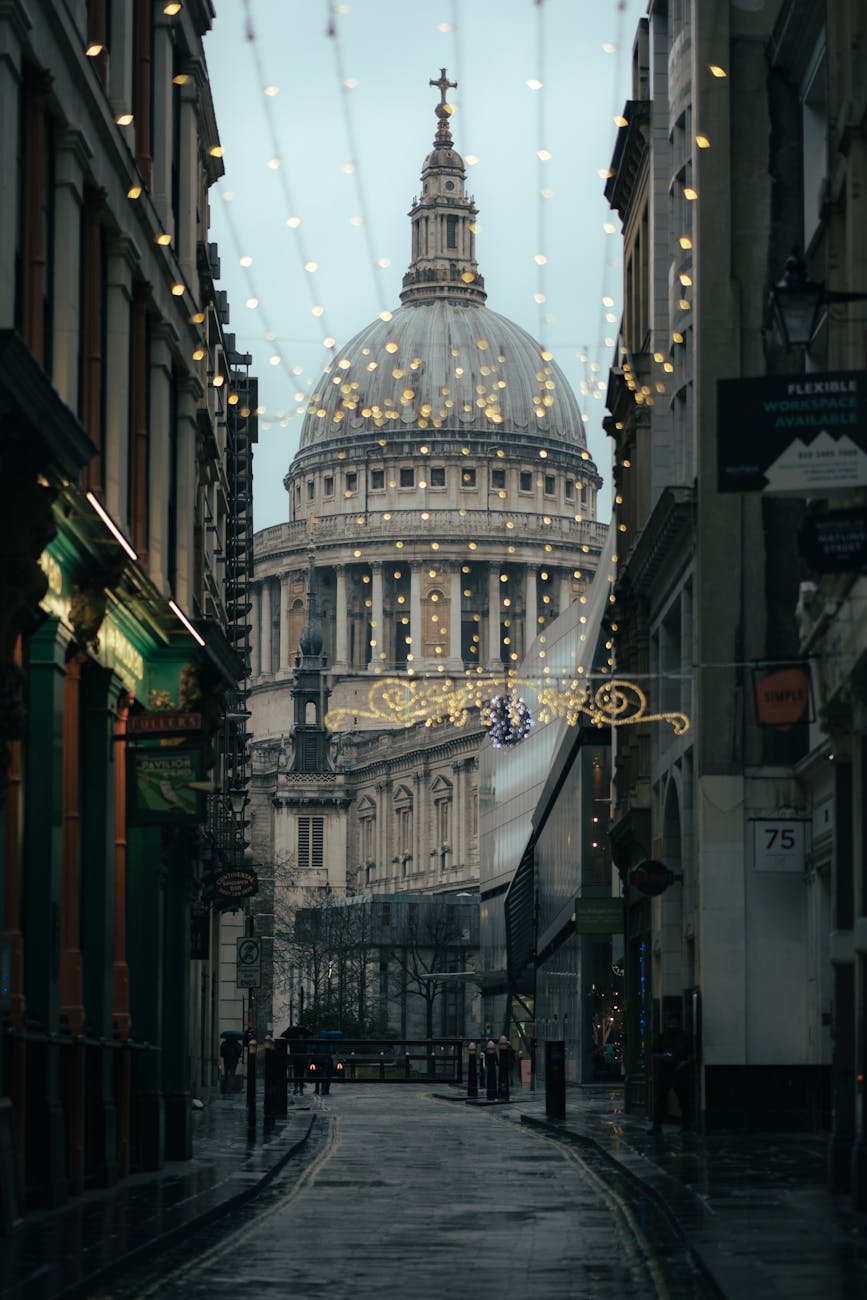
There is something unmistakably breathtaking about walking through the streets of London in December. The winter light is low, softening the stone façades and gilded lettering that mark centuries of human endeavour. This weekend, as I wandered near St James’s Palace, I found myself pausing before a grand Georgian facade. Its windows were frosted, the door slightly chipped at the edges, but the sense of life contained within those walls—the countless stories, decisions, and quiet domestic dramas—was palpable. Heritage buildings bear witness, in a very real way, to the rhythms of ordinary and extraordinary life, much like the pages of a journal or the quiet corners of a home carefully decorated for the season.

I’ve been particularly aware of this sense of memory and rhythm in my own flat this week, as I put up my Christmas decorations. There is an energy to the season—a balance of calm and celebration—that is both external and internal. A candle flickers on the windowsill, evergreen garlands scent the air, and suddenly the small rituals of light, scent, and colour transform the everyday into something reflective, mindful, sacred in its simplicity. It is a reminder that living spaces, whether our own or the city around us, are containers for memory, intention, and presence.

Heritage buildings function in much the same way. As urban theorist and geographer Sharon Zukin notes in The Cultures of Cities, city spaces are laden with meaning precisely because they carry traces of past lives and social habits. Walking past an ornate corner of Soho or an old warehouse on the South Bank, I find myself imagining the people who once passed through these spaces: their laughter, arguments, discoveries, and defeats. In this sense, architecture is a form of storytelling, a material diary of human experience, and our attentiveness to these stories allows us to inhabit the city more fully, more consciously, and to place ourselves within a continuum that stretches far beyond our immediate perception.

This reflection on the layered life of buildings resonates with my current work in creative and contemplative practice. Preparing for my brand new Five-Day Soul Map Challenge, I’ve been thinking about the parallels between the physical memory of heritage structures and the inner architectures of our own lives. Both are built incrementally, through choices and experiences that accumulate over time. Both require attentiveness to subtle signals—of decay and renewal, of what is alive and what needs careful tending. In our inner work, this might mean noticing repeated patterns, unspoken desires, or hidden sources of energy and creativity. The Soul Map Challenge is designed to guide participants through this process of mindful inquiry, helping to chart the hidden currents shaping the present and illuminating next steps with clarity and purpose.

There is a rhythm to the city in winter, through the soft hush of early mornings, the slow drift of pedestrians along frost-lined streets, the sudden warmth of a café where conversation hums like a quiet tide. Observing the city in this way reminds me, as I do when I light my Sunwait candles (a new tradition from Sweden that I have taken up this year), that mindfulness is not just an interior exercise; it is an engagement with the textures, smells, sounds, and histories that surround us.

Later in December, I will be spending time with my family in the United States, a shift that reminds me of the duality of our experience, rooted in one place, yet carried forward by relationships and movement across space and time. Just as heritage buildings bear the memory of those who inhabited them before us, we have the influences, lessons, and love of family and community, weaving these threads into our own practice and creativity. Recognising this continuity, even amidst change, brings a surprising sense of calm and joy.

Walking through London’s historic quarters, decorating my flat, preparing for the Soul Map Challenge, and anticipating the holiday season, I have become increasingly aware of the subtle ways that structure—both literal and metaphorical—supports our inner life.

If you are curious to explore this dynamic in your own life, whether through the lens of inner alchemy, creative reflection, or structured self-inquiry, I invite you to join one of my upcoming sessions. Inner Alchemy: Practices for the New Season of You is free and takes place on 1 December, 7.30–8.30 PM GMT—a gentle, reflective hour to help you re-centre and step into winter with clarity and calm. Sign up here. For a deeper dive, the Five-Day Soul Map Challenge runs 8–12 December, 8.00–9.00 AM GMT, offering a structured week of guided inquiry to illuminate your current patterns and next right steps (£19).

This December, as I move between London and home, between daily practice and festive preparation, I am committed to noticing these layers, to honouring their subtle rhythms, and to offering space for others to do the same through my workshops and coaching. Mindful living, I find, is never abstract; it is lived in the delicate balance of attention, memory, and intention, in spaces both old and new, and in moments of quiet, flickering light that illuminate the beauty of a life well observed.


LOOKING AHEAD: AN INVITATION

If you’re in your own season of reorientation—whether creative, vocational, or relational—I’d love to support you.

Inner Alchemy: Practices for the New Season of You (FREE)
1 December, 7.30–8.30 PM GMT
A gentle, reflective hour to help you re-centre and step into winter with clarity and calm.
https://www.meetup.com/the-art-of-creative-practice/events/311901504

Five-Day Soul Map Challenge (£19)
8–12 December, 8.00–9.00 AM
A structured, powerful week of guided inquiry to help you understand the deeper patterning of your current season and identify the next right steps.

Filling the Well: Notes from Sabbatical

My research sabbatical is coming to an end, and while I have made a lot of good progress on my next book, I’ve also been delighted by the sublter transformations that I’ve encountered. Alongside the core research for my new projects— on occult print culture and the strange fidelities between intimacy and texts—I’ve been tending to what Julia Cameron calls ‘the well,’ that source of creative inspiration. I’ve been learning to slow down enough to explore new skills, curiosities, and dormant longings to surface. Some of these pursuits are practical; some are contemplative; most sit somewhere between the two.

I began to practice bookbinding because I wanted to understand, physically, how a book hangs together. Working on the history of grimoires and the materiality of printed esoterica, I kept returning to the question: what does a book know about itself? Researchers like Owen Davies point toward the intimate entanglement between form and authority; grimoires weren’t just texts but talismanic objects, their legitimacy often communicated through their very construction.

But it wasn’t until I stitched my first pamphlet binding and felt the click of thread against paper that I understood this not just intellectually but bodily. Bookbinding slows you down to a new tempo. You can’t rush glue or the slow process of folding signatures. There’s something beautifully therapeutic about it.

I’ve also been learning how to brew coffee properly, an unexpectedly transformative discipline. It started with a simple desire to make better morning coffee to get me going (how often do we think of coffee just as an efficient way to get caffeine into our bloodstream?), but quickly became an experiment in sensory calibration. James Hoffmann’s work has been a guide and inspiration here. Grind size, water temperature, bloom time: they are all micro-decisions that shape experience. Becoming more attentive to them has become vital to my routine and daily practice. Sometimes the most powerful shift comes not from a grand reinvention but from learning a new ratio, a better rhythm, a different pour.

Then there is printmaking, a new art form that I have started experimenting with more recently. Monoprints, drypoint printing, and marbling all resist control in the most generative ways. They feel like metaphors for this sabbatical as a whole: you set the conditions, choose your pigments, prepare your plate, but the final print is something all its own, often capturing what Bob Ross would call ‘happy little accidents’. Printmaking is a collaboration between matter and intention, process and surrender. Some pieces are simply meant to exist only once, a reassuring thought for someone trained to measure impact in citations, outputs, and REF cycles.

One of the surprising discoveries of sabbatical is how porous the boundaries are between ‘hobby’ and ‘research’, ‘craft’ and ‘scholarship’, ‘practice’ and ‘life’. The old binaries feel increasingly unconvincing. My work on the ethics of mail-order occultism has been deepened by physically making books. My exploration of attachment in modernist literature has been illuminated by tactile processes that centre contact, negotiation, and impression. Even the coffee—humble as it seems—has become a way of thinking about attention as a moral resource.

There is also, I suspect, something about mid-career tenderness here: the desire to re-inhabit one’s own curiosity after years of professional responsibility. Sabbatical hasn’t been a retreat from work but a reorientation toward it. The crafts have been steadying companions, teaching me to show up with less armour and more texture.

This is the energy I’m carrying into 2026, both in my writing and in the programmes I’m designing: embodied creativity, and forms of inner work that feel supportive rather than ascetic. A year of root systems rather than resolutions.


Looking Ahead: An Invitation

If you’re in your own season of reorientation—whether creative, vocational, or relational—I’d love to support you.

Inner Alchemy: Practices for the New Season of You (FREE)
1 December, 7.30–8.30 PM GMT
A gentle, reflective hour to help you re-centre and step into winter with clarity and calm.
https://www.meetup.com/the-art-of-creative-practice/events/311901504

Five-Day Soul Map Challenge (£19)
8–12 December, 8.00–9.00 AM
A structured, powerful week of guided inquiry to help you understand the deeper patterning of your current season and identify the next right steps.


None of these practices—bookbinding, coffee brewing, marbling—were part of my planned sabbatical. They arrived almost incidentally, small doorways into a quieter kind of learning. But they’ve become some of the most meaningful teachers of this season. They’ve encouraged me to be a little less polished, a little more porous, and to remember that knowledge doesn’t only live in the mind.

Preserving Ideas

Last weekend I spent a few hours wandering through the Small Publishers Fair in London, where tables of hand-bound chapbooks, risograph zines, and small press essays lined Conway Hall like devotional offerings to the printed word. There was something really wonderful about it: a room buzzing not with algorithmic chatter, but with paper, ink, and the human hand.

Lately, this question of preserving ideas has been preoccupying me. As I’ve been working on my forthcoming projects—both scholarly and personal—I’ve found myself turning again to the physicality of books, not just as containers of knowledge but as archives of consciousness. The handmade box-making I’ve been experimenting with at home (a small project that began as a way to store my growing stack of old notebooks) has become a kind of meditative practice: measuring, cutting, folding, gluing, all in careful rhythm. It’s taught me something about form and memory—about how enclosure can protect, but also invite reverence.

Walter Benjamin once wrote that every book has a double life: one as a vessel of ideas, and another as an artefact that carries the traces of its readers. Marginalia, stains, folded corners all become evidence of encounter. When I teach or write about modernism, I’m always struck by how that movement both exalted and feared this materiality. Woolf, Joyce, and their contemporaries wanted language to transcend its own physical limits, yet they depended utterly on print.

My own shelves are full of books that now hold more of me than of their authors, filling with underlinings, exclamation marks, and the occasional coffee ring or grease smear. They are records not only of what I’ve read, but of who I was when I read it. In a sense, they preserve moments of thought—snapshots of consciousness mid-formation. To lose those, or to surrender entirely to digital ephemerality, would be to lose something essential about how we think in time.

There’s a similar intimacy in the act of making. When I’m gluing the corners of a handmade box or rolling out pastry dough, I notice how my thinking slows, finds rhythm in repetition. Craft requires patience, but it also invites reflection—it’s an embodied philosophy. David Pye, in The Nature and Art of Workmanship, distinguishes between the “workmanship of risk” (where every action could alter the outcome) and the “workmanship of certainty” (where machines guarantee precision). The handmade book, like the handwritten note, belongs to the first category: it lives in the space of risk, imperfection, and care.

In an era of constant digital revision, the printed page still says: this is what I thought, then. It invites us into a conversation with our past selves. Even my old notebooks, boxed and labelled, feel like small dialogues across time—some pages embarrassedly naive, others startlingly prescient.

There’s a line from Italo Calvino that I often come back to: The classics are those books that exert a peculiar influence, both when they refuse to go away and when they hide in the folds of memory. I think the same could be said of our own notes, letters, recipes, and marginalia. They refuse to go away; they wait patiently for us to rediscover them.

At the Small Publishers Fair, I was reminded how vibrant this world of small-scale making still is. Stalls dedicated to poetry, philosophy, and experimental art books, each one a testament to the persistence of the tactile imagination. Many of the presses represented there are acts of devotion, sustained by people who believe that ideas deserve bodies. To hold one of their books is to participate in a lineage of care: the slow publishing ethos that values depth over reach.

In the evenings lately, with autumn deepening and the smell of spiced raisins still in the kitchen, I’ve found myself reflecting on what it means to live archivally, or, to put it another way, to be a steward of one’s own thought. It’s a gentle calling, really: to keep what matters, let go of what doesn’t, and tend the rest with attention.

So whether you’re keeping a commonplace book, baking from a family recipe, or printing a limited-run essay for a small press, you are participating in this broader human act of preservation. You’re ensuring that thought continues to have texture—that it lives in the world not just as code or content, but as something we can touch, smell, and remember.

And maybe that’s what the physical book still teaches us, in its quiet way: that ideas, like relationships, need form to flourish. They ask for bodies, boxes, bindings, and for the gentle friction of being held.


UPCOMING EVENTS

If this resonates, you might enjoy joining one of my upcoming gatherings:

Taming Aversion: How to Work With the Mind When It Pushes Back

There’s a moment, familiar to anyone who has tried to live deliberately, when the mind simply says no. One minute, we’re aligned with our highest intentions, the next, we’re scrolling, tidying, grazing. That small, invisible shift — from presence to avoidance — is the terrain I’ve been exploring lately. Not because I’ve mastered it, but because I’ve been caught in it more times than I can count.

Aversion is easy to mistake for laziness, distraction, or even moral weakness. But what if it isn’t? What if the mind’s pushback isn’t defiance, but a form of care — a protective reflex triggered whenever growth begins to feel unsafe? The older I get, the more I suspect that the moments I’m most tempted to flee are the moments that matter most.

Every meaningful change seems to summon a guardian. The Buddhists call it mara; Freud might have called it resistance; psychosynthesis would describe it as a subpersonality defending its role in the inner system. Whatever name we choose, the pattern is the same: when the psyche senses transformation, it activates its most familiar defences.

Sometimes I’ll wake up with a vague heaviness, an urge to delay, to simplify the day, to shrink the horizon of possibility. The rational mind can explain it away (fatigue, overwork, weather), but underneath there’s often something more intimate: a small, frightened part that’s unsure what will happen if I really allow change to occur.

The task isn’t to override that part but to listen to it. Roberto Assagioli urges us to treat each subpersonality as purposeful, never pathological. In the same spirit, Internal Family Systems founder Richard Schwartz suggests asking these inner protectors what they’re afraid would happen if they didn’t intervene. Often the answer is touching: You might get hurt again.

There’s a strange irony in inner work: aversion tends to appear at precisely the moment when we’re closest to contact. The body stiffens not because we’re far from the truth, but because we’ve brushed against it.

This, I think, is why so many contemplative traditions treat aversion as a doorway rather than a wall. Pema Chödrön describes it as “the moment we touch our edge.” In those moments, the goal is not endurance but intimacy — learning to stay with what trembles.

When I sit in meditation and feel the urge to move, I’ve started to see it as a kind of emotional sonar. The resistance tells me something important is near. Rather than pushing through, I name it: aversion is here. I feel where it lives — perhaps in the throat, the chest, the solar plexus — and I breathe around it, widening the frame. Sometimes that’s enough. Sometimes it’s not. Either way, the willingness to stay changes the quality of the moment.

Unexamined aversion tends to generate drama. The mind, avoiding stillness, manufactures movement — endless narratives, self-critique, external blame. I sometimes think of this as the “noise of protection.” Beneath the content, the function is the same: distraction from direct contact with feeling.

In my own life, this often appears as overthinking. If I’m avoiding grief, I become analytical. If I’m avoiding fear, I become productive. The activity disguises itself as virtue — busyness, preparation, clarity — but underneath is the same motive: anything but this.

This dynamic is at the heart of the next workshop I’ll be leading — Stopping the Drama Cycle: A Workshop on Love & Our Limiting Patterns (3 November, 7.00–8.30pm UK time). We’ll be exploring how the mind uses drama — both internal and relational — to regulate discomfort. It’s not about pathologising the habit, but learning to see it clearly, tenderly, and to notice the quiet peace that emerges when we stop feeding it.

The paradox is that aversion softens not through conquest, but through companionship. The moment we stop trying to get rid of it, it begins to loosen its grip.

One practice that helps is gentle inquiry:

  • Ask, what am I unwilling to feel right now?
  • Ask, what am I protecting myself from?
  • And then, what would it feel like to allow just one degree more of openness?

This incremental approach — widening the window of tolerance rather than forcing it — honours the nervous system’s intelligence. As Bessel van der Kolk reminds us in The Body Keeps the Score, safety is the foundation of transformation.

Psychologically speaking, aversion is a sign that the psyche is reorganising itself. Spiritually speaking, it’s the ego’s last resistance before surrender. Either way, tenderness is the most effective solvent.

So much of contemporary self-help is built on the rhetoric of mastery: “hacking”, “rewiring” the brain. But perhaps what’s needed is not mastery but maturity: the willingness to work with the mind, not onit. Lately, I’ve been experimenting with what I call “soft discipline.” Instead of pushing through aversion, I create conditions for the opposite of fear: trust. I light a candle, clear my desk, breathe slowly, and remind myself that resistance is just another form of aliveness. It’s the psyche’s way of stretching before the leap.

In contemplative traditions from Buddhism to A Course in Miracles, resistance is reinterpreted as an invitation — an opportunity to practice forgiveness, not in the moral sense but in the cognitive one: the gentle release of judgement against ourselves for finding the work difficult.

This theme continues in Practical Miracles: Practicing the Course Beyond the Book (8 November, 2.00–5.00pm UK time) — a longer session on translating spiritual study into lived practice. We’ll explore how resistance can become revelation when approached through the lens of practice, not theory.

The longer I’ve worked with clients and students — and with my own mind — the more I see that aversion is not an obstacle to healing but one of its instruments. It appears wherever the psyche is trying to protect what it loves. To work with aversion, then, is to enter a relationship with love in its most disguised form.

The next time your mind pushes back, you might imagine thanking it. “Thank you for trying to protect me.” This simple act of recognition can dissolve years of struggle. Aversion doesn’t vanish, but it begins to trust you enough to soften. Growth, after all, isn’t the elimination of resistance but the deepening of relationship with it. What begins as pushback may, in time, become partnership — the psyche’s way of saying, I trust you to take me further than I could go alone.


Upcoming Workshops

Stopping the Drama Cycle: A Workshop on Love & Our Limiting Patterns
🗓 3 November, 7.00–8.30pm (UK time)
In this workshop we will explore how resistance and reactivity keep us circling the same emotional loops, and learn how to step out of them with compassion and clarity.

Practical Miracles: Practicing the Course Beyond the Book
🗓 8 November, 2.00–5.00pm (UK time)
This half-day workshop is deeper immersion into A Course in Miracles as a lived practice, where we will translate insight into relationship, creativity, and peace.