700 Members and Counting: Celebrating Our Creative Community and What Lies Ahead

As autumn settles in, the nights are growing long and dark, and there’s a certain stillness in the air that invites reflection. I’m delighted to share that the Art of Creative Practice Meetup group has now passed 700 members in just two months (we also have a 4.9 star rating with 83 reviews, and I am so grateful to everyone who has shared their comments and reviews)! What a privilege it has been walking this journey with all of you! If you haven’t had a chance to join one of our meetups yet, please do because we look forward to meeting you and getting a chance to welcome you to our community!

For me, this season is also one of personal transition. I’m preparing to move to a new flat next year, a beautiful historic 1930s building I’m excited about, even if I never enjoy the actual moving process. I’m taking a few days away this week to recharge, but all of our usual events will continue as normal, including the Course in Miracles Study Group on Sunday night and our weekly co-working sessions on Monday morning.


We’re also now two months into the 12-week Artist’s Way Circle, and the depth and richness that has formed in that group continues to amaze me! Creative work is often solitary, but our collective spaces are where trust, care, and connection flourish. It’s in these spaces that we learn how to sustain ourselves as creatives, balancing the solitary labour of creation with the nourishment of community (if you didn’t get a chance to join the Artist’s Way Circle this year, I hope that we will be able to offer the opportunity again next year!).

The upcoming Five-Day Soul Map Challenge, running from December 8th to December 12th builds on these ideas, offering a structured pathway to align with creative and personal priorities. A central focus of the challenge is an exploration of what are called subpersonalities, the psychological term for the masks and personas we all have. Many of these voices serve useful purposes, but they can also pull us in conflicting directions or keep us stuck.

Alongside this, the challenge works with what are called mind/body/emotion centres. Many of us operate instinctively from one centre—our thoughts, our feelings, or our physical impulses—but rarely from all three. In the Challenge, you’ll explore what it feels like to operate from each centre and discover the balance you need to make aligned choices, manage energy, and move forward with clarity.

The Challenge also introduces a number of powerful, brand-new tools that I can’t wait to share with you! They are designed to reveal hidden patterns, release blocks, and help you translate insight into tangible action.

To give you a taste of the work, I’m hosting a free Inner Alchemy workshop on December 1st. This powerful session introduces some of these tools, demonstrates how they work, and lets you experience the impact they can make in your creative practice before committing to the full five days.

Even as the nights grow longer and the world slows down, the creative work continues, both in the quiet of your studio and in the shared spaces we cultivate together. Whether it’s our Study Group, co-working sessions, or the Soul Map Challenge, these gatherings are where reflection meets action, insight meets support, and the solitary and communal aspects of creativity meet in balance.

The coming year holds enormous potential for you all, and I feel deeply privileged to walk alongside all of you on this journey. I can’t wait to see how 2026 unfolds!


Upcoming Workshops

Weekly Events (free/community supported)

Why Slowness Is a Radical Act in Scholarship and Life

As I near the end of my sabbatical—a season shaped by long writing days, quiet walks, and a study of mail-order esoteric courses in early twentieth-century America—I’ve been thinking a great deal about pace. Not productivity, not efficiency, but the rhythm of attention itself: how we move through our days, what we notice, and what we let notice us.

Over the past months, I’ve been immersed in the strange, fascinating world of early twentieth-century mail-order esoteric courses. The book I’ve been writing on this traces how these correspondence schools turned spiritual transformation into a kind of mediated intimacy, bringing occult wisdom into the homes of readers far from established centres of learning. It’s a history of aspiration and longing, but also of slowness. Students would wait weeks for lessons to arrive, copy out exercises by hand, and post back reflections to a distant mentor. Transformation was not instant. In that waiting, something profound happened: learning became devotional.

That realization has accompanied me through this autumn, which we celebrated with our small Samhain ritual—watching Hocus Pocus I & II by candlelight, gathering fallen leaves, and covering them with ink and pressing them onto paper to make monoprints. There was a childlike magic in it: the squelch of the sticky ink, the soft squeaky rolling of the brayer, the moment when the paper lifted to reveal the print. It struck me how close this is to scholarship at its best: slow, embodied, receptive. The act of noticing—whether in art, research, or life—cannot be rushed.

Our institutions, however, are built on speed. Academia, once imagined as a monastery of thought, now too often resembles an airport: loud, transactional, and defined by transit rather than presence. We are rewarded for throughput—papers, metrics, outputs—while the invisible labor of thinking, gestating, waiting is quietly devalued.

Philosopher Byung-Chul Han calls this “the burnout society”: a culture of hyperactivity that mistakes motion for meaning. Similarly, Jenny Odell’s How to Do Nothing (2019) reminds us that attention is not a private resource but an ecological one. How we attend to the world shapes the world itself, and to be slow is, in this sense, to resist.

Slowness allows the possibility of depth. When I teach, I often tell students that thinking is not something we do; it’s something we undergo. Insight arrives in its own time, not on schedule. When we move too fast, we interrupt the very process that might save us—from shallowness, from reactivity, from the illusion that our worth depends on our output.

This past year has been less about producing words and more about unlearning the compulsion to be constantly doing something. Writing about mail-order mysticism has only intensified that awareness. Students were told that true understanding could not be forced; each lesson would reveal itself “in due time.”

That phrase—in due time—has become a quiet mantra for me.

There were days this autumn when the words wouldn’t come, when the archival material felt stubbornly opaque. But I began to notice something else happening beneath the surface: a subtle attunement to pattern, rhythm, and resonance. I realised that my task wasn’t to force insight but to cultivate the conditions in which it might emerge.

The same principle lies at the heart of A Course in Miracles, which I’ll be exploring in my upcoming workshop, Practical Miracles: Practicing the Course Beyond the Book (Saturday, November 8th, 2–5pm GMT). In our fast-moving world, even spirituality can become hurried: one more thing to optimise, one more practice to master. But true practice, like true scholarship, begins with slowing down. It’s the decision to notice what’s really happening in the moment you’re already in.

During the workshop, we’ll work with simple, repeatable tools for applying this awareness in daily life: at work, in relationships, and especially in moments of frustration or overwhelm. If that sounds abstract, think again of the leaf print: the slowness of laying down ink, the patience of pressing, the surprise of revelation. That’s what a miracle is—a new image of reality emerging from the same material, seen through the quiet lens of love.

As I prepare to return from sabbatical to the rhythm of teaching and service, I’m reflecting on how to carry this slowness with me. I suspect the answer isn’t in withdrawing from the world but in moving through it differently: walking rather than rushing, listening rather than reacting, leaving unscheduled time for what Thomas Merton called “the hidden wholeness.”Slowness doesn’t mean stagnation. It means aligning with the tempo of reality itself, which, as nature reminds us, is cyclical, not linear. Leaves fall; the soil rests; then, without effort, new life begins. Our task is not to speed the process but to be faithful to it.

If we can do that—in writing, in teaching, in love—we might rediscover a form of productivity that isn’t extractive but regenerative. A scholarship that nourishes rather than depletes. A spirituality that unfolds rather than performs. This, to me, is what makes slowness radical: it reclaims our humanity. It reminds us that attention is sacred, that thought takes time, and that the most transformative acts are often the quietest ones.

If that resonates, I’d love you to join me for Practical Miracles: Practicing the Course Beyond the Book this Saturday. Together, we’ll explore how to live from a place of peace and guidance, even when life moves quickly. Because ultimately, the miracle isn’t found in escaping the world’s pace—it’s found in learning to move through it with grace.

You can learn more and register through the Living A Course in Miracles group on Meetup. And if you’re drawn to the work but cost is a barrier, please reach out. We’ll find a way.

Preserving Ideas

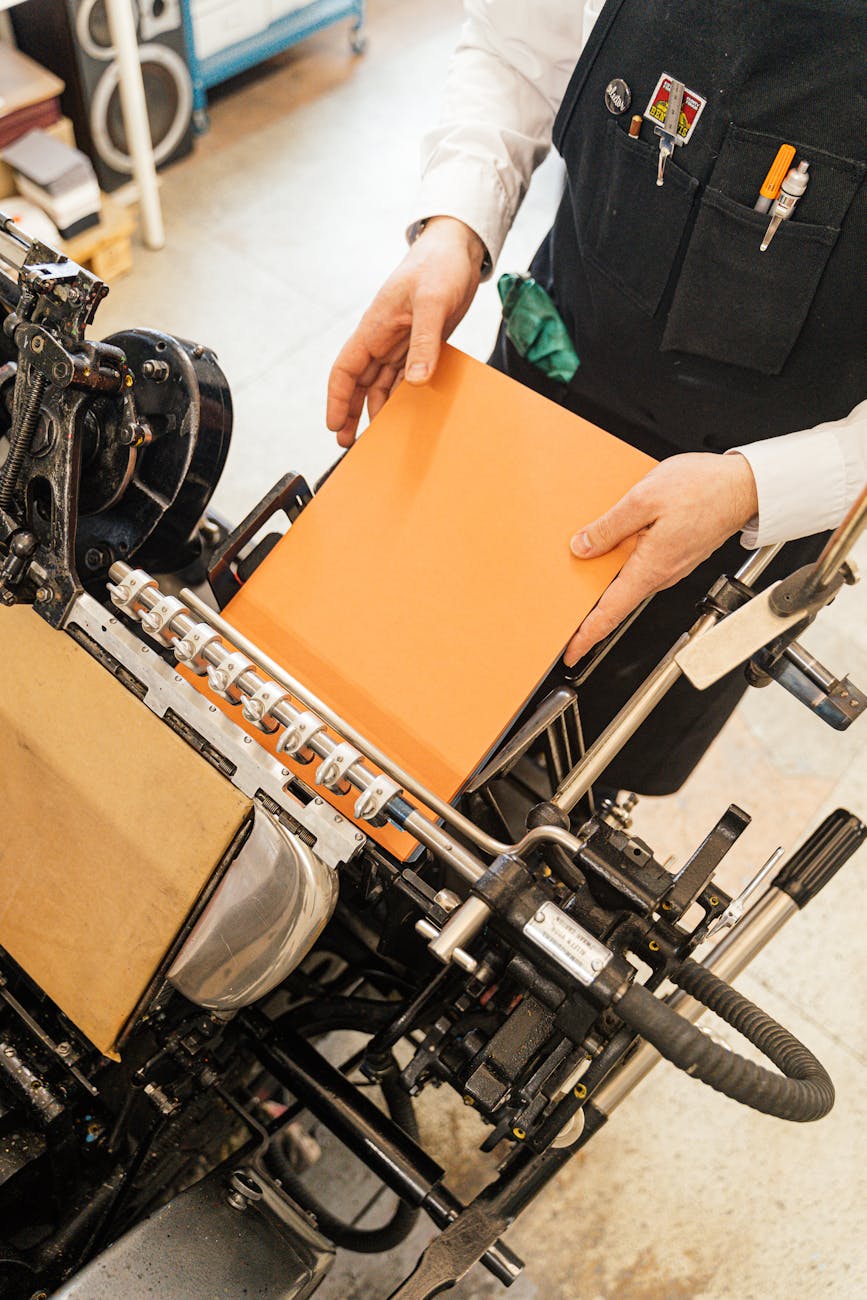
Last weekend I spent a few hours wandering through the Small Publishers Fair in London, where tables of hand-bound chapbooks, risograph zines, and small press essays lined Conway Hall like devotional offerings to the printed word. There was something really wonderful about it: a room buzzing not with algorithmic chatter, but with paper, ink, and the human hand.

Lately, this question of preserving ideas has been preoccupying me. As I’ve been working on my forthcoming projects—both scholarly and personal—I’ve found myself turning again to the physicality of books, not just as containers of knowledge but as archives of consciousness. The handmade box-making I’ve been experimenting with at home (a small project that began as a way to store my growing stack of old notebooks) has become a kind of meditative practice: measuring, cutting, folding, gluing, all in careful rhythm. It’s taught me something about form and memory—about how enclosure can protect, but also invite reverence.

Walter Benjamin once wrote that every book has a double life: one as a vessel of ideas, and another as an artefact that carries the traces of its readers. Marginalia, stains, folded corners all become evidence of encounter. When I teach or write about modernism, I’m always struck by how that movement both exalted and feared this materiality. Woolf, Joyce, and their contemporaries wanted language to transcend its own physical limits, yet they depended utterly on print.

My own shelves are full of books that now hold more of me than of their authors, filling with underlinings, exclamation marks, and the occasional coffee ring or grease smear. They are records not only of what I’ve read, but of who I was when I read it. In a sense, they preserve moments of thought—snapshots of consciousness mid-formation. To lose those, or to surrender entirely to digital ephemerality, would be to lose something essential about how we think in time.

There’s a similar intimacy in the act of making. When I’m gluing the corners of a handmade box or rolling out pastry dough, I notice how my thinking slows, finds rhythm in repetition. Craft requires patience, but it also invites reflection—it’s an embodied philosophy. David Pye, in The Nature and Art of Workmanship, distinguishes between the “workmanship of risk” (where every action could alter the outcome) and the “workmanship of certainty” (where machines guarantee precision). The handmade book, like the handwritten note, belongs to the first category: it lives in the space of risk, imperfection, and care.

In an era of constant digital revision, the printed page still says: this is what I thought, then. It invites us into a conversation with our past selves. Even my old notebooks, boxed and labelled, feel like small dialogues across time—some pages embarrassedly naive, others startlingly prescient.

There’s a line from Italo Calvino that I often come back to: The classics are those books that exert a peculiar influence, both when they refuse to go away and when they hide in the folds of memory. I think the same could be said of our own notes, letters, recipes, and marginalia. They refuse to go away; they wait patiently for us to rediscover them.

At the Small Publishers Fair, I was reminded how vibrant this world of small-scale making still is. Stalls dedicated to poetry, philosophy, and experimental art books, each one a testament to the persistence of the tactile imagination. Many of the presses represented there are acts of devotion, sustained by people who believe that ideas deserve bodies. To hold one of their books is to participate in a lineage of care: the slow publishing ethos that values depth over reach.

In the evenings lately, with autumn deepening and the smell of spiced raisins still in the kitchen, I’ve found myself reflecting on what it means to live archivally, or, to put it another way, to be a steward of one’s own thought. It’s a gentle calling, really: to keep what matters, let go of what doesn’t, and tend the rest with attention.

So whether you’re keeping a commonplace book, baking from a family recipe, or printing a limited-run essay for a small press, you are participating in this broader human act of preservation. You’re ensuring that thought continues to have texture—that it lives in the world not just as code or content, but as something we can touch, smell, and remember.

And maybe that’s what the physical book still teaches us, in its quiet way: that ideas, like relationships, need form to flourish. They ask for bodies, boxes, bindings, and for the gentle friction of being held.


UPCOMING EVENTS

If this resonates, you might enjoy joining one of my upcoming gatherings:

Taming Aversion: How to Work With the Mind When It Pushes Back

There’s a moment, familiar to anyone who has tried to live deliberately, when the mind simply says no. One minute, we’re aligned with our highest intentions, the next, we’re scrolling, tidying, grazing. That small, invisible shift — from presence to avoidance — is the terrain I’ve been exploring lately. Not because I’ve mastered it, but because I’ve been caught in it more times than I can count.

Aversion is easy to mistake for laziness, distraction, or even moral weakness. But what if it isn’t? What if the mind’s pushback isn’t defiance, but a form of care — a protective reflex triggered whenever growth begins to feel unsafe? The older I get, the more I suspect that the moments I’m most tempted to flee are the moments that matter most.

Every meaningful change seems to summon a guardian. The Buddhists call it mara; Freud might have called it resistance; psychosynthesis would describe it as a subpersonality defending its role in the inner system. Whatever name we choose, the pattern is the same: when the psyche senses transformation, it activates its most familiar defences.

Sometimes I’ll wake up with a vague heaviness, an urge to delay, to simplify the day, to shrink the horizon of possibility. The rational mind can explain it away (fatigue, overwork, weather), but underneath there’s often something more intimate: a small, frightened part that’s unsure what will happen if I really allow change to occur.

The task isn’t to override that part but to listen to it. Roberto Assagioli urges us to treat each subpersonality as purposeful, never pathological. In the same spirit, Internal Family Systems founder Richard Schwartz suggests asking these inner protectors what they’re afraid would happen if they didn’t intervene. Often the answer is touching: You might get hurt again.

There’s a strange irony in inner work: aversion tends to appear at precisely the moment when we’re closest to contact. The body stiffens not because we’re far from the truth, but because we’ve brushed against it.

This, I think, is why so many contemplative traditions treat aversion as a doorway rather than a wall. Pema Chödrön describes it as “the moment we touch our edge.” In those moments, the goal is not endurance but intimacy — learning to stay with what trembles.

When I sit in meditation and feel the urge to move, I’ve started to see it as a kind of emotional sonar. The resistance tells me something important is near. Rather than pushing through, I name it: aversion is here. I feel where it lives — perhaps in the throat, the chest, the solar plexus — and I breathe around it, widening the frame. Sometimes that’s enough. Sometimes it’s not. Either way, the willingness to stay changes the quality of the moment.

Unexamined aversion tends to generate drama. The mind, avoiding stillness, manufactures movement — endless narratives, self-critique, external blame. I sometimes think of this as the “noise of protection.” Beneath the content, the function is the same: distraction from direct contact with feeling.

In my own life, this often appears as overthinking. If I’m avoiding grief, I become analytical. If I’m avoiding fear, I become productive. The activity disguises itself as virtue — busyness, preparation, clarity — but underneath is the same motive: anything but this.

This dynamic is at the heart of the next workshop I’ll be leading — Stopping the Drama Cycle: A Workshop on Love & Our Limiting Patterns (3 November, 7.00–8.30pm UK time). We’ll be exploring how the mind uses drama — both internal and relational — to regulate discomfort. It’s not about pathologising the habit, but learning to see it clearly, tenderly, and to notice the quiet peace that emerges when we stop feeding it.

The paradox is that aversion softens not through conquest, but through companionship. The moment we stop trying to get rid of it, it begins to loosen its grip.

One practice that helps is gentle inquiry:

  • Ask, what am I unwilling to feel right now?
  • Ask, what am I protecting myself from?
  • And then, what would it feel like to allow just one degree more of openness?

This incremental approach — widening the window of tolerance rather than forcing it — honours the nervous system’s intelligence. As Bessel van der Kolk reminds us in The Body Keeps the Score, safety is the foundation of transformation.

Psychologically speaking, aversion is a sign that the psyche is reorganising itself. Spiritually speaking, it’s the ego’s last resistance before surrender. Either way, tenderness is the most effective solvent.

So much of contemporary self-help is built on the rhetoric of mastery: “hacking”, “rewiring” the brain. But perhaps what’s needed is not mastery but maturity: the willingness to work with the mind, not onit. Lately, I’ve been experimenting with what I call “soft discipline.” Instead of pushing through aversion, I create conditions for the opposite of fear: trust. I light a candle, clear my desk, breathe slowly, and remind myself that resistance is just another form of aliveness. It’s the psyche’s way of stretching before the leap.

In contemplative traditions from Buddhism to A Course in Miracles, resistance is reinterpreted as an invitation — an opportunity to practice forgiveness, not in the moral sense but in the cognitive one: the gentle release of judgement against ourselves for finding the work difficult.

This theme continues in Practical Miracles: Practicing the Course Beyond the Book (8 November, 2.00–5.00pm UK time) — a longer session on translating spiritual study into lived practice. We’ll explore how resistance can become revelation when approached through the lens of practice, not theory.

The longer I’ve worked with clients and students — and with my own mind — the more I see that aversion is not an obstacle to healing but one of its instruments. It appears wherever the psyche is trying to protect what it loves. To work with aversion, then, is to enter a relationship with love in its most disguised form.

The next time your mind pushes back, you might imagine thanking it. “Thank you for trying to protect me.” This simple act of recognition can dissolve years of struggle. Aversion doesn’t vanish, but it begins to trust you enough to soften. Growth, after all, isn’t the elimination of resistance but the deepening of relationship with it. What begins as pushback may, in time, become partnership — the psyche’s way of saying, I trust you to take me further than I could go alone.


Upcoming Workshops

Stopping the Drama Cycle: A Workshop on Love & Our Limiting Patterns
🗓 3 November, 7.00–8.30pm (UK time)
In this workshop we will explore how resistance and reactivity keep us circling the same emotional loops, and learn how to step out of them with compassion and clarity.

Practical Miracles: Practicing the Course Beyond the Book
🗓 8 November, 2.00–5.00pm (UK time)
This half-day workshop is deeper immersion into A Course in Miracles as a lived practice, where we will translate insight into relationship, creativity, and peace.


Metaconsciousness: Becoming Aware of the Ways We’re Driven

Lately I’ve been thinking about how much of life unfolds beneath the surface of our awareness, not just in the mysterious depths of the unconscious, but also in the quieter, more practical rhythms of habit, mood, and reaction. What if our real work is to notice not just what we’re conscious of, but how consciousness itself is being directed?

That’s what is meant by metaconsciousness, the capacity to recognise when we are being driven by hormones, hunger, fear of rejection, deadlines, the steady dopamine drip of our phones, or the deep psychic grooves of childhood conditioning. In my own experience—especially during the past few months of moving between projects, planning new teaching, and reshaping routines—this awareness has felt like an internal turning point. The challenge isn’t simply to ‘be mindful’, but to discern the layers of agency beneath the surface: Who, exactly, is choosing what I’m doing right now?

When I start to ask that question seriously, it becomes uncomfortable. I notice how much of my day is already spoken for by subtle compulsions masquerading as preferences. Even something as benign as checking email can carry the faint pulse of anxiety, a microdose of control. We like to believe that modern life rewards autonomy and discernment, but in practice it trains us in reactivity, which is, by definition, the opposite of freedom.

From Consciousness to Metaconsciousness

Consciousness, in this view, is not a steady state but a constantly fluctuating field of attention. It’s automatic, embodied, and largely determined by biological imperatives. You feel hunger, so you eat. You feel threatened, so you defend. You feel bored, so you reach for your phone. These are not moral failings; they’re simply how the nervous system evolved to keep us alive.

Metaconsciousness, though, introduces a different quality. It’s what happens when we see that we’re acting automatically and hold that recognition with curiosity rather than judgment. There’s a subtle but profound difference between saying ‘I’m angry’ and ‘I notice that anger is arising’. The first statement identifies with the emotion; the second observes it. And in that observation lies the seed of freedom.

This is why contemplative practice remains, for me, one of the few truly radical technologies of our time. Sitting quietly, noticing the mind’s movements without needing to edit or manage them, slowly reveals how much of what we call “self” is just a cascade of impulses, stories, and inherited scripts. Over time, a new perspective opens—one that isn’t outside the body but is no longer confined by it.

If you’re drawn to exploring this dimension in your own creative or professional life, I’ll be leading an online session called Mindfulness for Creatives: Cultivating Focus, Flow, and Inspiration on 23 October (7.30–9.00pm, UK time). We’ll look at practical tools for noticing when attention narrows or scatters—and how that awareness can restore genuine inspiration.

The Drama of the Driven Life

Of course, once we begin to see how we’re driven, another pattern emerges: the drama of selfhood. Many of us unconsciously replay emotional scripts that were formed long before adulthood, such as seeking validation, fearing abandonment, or rescuing others to avoid our own discomfort. These patterns aren’t evidence of failure but they are evidence that we are living out of old perspectives and potentially trying to replicate old relationships from the past, especially the damaging or traumatic ones.

But they can also be exhausting. In coaching and in my own reflective practice, I’ve seen how deeply these dynamics colour our work, our love, and even our whole sense of purpose. The shift toward metaconsciousness invites us to watch these patterns with compassion and detachment, and to move, in psychological terms, from within the drama to observing it.

This theme forms the heart of my upcoming workshop Stopping the Drama Cycle: A Workshop on Love & Our Limiting Patterns on 3 November (7.00–8.30pm, UK time). It’s an evening devoted to understanding how we get pulled into emotional triangulations—the victim, rescuer, and persecutor roles that Karpman identified—and how to step into a more mature and loving mode of engagement. If you’ve ever felt trapped in repetition, whether in relationships or creative work, this session offers a clear, compassionate way through.

Beyond Insight: Practicing the Miraculous

Metaconsciousness doesn’t stop at awareness; it calls for us to do something with it and act from a deeper centre. For me, this is where A Course in Miracles becomes a training in radical perception. Its central insight, that we can learn to see differently, aligns perfectly with the idea of metaconsciousness: we are not our automatic thoughts, but the awareness capable of choosing love instead of fear.

In Practical Miracles: Practicing the Course Beyond the Book on 8 November (2–5pm, UK time), we’ll explore this integration more experientially. How do we move from intellectual understanding to lived transformation? How do we reframe life’s small irritations as opportunities to practice gentler perception? This isn’t about metaphysical abstraction but about everyday miracle-mindedness: the courage to meet the driven mind with tenderness.

A Season of Turning Inward

As autumn settles in, I find myself slowing down a bit. The academic year begins; projects find their rhythm; the light changes. Each season asks for its own form of consciousness, and autumn, for me, always invites metaconsciousness. It’s the season of noticing how we’re driven: by deadlines, by expectations, by the desire to finish before winter.

But it’s also the season of release. Of choosing what’s worth carrying forward and what can gently fall away. In this way, the movement from consciousness to metaconsciousness mirrors the movement from doing to being—from the leaf’s impulse to hold the branch to its graceful surrender to air.

If you’ve been following some of my recent writing on what our books say about us or how to develop positive morning rituals, you’ll recognise the same undercurrent: how to live well within limits. To become aware not only of what drives us, but of the stillness beneath those drives.

And that, I suspect, is the quiet art of metaconsciousness. Not transcending the body or renouncing the world, but inhabiting both more fully—knowing that our thoughts and feelings will continue to move like weather, while something deeper watches with patience.

If you’d like to explore that space with others this autumn, I hope you’ll join one—or several—of these gatherings.


Upcoming Workshops