How to Carry Inner Stillness into Outer Action

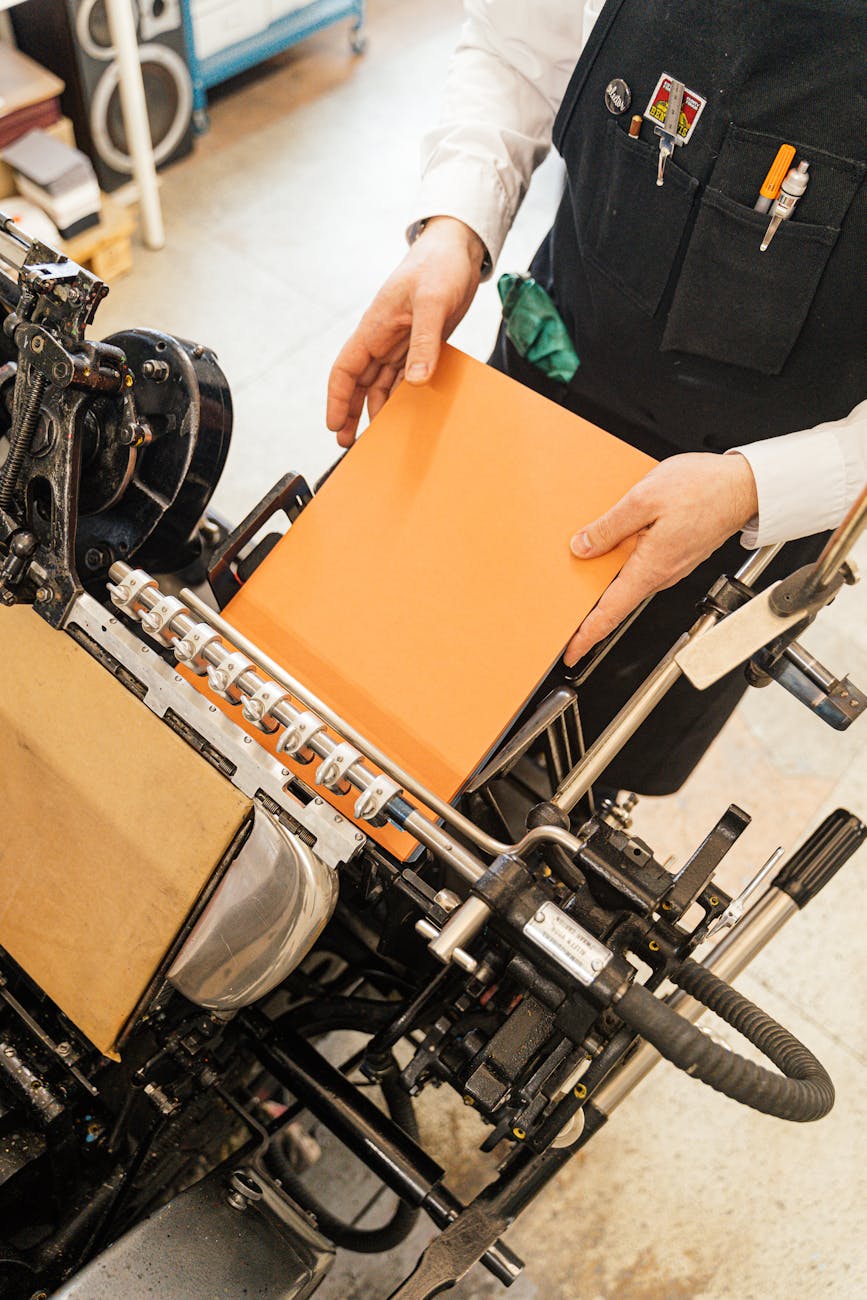
Photo by Aron Visuals on Pexels.com

I’ve been thinking a lot lately about the word ‘equinamity’: what it really means, why we use it so infrequently, and how we can translate the inner stillness of equinamity into outer action.

It’s an old question, of course. The contemplative traditions are full of cautions against mistaking withdrawal for wisdom, or serenity for disengagement. And yet, in many contemporary spiritual and creative cultures, stillness is subtly framed as an end in itself, or something to be achieved, protected, even defended against the messiness of life.

My own experience suggests something more demanding, and ultimately more generous: stillness is not a place we go, but a quality we carry. Its real test is not how calm we feel on the cushion, but how we move when the world asks something of us.

Equanimity is often misunderstood as emotional neutrality or the ability to remain unruffled, untouched. But in its deeper sense (and here the Stoics, Buddhist psychology, and contemporary contemplative science quietly agree), equanimity is not about less feeling. It’s about more capacity. As William James observed in The Varieties of Religious Experience, maturity of spirit does not erase emotion; it reorganises it. Similarly, in Buddhist psychology, upekkhā (equanimity) is not indifference but balance—the ability to stay present without being commandeered by reactivity.

What matters, then, is not whether we feel disturbance, but whether disturbance determines our next move.

This distinction has felt particularly alive to me recently as I return to university teaching after a sabbatical and time away from campus to focus on my thinking and writing. Much of that time was spent working on my latest book, a project that demanded long stretches of solitude, patience, and sustained inward listening. Sabbaticals are often imagined as pauses from “real work,” but for me this one clarified something essential: inner stillness only becomes trustworthy when it is tested by responsibility.

There is a moment in many contemplative narratives that matters more than the awakening itself: the return. The Buddha leaves the Bodhi tree. Dante descends the mountain of Purgatory. The mystic goes back to the village.

For me, that return has taken the form of stepping into a new academic role at my university, taking over the MA programmes in English Literature and Creative Writing. I feel a genuine sense of excitement about this transition because it asks for a different quality of presence.

Teaching, at its best, is a relational practice. It requires attunement, adaptability, and a willingness to meet uncertainty without control. In that sense, it is one of the most honest laboratories for equanimity I know. You cannot curate the room. You cannot pre-empt every emotional current. You can only show up with clarity, boundaries, and a willingness to respond rather than react.

In my coaching and teaching work, I often encounter the fear that: If I slow down, I’ll lose momentum. If I soften, I’ll stop functioning. But stillness, when cultivated well, does not reduce effectiveness but it refines it.

Contemporary neuroscience supports this. Practices that strengthen interoceptive awareness and emotional regulation do not dampen motivation; they improve decision-making under pressure. This is where equanimity becomes practical. It shows up as:

  • the ability to pause before replying to a difficult email
  • the capacity to hold creative uncertainty without collapsing into self-judgement
  • the willingness to set boundaries without aggression or apology

These are not abstract ideals. They are trainable skills—and they matter enormously for creatives, academics, and highly sensitive people navigating complex systems.

Writers and artists, in particular, are vulnerable to confusing intensity with truth. We can mistake emotional activation for insight, urgency for necessity. Yet some of the most durable work I know emerges from a place of deep inner steadiness. Equanimity allows us to stay with the work long enough for it to become true, not just expressive.

This insight informs much of what I explore in my current writing and teaching: how attachment dynamics, attention, and inner regulation shape not only what we create, but how we live alongside our creations. Creative formation, like spiritual formation, is less about transcendence than about reliability—becoming someone who can be trusted with complexity.

If stillness is to move with us, it must be practiced in motion. This is why I’m increasingly interested in integrative approaches that bridge meditation, creative rhythm, and everyday action.

Over the coming weeks, I’m hosting a small number of workshops through The Art of Creative Practice that explore exactly this terrain:

For those seeking more sustained, individual support, my 1-1 creativity coaching spaces are currently fully booked until March. If you’d like to join the waiting list, you’re very welcome to get in touch at allan_johnson@mac.com.

Equanimity is not a spiritual personality trait. It is a practice of continuity: learning how to carry what we touch in silence into the noise of relationship, work, and responsibility.

As I step back into the classroom, into institutional life, and into new forms of creative leadership, I’m reminded that the real measure of stillness is not how protected it feels—but how generously it participates.

Stillness that cannot move will eventually calcify. But stillness that walks with us becomes wisdom.

And wisdom, as ever, is something we learn in company.

What Bookbinding Taught Me About Patience and Care

Photo by Antoni Shkraba Studio on Pexels.com

There is something about the craft of bookbinding. It re-educates the hands, and through them, the nervous system. It returns time to its proper scale.

I’ve been thinking about this more since settling into my new flat, which—by a small but meaningful stroke of grace—includes a dedicated studio space. For the first time in years, my tools don’t need to be packed away between sessions. Paper can sit under weights overnight without being disturbed, and work can pause without being dismantled.

Already this matters more than I expected. Bookbinding, after all, resists the logic of efficiency. Adhesive must dry. Grain direction must be respected. Linen thread must be drawn tight but not too tight. You cannot rush a spine without paying for it later. The work teaches you—firmly but kindly—that attention cannot be compressed.

Simone Weil famously wrote that “attention is the rarest and purest form of generosity.” Bookbinding operationalises this insight. You can’t bind a book while thinking three steps ahead. If your attention wanders while folding signatures, the error will propagate. If you rush the punching of sewing stations, the whole text block will pull askew. You can’t persuade paper fibres to behave differently through force of will; you must cooperate with them.

In this sense, bookbinding has become a counter-practice to much of contemporary creative life. Online, speed is rewarded. Visibility is currency. Iteration is encouraged, but only when it looks like momentum. The slowness of binding—a practice that may take days or weeks before anything finished appears—feels almost monastic by comparison.

And yet, paradoxically, it has made me more productive, not less.

One of the biggest misconceptions about patience is that it means waiting. In practice, patience is active–it’s a verb (metaphorically at least) because you are always doing something: sharpening a blade, squaring a stack, testing tension, laying out the next stage so it will be ready when the moment comes.

This mirrors something I see repeatedly in coaching work, particularly with highly sensitive or intellectually driven creatives. There is often an underlying anxiety that if one is not producing, one is stagnating. But many forms of growth happen beneath the threshold of visible output.

Since moving into the new flat and setting up the studio, I’ve noticed a subtle shift in how I approach my other work—writing, teaching, contemplative practice. I’m more willing to let something rest unfinished.

There is also, I think, an ethical dimension to working with materials in this way. Richard Sennett, in The Craftsman, describes craftsmanship as a dialogue between hand and material, where resistance becomes instructive rather than frustrating. This is not mastery-as-domination, but mastery-as-listening.

In bookbinding, materials remember what you do to them. Paper creased carelessly will never quite forgive you. Cloth stretched unevenly will telegraph the mistake forever. This permanence sharpens responsibility. You learn to slow down not because slowness is virtuous, but because it is necessary.

This has felt especially grounding during a period of personal transition. A new home, even a welcome one, requires recalibration. New light patterns. New noises. New routines. The studio has become a place where that recalibration can happen somatically, not just cognitively. Through repeated, careful gestures, the body relearns safety.

It’s hard not to notice the symbolic resonance here. Books are already threshold objects—containers of thought, memory, and voice. Binding them by hand heightens this awareness. You become acutely conscious of the labour that precedes reading, of the infrastructure that makes inwardness portable.

All of this feeds into a broader theme that’s been shaping my work lately: the power of small, well-held experiments. Not performative reinventions, but modest shifts in practice that reorient attention.

Perhaps the deepest lesson bookbinding has taught me is that care compounds. What feels like slowness at the outset becomes reliability later. Structures hold. Work lasts. You spend less time repairing what was rushed.

This is true of creative practice, of relationships, of inner life. Patience is not something we adopt once and for all; it is something we rehearse through forms that demand it of us.

For now, I’m grateful for a studio that allows this rehearsal to continue—quietly, materially, without display. And I’m grateful, too, for the conversations that extend from it: in workshops, in coaching, in shared spaces of attention.


Upcoming Events

Integrative Meditation

  • 19 January | 7.30-8.30 PM GMT | £4

Creative Flow Co-Working Session: The Power of Tiny Experiments

Highly Sensitive Creatives: Energy, Boundaries, and Creative Rhythm


More to Explore

Four Dimensions of Stillness for Creatives

Living in a city like London trains the nervous system in a particular way. Even when we love urban life—its density, its cultural richness, its chance encounters—it asks us to metabolise a constant low-level stimulation: noise, movement, decision-making, comparison.

Over the past few weeks, I’ve been thinking about this more deliberately. I’ve recently moved into a flat in a beautiful 1920s building. It’s filled with heaps of character, and I know that I’ll be very happy here, but it’s also a significant change.I’ve spent the past decade living in new-build flats, the kind with sleek appliances, underfloor heating, and a comforting sameness to all the others. But my new flat, even before my furniture was moved in and the boxes filled every spare corner, was noticeably maximalist: crown moulding, dado rails, radiators, and, perhaps most notably, the constant sounds of neighbours on all sides.

This move has coincided with a renewed reflection on minimalism as a practice of attention, that is less about owning fewer objects (though that can help), and more about creating pockets of stillness within environments that are, by default, overstimulating.

Minimalism has been thoroughly Instagrammed. White walls, pale wood, a single ceramic cup placed just so. There is nothing wrong with this, but it risks missing the deeper point. And my old flat was certainly minimalist in the aesthetic sense.

Writers like Cal Newport in Digital Minimalism and Jenny Odell in How to Do Nothing have both argued, in different ways, that minimalism is not about subtraction for its own sake, but about protecting what matters in a culture designed to fragment attention. Similarly, the Japanese concept of ma—often translated as ‘negative space’—suggests that meaning arises not from what is present alone, but from the intervals of emptiness around it that give it shape.

Big cities are where this discernment is most tested. Urban life rewards responsiveness: quick replies, constant availability, social agility. For many creatives and sensitive thinkers, this can become exhausting. We learn to override subtle signals—fatigue, saturation, the need for withdrawal—because the environment rarely validates them.

Over the years—through my own practice, teaching, and coaching—I’ve noticed that these pockets of stillness tend to form around four dimensions:

  • Spatial stillness: a chair by a window, a desk cleared of visual noise, a room that signals ‘nothing is required of you here.’
  • Temporal stillness: protected times in the week that are not optimised, monetised, or rushed.
  • Relational stillness: fewer, deeper conversations; rhythms of contact that don’t require constant performance.
  • Inner stillness: practices that allow attention to settle without forcing it: meditation, journalling, slow reading.

One theme that runs through my recent work is the idea that many creatives are finely tuned. They notice more. They process more. They feel more. Without the right structures, this depth becomes a liability. This is why I resist advice that tells people simply to “push through” or “build resilience.” Resilience matters, but so do the structures of support and nurturance around you.

A few practical reflections that may be useful:

  • Reduce friction at points of transition. The moments between activities are where overstimulation accumulates. Even five minutes of pause between tasks can change the tone of a day.
  • Let one room be functionally “unproductive.” A space that is not for work, storage, or optimisation becomes a psychological refuge.
  • Limit inputs before increasing outputs. Reading less, scrolling less, listening less can paradoxically make creative work richer.
  • Choose rhythms over goals. A daily walk, a weekly reflective session, a regular co-working rhythm—these stabilise attention over time.

None of this requires perfection. It requires kindness toward your own nervous system.

If this resonates, there are several ways to explore these ideas in a supported, communal way over the coming weeks.

For those wanting more personalised support, I also offer 1-1 coaching, focused on helping creatives and thinkers build sustainable structures for meaningful work and life. You’re welcome to book a free 15-minute clarity call here: https://allanjohnson.co.uk/coaching/

Pockets of stillness don’t remove us from life; they allow us to participate more fully, with less quiet self-erasure. In a culture that rewards constant motion, stillness becomes a form of discernment. And discernment, I increasingly believe, is one of the most important creative capacities we have.


More to Explore

Fifteen Minutes a Day in 2026: Reading for Breadth and Lifelong Learning

In 2026, I’ll be undertaking a deliberately anachronistic experiment.

Each day for the coming year, I’ll be reading for around fifteen minutes from the so-called ‘Five-Foot Shelf’, the early twentieth-century Harvard Classics series assembled by Charles W. Eliot and promoted as a complete liberal education for the working adult. I’ll be following Eliot’s original prescription closely: not bingeing, not accelerating, not ‘optimising’, but reading at the pace he proposed, in the order he set out, according to the widely circulated ‘fifteen minutes a day’ schedule that accompanied the series.

What interests me is not whether Eliot’s claim still holds in any literal sense, but what happens when such a rhythm is taken seriously now, by someone already saturated in reading, already professionally formed, and already deeply aware of the limits of any canon.

Because I read constantly for my day job.

As an English literature professor, reading in depth is not optional; it is the ground of the work. I read intensively, repeatedly, and often narrowly. I return to the same texts across years and decades. I read them historically, theoretically, critically. I annotate, teach, publish, and argue with them. Some of the works on the Five-Foot Shelf fall squarely into this category: texts I’ve read many times, taught in multiple contexts, or written about in peer-reviewed research.

Others, however, are unfamiliar, sometimes embarrassingly so. Texts I’ve skimmed but never lived with, heard cited but never read end-to-end, or vaguely assumed I would ‘get to’ one day. Encountering these side by side, under the same modest daily constraint, is part of the experiment.

It’s probably worth saying, explicitly, that this project is not an attempt to resurrect a Great Books curriculum or to smuggle the ‘canon’ back in through the side door. I am well aware of the canon wars, and sympathetic to many of the critiques: the exclusions they exposed were real, consequential, and long overdue. The idea that a single, authoritative list of texts could stand in for ‘universal’ culture is no longer tenable, and nor should it be.

What interests me, then, is not the Five-Foot Shelf as a claim to authority, but as a historical artefact and a formative device. It is a record of how liberal education was once imagined, packaged, and sold to hard-working, well-meaning people for whom formal education was not a practical reality. Reading it now allows us to ask not ‘Is this the canon and is it good or right?’ but ‘What did this structure think reading was for?’ What habits of mind did it privilege? What kinds of judgment did it aim to produce?

There is also value—both intellectual and ethical—in encountering texts that do not immediately affirm our assumptions or reflect our intellectual formation. Not because they are beyond critique, but because critique itself is deepened by sustained engagement rather than dismissal at first contact. The fifteen-minutes-a-day format matters here. It resists both reverence and rejection, asking instead for patience, repetition, and the willingness to let one’s responses evolve over time.

In that sense, the project is as much about format as it is about content. A fixed sequence, a modest daily commitment, and a year-long horizon create conditions that are increasingly rare in contemporary reading life. What emerges under those conditions—agreement, resistance, boredom, insight, irritation—tells us something not only about the texts, but about ourselves as adult readers navigating a fractured, accelerated intellectual landscape.

This project is about breadth, deliberately undertaken alongside a professional life structured around depth.

In contemporary intellectual culture, depth is rightly prized. It is associated with rigour, expertise, and responsibility. Breadth, by contrast, is often treated with suspicion: dilettantism, surface knowledge, or the scattered attention of the generalist.

Liberal education, as it was originally imagined, did not ask readers to choose between breadth and depth. It assumed that serious engagement required both: immersion in particular problems and exposure to forms of thought beyond one’s immediate specialism. Breadth was not a substitute for depth; it was a condition for judgment.

The Five-Foot Shelf was an attempt—flawed, exclusionary, ambitious, and yet sincere—to provide such breadth to adults who were already working, already formed, already busy. Its claim was not that fifteen minutes a day would make one an expert, but that it could sustain a relationship with the wider inheritance of thought, language, and ethical imagination.

Depth sharpens tools. Breadth calibrates them.

Depth teaches us how to see clearly within a frame. Breadth reminds us that frames exist.

As someone whose professional life is structured around long reading days, sustained writing periods, and deep immersion, this constraint feels oddly corrective. It returns reading to a scale that is neither performative nor instrumental.

What matters is not how much ground is covered, but the continuity of attention. This is one of the lessons adulthood keeps teaching us: formation happens not through intensity alone, but through return.

One of the persistent myths of academic life is that learning culminates in mastery. That once one has specialised, published, and secured a position, one’s relationship to knowledge stabilises.

In practice, the opposite is often true. Expertise narrows responsibility. It brings obligations: to texts, methods, and debates that demand constant upkeep. Over time, this can subtly crowd out curiosity—the kind not immediately justified by relevance or outcome.

Some of the most important intellectual experiences of adulthood occur not when we deepen what we already know, but when we allow ourselves to become beginners again, within a structure that does not require us to justify that choice.

This is lifelong learning in its older, less marketable sense: not continuous upskilling, but sustained openness. I am an academic, and I will always read for work. But I also read for pleasure, understanding, and character development. The distinction matters.

One of the things institutions once did—however imperfectly—was structure intellectual aspiration. They told us what counted, what came next, and what completion looked like. As those structures loosen or disappear, the burden of decision shifts inward.

What do I want to know?
What deserves my attention now?
What kind of reader—and thinker—am I still becoming?

The Five-Foot Shelf functions here not as an authority, but as a scaffold. It provides a sequence that frees me from constant choice, while still leaving me responsible for the meaning I make of it.

This is why setting personal educational goals matters so much in adulthood. Without them, learning becomes reactive, fragmented, or indefinitely deferred. With them, even modest commitments—like fifteen minutes a day—can accumulate surprising force.

An Invitation

If this project speaks to you, it’s likely because you’re someone who thinks carefully about how ideas, attention, and intention interact. You may have more ideas than hours, more commitments than containers, and a sense that what’s missing is not motivation but shape.

That is exactly what Reflect & Reset: Quarterly Planning Workshop (R&R Q1) is designed to provide.

This 90-minute online workshop, taking place on Monday 5 January 2026 (7:30–9:00pm GMT), offers a structured, spacious way to step back from the rush of the new year and decide—deliberately—what the next three months are for. It’s for creatives, thinkers, and reflective practitioners who value depth, but know that depth needs rhythm if it’s going to survive contact with real life.

During the session, I’ll guide you through my Reflect & Reset Map system: an evidence-based framework that combines reflection, prioritisation, and light structure. Together, we’ll clarify what genuinely matters to you in January, February, and March, translate that into a small number of meaningful commitments, and shape a plan that respects both your inner life and your outer responsibilities.

If you’re starting 2026 with questions about focus, learning, creative work, or how to hold serious intentions without burning out, this workshop is an ideal place to begin. Bring your journal and your favourite hot drink. I look forward to seeing you there!

The American Dream in Hallmark Christmas Films

Photo by Tom Fisk on Pexels.com

In the final days before Christmas, as London softened into that peculiar hush that arrives once schools have begun to let out and families retreat inward to the warmth of the home, I found myself doing something thoroughly predictable and deeply comforting: watching Hallmark Christmas films under my Snuggie. Between farewell dinners with friends, long walks through streets still glowing with festive unrestraint, and the gentle anxiety of packing up a life temporarily for an extended stay in the United States, these films offered a reliable background hum. (You can read a longer and older reflection on Christmas nostalgia in my family and the birth of the family Christmas elf here.)

I’m preparing to fly to the US for a long Christmas break with time with family, slower mornings, the recalibration that comes from a geographical and cultural shift. London has been generous this year: beautiful gatherings, thoughtful conversations, laughter that lingered longer than expected. Leaving it, even temporarily, has sharpened my awareness of transition. And it is in moments like this—between places, identities, rhythms—that the Hallmark Christmas universe reveals itself not as kitsch alone, but as a persistent cultural fantasy about the nature of self-invention and moving between ‘city’ and ‘home’ at the Yuletide season.

Almost without exception, these films follow a familiar arc. A protagonist (usually overworked, professionally successful, emotionally disconnected) is pulled back to a small town—often reluctantly—where their old patterns begin to slip away. There is a bakery to save, a family tradition to restore, a local festival under threat. Somewhere along the way, ambition is softened, productivity is re-evaluated, and a new version of the self is chosen.

Because beneath the snow-dusted town squares and improbably attractive small business owners, Hallmark Christmas films aren’t just about romance; they are the American Dream writ large, specifically, the dream in its form as a renewable project of becoming.

The American Dream, as it appears in Hallmark films, isn’t about upward mobility in the sociological sense. It is about re-choosing oneself. Reinventing the self in alignment with values that feel more authentic, more humane, and more emotionally intelligent. The dream isn’t that you can become rich or even necessarily that you can become anything you want, but that you can become truer.

And this idea has deep roots. One can trace it back to Emerson’s insistence on self-reliance, to William James’s pragmatism, to the therapeutic turn of twentieth-century American culture that Philip Rieff so famously diagnosed. But Hallmark offers a softened, seasonal version of this lineage: a therapeutic narrative wrapped in garlands and goodwill.

The protagonists are rarely impoverished or desperate. They are comfortable but misaligned. Their problem isn’t survival; it is meaning. And meaning, in this universe, is restored not through critique or struggle, but through return. Home. Community. A slower tempo. A person who sees you. Who really sees you.

This is why these films often resonate more deeply during this time of year. Watching them while packing to cross the Atlantic, I noticed how insistently they rehearse the fantasy that identity can be paused, revised, and resumed elsewhere. That you can step out of one life and into another without too much residue. That airports are not thresholds of loss, but portals of possibility.

Of course, this is where the fantasy reveals its limits.

The Hallmark town is a place without structural conflict. There is no precarity that cannot be solved by collective goodwill, no inequality that demands reckoning, no historical weight that resists the redemptive arc. In this sense, the films function as what Lauren Berlant might call “cruel optimism”, attachments to images of the good life that soothe even as they obscure.

And yet.

It would be too easy—and perhaps too academic—to dismiss these films as ideological anaesthetic. What interests me more than just their popularity is their persistence and their quiet emotional efficacy, because they continue to speak to something real: a widespread longing for lives that feel coherent, relational, and narratable.

In my recent work—particularly in my ongoing thinking about pedagogy, spiritual self-formation, and the ethics of transformation—I’ve become increasingly attentive to the stories we use to make change imaginable. Hallmark films offer a highly accessible script for transformation: leave the wrong life, return to the right one, and allow love to confirm the choice.

This is not how life works. But it is how many people wish it could work, especially at the turn of the year.

There is something revealing about the timing of these films. They flood the cultural field precisely when people are already taking stock of relationships, work, priorities, failures, and hopes. They offer not instruction, but reassurance: you are not too late; you are allowed to begin again; reinvention can bring you closer to your real ‘Self’.

Having lived long enough outside the US to see these films from an oblique angle (and I say that as someone who grew up in a small, cosy Midwestern town that wouldn’t be out of place in a Hallmark film), I’m struck by how distinctively American this vision of self-invention remains. European narratives of change tend to emphasise accommodation, inheritance, and negotiation with limits. The American story still leans toward reinvention as both a moral right and an ethical imperative.

Hallmark Christmas films distil that impulse into its gentlest form.

They are not about conquest or domination, but about choosing differently. About saying no to a life that looks successful but feels thin. About rediscovering craft, community, and care. About allowing relational life to matter again.

And this is where, perhaps unexpectedly, they intersect with my work in coaching and contemplative practice. One of the most common experiences people bring into one-to-one sessions is not crisis, but quiet misalignment. A sense that life is working externally while drifting internally. That something has been gained at the expense of something unnamed. The fantasy that a single decision—a move, a relationship, a new project—might re-knit the whole.

Hallmark films indulge that fantasy fully. Real life does not. But it does allow for smaller, truer acts of re-alignment.

This is why I continue to return, both in writing and in practice, to frameworks that slow transformation down rather than accelerate it. Quarterly reflection instead of dramatic reinvention. Gentle integrative practices rather than total overhaul. Attention to parts, patterns, and pacing.

As the year turns, I’m offering two spaces that are explicitly designed to work with this threshold moment—not to promise reinvention, but to support intentional re-orientation.

On 5 January, I’ll be hosting Reflect & Reset: a Quarterly Planning Workshop, a 90-minute session designed to help you review where you are, clarify what matters now, and set direction without force. It’s not about hustle or optimisation, but about coherence—internal and external. You can register here:
https://www.meetup.com/the-art-of-creative-practice/events/311948616

And on 12 January, I’ll be offering an Integrative Meditation session, an hour to settle the nervous system, reconnect with embodied awareness, and begin the year from a place of presence rather than pressure. Details and registration here:
https://www.meetup.com/the-art-of-creative-practice/events/311944273

Both are intentionally modest in scale. No promises of transformation by Valentine’s Day. Just spaces to listen more carefully to what is already asking for attention.

If Hallmark Christmas films remind us of anything worth keeping, it is this: people change not because they are broken, but because something in them wants to live more honestly. The danger lies not in the desire for reinvention, but in the belief that it must be instantaneous, total, or externally validated.

As I finish packing, folding one life neatly enough to place it temporarily in storage, I feel grateful for the quieter truths these films gesture toward even as they simplify them. That rhythm matters. That community shapes us. That work is not the same as worth. That it is permissible—necessary, even—to pause and ask whether the life we are living still fits.

The American Dream, in its most humane form, is not about becoming exceptional. It is about becoming aligned. And alignment, unlike fantasy, is something we can practice—slowly, relationally, and with care.

If you’re standing at a threshold of your own—new year, new season, new questions—you’re very welcome to reach out. I have limited availability for 1-1 coaching opening up in the new year, and I’m always glad to explore whether the work might be supportive for where you are now.

For now, though, I’ll finish the last of the packing, queue up another improbably snowy town, and let the fantasy do what it does best: remind me that change is allowed to be gentle.


Upcoming Events

Reflect & Reset: Quarterly Planning Workshop

Integrative Meditation


More to Explore