The Magic of December: London Streets and Seasonal Reflections

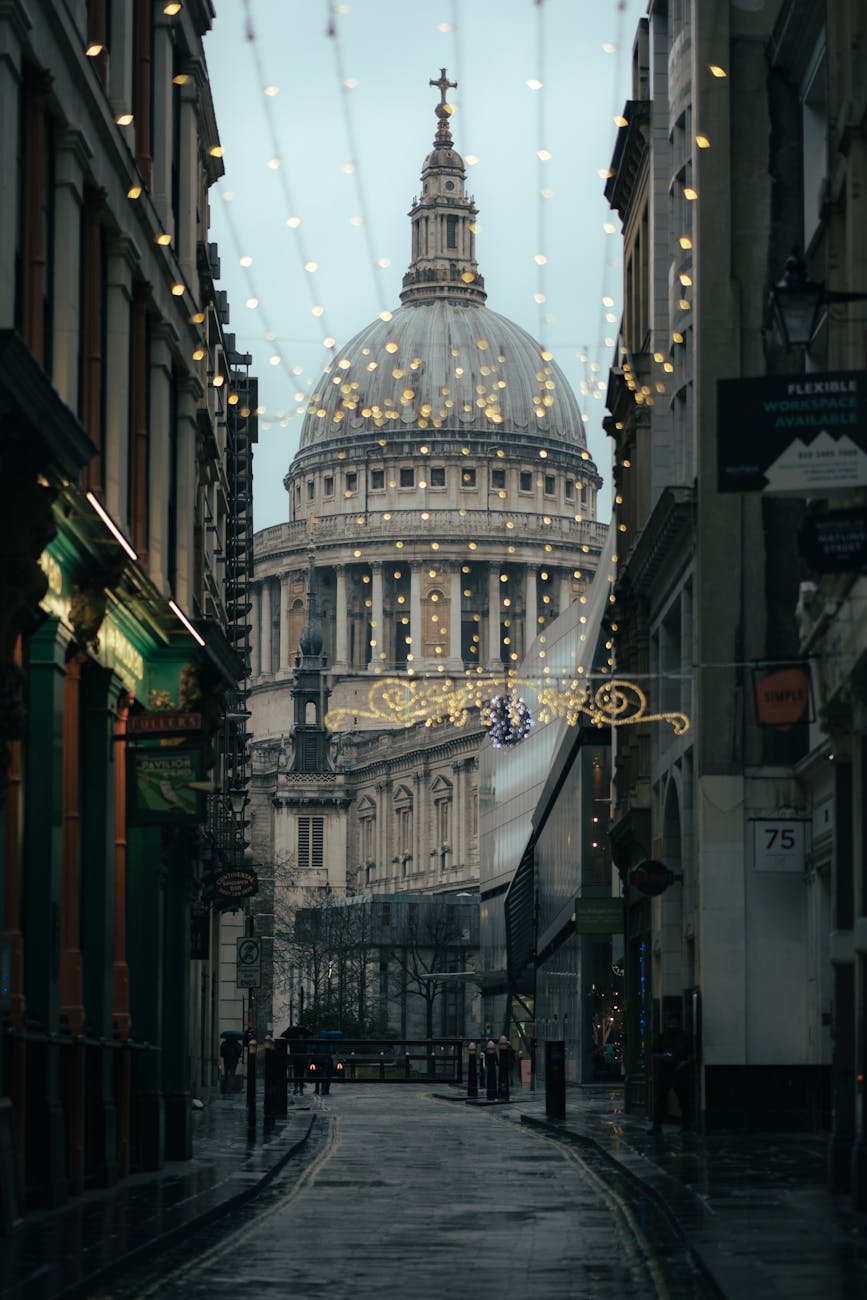
There is something unmistakably breathtaking about walking through the streets of London in December. The winter light is low, softening the stone façades and gilded lettering that mark centuries of human endeavour. This weekend, as I wandered near St James’s Palace, I found myself pausing before a grand Georgian facade. Its windows were frosted, the door slightly chipped at the edges, but the sense of life contained within those walls—the countless stories, decisions, and quiet domestic dramas—was palpable. Heritage buildings bear witness, in a very real way, to the rhythms of ordinary and extraordinary life, much like the pages of a journal or the quiet corners of a home carefully decorated for the season.

I’ve been particularly aware of this sense of memory and rhythm in my own flat this week, as I put up my Christmas decorations. There is an energy to the season—a balance of calm and celebration—that is both external and internal. A candle flickers on the windowsill, evergreen garlands scent the air, and suddenly the small rituals of light, scent, and colour transform the everyday into something reflective, mindful, sacred in its simplicity. It is a reminder that living spaces, whether our own or the city around us, are containers for memory, intention, and presence.

Heritage buildings function in much the same way. As urban theorist and geographer Sharon Zukin notes in The Cultures of Cities, city spaces are laden with meaning precisely because they carry traces of past lives and social habits. Walking past an ornate corner of Soho or an old warehouse on the South Bank, I find myself imagining the people who once passed through these spaces: their laughter, arguments, discoveries, and defeats. In this sense, architecture is a form of storytelling, a material diary of human experience, and our attentiveness to these stories allows us to inhabit the city more fully, more consciously, and to place ourselves within a continuum that stretches far beyond our immediate perception.

This reflection on the layered life of buildings resonates with my current work in creative and contemplative practice. Preparing for my brand new Five-Day Soul Map Challenge, I’ve been thinking about the parallels between the physical memory of heritage structures and the inner architectures of our own lives. Both are built incrementally, through choices and experiences that accumulate over time. Both require attentiveness to subtle signals—of decay and renewal, of what is alive and what needs careful tending. In our inner work, this might mean noticing repeated patterns, unspoken desires, or hidden sources of energy and creativity. The Soul Map Challenge is designed to guide participants through this process of mindful inquiry, helping to chart the hidden currents shaping the present and illuminating next steps with clarity and purpose.

There is a rhythm to the city in winter, through the soft hush of early mornings, the slow drift of pedestrians along frost-lined streets, the sudden warmth of a café where conversation hums like a quiet tide. Observing the city in this way reminds me, as I do when I light my Sunwait candles (a new tradition from Sweden that I have taken up this year), that mindfulness is not just an interior exercise; it is an engagement with the textures, smells, sounds, and histories that surround us.

Later in December, I will be spending time with my family in the United States, a shift that reminds me of the duality of our experience, rooted in one place, yet carried forward by relationships and movement across space and time. Just as heritage buildings bear the memory of those who inhabited them before us, we have the influences, lessons, and love of family and community, weaving these threads into our own practice and creativity. Recognising this continuity, even amidst change, brings a surprising sense of calm and joy.

Walking through London’s historic quarters, decorating my flat, preparing for the Soul Map Challenge, and anticipating the holiday season, I have become increasingly aware of the subtle ways that structure—both literal and metaphorical—supports our inner life.

If you are curious to explore this dynamic in your own life, whether through the lens of inner alchemy, creative reflection, or structured self-inquiry, I invite you to join one of my upcoming sessions. Inner Alchemy: Practices for the New Season of You is free and takes place on 1 December, 7.30–8.30 PM GMT—a gentle, reflective hour to help you re-centre and step into winter with clarity and calm. Sign up here. For a deeper dive, the Five-Day Soul Map Challenge runs 8–12 December, 8.00–9.00 AM GMT, offering a structured week of guided inquiry to illuminate your current patterns and next right steps (£19).

This December, as I move between London and home, between daily practice and festive preparation, I am committed to noticing these layers, to honouring their subtle rhythms, and to offering space for others to do the same through my workshops and coaching. Mindful living, I find, is never abstract; it is lived in the delicate balance of attention, memory, and intention, in spaces both old and new, and in moments of quiet, flickering light that illuminate the beauty of a life well observed.


LOOKING AHEAD: AN INVITATION

If you’re in your own season of reorientation—whether creative, vocational, or relational—I’d love to support you.

Inner Alchemy: Practices for the New Season of You (FREE)
1 December, 7.30–8.30 PM GMT
A gentle, reflective hour to help you re-centre and step into winter with clarity and calm.
https://www.meetup.com/the-art-of-creative-practice/events/311901504

Five-Day Soul Map Challenge (£19)
8–12 December, 8.00–9.00 AM
A structured, powerful week of guided inquiry to help you understand the deeper patterning of your current season and identify the next right steps.

Filling the Well: Notes from Sabbatical

My research sabbatical is coming to an end, and while I have made a lot of good progress on my next book, I’ve also been delighted by the sublter transformations that I’ve encountered. Alongside the core research for my new projects— on occult print culture and the strange fidelities between intimacy and texts—I’ve been tending to what Julia Cameron calls ‘the well,’ that source of creative inspiration. I’ve been learning to slow down enough to explore new skills, curiosities, and dormant longings to surface. Some of these pursuits are practical; some are contemplative; most sit somewhere between the two.

I began to practice bookbinding because I wanted to understand, physically, how a book hangs together. Working on the history of grimoires and the materiality of printed esoterica, I kept returning to the question: what does a book know about itself? Researchers like Owen Davies point toward the intimate entanglement between form and authority; grimoires weren’t just texts but talismanic objects, their legitimacy often communicated through their very construction.

But it wasn’t until I stitched my first pamphlet binding and felt the click of thread against paper that I understood this not just intellectually but bodily. Bookbinding slows you down to a new tempo. You can’t rush glue or the slow process of folding signatures. There’s something beautifully therapeutic about it.

I’ve also been learning how to brew coffee properly, an unexpectedly transformative discipline. It started with a simple desire to make better morning coffee to get me going (how often do we think of coffee just as an efficient way to get caffeine into our bloodstream?), but quickly became an experiment in sensory calibration. James Hoffmann’s work has been a guide and inspiration here. Grind size, water temperature, bloom time: they are all micro-decisions that shape experience. Becoming more attentive to them has become vital to my routine and daily practice. Sometimes the most powerful shift comes not from a grand reinvention but from learning a new ratio, a better rhythm, a different pour.

Then there is printmaking, a new art form that I have started experimenting with more recently. Monoprints, drypoint printing, and marbling all resist control in the most generative ways. They feel like metaphors for this sabbatical as a whole: you set the conditions, choose your pigments, prepare your plate, but the final print is something all its own, often capturing what Bob Ross would call ‘happy little accidents’. Printmaking is a collaboration between matter and intention, process and surrender. Some pieces are simply meant to exist only once, a reassuring thought for someone trained to measure impact in citations, outputs, and REF cycles.

One of the surprising discoveries of sabbatical is how porous the boundaries are between ‘hobby’ and ‘research’, ‘craft’ and ‘scholarship’, ‘practice’ and ‘life’. The old binaries feel increasingly unconvincing. My work on the ethics of mail-order occultism has been deepened by physically making books. My exploration of attachment in modernist literature has been illuminated by tactile processes that centre contact, negotiation, and impression. Even the coffee—humble as it seems—has become a way of thinking about attention as a moral resource.

There is also, I suspect, something about mid-career tenderness here: the desire to re-inhabit one’s own curiosity after years of professional responsibility. Sabbatical hasn’t been a retreat from work but a reorientation toward it. The crafts have been steadying companions, teaching me to show up with less armour and more texture.

This is the energy I’m carrying into 2026, both in my writing and in the programmes I’m designing: embodied creativity, and forms of inner work that feel supportive rather than ascetic. A year of root systems rather than resolutions.


Looking Ahead: An Invitation

If you’re in your own season of reorientation—whether creative, vocational, or relational—I’d love to support you.

Inner Alchemy: Practices for the New Season of You (FREE)
1 December, 7.30–8.30 PM GMT
A gentle, reflective hour to help you re-centre and step into winter with clarity and calm.
https://www.meetup.com/the-art-of-creative-practice/events/311901504

Five-Day Soul Map Challenge (£19)
8–12 December, 8.00–9.00 AM
A structured, powerful week of guided inquiry to help you understand the deeper patterning of your current season and identify the next right steps.


None of these practices—bookbinding, coffee brewing, marbling—were part of my planned sabbatical. They arrived almost incidentally, small doorways into a quieter kind of learning. But they’ve become some of the most meaningful teachers of this season. They’ve encouraged me to be a little less polished, a little more porous, and to remember that knowledge doesn’t only live in the mind.

700 Members and Counting: Celebrating Our Creative Community and What Lies Ahead

As autumn settles in, the nights are growing long and dark, and there’s a certain stillness in the air that invites reflection. I’m delighted to share that the Art of Creative Practice Meetup group has now passed 700 members in just two months (we also have a 4.9 star rating with 83 reviews, and I am so grateful to everyone who has shared their comments and reviews)! What a privilege it has been walking this journey with all of you! If you haven’t had a chance to join one of our meetups yet, please do because we look forward to meeting you and getting a chance to welcome you to our community!

For me, this season is also one of personal transition. I’m preparing to move to a new flat next year, a beautiful historic 1930s building I’m excited about, even if I never enjoy the actual moving process. I’m taking a few days away this week to recharge, but all of our usual events will continue as normal, including the Course in Miracles Study Group on Sunday night and our weekly co-working sessions on Monday morning.


We’re also now two months into the 12-week Artist’s Way Circle, and the depth and richness that has formed in that group continues to amaze me! Creative work is often solitary, but our collective spaces are where trust, care, and connection flourish. It’s in these spaces that we learn how to sustain ourselves as creatives, balancing the solitary labour of creation with the nourishment of community (if you didn’t get a chance to join the Artist’s Way Circle this year, I hope that we will be able to offer the opportunity again next year!).

The upcoming Five-Day Soul Map Challenge, running from December 8th to December 12th builds on these ideas, offering a structured pathway to align with creative and personal priorities. A central focus of the challenge is an exploration of what are called subpersonalities, the psychological term for the masks and personas we all have. Many of these voices serve useful purposes, but they can also pull us in conflicting directions or keep us stuck.

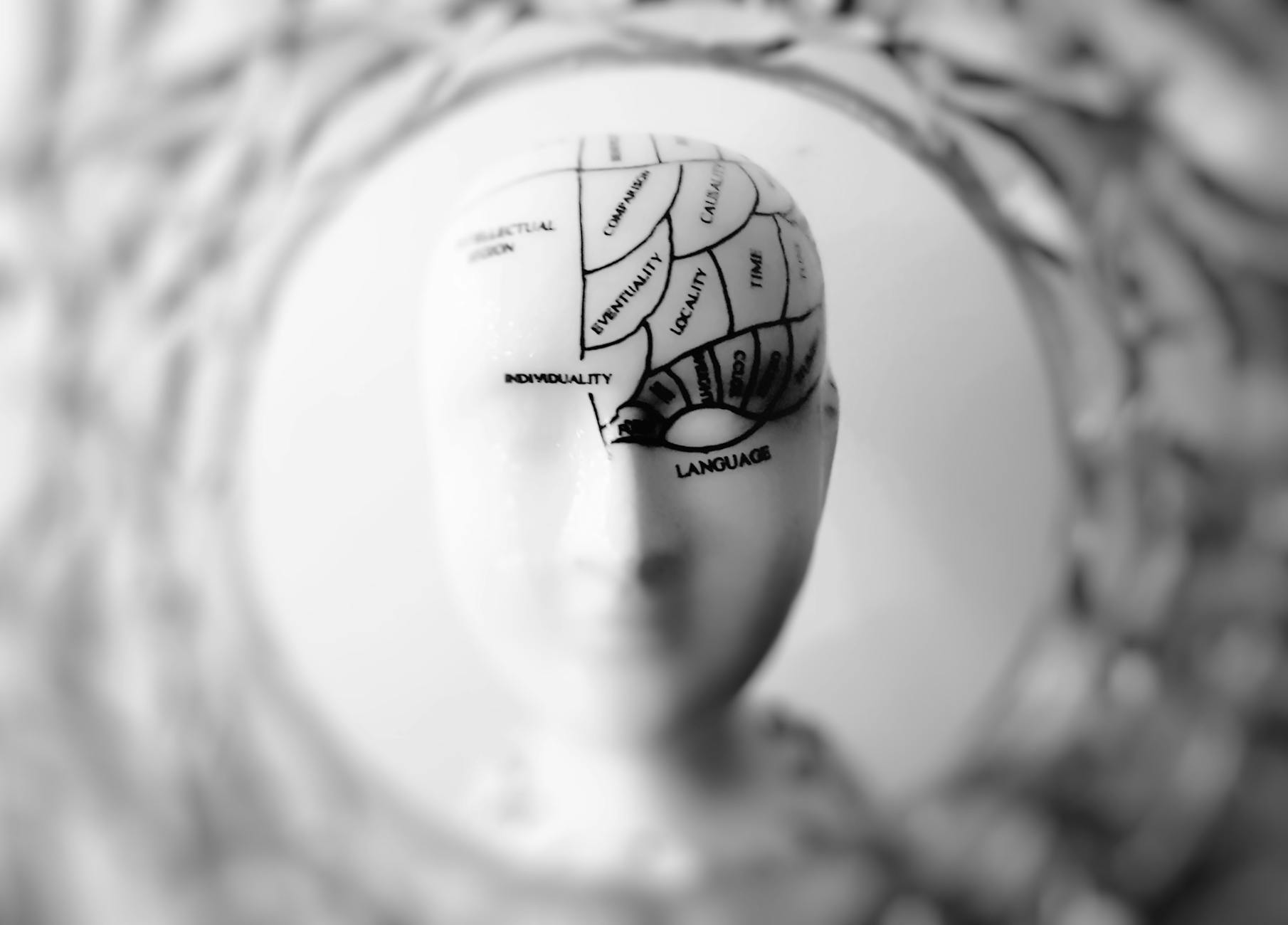
Alongside this, the challenge works with what are called mind/body/emotion centres. Many of us operate instinctively from one centre—our thoughts, our feelings, or our physical impulses—but rarely from all three. In the Challenge, you’ll explore what it feels like to operate from each centre and discover the balance you need to make aligned choices, manage energy, and move forward with clarity.

The Challenge also introduces a number of powerful, brand-new tools that I can’t wait to share with you! They are designed to reveal hidden patterns, release blocks, and help you translate insight into tangible action.

To give you a taste of the work, I’m hosting a free Inner Alchemy workshop on December 1st. This powerful session introduces some of these tools, demonstrates how they work, and lets you experience the impact they can make in your creative practice before committing to the full five days.

Even as the nights grow longer and the world slows down, the creative work continues, both in the quiet of your studio and in the shared spaces we cultivate together. Whether it’s our Study Group, co-working sessions, or the Soul Map Challenge, these gatherings are where reflection meets action, insight meets support, and the solitary and communal aspects of creativity meet in balance.

The coming year holds enormous potential for you all, and I feel deeply privileged to walk alongside all of you on this journey. I can’t wait to see how 2026 unfolds!


Upcoming Workshops

Weekly Events (free/community supported)

Why Slowness Is a Radical Act in Scholarship and Life

As I near the end of my sabbatical—a season shaped by long writing days, quiet walks, and a study of mail-order esoteric courses in early twentieth-century America—I’ve been thinking a great deal about pace. Not productivity, not efficiency, but the rhythm of attention itself: how we move through our days, what we notice, and what we let notice us.

Over the past months, I’ve been immersed in the strange, fascinating world of early twentieth-century mail-order esoteric courses. The book I’ve been writing on this traces how these correspondence schools turned spiritual transformation into a kind of mediated intimacy, bringing occult wisdom into the homes of readers far from established centres of learning. It’s a history of aspiration and longing, but also of slowness. Students would wait weeks for lessons to arrive, copy out exercises by hand, and post back reflections to a distant mentor. Transformation was not instant. In that waiting, something profound happened: learning became devotional.

That realization has accompanied me through this autumn, which we celebrated with our small Samhain ritual—watching Hocus Pocus I & II by candlelight, gathering fallen leaves, and covering them with ink and pressing them onto paper to make monoprints. There was a childlike magic in it: the squelch of the sticky ink, the soft squeaky rolling of the brayer, the moment when the paper lifted to reveal the print. It struck me how close this is to scholarship at its best: slow, embodied, receptive. The act of noticing—whether in art, research, or life—cannot be rushed.

Our institutions, however, are built on speed. Academia, once imagined as a monastery of thought, now too often resembles an airport: loud, transactional, and defined by transit rather than presence. We are rewarded for throughput—papers, metrics, outputs—while the invisible labor of thinking, gestating, waiting is quietly devalued.

Philosopher Byung-Chul Han calls this “the burnout society”: a culture of hyperactivity that mistakes motion for meaning. Similarly, Jenny Odell’s How to Do Nothing (2019) reminds us that attention is not a private resource but an ecological one. How we attend to the world shapes the world itself, and to be slow is, in this sense, to resist.

Slowness allows the possibility of depth. When I teach, I often tell students that thinking is not something we do; it’s something we undergo. Insight arrives in its own time, not on schedule. When we move too fast, we interrupt the very process that might save us—from shallowness, from reactivity, from the illusion that our worth depends on our output.

This past year has been less about producing words and more about unlearning the compulsion to be constantly doing something. Writing about mail-order mysticism has only intensified that awareness. Students were told that true understanding could not be forced; each lesson would reveal itself “in due time.”

That phrase—in due time—has become a quiet mantra for me.

There were days this autumn when the words wouldn’t come, when the archival material felt stubbornly opaque. But I began to notice something else happening beneath the surface: a subtle attunement to pattern, rhythm, and resonance. I realised that my task wasn’t to force insight but to cultivate the conditions in which it might emerge.

The same principle lies at the heart of A Course in Miracles, which I’ll be exploring in my upcoming workshop, Practical Miracles: Practicing the Course Beyond the Book (Saturday, November 8th, 2–5pm GMT). In our fast-moving world, even spirituality can become hurried: one more thing to optimise, one more practice to master. But true practice, like true scholarship, begins with slowing down. It’s the decision to notice what’s really happening in the moment you’re already in.

During the workshop, we’ll work with simple, repeatable tools for applying this awareness in daily life: at work, in relationships, and especially in moments of frustration or overwhelm. If that sounds abstract, think again of the leaf print: the slowness of laying down ink, the patience of pressing, the surprise of revelation. That’s what a miracle is—a new image of reality emerging from the same material, seen through the quiet lens of love.

As I prepare to return from sabbatical to the rhythm of teaching and service, I’m reflecting on how to carry this slowness with me. I suspect the answer isn’t in withdrawing from the world but in moving through it differently: walking rather than rushing, listening rather than reacting, leaving unscheduled time for what Thomas Merton called “the hidden wholeness.”Slowness doesn’t mean stagnation. It means aligning with the tempo of reality itself, which, as nature reminds us, is cyclical, not linear. Leaves fall; the soil rests; then, without effort, new life begins. Our task is not to speed the process but to be faithful to it.

If we can do that—in writing, in teaching, in love—we might rediscover a form of productivity that isn’t extractive but regenerative. A scholarship that nourishes rather than depletes. A spirituality that unfolds rather than performs. This, to me, is what makes slowness radical: it reclaims our humanity. It reminds us that attention is sacred, that thought takes time, and that the most transformative acts are often the quietest ones.

If that resonates, I’d love you to join me for Practical Miracles: Practicing the Course Beyond the Book this Saturday. Together, we’ll explore how to live from a place of peace and guidance, even when life moves quickly. Because ultimately, the miracle isn’t found in escaping the world’s pace—it’s found in learning to move through it with grace.

You can learn more and register through the Living A Course in Miracles group on Meetup. And if you’re drawn to the work but cost is a barrier, please reach out. We’ll find a way.

Preserving Ideas

Last weekend I spent a few hours wandering through the Small Publishers Fair in London, where tables of hand-bound chapbooks, risograph zines, and small press essays lined Conway Hall like devotional offerings to the printed word. There was something really wonderful about it: a room buzzing not with algorithmic chatter, but with paper, ink, and the human hand.

Lately, this question of preserving ideas has been preoccupying me. As I’ve been working on my forthcoming projects—both scholarly and personal—I’ve found myself turning again to the physicality of books, not just as containers of knowledge but as archives of consciousness. The handmade box-making I’ve been experimenting with at home (a small project that began as a way to store my growing stack of old notebooks) has become a kind of meditative practice: measuring, cutting, folding, gluing, all in careful rhythm. It’s taught me something about form and memory—about how enclosure can protect, but also invite reverence.

Walter Benjamin once wrote that every book has a double life: one as a vessel of ideas, and another as an artefact that carries the traces of its readers. Marginalia, stains, folded corners all become evidence of encounter. When I teach or write about modernism, I’m always struck by how that movement both exalted and feared this materiality. Woolf, Joyce, and their contemporaries wanted language to transcend its own physical limits, yet they depended utterly on print.

My own shelves are full of books that now hold more of me than of their authors, filling with underlinings, exclamation marks, and the occasional coffee ring or grease smear. They are records not only of what I’ve read, but of who I was when I read it. In a sense, they preserve moments of thought—snapshots of consciousness mid-formation. To lose those, or to surrender entirely to digital ephemerality, would be to lose something essential about how we think in time.

There’s a similar intimacy in the act of making. When I’m gluing the corners of a handmade box or rolling out pastry dough, I notice how my thinking slows, finds rhythm in repetition. Craft requires patience, but it also invites reflection—it’s an embodied philosophy. David Pye, in The Nature and Art of Workmanship, distinguishes between the “workmanship of risk” (where every action could alter the outcome) and the “workmanship of certainty” (where machines guarantee precision). The handmade book, like the handwritten note, belongs to the first category: it lives in the space of risk, imperfection, and care.

In an era of constant digital revision, the printed page still says: this is what I thought, then. It invites us into a conversation with our past selves. Even my old notebooks, boxed and labelled, feel like small dialogues across time—some pages embarrassedly naive, others startlingly prescient.

There’s a line from Italo Calvino that I often come back to: The classics are those books that exert a peculiar influence, both when they refuse to go away and when they hide in the folds of memory. I think the same could be said of our own notes, letters, recipes, and marginalia. They refuse to go away; they wait patiently for us to rediscover them.

At the Small Publishers Fair, I was reminded how vibrant this world of small-scale making still is. Stalls dedicated to poetry, philosophy, and experimental art books, each one a testament to the persistence of the tactile imagination. Many of the presses represented there are acts of devotion, sustained by people who believe that ideas deserve bodies. To hold one of their books is to participate in a lineage of care: the slow publishing ethos that values depth over reach.

In the evenings lately, with autumn deepening and the smell of spiced raisins still in the kitchen, I’ve found myself reflecting on what it means to live archivally, or, to put it another way, to be a steward of one’s own thought. It’s a gentle calling, really: to keep what matters, let go of what doesn’t, and tend the rest with attention.

So whether you’re keeping a commonplace book, baking from a family recipe, or printing a limited-run essay for a small press, you are participating in this broader human act of preservation. You’re ensuring that thought continues to have texture—that it lives in the world not just as code or content, but as something we can touch, smell, and remember.

And maybe that’s what the physical book still teaches us, in its quiet way: that ideas, like relationships, need form to flourish. They ask for bodies, boxes, bindings, and for the gentle friction of being held.


UPCOMING EVENTS

If this resonates, you might enjoy joining one of my upcoming gatherings: