Mindfulness for Creative Professionals: Unlock Your Artistic Potential

Mindfulness for creative professionals is not merely something that someone does; it is a journey that unlocks the door to deeper inspiration, clarity, and innovation. Through this introspective approach, individuals come to realize that creativity flourishes not in chaos, but in the calm spaces created by mindfulness. Through the integration of these practices into daily routines, creative professionals can not only enhance their individual artistry but also foster collaboration and synergy in their projects, ultimately leading to innovative outcomes that reflect a harmonious balance of mind and heart.


The Muse of Mindfulness

Mindfulness, in its purest form, is the art of paying deliberate, non-judgmental attention to the present moment. For creative professionals, this means stepping away from the constant barrage of deadlines, critiques, and the inner critic, and instead allowing the raw essence of creativity to emerge unencumbered. In this moment of quiet, the creative takes a deep, intentional breath—a pause that is both a beginning and a release. It is in these moments of mindful presence that the inner creative muse awakens, offering insights that transcend the ordinary and ignite the imagination.

Research in neuroscience and psychology has shown that mindfulness can significantly enhance cognitive flexibility—the ability to shift perspectives and generate innovative ideas. Practices such as meditation have been linked to improved focus, emotional regulation, and even structural changes in the brain that favor creative thinking. Pioneers like Jon Kabat-Zinn, through mindfulness-based stress reduction (MBSR), have demonstrated that the practice can quiet the mind, reduce anxiety, and foster an environment where novel ideas can flourish.

For creative professionals, mindfulness is a bridge between the analytical and the intuitive. It allows the mind to move freely between logical problem-solving and abstract, artistic expression. This balance is essential, whether you are a painter wrestling with color theory or a writer crafting a narrative that captures the human experience.

Mindfulness as a Creative Ritual

For many creative professionals, the artistic process is not just a task but a ritual—a sacred practice that connects the inner self to the external world. Mindfulness can serve as a ritualistic prelude to creativity, a way to transition from the everyday noise into a state of receptive calm.

Morning Meditations for Artists:
Starting the day with a brief meditation can set the tone for creative expression. Whether it’s five minutes of silent breathing, a mindful walk through nature, or a journaling session that reflects on dreams and aspirations, these rituals ground the artist in the present moment. As the mind settles, the floodgates of creativity open, revealing ideas that have long been buried under the weight of routine thoughts.

Mindful Observation:
Another powerful technique is mindful observation. This involves engaging with your environment with full sensory awareness—listening to the rustle of leaves, watching the interplay of light and shadow, or simply savoring the aroma of freshly brewed coffee. These observations can spark new ideas, as they encourage the mind to notice beauty and detail in the everyday. An illustrator might sketch the intricate patterns of a butterfly’s wing, or a writer might find inspiration in the rhythm of a bustling street corner.

Overcoming Creative Blocks with Mindfulness

Creative blocks are a common adversary for those in artistic fields. They often arise when the mind is cluttered with self-criticism, fear of failure, or the relentless pressures of commercial expectations. Mindfulness offers a compassionate counterpoint to these challenges by fostering an attitude of acceptance and curiosity.

The Practice of Non-Judgment:
At the heart of mindfulness is the practice of non-judgment. For the creative professional, this means embracing the messy, sometimes imperfect process of creation without the burden of self-criticism. When a writer hesitates at the blank page or a sculptor hesitates before a rough block of marble, mindfulness reminds them that every stroke, every mark, is part of the unfolding creative journey. By acknowledging each moment as it is—without labeling it as ‘good’ or ‘bad’—creatives can bypass the internal barriers that stifle creativity.

Mindful Breaks:
In the midst of a creative marathon, taking short, mindful breaks can rejuvenate the mind. A quick breathing exercise or a few minutes of silent reflection can clear away mental clutter and restore focus. Studies have shown that even brief periods of mindfulness can improve concentration and reduce stress, thereby paving the way for a renewed burst of creativity.

Practical Strategies for Integrating Mindfulness into the Creative Process

Implementing mindfulness into your creative practice doesn’t require a complete overhaul of your routine—it can be woven seamlessly into the fabric of daily life. Here are some practical strategies to consider:

  1. Set a Daily Intention:
    Begin your creative session by setting an intention. It could be as simple as “Today, I will embrace every idea, no matter how unconventional,” or “I will explore the beauty of imperfection in my work.” This intention acts as an anchor, guiding your focus and opening your mind to new possibilities.
  2. Create a Mindful Workspace:
    Design a creative space that inspires calm and focus. This might involve decluttering your studio, incorporating natural elements like plants or soft lighting, or even playing gentle, ambient music. A mindful workspace is a sanctuary where distractions are minimized and the mind is free to wander, explore, and create.
  3. Incorporate Mindfulness Breaks:
    Schedule regular mindfulness breaks into your creative process. Whether it’s a few minutes of deep breathing, a short walk, or a meditation session, these breaks allow your mind to reset and reconnect with your inner creative flow.
  4. Reflect Through Journaling:
    Keeping a mindfulness journal can help track your creative progress and emotional journey. Write down thoughts, insights, and observations from your mindful practices, and notice patterns or recurring themes that emerge in your art. Over time, this reflective practice can reveal the subtle ways in which mindfulness has transformed your creative process.
  5. Join a Mindfulness Community:
    Connect with other creative professionals who share a passion for mindfulness. Workshops, retreats, and online forums provide spaces to exchange ideas, share experiences, and learn new techniques. These communities foster a supportive environment where creativity and mindfulness mutually reinforce each other.

The Science Behind Mindful Creativity

Modern research continues to uncover the profound impact mindfulness can have on the creative brain. Neuroimaging studies reveal that regular mindfulness practice can alter brain activity in regions associated with attention, emotion regulation, and divergent thinking—the type of thinking that underpins creativity. For instance, studies have found that mindfulness meditation increases activation in the prefrontal cortex, a region vital for planning, decision-making, and problem-solving.

Furthermore, mindfulness can reduce activity in the brain’s default mode network (DMN), which is often linked to self-referential thoughts and the tendency to ruminate. By quieting the DMN, mindfulness creates a mental space where the mind is less preoccupied with fears, doubts, and distractions, allowing the creative spark to ignite more freely. These scientific insights not only validate the age-old practices of mindfulness but also underscore its potential to serve as a catalyst for artistic innovation.

Cultivating a Lifelong Creative Practice

The journey toward unlocking your creative potential through mindfulness is not a destination but an ongoing practice—a lifelong dialogue between your inner self and the ever-evolving tapestry of the creative world. It calls for patience, persistence, and a willingness to explore the unknown. Every mindful breath, every moment of stillness, is an invitation to dive deeper into the wellspring of your creative essence.

Over time, as mindfulness becomes an integral part of your creative routine, you may notice subtle yet profound shifts in your artistic expression. Ideas that once seemed elusive now flow with greater ease, and the boundaries between your inner world and the external canvas blur, allowing for a seamless expression of your authentic self. It is a journey marked by continuous discovery, where each mindful practice adds a new layer to the rich tapestry of your creative life.

Embracing the Paradox of Art and Mindfulness

Creativity is, by its nature, a paradox—a dance between structure and spontaneity, discipline and abandon. Mindfulness complements this paradox perfectly, offering a way to navigate the tension between order and chaos. When you allow yourself to be fully present, you tap into a space where the rigid lines of expectation dissolve, leaving behind the raw, unfiltered essence of creativity. It is here, in this sacred liminal space, that true artistic magic happens.

Consider the designer who, by embracing mindfulness, learns to see not just with the eyes but with the soul. Every work becomes a deliberate act of creation that honours both the process and the outcome. Every color, every texture, whispers secrets of a deeper truth—a truth that is accessible only when the mind is quiet and the heart is open.

A Vision for the Future of Creative Mindfulness

As creative professionals continue to navigate an ever-evolving landscape defined by rapid technological advancements and shifting cultural paradigms, mindfulness stands as a timeless anchor—a practice that grounds the creative spirit in authenticity and purpose. The future of artistic expression may well be shaped by those who embrace mindfulness, allowing them to transcend the noise and chaos of modern life and tap into the wellspring of genuine inspiration.

Mindfulness for creative professionals is an invitation—a call to reclaim the space within, where the seeds of artistic potential lie dormant, waiting to be nurtured by the gentle touch of awareness. It is a practice that honors the delicate interplay between the inner world of imagination and the outer realm of expression. Through mindfulness, you unlock not just your artistic potential but a deeper connection to your authentic self—a self that thrives in the beauty of each moment, unfettered by doubt or distraction.

As you embark on your own mindful journey, remember that each breath is an opportunity to reconnect with the muse within. Whether you are a writer seeking clarity in your narrative, a painter yearning for a fresh burst of color, or a musician in search of the perfect melody, mindfulness offers a path toward a more inspired, creative life. Embrace the practice, let it guide you, and discover the limitless possibilities that await when you truly listen to the whispers of your inner creative spirit.


Unlock your potential with mindfulness! Discover how a few mindful moments can help spark breakthrough, overcome blocks, and transform your personal and professional journey. Subscribe to my blog today for more on the art of being present.


If you want to start putting these ideas into action, you can sign up for Integrative Meditation (Level 1). This course represents the culmination of years of learning, practice, and personal growth. Integrative Meditation is a comprehensive framework designed to enhance your mental and emotional well-being. It draws on Mindfulness-Based Cognitive Therapy (MBCT), positive psychology, neuroscience, Acceptance and Commitment Therapy (ACT), journaling, and breathwork to support you in reducing stress, enhancing focus, building emotional resilience, and discovering your true self.


Unlock Your Creativity with The Artist’s Way: Morning Pages and More

Julia Cameron is a prolific author, artist, and teacher best known for her transformative work in the realm of creativity who has helped millions of people worldwide unlock their creative potential through her innovative techniques and practices.  One of her most influential and widely used techniques, first introduced in The Artist’s Wayis called Morning Pages, a simple but very powerful invitation to write three stream of consciousness pages every morning to get down a jumble of thoughts, plans, worries, and hopes down on paper first thing in the morning. I’ve seen how Morning Pages can reduce anxiety and creates a sense of mental clarity that can positively impact your day. The beauty of Morning Pages lies in its simplicity and accessibility; all it takes to start is a notebook and pen.

While Morning Pages are definitely the most well-known of Cameron’s techniques, The Artist’s Way is rich with other innovative tools and insights designed to help us reclaim our creativity and personal power. I want to dive into some of these lesser known but equally powerful practices from her book, including the Artist Date, Affirmations, Time Travel, Synchronicity, and Creative U-Turns. By integrating these practices into our daily lives, we can expand our creative horizons and find deeper fulfilment in our life and work.

Nurturing Your Creative Self

For Cameron, the second most important tool after Morning Pages is the Artist Date, a weekly solo expedition to explore something that really interests you. It is a commitment to nurture your inner artist by setting aside time each week to do something you enjoy.

The importance of play, exploration and creativity cannot be overstated. Our daily routines often leave little room for spontaneity and fun, both of which are crucial for fostering creativity. As Cameron points out, Artist Dates encourage us to step out of our usual habits and see the world through new eyes, with a sense of wonder and curiosity. Some of the Artist Dates I enjoy are visiting a museum, taking a walk in one of the parks around London, going to a concert on my lunch break, or visiting an art shop to try something new.

Fitting Artist Dates into a busy schedule can definitely be a challenge, but it’s important that you prioritise this time for yourself, even if it’s just an hour a week: start by setting aside an hour each week for your artist states. Think of it as a non-negotiable appointment with your creative self.

Overcoming Creative Blocks

We regularly face blocks that hinder our progress on whatever we are working on. In The Artist’s Way, Cameron offers several tools to help us overcome these blocks and keep our creative energy flowing. One of the most important tools for overcoming creative blocks is the use of affirmations, positive statements that can counteract negative self-talk and limiting mindsets. For example, an affirmation could be: ;’I’m a talented and capable creator’ or ‘my creativity flows effortlessly.’ By repeating affirmations, we can rewire our neural pathways and cultivate a more positive and supportive inner dialogue.

Another important tool in The Artist’s Way called Time Travel, where we use journaling to work through and heal past creative wounds. Many of us carry emotional baggage from past experiences where our creativity was criticised or rejected. By acknowledging these wounds and writing through them, we can begin to free ourselves from their negative effects.

Cameron also introduces the concept of Creative U-turns, moments when we sabotage our own progress, often out of fear of success or failure. It’s important to recognise these patterns and consciously choose to overcome them. For example, if you find yourself putting off a project, you’re excited about, recognise this behaviour as creative U and take action to overcome it by breaking the project down into smaller tasks or setting a fixed deadline.

The Importance of Synchronicity

A key component of The Artist’s Way is synchronicity, or meaningful coincidences, and Cameron emphasises synchronicity as a guiding force in the creative process. When we open ourselves up to creativity, we often notice patterns and coincidences that seem to lead us in the right direction. These moments of synchronicity can be seen as signs that we’re on the right path. Recognising and trusting synchronicities means being open and receptive to the messages the universe sends us. This can be as simple as noticing recurring themes in conversations, books, or experiences that seem to resonate with your creative project. It can also mean paying attention to your gut instincts and intuitive impulses that guide your decisions, those little signals that keep us on the right path.

Cameron shares numerous personal anecdotes about how synchronicity has played a role in her creative journey. I’ve found that it’s been a part of my journey too, in moments when a particular resource or connection I need seems to suddenly appear out of nowhere. When we learn to trust these moments and follow the messages they give us, it can lead to unexpected and positive outcomes to enhance our awareness of synchronicity can be useful to keep a journal of coincidences and intuitive insights as they emerge, reflecting on these entries regularly, we can begin to see how they connect with our creative journey. And the more we practise recognising synchronicity, the more we can tune into its presence in our life.

Building Community

Creativity thrives in a supportive environment, while individual practises like morning pages and artist dates are essential. Having a community of people to share with also provides invaluable encouragement and feedback. Cameron emphasises the importance of community and nurturing our creative spirits. Finding or starting a supportive group can take several forms. You could join a local writing group, meditation class, or a creative workshop. There are also online forums where you can share and network with other creatives around the world. Sharing your work with others and getting feedback is a really good way to grow as a creative—constructive feedback can help you hone your craft and boost your confidence and motivation. Being part of a community also provides an opportunity to collaborate, learn from others and be inspired.

Living the Artist’s Way

Integrating the practises from The Artist’s Way into your daily life is a gradual process that requires commitment and consistency. But the rewards of a more creative and fulfilling life are well worth the effort. Start with a morning routine that includes morning pages. This exercise sets you up positively for the day and clears your mind so you can approach your creative work with a fresh perspective. Combine this with weekly artist appointments to ensure you’re regularly engaging in activities that inspire and rejuvenate you. It can be challenging to balance creativity and other life commitments, but it’s important that you prioritise your own creative pursuits.

Start small and build consistency over time. The key is to create a sustainable routine that supports your creative growth without overwhelming you. The Artist’s Way provides a comprehensive 12-week framework for unlocking your creative potential, and there’s much more you can learn from the book. The impact of these exercises is profound, and as you embark on this journey, remember that creativity isn’t a destination, but a continual process of growth and exploration.


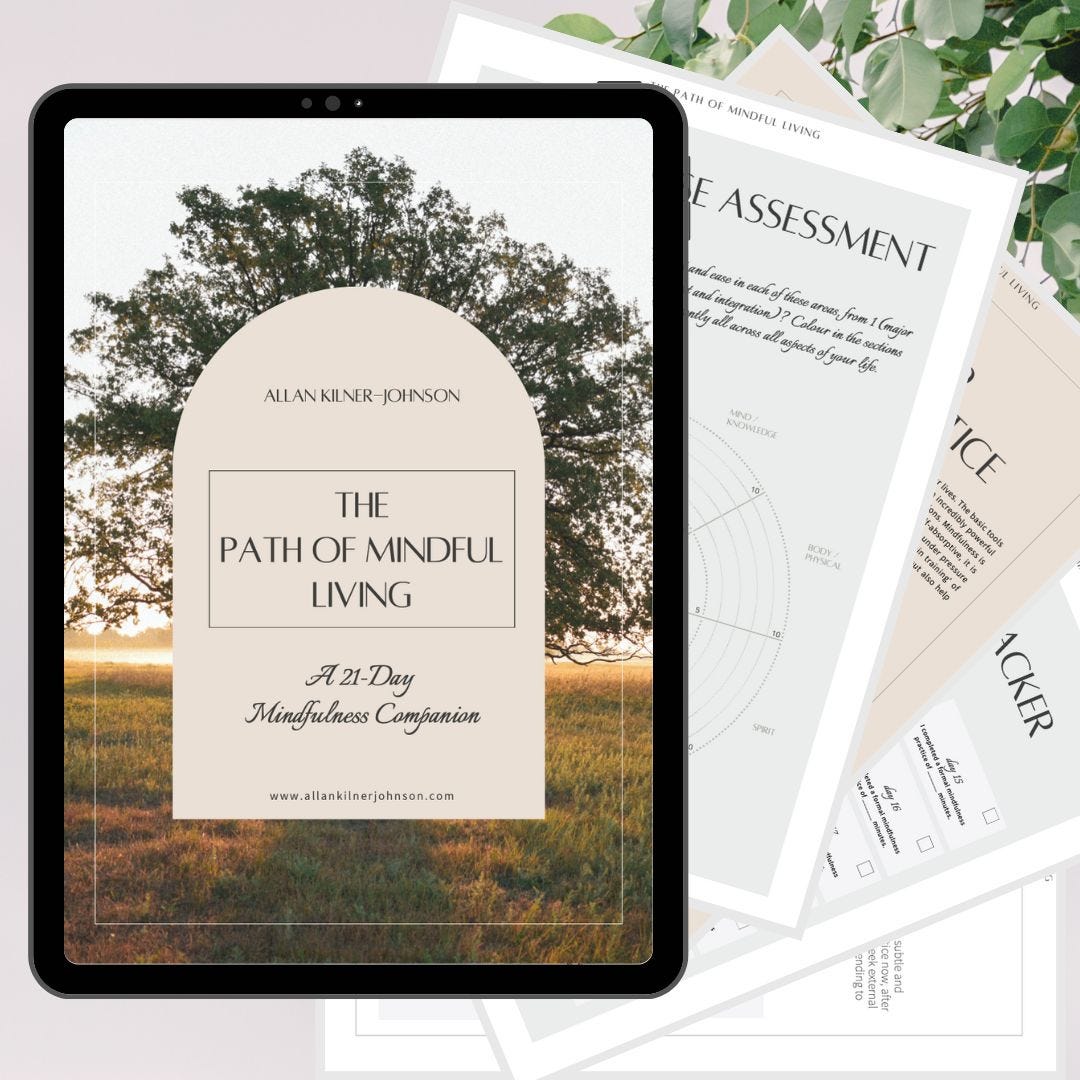
In The Path of Mindful Living: A 21-Day Mindfulness Companion, I lead you through a series of self-guided mindfulness exercises and show you how to bring mindfulness into your daily life. Readers of Integrative Creativity can download the workbook and pullout charts for only £6


Psychologist Carl Rogers’ Three-Step Formula to Finding Joy Every Day

What does it mean to live the ‘good life’? Is it about having a big house, the right job, the freedom of time and the energy to pursue your own goals? Our culture gives us many misleading messages about how to find happiness. More often than not, the things we think will make us happy once we get them that turn out to be false promises. We tend to subconsciously believe that happiness is only something that is possible in the future: we can only be happy when we’ve got that promotion, when we’ve gone on holiday, when we’ve completed that creative project. However, the influential American psychologist Carl Rogers encourages us to look at the good life in a slightly different way.

Rogers was a pioneering American psychologist and one of the founders of humanistic psychology, a school of thought that emerged in the mid-20th century. Humanistic psychology emphasises people’s inherent striving for self-actualization and creativity. Born in 1902, Rogers developed his theories at a time when behaviourism and psychoanalysis were the predominant paradigms in psychology. He believed that these approaches were too deterministic and didn’t take into account the subjective experience of the individual.

Rogers’ most important contribution is the development of client-centred therapy, also known as person-centred therapy. This approach is based on the idea that individuals have extensive resources at their disposal to understand themselves and change their self-concepts, attitudes, and behaviours. The role of the therapist is to create a supportive environment in which the client can discover these resources. Rogers set out his views on what constitutes the good life in his influential book On Becoming a Person. In it, he identifies three indicators of a good life, or more specifically, three steps in a process of how to achieve a good life.

An increasing openness to experience

The first step Rogers describes in finding the good life is cultivating an increasing openness to experience. As we explore new opportunities and possibilities, learn new things and create new projects, we realise how limiting and static vision of the future had been. It’s not that future plans are inherently bad; rather, our future plans tend to create a single monolithic vision of what happiness can look like for us. This singular focus can blind us to the myriad ways we can experience joy and fulfilment in the present moment.

Openness to experience means allowing the full range of our thoughts and feelings without denying or distorting them. It means being receptive to new experiences and perspectives and being willing to change and grow. This openness allows us to recognise the subtlety of sensations and feelings that arise in different contexts. By becoming more open, we begin to realise that the good life isn’t a destination, but a journey that requires constant learning and adaptation.

Increasingly existential living

The second step on the journey to the good life that Rogers points out is the increasing awareness of the existential nature of our lives. This concept may seem abstract, but it essentially means that we become more aware of the nature of our experiences. It’s about recognising how our inner emotional world interacts with our outer environment and understanding that we play a role in shaping both.

Existentialisation refers to the process of becoming more attuned to our existence and taking more responsibility for our lives. This involves recognising our freedom of choice and the responsibility that comes with it. It’s about understanding that we aren’t passive recipients of our circumstances, but active creators of our experiences. By expanding our awareness and taking responsibility for our actions, we begin to live more authentically and meaningfully.

Increasing trust in our own body

The third and final indicator of a good life, according to Rogers, is a growing trust in our own bodies. This doesn’t only mean our physical body, which is of course an important part, but also all functions and aspects of the body, such as our gut feeling, intuitive insights, and the feeling of physical affirmation.

Rogers emphasises how important it is to listen to our bodies and trust the signals it sends us. This includes recognising whether we’re rejecting something because it’s unfamiliar to us or whether we’re rejecting it because it’s really bad for us. It also means recognising the subtle difference between knowledge and belief, intellect and wisdom, and faith and blind trust. By trusting our bodies, we become more sensitive to our needs and desires and can make choices that are in alignment with our true selves.


These three characteristics of the good life — openness to experience, expansion and existentialisation, and trust in our bodies— have no final end point or destination. They are an expression of a continuous process that unfolds over time. The more open we become to experience, the more aware we become of our existence and the more trust we have in our bodies, the more we embark on a journey of self-discovery and growth.

Spiritual practises such as meditation, yoga, tai chi, and ritual can be incredibly important tools on this journey. Working with therapists, coaches, and spiritual teachers can also provide valuable support and guidance. The good life is not about accumulating material possessions or achieving external success. Instead, it is an alchemical state of being, a dynamic process in which we learn to shape our experience of the world so that it is authentic and fulfilling.

Rogers’ perspective on the good life challenges us to look beyond societal expectations and external achievements. By increasing our openness to experience, expanding our awareness of our existence and trusting our own bodies, we can cultivate a richer, more meaningful life. The good life is not a static destination, but an ongoing journey of self-discovery and growth guided by our inner wisdom and supported by our outer practises.


In The Path of Mindful Living: A 21-Day Mindfulness Companion, I lead you through a series of self-guided mindfulness exercises and show you how to bring mindfulness into your daily life. 

Readers of Integrative Creativity can download the workbook and pullout charts for only £6

Navigating the Filling-Fishing Fallacy: Balancing Inspiration and Creation

water drop on bucket photo

Part of the challenge we face as creatives is what feels like a constant pressure to come up with new ideas. We may feel compelled to continuously produce original works and keep pace with the ever-evolving landscape of our fields. This pressure can sometimes lead to creative burnout, a feeling of being stuck in a cycle of expectation and output. It’s important to recognize that creativity also requires rest, reflection, and rejuvenation. Sometimes, stepping back from the relentless pursuit of new ideas can actually lead to a fresh perspective and renewed inspiration. Taking the time to explore different experiences, engage in unrelated activities, or simply take a break can often spark the innovative thinking needed to push creative boundaries.

Julia Cameron often talks about how important it is for the creative process to ‘fill the well’. This concept entails actively seeking inspiration, experience, and knowledge to support our creative endeavors. According to Cameron, creativity thrives in a dynamic interplay between exploration and expression, making it crucial for us to engage in activities that replenish our well of creativity. This may involve immersing ourselves in diverse art forms, exploring nature, engaging in thought-provoking conversations, or delving into various cultural experiences. By continuously filling our well with new and stimulating input, we enhance our ability to generate fresh and innovative ideas, setting the stage for meaningful and impactful creative expression.

However, it’s equally important to recognise when it’s time to move from filling the well to fishing in it. This transition signifies the moment when we must delve into our accumulated ideas, influences, and inspirations and break through the inertia to start creating. By tapping into the wealth of experiences and knowledge we have gathered, we can breathe life into new projects, harnessing our creative energy to bring our visions to fruition.

It’s not uncommon for creatives to underestimate or overestimate just how much new information or external inspiration they need before getting down to work, what I call the Filling-Fishing Fallacy. This phenomenon can occur when creators feel like they need to continuously fill their minds with new ideas, never feeling fully prepared to start their projects. On the other hand, some may become so engrossed in seeking external inspiration that they never actually dive into the creative process. Finding the right balance between gathering new insights and diving into the work can be a challenge for many, but it’s an important aspect of the creative process to master.

Sometimes we just need to start writing, start painting, start moving, or start creating. Sometimes we’ve already consumed enough inspiration to get us going. Sometimes we need to stop filling the well and start fishing in it.

It’s a common misconception that we need to inundate ourselves with new information or inspiration before we can even begin the creative process. The truth, however, is that creativity isn’t just about the accumulation of information, but the delicate balance between ‘filling the well’ and fishing in it. This delicate balance involves not only seeking new input but also allowing time for reflection and synthesis. It’s the interplay between absorbing new ideas and allowing them to percolate within our minds, creating a rich reservoir of thoughts that can be drawn from when the time for creativity comes. The process of creativity is not solely about input, but rather the alchemical process that occurs when we blend new knowledge with our unique perspectives and experiences. Therefore, nurturing creativity involves both the acquisition of new information and the cultivation of a mental landscape conducive to the generation of original ideas.

By learning to distinguish between when we need to fill the well with new experiences, inspiration, and knowledge, and when we should start fishing in it, drawing from the resources we have gathered, we can optimise our creative process and avoid unnecessary burnout. Taking the time to nurture our creativity through exploration and learning, and then knowing when to harness that creativity by actually producing work, allows us to maintain a sustainable and fulfilling creative practice.

As I writer I used to spend hours scrolling through social media, bookmarking articles and watching videos for research and inspiration. Despite the abundance of material, I found it increasingly difficult to translate this flood of information into tangible creative results. What I didn’t then realise is that the act of creating requires not only input, but also processing and synthesis. I had to learn to take the time to think about and digest the information I’d gathered, and then to figuratively fish from this well of inspiration.

Many of us fall into the trap of overfilling our creative wells, believing that more information and inspiration will inevitably lead to better ideas. However, this can quickly become overwhelming and counterproductive. Overfilling the well can lead to analytical paralysis and creative stagnation. It’s important to find a balance between input and output to avoid getting trapped in this cycle. Taking the time to reflect and distill key insights from the multitude of inputs can lead to more focused and impactful creative output. Embracing moments of quiet and stillness can also allow the mind to process and connect the dots, resulting in innovative ideas and solutions. So, instead of overfilling the well, it’s essential to nourish it with a diverse range of meaningful inputs and allow the space for deep, uninterrupted reflection.

By understanding the signs of overfilling, such as feeling overwhelmed, mentally drained, or uninspired, we can proactively reclaim our creative energy and channel it into productive endeavours. Recognising the importance of balance and the need to differentiate between gathering inspiration and actively creating can empower us to break free from the cycle of overconsumption that the modern world often pushes us toward. Embracing moments of quiet reflection, engaging in activities that nourish our creativity, and setting boundaries around our time and energy can further support this shift towards a more sustainable and fulfilling creative practice.

Creativity isn’t a finite resource to be hoarded, but a dynamic force that thrives on movement and expression. When we embrace this mindset, we unlock endless possibilities for growth and innovation. By shifting our focus from accumulation to action, we open the door to new experiences and perspectives. This shift allows us to explore uncharted territories and break free from the confines of routine, fostering a sense of adventure and discovery. As we engage with our creative impulses, we not only fuel our own passions but also inspire and uplift those around us. It’s through this active engagement with creativity that we can truly harness its transformative power and make a meaningful impact on the world around us.

Once we have filled our wells with inspiration and ideas, it’s time to move from passive consumption to active creation. This is where the magic happens — the act of fishing in the well of creativity. Fishing in the well allows us to tap into our reservoir of ideas and insights and transform them into tangible works of art, innovations or forms of expression. This is the phase where inspiration meets action, where ideas are brought to life.

What characterises this phase isn’t only the act of creation itself, but also the depth and richness of the material from which we are able draw. Fishing in the well isn’t just about producing something, it’s about engaging with our creative resources in a meaningful way. It’s about breaking through the inertia, the uncertainty, and, yes, sometimes the fear, to begin to create.

It’s about trusting the depth of our inspiration and allowing intuition and curiosity to guide us. When we allow ourselves to fish in the well, we can turn ideas into reality and begin to unleash our full potential. Creativity isn’t a linear process, but an iterative one, built up piece by piece over time. As we navigate between filling the well and fishing in it, we should embrace the fluidity of the creative journey and trust in our ability to navigate through its ebbs and flows.

During the Renaissance, scholars and artists developed a profound appreciation for the intricacies of the natural world, leading to the creation of spaces known as kunstkammers or studiolos — personal rooms meticulously curated and filled with an array of treasures, curiosities, and sources of inspiration. These rooms served as the physical embodiment of the creative process, providing a sanctuary for exploration, reflection, and the convergence of expression. Within these carefully crafted environments, individuals fostered a deep connection with their work, surrounded by objects that ignited their imagination and encouraged artistic experimentation. The kunstkammers and studiolos symbolized the fusion of art, science, and intellect, serving as testimony to the multifaceted nature of creativity during this remarkable period in history.

The cultivation of our own art chamber — whether physical or metaphorical— is a tangible reminder of the interplay between filling the well and fishing in it. It is a sanctuary for creativity, a place where ideas can flourish and inspiration can unfold. What makes the art chamber special is not only the physical components, but also the intention and energy inherent in it. It’s about understanding the symbiotic relationship between inspiration and expression and creating a sanctuary for our creative endeavours. Our environment has a profound impact on our creative process and mindset. By consciously designing a space that encourages inspiration and productivity, we can optimise our creative potential and enhance our overall wellbeing.

The Filling-Fishing Fallacy serves as a powerful metaphor for the creative process, illuminating the intricate interplay between replenishing our well of creativity and actively engaging with the ideas and concepts within it. It prompts us to consider the dangers of overfilling the well, leading to stagnation and an overflow of undirected thoughts, thus hindering the creative process. Conversely, by embracing the act of “fishing” in our creative well, we learn to navigate the depths of our creativity, selecting and refining the most compelling ideas. This process allows us to cultivate our own unique art chambers, honing our creative intuition and enabling us to harness the full potential of our imaginative energy. Through this intentional and purposeful engagement with our creative resources, we are able to transcend previous limitations and reach new dimensions of inspiration, innovation, and expression.

Digital Minimalism and Why I Write My Morning Pages By Hand

In a world dominated by touchscreens and keyboards, the reason why writing by hand is still important seems to be increasingly forgotten. The physical act of putting pen to paper has a profound impact on our creativity and unleashes untapped potential in our minds.

This year, I have gone back to writing my Morning Pages by hand and it’s made a huge difference to me.

Many famous thinkers and writers throughout history have emphasised the benefits of writing by hand—and, indeed, Julia Cameron herself made it very clear that Morning Pages should be handwritten, even if I forgot about that for a while. The act of handwriting activates various cognitive processes and creates a unique connection between the brain and the hand. The tactile experience of writing seems to anchor the information deeper in our memory, promoting a deeper understanding of the material.

In a world where information overload is the norm, it becomes a valuable skill to retain and truly understand what we encounter. Handwriting provides a pathway to better learning as it allows us to grasp concepts more effectively and subsequently stimulates our creativity.

J.K. Rowling wrote the first drafts of Harry Potter by hand. This way of writing allowed her to give free rein to her creativity without the constraints of a blinking cursor. Rowling herself has spoken about the liberating experience of writing by hand, explaining that it allowed her to explore creative tangents and unexpected plot twists.

The cognitive processes triggered by the physicality of handwriting have the potential to fuel our creative minds and push us beyond the boundaries of conventional thinking. Handwriting improves memory, fosters deep understanding and unleashes creative potential. This practise can be a powerful tool to manage the complexity of our information-driven world.

Part of the problem I struggled with is that in the digital age, speed often takes precedence over thought. Clicking buttons can feel like a race against time, where our thoughts have to keep up with the incessant flow of information. However, when we focus on the deliberate pace of handwriting, a profound shift occurs.

Writing by hand encourages a slower, more contemplative approach to thinking. It makes us savour every word, every sentence as we put our ideas down on paper. The physical effort required to form letters and words engages our senses in a way that typing does not. This deliberate rhythm can be a balm for an overstimulated mind and provides a sanctuary for deep thinking in a world where speed is often more important than substance.

Take the example of Virginia Woolf, who filled countless notebooks with her handwritten thoughts. Her methodical approach to writing allowed her to immerse herself in the nuances of her characters and narratives, creating literary works that stand the test of time. This is in stark contrast to the speed of digital communication, where brevity often trumps depth.

Writing my Morning Pages by hand has taught me to trust the pace at which ideas flow. When I used to type them, my mind would race ahead and I’d find myself faced with pages of pretty nonsensical stream of consciousness. By gently slowing down with handwritten pages, my ideas have more time to take shape before flowing onto the page.

I have realised that the deliberate pace of handwriting creates a connection between mind and paper that is difficult to achieve in the digital world. By slowing down the pace, we give our thoughts the space they need to develop and mature.

In a society that celebrates constant productivity, the value of well thought-out, well-developed concepts cannot be overestimated. The deliberate pace of handwriting encourages deep thinking and provides a counterbalance to the hectic pace of digital communication.

I see the sensory experience of handwriting as a rebellion against the sterility of digital tools. The feel of paper under our fingertips, the scratch of the pen on the page — these sensations engage our senses in a way that a keyboard and a screen cannot.

Sure, I love technology as much as the next person, but I’m learning to connect more with a form of digital minimalism, where I rely on the best of digital and the best of analogue without assuming that a digital version of something is always preferable.

Why is this tactile experience of the analogue so important? When we write by hand, we activate not only the visual sense, but also the tactile and kinaesthetic senses. This multi-sensory engagement leaves a deeper and more lasting impression on our memory.

In addition, the tactile experience of writing by hand also has therapeutic benefits. It can be a mindful exercise that anchors us in the present moment and offers a break from the constant digital deluge. In a world full of distractions, the act of writing by hand becomes a meditative exercise that allows us to switch off from the chaos and reconnect with our thoughts.

Digital minimalism is a subtle rebellion against a world that tells us that digital is the only way forward.

The practise of writing by hand is not a relic of the past, but a key to unlocking creativity in the present. From improving memory and fostering deep understanding to promoting conscious thinking and engaging multiple senses, handwriting offers a multitude of benefits.

In a world increasingly dominated by digital technologies, rediscovering the power of writing on paper can be a revolutionary act, freeing our minds to explore unexplored realms of imagination. So, in the midst of the digital rush, take a moment to savour the simplicity and richness of writing by hand — your creativity will thank you.


In The Path of Mindful Living: A 21-Day Mindfulness Companion, I lead you through a series of self-guided mindfulness exercises and show you how to bring mindfulness into your daily life. Readers of my blog can download the workbook and pullout charts for only £6.