Taming Aversion: How to Work With the Mind When It Pushes Back

There’s a moment, familiar to anyone who has tried to live deliberately, when the mind simply says no. One minute, we’re aligned with our highest intentions, the next, we’re scrolling, tidying, grazing. That small, invisible shift — from presence to avoidance — is the terrain I’ve been exploring lately. Not because I’ve mastered it, but because I’ve been caught in it more times than I can count.

Aversion is easy to mistake for laziness, distraction, or even moral weakness. But what if it isn’t? What if the mind’s pushback isn’t defiance, but a form of care — a protective reflex triggered whenever growth begins to feel unsafe? The older I get, the more I suspect that the moments I’m most tempted to flee are the moments that matter most.

Every meaningful change seems to summon a guardian. The Buddhists call it mara; Freud might have called it resistance; psychosynthesis would describe it as a subpersonality defending its role in the inner system. Whatever name we choose, the pattern is the same: when the psyche senses transformation, it activates its most familiar defences.

Sometimes I’ll wake up with a vague heaviness, an urge to delay, to simplify the day, to shrink the horizon of possibility. The rational mind can explain it away (fatigue, overwork, weather), but underneath there’s often something more intimate: a small, frightened part that’s unsure what will happen if I really allow change to occur.

The task isn’t to override that part but to listen to it. Roberto Assagioli urges us to treat each subpersonality as purposeful, never pathological. In the same spirit, Internal Family Systems founder Richard Schwartz suggests asking these inner protectors what they’re afraid would happen if they didn’t intervene. Often the answer is touching: You might get hurt again.

There’s a strange irony in inner work: aversion tends to appear at precisely the moment when we’re closest to contact. The body stiffens not because we’re far from the truth, but because we’ve brushed against it.

This, I think, is why so many contemplative traditions treat aversion as a doorway rather than a wall. Pema Chödrön describes it as “the moment we touch our edge.” In those moments, the goal is not endurance but intimacy — learning to stay with what trembles.

When I sit in meditation and feel the urge to move, I’ve started to see it as a kind of emotional sonar. The resistance tells me something important is near. Rather than pushing through, I name it: aversion is here. I feel where it lives — perhaps in the throat, the chest, the solar plexus — and I breathe around it, widening the frame. Sometimes that’s enough. Sometimes it’s not. Either way, the willingness to stay changes the quality of the moment.

Unexamined aversion tends to generate drama. The mind, avoiding stillness, manufactures movement — endless narratives, self-critique, external blame. I sometimes think of this as the “noise of protection.” Beneath the content, the function is the same: distraction from direct contact with feeling.

In my own life, this often appears as overthinking. If I’m avoiding grief, I become analytical. If I’m avoiding fear, I become productive. The activity disguises itself as virtue — busyness, preparation, clarity — but underneath is the same motive: anything but this.

This dynamic is at the heart of the next workshop I’ll be leading — Stopping the Drama Cycle: A Workshop on Love & Our Limiting Patterns (3 November, 7.00–8.30pm UK time). We’ll be exploring how the mind uses drama — both internal and relational — to regulate discomfort. It’s not about pathologising the habit, but learning to see it clearly, tenderly, and to notice the quiet peace that emerges when we stop feeding it.

The paradox is that aversion softens not through conquest, but through companionship. The moment we stop trying to get rid of it, it begins to loosen its grip.

One practice that helps is gentle inquiry:

  • Ask, what am I unwilling to feel right now?
  • Ask, what am I protecting myself from?
  • And then, what would it feel like to allow just one degree more of openness?

This incremental approach — widening the window of tolerance rather than forcing it — honours the nervous system’s intelligence. As Bessel van der Kolk reminds us in The Body Keeps the Score, safety is the foundation of transformation.

Psychologically speaking, aversion is a sign that the psyche is reorganising itself. Spiritually speaking, it’s the ego’s last resistance before surrender. Either way, tenderness is the most effective solvent.

So much of contemporary self-help is built on the rhetoric of mastery: “hacking”, “rewiring” the brain. But perhaps what’s needed is not mastery but maturity: the willingness to work with the mind, not onit. Lately, I’ve been experimenting with what I call “soft discipline.” Instead of pushing through aversion, I create conditions for the opposite of fear: trust. I light a candle, clear my desk, breathe slowly, and remind myself that resistance is just another form of aliveness. It’s the psyche’s way of stretching before the leap.

In contemplative traditions from Buddhism to A Course in Miracles, resistance is reinterpreted as an invitation — an opportunity to practice forgiveness, not in the moral sense but in the cognitive one: the gentle release of judgement against ourselves for finding the work difficult.

This theme continues in Practical Miracles: Practicing the Course Beyond the Book (8 November, 2.00–5.00pm UK time) — a longer session on translating spiritual study into lived practice. We’ll explore how resistance can become revelation when approached through the lens of practice, not theory.

The longer I’ve worked with clients and students — and with my own mind — the more I see that aversion is not an obstacle to healing but one of its instruments. It appears wherever the psyche is trying to protect what it loves. To work with aversion, then, is to enter a relationship with love in its most disguised form.

The next time your mind pushes back, you might imagine thanking it. “Thank you for trying to protect me.” This simple act of recognition can dissolve years of struggle. Aversion doesn’t vanish, but it begins to trust you enough to soften. Growth, after all, isn’t the elimination of resistance but the deepening of relationship with it. What begins as pushback may, in time, become partnership — the psyche’s way of saying, I trust you to take me further than I could go alone.


Upcoming Workshops

Stopping the Drama Cycle: A Workshop on Love & Our Limiting Patterns
🗓 3 November, 7.00–8.30pm (UK time)
In this workshop we will explore how resistance and reactivity keep us circling the same emotional loops, and learn how to step out of them with compassion and clarity.

Practical Miracles: Practicing the Course Beyond the Book
🗓 8 November, 2.00–5.00pm (UK time)
This half-day workshop is deeper immersion into A Course in Miracles as a lived practice, where we will translate insight into relationship, creativity, and peace.


Book Buying as a Practice of Becoming

As I usually do, I bought a used copy of this month’s selection for my neighbourhood book club: Hotel du Lac, Anita Brookner’s marvellous 1984 Booker Prize-winning novel about making sense of people and the shame we inhabit. The copy I received was a marvellous 1980s edition, its cover gently worn, the paper slightly yellowed with age. Inside was an inscription in assertive biro: To Rita with love, Pete xxx. April 86.

I love finding ephemera like that in used books (once, I found a four-leaf clover that a child had pressed between pages and forgotten in 1972). That simple handwritten note in Hotel du Lac became a fragment of someone else’s life, a small piece of history folded into my own. It reminded me that buying a book is rarely just about acquiring a text — it is, at its best and fullest expression, a gesture of self-formation. Choosing a book can be a conscious act of orienting yourself toward a new way of thinking, a new rhythm of attention, a new life project. In that way, book buying is a practice of becoming.

Every book purchase marks a threshold, a crossing into a new state of thought, feeling, or attention. When I choose a book, I am often choosing not only the ideas it contains but also the possibility of becoming someone who holds those ideas. That threshold might be a commitment to learn something new, to deepen a habit, or to allow oneself to enter an unfamiliar world.

For me, Hotel du Lac became not just a novel but a threshold to conversation — in our book club meeting tonight we will speak about solitude, desire, love, and the quiet transformations of everyday life, I’m sure. The purchase itself became the first step into that dialogue.

Choosing which books to buy is also an ethical act — a choice about the economy of your attention and the kind of knowledge you wish to cultivate. In our age of algorithm-driven recommendations and one-click convenience, the act of selecting a book has become even more deliberate. It is an assertion: of attention, of values, of resistance to the noise of the digital marketplace.

I try to keep this in mind. When I choose a book, I am choosing the kind of life I wish to live. That is why I prefer second-hand bookshops, curated lists, and the serendipity of browsing. The gift of finding a well-loved copy of Hotel du Lac was not just about economy but about entering into a relationship with the book that carries the traces of other readers and a past moment in time.

My first job as a teenager was as a bookseller at Borders Books, and I’ll never forget the linger last hour before closing when the shop was almost empty and I wandered to and fro reshelving books that had been cast aside and getting lost myself in the shelves. There is something profound in the act of browsing: the way attention moves differently among stacks of books, the accidental discoveries, the impulse that turns browsing into a purchase. This ritual carries a rhythm: the searching, the selection, the return home, the opening of the book for the first time. It is a small act of pilgrimage.

This ritual has shifted for me over recent years. I buy more online and second-hand now, but I also savour the moments when I am in a physical shop, taking time to feel the books, the paper, the weight of them in my hands. Buying a book in that way is an act of attention — a slow, deliberate counterpoint to the speed of modern life.

The books we choose to live with often become companions in our ongoing process of becoming. That inscription in Hotel du Lac reminded me of this. A book is not simply an object; it is a living presence. It carries the imprint of its past readers and acquires a new life each time it meets another. In choosing it, we invite it into our own narrative.

Some books grow with us. They take on new meaning as we return to them at different stages of life. They become landmarks in our own inner journeys. It’s for that reason that buying books can be a form of investment in the future self we aspire to become.

When I buy a book, I am buying a possibility: a possibility of becoming a reader who thinks differently, who sees differently, who lives differently. Each purchase is a small apprenticeship in self-making.

Here are some ways to make book buying a mindful practice:

  • Keep a wishlist and revisit it periodically.
  • Choose one book that challenges your usual thinking every month.
  • Seek out books outside your comfort zone.
  • Return to books that have shaped you before.

If we approach book buying as a practice of becoming, every purchase becomes a small act of self-cultivation. This month, my purchase of Hotel du Lac was not just for a book club — it became a quiet practice of curiosity, of connecting with a history, of choosing to open myself to a particular conversation. In this way, every book bought with attention becomes a threshold, an ethical choice, a ritual, a companion, and an investment in becoming.

If you choose to see book buying this way, your library becomes not simply a collection of texts but a landscape of your own growth. What will your next purchase become for you?


Upcoming Events

If this resonates, you might enjoy joining one of my upcoming gatherings:


More to Explore

The Home Library as a Mirror of the Mind

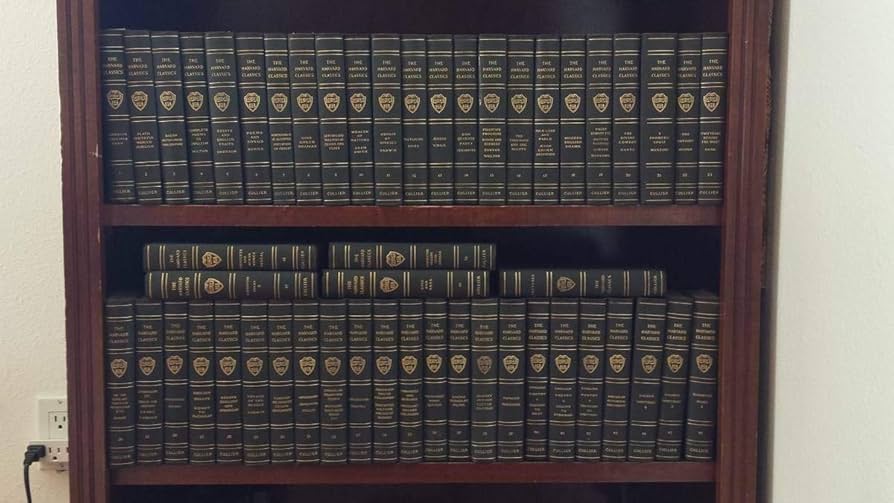
A personal library is never just a collection of books. It is a portrait of the self across time, and you can learn a huge amount about a person by the books that they have chosen to travel with them across that time. One’s own bookshelves are a living archive of who we have been, who we have longed to become, and who we may yet be. The books half-finished or cherished, the books read in the happy moments, the books purchased when we needed a lift. Unlike the tidy impersonality of the public library, the personal library is unruly, inconsistent, and idiosyncratic, its shape dictated less by the systemising logic of the Dewey Decimal System than by the peculiarities of taste, impulse, and circumstance. My shelves–spread across my study at home and my office at the university–when I look at them honestly, resemble a layered self-portrait that is part map, part diary, part dream, and through which I can unmistakably recall key moments in my life. The books that have travelled with me not only capture what I know but also what I have avoided, forgotten, or left unresolved.

Books we keep are often less about what we have read than about what we intend to read or read again. The unread shelf is one of the most intimate mirrors of the mind because it reflects not accomplishment but aspiration. Umberto Eco called this the ‘antilibrary’: the space of books not yet opened, which serve as reminders of all that lies beyond the edge of our present knowing. In Japan, tsundoku is the habit of buying books for the joy of owning them rather than the intention of reading them. When I look at certain volumes—some of which I bought decades ago and still haven’t touched—I feel less guilt than possibility. They are placeholders for a moment that might arrive slowly, or not at all, but whose presence reassures me that my intellectual life is not finished, not fully determined.

Reordering a shelf is often a kind of reordering of thought. Five years ago, I moved into a new office on campus, and, in spite of my best intentions, I still haven’t organised my books like I would have wanted, but that is a project for my sabbatical. And at home, I am preparing to move to a new flat, so I have been spending a fair bit of time sorting through my collection, donating some, moving others to my office, or setting some free into the wild as a Book Fairy. I have moved so many times in adulthood that my collection of books at home is regularly evolving under the simple pressures of space and time, and I’ve had to develop a somewhat loose relationship with those books, knowing that, as with everything, I can’t hold on to them forever. This is the hidden power of the library as a mirror. Our bookshelves are a form of externalised cognition, a way of staging our fears and hopes outside the confines of the mind.

Letting go of books can be difficult because they also hold memory, intimacy, and attachment. Certain volumes are less significant for their content than for the personal histories they embody. I have books given to me by mentors who shaped my early studies, others still carrying the marginalia of my younger, more anxious self. Some are battered, underlined, dog-eared—too fragile to lend but too precious to part with. In their presence, I find a strange companionship. They are transitional objects in Winnicott’s sense: things we hold onto not only for what they teach but for how they carry fragments of relationship and selfhood. These books resist being reduced to anything except being a part of the texture of a life.

As I’m choosing what books to let go of, I recall that the gaps in our libraries are just as telling as the books that line our shelves. If a library is a mirror, it reflects not only presence but absence: the silences we keep, the topics we resist, the voices we have yet to admit. I sometimes notice that my shelves are thin on contemporary fiction, which says something about my longstanding attachment to modernism and its afterlives. Other omissions—books I once borrowed and never replaced, fields I always meant to explore but never did—speak of hesitation, avoidance, or perhaps simply the finitude of time. Jacques Derrida reminds us that every archive preserves by excluding, gathering by leaving out. Our private libraries enact this paradox: they are as revealing in what they omit as in what they display.

There is also something quietly resistant in the very existence of the personal library. In an age of Kindle files and algorithmic recommendations, a wall of physical books feels like a slow, analogue refusal of efficiency. Digital texts are searchable, portable, infinitely replicable, but they lack the unruly density of shelves. But the personal library allows for accidents and rediscoveries, for stumbling across what we had forgotten. I sometimes find myself pulling down a volume at random and finding exactly the thought I did not know I needed. The shelves resist the flatness of digital feeds, offering instead a landscape shaped by serendipity and memory.

Yet even in their solitude, libraries are relational. Our shelves testify not only to solitary identity but to the communities we belong to: friends who recommended titles, colleagues who insisted on ‘essential’ readings, teachers whose voices linger in the texts they assigned (the work of W.G. Sebald falls very much into this category for me, and even though I have copies of all of his works gifted to my by an early mention and although I know that one day I will turn to him with the awe he is so regularly afforded, I know that that time hasn’t quite yet come for me. But it will.).

Quite often, while working in my university office, a visitor pauses before my shelves and points out a title, sparking conversations that might never have arisen otherwise. In this sense, the private library is not wholly private; it is porous, extending outward into dialogue. My own work in groups—whether through coaching or the Artist’s Way Circle I’m running this autumn—often reminds me that what we read, and how we gather around reading, is never a solitary affair. Libraries mirror not only the mind but also the networks of relation that sustain it.

Curating a library, then, is less about control than about cultivating a conversation. Books speak to each other across time and genre, staging unexpected encounters. I love those moments when a novel resonates with a philosopher, or when a fragment of mystical writing suddenly illuminates a passage in Freud. The library, seen this way, is not a static repository but a living dialogue, a set of voices waiting to be overheard. To tend a library is to arrange the conditions under which these conversations might occur.

Ultimately, our personal libraries remind us that identity is always a work-in-progress. Just as we are never finished as thinkers or as people, our shelves are never truly complete. They change as we change, expanding, contracting, reordering, accumulating silences and rediscoveries. To stand before them is to confront not a finished self but a process of becoming. Perhaps this is why libraries are so comforting: they mirror back to us not perfection but movement, reminding us that our lives, like our shelves, are full of possibility still unfolding.

I feel this sense of unfolding strongly at the moment, as I move between projects—teaching, writing, coaching, and group facilitation. My shelves are in transition, just as I am. There are new books arriving on attachment and literature, old companions being re-read, volumes I suspect I will never get to but cannot quite let go of. It feels fitting that, at the same time, I am gathering others into shared explorations of creativity and practice. If you are curious about these conversations, you might want to join me for The Art of Creative Practice—a space where, much like our shelves, we bring together disparate influences and let them speak to one another.

To tend a private library is to tend to the life of the mind. But more than that, it is to honour the shifting textures of memory, aspiration, and relation that define who we are. As you look at your own shelves this week, you might pause to notice not only what they contain but what they reveal—about where you’ve been, where you are, and where you might yet be heading.


Upcoming Workshop: Mindfulness for Creative Practice

Thursday 23 October, 7.30-9.00pm (UK time)

Step away from the noise and distractions of everyday life and reconnect with your creative practice. This 90-minute online workshop is designed for anyone who wants to explore mindfulness as a tool to enhance focus, deepen flow, and spark inspiration.

Drawing on principles from Mindfulness-Based Stress Reduction (MBSR) and Mindfulness-Based Cognitive Therapy (MBCT), the workshop combines evidence-based mindfulness techniques with practical creative exercises. Together, we’ll explore how to:

  • Quiet the inner critic and reduce creative blocks
  • Build sustainable habits that nourish your practice
  • Harness attention and presence to enhance imagination
  • Connect with a supportive community of fellow creatives

Through a blend of guided exercises, reflective practices, and techniques you can return to again and again, you’ll discover how mindfulness can open new pathways into your creative life. Whether your medium is writing, painting, music, research, or design, these methods are adaptable to any form of creative work.

👉 Reserve your spot here

Literary Walks: How Reading Cities Shapes the Way We Live in Them

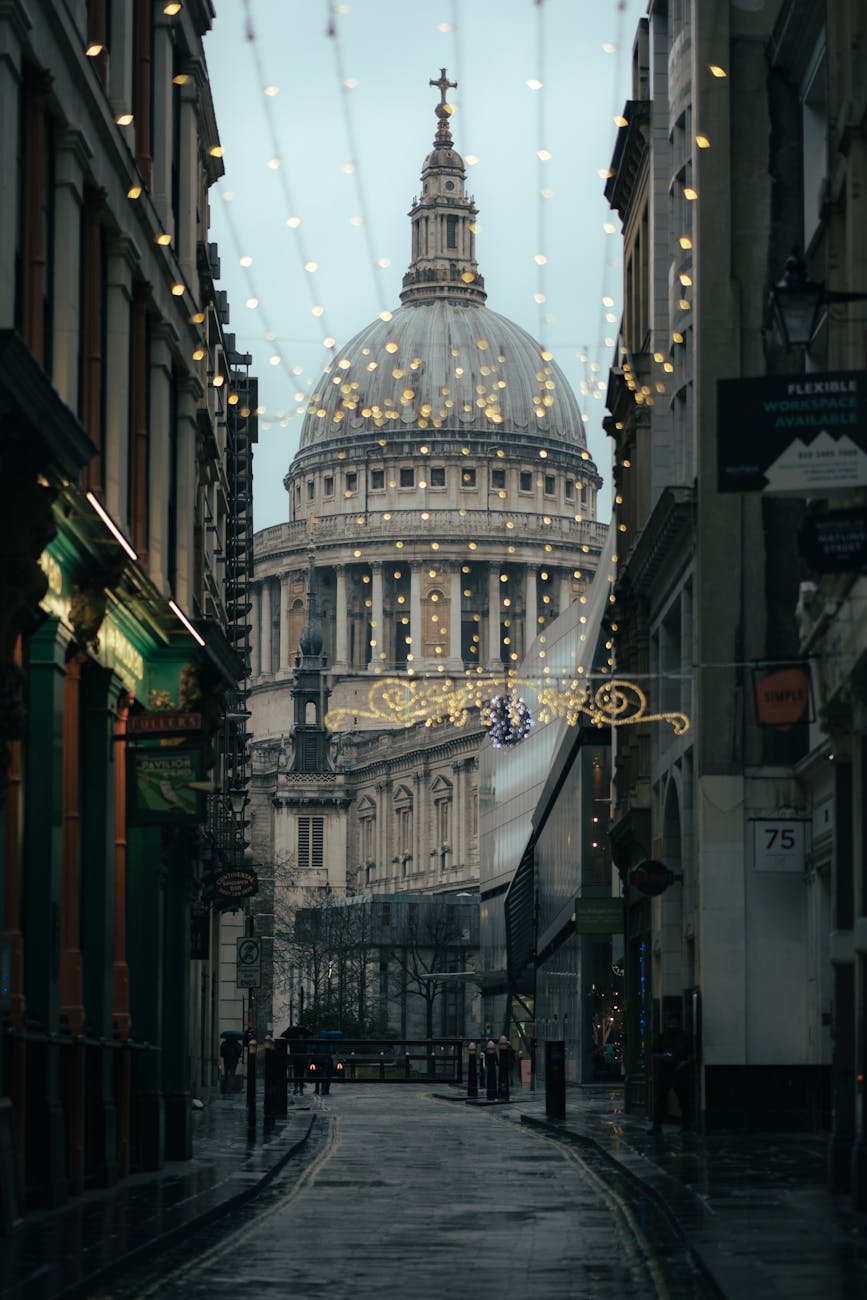
I notice how literature lingers in the pavements in London. I’ve found this more and more the longer I’ve lived here. After all, ‘when a man is tired of London, he is tired of life’, as Samuel Johnson wrote. Even on the most ordinary days, when I’m simply walking to the shops or having a coffee, a remembered passage from Woolf or Dickens reshapes the atmosphere, giving a quiet strangeness to what otherwise might seem familiar. Literary walks don’t need to be formal, nor do they require a tour group—although there is a place for those. Instead, they are an everyday practice of letting what we’ve read colour what we see, and in turn allowing the city to read us back.

Cities are always already read, even before we open a book about them. Our streets teem with signs and symbols: shopfront typography, graffiti tags, the peculiar poetics of street names, layering like muddy sediment the history of an ancient city, each one carrying some buried narrative. Roland Barthes, in Mythologies, reminds us that everyday signs are never innocent, but instead they come loaded with cultural meaning. Michel de Certeau goes further, describing walking itself as a kind of writing: each step a form of mark-making, each turn a marginal note. Perhaps this is why walking has become one of my most reliable contemplative practices; I can never quite shake the sense that London is, in spite of its sublime history, an unfinished text, and that my role as a walker is not only to read but to annotate.

Reading literature set in a city makes us feel less like visitors and more like participants. When I first read Mrs Dalloway, I hadn’t spent much time in London, but the rhythm of Woolf’s sentences gave me an immediate familiarity with the city. Later, when I actually walked those spaces and traced Clarissa’s journey on foot with my students the novel gave me entry points into belonging to a city that didn’t seem materially my own. Literature offers a way of settling without appropriation: it lets us walk streets we may never ‘own’ or even afford to live on, but with a kind of kinship. For me, reading the urban canon—Joyce’s Ulysses for Dublin, Smith’s NW for Willesden—has softened the edges of new places, helping me to live in them with curiosity rather than defensiveness.

Walking with a book’s shadow creates a double vision: the city as it is, and the city as it is imagined. Every time I find myself near Holborn, I see Dickens’s London superimposed on the glassy facades of insurance firms; the ghosts of debtors’ prisons and fog-bound alleys live on in the shadow of a Costa or Pret. And I can’t help but notice how nearly every pub in the vicinity has a plaque reporting that Dickens used to drink there and recounting a famous 17th-century stabbing that took place there. To walk with these texts is to carry a palimpsest in mind, where past and present are layered, sometimes clashing, sometimes harmonising. In my own recent walks, especially since returning to more teaching this year after six years in leadership, I’ve been acutely aware of this doubling. The university campus is also both a physical environment and a palimpsest of earlier student generations—I grow older, but my students, disconcertingly, stay the same age every year. Literature trains us to notice these overlays, and walking keeps the lesson alive.

Literary walking is not only about cities, it is also about the walker. What we bring to the page and to the street matters as much as what the author provides. Some days my walks are brisk and pragmatic; on others, they slow into reverie. I notice how my mood shapes the city I ‘read’, whether the buildings feel inviting or alienating, whether the metaphors I attach are hopeful or heavy. Theorists of psychogeography often emphasise dérive—the unplanned journey or drift—as a mode of breaking free from capitalist rationalisation of space. Yet for me, walking with literature offers a slightly different promise: not only resistance, but companionship. A door knocker shaped like a lion’s head, a tree whose branches look suddenly archetypal, a narrow side alley that seems like it should have its own subplot. Reading tunes our attention and primes us to see texture where before there was only function. 

There is also a social dimension to literary walking. Books are companions, but so too are the people we share them with. When I’ve brought novels into reading groups or teaching seminars, I’ve been struck by how each reader brings a different walk through the same text. These conversations remind me that the city is never read alone—it is always interpreted collectively, shaped by a multiplicity of histories. I think of my own upcoming groups—the Living a Course a Course in Miracles study group or the weekly Creative Flow Sessions that are beginning this autumn—as spaces where such collective interpretations of experience can flourish, even if not always tethered to literal walking.

In many ways, literary walking is about staying with a place rather than consuming it. When I moved to Hong Kong, I was initially so overcome by the immensity of it that I bought a fancy camera to help me train my vision on the particulars; when I visit Stockholm, my favourite city in the world after London, I find a space that is, inversely, more human-scale. London is a capital somewhere in between, neither entirely comforting to the human spirit or form, nor entirely forbidding. One never tires of London because it takes work, practice, and grit to live in London. 

Cities are often perceived as destinations to be ‘done’, sights to be checked off in rapid succession. But literary walking resists that tempo. It asks us to linger, to reread, to take a slower pace. To walk with a book in mind is to inhabit a place rather than extract from it. In this sense, walking becomes a small ecological ethic, a way of living lightly while seeing deeply. The practice is never finished, just as no book is ever fully read. Each walk is another opportunity for literature to accompany us, shaping how we see and how we are perceived.


An Invitation to Walk With Me (Figuratively at least)

What books have changed the way you walk your city? I’d love to hear your reflections—share them in the comments or reply if you’re reading this via newsletter. If you’d like to explore more practices that blend literature, creativity, and contemplative living, you’re warmly invited to join our Weekly Creative Flow Sessions  this autumn or the new 18-month reading cycle of A Course in Miracles.

As autumn approaches, I hope your own walks—whether with books, with friends, or simply with yourself—offer you fresh ways of seeing the cities you call home.


Embracing Craft in Academia: Reflections on Sabbatical

Academia, for all its bureaucratic scaffolding and metricisation (neither of which, in spite of what many would have us believe, is newly arrived on the scene), has always seemed to me less an outcome and more a craft. The language we use is linear and progressive—impact, output, key performance indicators—but the experience is slower and quieter. What looks from the outside like a trajectory of advancement often feels, from the inside, like the painstaking rhythms of practice: revisiting texts, refining an argument, shaping a paragraph until it carries its own weight.

Beginning a period of sabbatical this month has sharpened this distinction for me. Having the time to work on my next book, on liberal theology in early-20th-century America, is an extraordinary privilege, of course, but also a perturbing reminder that the rhythms of academic life are neither fixed nor inevitable. After a six-year term as an associate dean, when my diary wasn’t my own and a truly uninterrupted hour for writing was out of the question, I now find myself in a space where mornings are less prescribed, afternoons more open, and evenings less weighed down by the day’s unanswered emails.

This shift has interrupted the treadmill to which I had grown accustomed: no more weekly meetings or administrative reports, fewer obligations to the tempo of the institution. The contrast is striking. Career logic dictates constant forward motion, progression, and visibility. Sabbatical interrupts that, slowing time to the pace of craft: immersion, attention, revision. After years of deliberately (and at times aggressively) climbing a ladder, it feels now like I am stepping back into the workshop of what I have actually been trained to do: pore over the historical record to better understand what modernist literature means, and, in doing so, cultivate my own scholarly sensibilities in order to train students to do the same.

The language of career encourages us to think in terms of advancement, but the language of craft invites us to think in terms of depth. Career implies a vertical climb: promotion, recognition, and external markers of success. Craft, by contrast, is iterative and circular: you return to the same problems with new tools, you revisit the same materials with a slightly steadier hand. In my ways, this sabbatical is feeling like an unmistakable return, and whether or not my hand is indeed steadier, it is at the very least different to when I began my career.

Pierre Bourdieu’s account of ‘academic capital’ in Homo Academicus explains much about why universities are structured to reward careerist accumulation: advancement depends on how well one plays the game, converting intellectual labour into recognisable forms of capital. But Richard Sennett’s celebration of craft in The Craftsman reminds us that the deeper meaning of scholarly work is found elsewhere: in the long hours of slow reading, the shaping of sentences, the iterative labour of interpretation. Bourdieu undoubtedly shows us the internal logic of the field, but to treat scholarship as craft is to resist the abstraction of labour into capital and to remain grounded in the work itself, the feel of words under the hand, the quiet satisfaction of making something well.

Craft is built not through dramatic leaps but through the slow accumulation of skill over time. Looking back, I see this clearly in my own trajectory. As an undergraduate, I was awkward but diligent; I once arrived late to an exam with an analogue alarm clock whose battery had died, holding it up as evidence. From those unpolished beginnings to my current role as teacher and writer, what has mattered is not sudden transformation but steady honing.

This accumulation resists the logic of outputs. Like any craft, academic practice is tethered to the materiality of tools, spaces, and habits. The scholar’s equivalents of the potter’s wheel or carpenter’s chisel are the library, the notebook, and the annotated text (I’ve also grown accustomed to my ReMarkable tablet but still feel uneasy when I see my disused notebooks glaring back at me from the shelf). 

My own sabbatical days so far have been marked by relocating books and rediscovering notes I had once scribbled in margins, while rearranging my desk into something that feels more like a workshop than an office. Bruno Latour reminds us in Reassembling the Social that tools are never neutral; they co-constitute practice. Academic work, though often presented as disembodied thought (the ‘output’, the ‘paper’, the ‘impact’), is always materially situated. The desk, the chair, the pen, the screen: they are part of the making.

The pressures of modern academia can make it dangerously easy to forget the craft beneath the career, but the dangers of modern academia can make it just as tempting to ignore the career beneath the craft, an evasion that only feeds the very thing we hoped to resist.

I know this from experience. Six years in middle leadership brought tremendous satisfaction but also a creeping drift away from the hands-on craft of my own research. Strategy and oversight are necessary, but they can displace the intimate contact with sources and sentences that drew me to academia in the first place. Sabbatical is, in that sense, a time to retool: to remember the making at the heart of the work. As Stefan Collini asked in What Are Universities For?, what are we serving if we forget the scholarly craft that justifies the institution itself?

My hope for this sabbatical is to deepen the craft. A book will come out of it, but as a tool rather than a product. I want to give myself permission to linger in primary texts, to sketch ideas without rushing to publication, to think slowly. Projects on attachment and literature, and on contemplative approaches to pedagogy beckon, but I want to approach them less as tasks to be completed than as materials to be worked with patiently.

To see scholarship as craft is to reclaim its artistry from the machinery of career. Universities will continue to speak the language of metrics, rankings, and progression, an essential role, because it is this machinery that maintains the workshop in which scholarship can take place. But we don’t have to speak in the same register. To resist or even repudiate the machine is not to undermine the institution but to create the very conditions in which scholarship can breathe: the space for slow thought, patient practice, and the kind of intellectual labour that no metric can capture.

The machinery of career will always hum in the background, but we needn’t let its clatter drown out the quieter sound of practice itself. If these reflections resonate, I explore them further in The Art of Academic Practice on Substack, a space for thinking together about how scholarship might remain both sustainable and alive.