Perfectionism I’m increasingly convinced, is not at all about maintaining high standards. Writers like Brené Brown have been helpful for me in naming this dynamic: perfectionism as a defence against vulnerability rather than a pursuit of excellence. Similarly, Donald Winnicott’s idea of the “good enough” offers a quiet corrective. Not a lowering of standards, but a recalibration—an insistence that aliveness matters more than polish.
What I’m experimenting with, imperfectly, is letting things move sooner. Allowing the work to be seen in earlier stages. Trusting that clarity often emerges through expression rather than prior to it. It’s a small shift, but it changes the atmosphere completely. Less pressure. More momentum.
If this feels familiar, I’ll be exploring these patterns—and offering some practical ways through them—in tomorrow’s workshop, Overcoming Perfectionism and Taming the Inner Critic (Tuesday 5 May | 7.30–9.00pm UK time | £12). You can register here: https://www.meetup.com/the-art-of-creative-practice/events/314377652/
And if you’re looking for something more sustained, I currently have one space open for 1–1 coaching. It’s a chance to work with these patterns at a deeper level, in a way that’s both rigorous and, importantly, kind.
There is something uncomfortably revealing about the creative projects we keep putting off “for later.” The ones we abandon outright are easier to narrate, to explain away, to file under “not quite right” or “no longer aligned.” But the projects we hold on to with a kind of reverence but never actually commit to have a lot to say about what we truly value.
I’ve been thinking about this a great deal recently, not least because I’ve found myself in the thick of planning and filming new material for The Art of Creative Practice, which, this autumn, will expand into a new interactive community with a dedicated app. It’s a project that, in one sense, has been years in the making through the accumulation of methods, fragments of teaching, and lived experiments in what it might mean to treat creativity as a way of approaching the world. In another sense, it has only just begun, precisely because I’ve stopped waiting for it to become something more perfect, more complete, more defensible.
I’m reminded here of something in Art & Fear by David Bayles and Ted Orland: the idea that most artists are defeated not by a lack of talent, but by the fear of making something imperfect. The projects we keep “for later” are often the ones we’ve invested with the highest symbolic stakes. They are not just projects: they are proxies for who we think we might be, if only we could get them right.
And so we wait…
But waiting, as it turns out, isn’t a neutral act. It shapes the project just as much as doing does. It introduces a kind of conceptual inflation: the longer something is delayed, the more significant it seems to become, and the more it has to carry. No wonder it becomes increasingly difficult to begin.
There’s a tension here that I see often in my coaching work, and that I recognise in myself: the pull between the desire for integrity and the reality of practice. Integrity asks for coherence, for alignment, for something that feels “true.” Practice, on the other hand, is messy, iterative, frequently disappointing. The danger is that we place integrity at the end of the process—something to be achieved once the work is finished—rather than at the beginning, as a commitment to showing up honestly, even (especially) when the work is unfinished.
This is where the projects we defer become instructive. They show us, quite precisely, where our thresholds are. What feels too important to risk? What feels too revealing to share? What feels too central to our identity to be allowed to fail?
In my own case, fully developing an app-based community for The Art of Creative Practice has long occupied that space. It sits at the intersection of so many things I care about: creativity as a spiritual practice, the relationship between inner life and outer action, and increasingly, the connection between creativity and ecology, that is, what it might mean to create in a way that is responsive to, and in relationship with, the more-than-human world.
Over the past months, as I’ve been filming and shaping this new material, I’ve had to let go of a certain fantasy of what the project should be. This feels important to say, because it’s easy to assume that projects like this emerge fully formed, or that there is a moment of clarity in which everything clicks into place. In reality, it’s much closer to what Donald Schön called “reflection-in-action”—a kind of thinking that happens through doing, where the work itself becomes the site of inquiry.
There’s also something relational at play here. One of the reasons I’m building this next phase of The Art of Creative Practice as a dedicated app and year-long journey is precisely to create a more vibrant, dialogical space for this kind of unfolding. The older model—content delivered, consumed, and completed—feels increasingly insufficient for the kind of work I’m interested in. Creativity, especially when understood as a spiritual or ecological practice, is not something we do alone. It is shaped through conversation, through encounter, through the subtle feedback loops of community.
More on this in the coming weeks and months, but for now it feels like a significant shift: from holding the project back until it is “ready,” to allowing it to develop in public, in relation.
If there is a question running through all of this, it might be this: what would it mean to bring one of your “for later” projects slightly closer? Not to complete it, not to perfect it, but simply to reduce the distance between where it is and where you are.
And if perfectionism feels like a particularly strong thread in all of this, I’m running a workshop next week that speaks directly to it:
We’ll be working with some of these dynamics in a practical, grounded way, looking at how the inner critic operates, and how we might begin to relate to it differently, without needing to silence it entirely.
For now, though, I’m returning to the question I began with. The projects we keep “for later” are not just deferred tasks. They are, in many cases, small maps of our inner landscape. They show us where we hesitate, where we hope, where we protect something that feels, inarticulately, important.
The invitation is not to force those projects into the present, but to become curious about the distance we’ve placed between ourselves and them. To ask, gently but persistently: what am I waiting for?
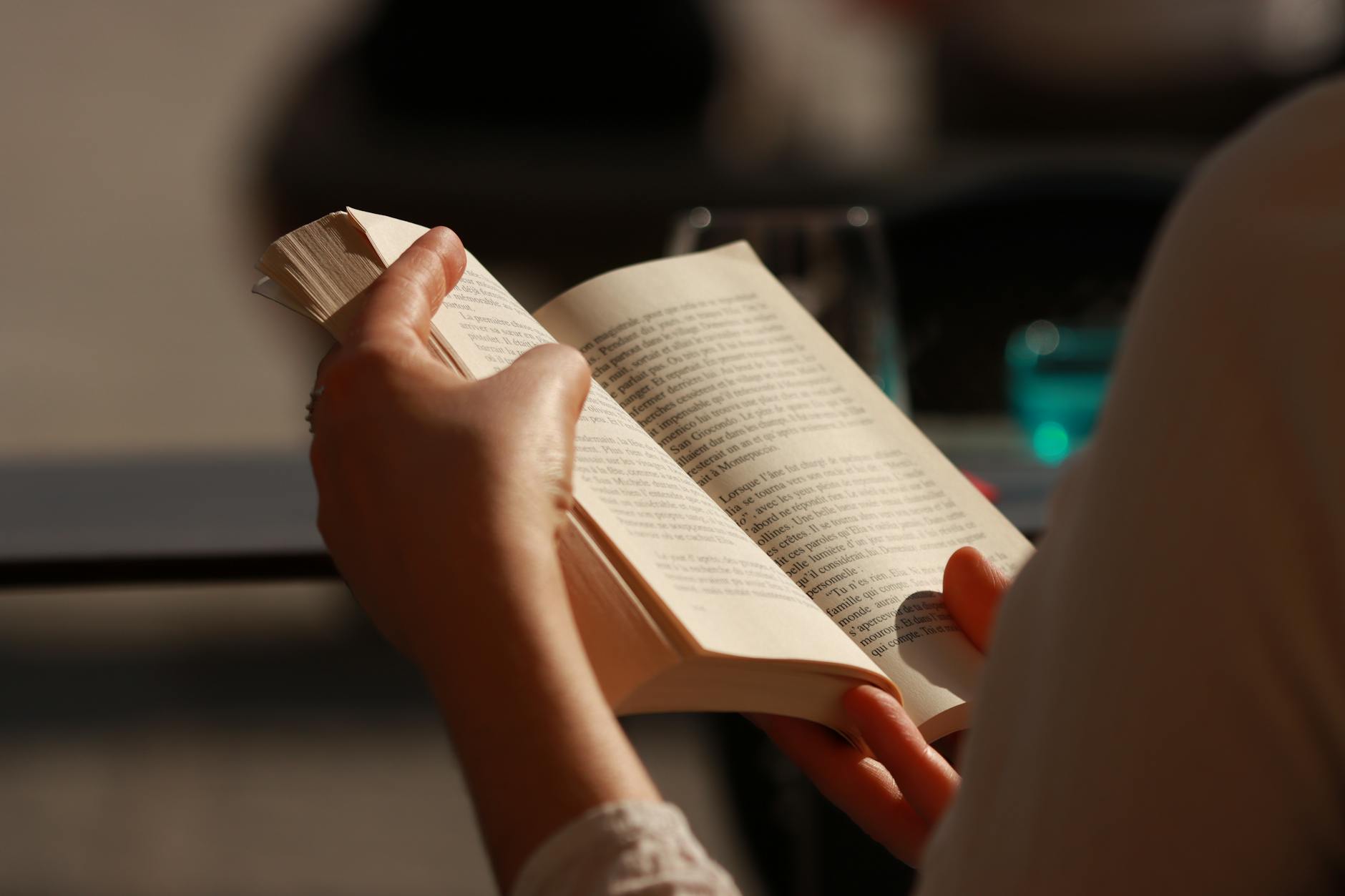
I’ve been thinking a lot lately about what it means to really read something.
Partly this has come from my work running the new Writer’s Flow Circle, which has already been a genuinely energising experience sitting alongside a group of thoughtful, committed writers who are all, in different ways, trying to deepen their relationship to their own work. What’s become clear, very quickly, is that writing problems are almost always reading problems in disguise.
When one of my 1-1 coaching clients says “I feel stuck,” or “I don’t know what I think,” or “I’ve lost confidence in my voice,” what often sits underneath is a fractured reading life: too many inputs, too quickly consumed, with too little time for digestion.
There’s a familiar temptation to read instrumentally, to gather, to assemble, to skim. At times useful, yes. But it can also be subtly corrosive if it becomes the default mode. We live in a culture that rewards speed and visibility. To have read something is often more about being able to reference it than to have truly encountered it.
The philosopher Maryanne Wolf writes about this in Reader, Come Home, where she describes the shift from “deep reading” to what she calls “bi-literate reading”, a split between fast, digital skimming and slower, immersive engagement. The more we train ourselves to skim, the harder it becomes to sustain attention.
This isn’t new, of course. It sits somewhere in the lineage of thinkers like Mortimer Adler in How to Read a Book, and further back in the monastic tradition of lectio divina, the slow, attentive, almost meditative reading of sacred texts
Here are a few practices that are deeply effective:
1. Time-boxed immersion Rather than vaguely intending to “read more,” set a defined container. Even 25 minutes of uninterrupted reading can be enough to drop beneath the surface.
2. Read before you input This is a small but hugely significant shift: reading before opening email or social media. The quality of attention is noticeably different.
3. Pair reading with reflection Not extensive note-taking. Just a few lines afterwards: What stayed with me? What resisted me? What do I want to return to?
4. Re-read without guilt Depth often comes from returning, not progressing. There’s something very rich and important and valuable in allowing a text to unfold over time.
The more I work with writers, the more I see that reading and writing are not separate activities. They’re two expressions of the same underlying process. When reading becomes shallow, writing often becomes strained; when reading deepens, writing tends to follow, not immediately, but reliably.
If you’ve felt scattered in your reading lately—or if books have started to feel more like obligations than encounters—it might be worth experimenting with a slightly different approach this week. Choose one text. Give it more time than feels necessary. Let it be incomplete. And notice what happens.
If You’d Like to Go Further
If this resonates, there are a few ways to continue the work together.
I’m currently offering free Clarity Calls for those interested in ongoing 1–1 creativity coaching. These are relaxed, exploratory conversations where we look at your current creative process—what’s working, what isn’t, and where you might want to go next.
I’m also running a couple of upcoming sessions that build on these themes:
Weekly Creative Flow Coworking Session: Decluttering Your Creative Mind Monday 27 April | 10.00–12.00 (UK time) | Free A gentle, structured space to clear mental noise and reconnect with focused creative work. Register: https://www.meetup.com/the-art-of-creative-practice/events/313785594/
And, if you’re in London, I’ll be hosting a series of in-person workshops at Treadwell’s Books over the coming months. Keep an eye out for more details!
There’s a particular tone to the Easter break that I’ve come to love: the semester recedes just enough for patterns to come into view, and there is a much-needed opportunity to reassess, realign, and prepare again for the next portion of the year.
This year, that pause has felt especially necessary. My partner moved in this week: a joyful, grounding shift, but also one that gently disrupts the rhythms I had sedimented into habit. Shared space recalibrates everything–time, attention, even silence–and it’s a reminder that inner work doesn’t happen in ideal conditions. It happens in situ, in the ongoing negotiation between self and world.
And so I’ve found myself returning—again, deliberately—to the practices that don’t negotiate.
Meditation each morning: nonnegotiable. The daily Course in Miracles workbook lesson: also nonnegotiable.
Because if there’s one thing I’m increasingly convinced of, it’s this: outer impact without inner skill is unstable. We tend to think of impact in visible terms like outputs, influence, reach. But this is only ever the surface expression of something more subtle: the quality of attention we bring to what we do.
We want clarity, but not the discipline that produces it. We want flow, but not the boundaries that make it possible. We want impact, but without interrogating the internal patterns that shape how we show up.
What contemplation actually does—at its best—is interrupt. In my own practice, this often shows up as a kind of deceleration. The day still unfolds, emails still get answered, teaching still happens—but the internal tempo changes. There’s more space between stimulus and response. You begin to notice the scripts.
I wish I could say that this awareness translates seamlessly into behaviour. It doesn’t. There are still days where the meditation feels mechanical. Where the workbook lesson lands flat. Where I move through the day slightly out of sync with myself.
And recently, with the changes at home, that’s been more noticeable. The routines that once held me are being renegotiated. There’s a kind of friction in that—small, but real.
So instead of trying to restore the old rhythm, I’m experimenting with a new one. Shorter meditations on busier mornings. A more intentional transition into the workbook lesson rather than squeezing it in. A willingness to let the practice adapt without losing its core.
The question, then, is how this translates outward. What does contemplation actually do in the world? At one level, it refines attention. And refined attention tends to produce better work—more precise, more thoughtful, less reactive. But at a deeper level, it changes the quality of engagement. You become less invested in being right and more interested in what’s actually true.
In teaching, I’ve noticed this as a shift from delivering content to holding space. The material matters, of course, but what matters more is the field of attention in which that material is encountered.
In coaching, it’s even more pronounced. The most useful thing I can offer isn’t a technique or a framework, but real presence. The ability to sit with someone without immediately trying to fix or reframe. And this is where inner skills become outer impact.
There’s a temptation—especially in creative and professional spaces—to bypass this layer entirely. Then strategy turns into control, output becomes compulsion, and visibility slides into performance.You can observe this, I think, in certain corners of the online world—a kind of frenetic productivity that looks impressive on the surface but carries an undercurrent of exhaustion.
Contemplation offers a counterpoint.
If you’re reading this and recognising something—perhaps a sense that your outer work is slightly outpacing your inner grounding—then this might be a good moment to recalibrate. And if you’d like some structure around that, I’m holding a couple of spaces this April that are designed to support exactly this integration:
Weekly Creative Flow Coworking Session: Creative Boundaries that Nourish Monday 20 April | 10.00–12.00am UK time | FREE A gently structured session to help you reconnect with focused, intentional work—without burning out. Register here: https://www.meetup.com/the-art-of-creative-practice/events/313774347/
Flow on Demand: Rituals for Focus and Inspiration Tuesday 21 April | 7.30–9.00pm UK time | £12 A deeper dive into designing personal rituals that support sustained attention and creative flow. Register here: https://www.meetup.com/the-art-of-creative-practice/events/314020341/
And if you’re looking for more personalised support, my 1–1 coaching work is very much oriented around this intersection of inner practice and outer impact, helping you build the internal conditions that make your external goals not just achievable, but sustainable.
Creative practice is one of the few places where procrastination can masquerade as discernment.
In most areas of life the difference between the two is fairly easy to spot. If you delay replying to an email for three weeks, you are probably not engaging in a subtle process of ethical reflection. If you keep postponing a dentist appointment, you are unlikely to be waiting for the right aesthetic conditions to emerge. Procrastination, in most domains, looks exactly like what it is.
Creative work is different. Here, hesitation can feel virtuous. Delay can wear the coat of taste. Not doing something can look like a form of artistic integrity. The line between genuine discernment and sophisticated avoidance becomes very thin.
This is one of the reasons creative practice can become psychologically complex. It sits at the intersection of imagination, identity, and judgment. We are not just deciding what to do—we are deciding whether what we do will be worthy of the version of ourselves we hope to become.
The philosopher and theologian Josef Pieper once wrote that leisure is the basis of culture. What he meant wasn’t idleness in the modern sense, but a kind of receptive attentiveness to reality. Creative work often begins in this receptive space. We listen before we speak. We wait before we write.
But the receptive state can also become a hiding place.
I have been thinking about this a lot recently while preparing a few things for the coming week. Ostara is approaching, thel seasonal threshold into Spring hat invites a little reflection and reorganisation. My houseplants are beginning to look as if they want to wake up again. A few of them clearly need repotting and I have been making notes about some spring recipes I want to experiment with.
These kinds of seasonal rhythms often nudge my creative life back into motion. Gardening and writing share a certain temperament. Neither responds well to frantic effort, but both require regular engagement. You cannot simply contemplate tomatoes into existence. At some point, you have to put your hands in the soil.
Writing is similar. The American writer Annie Dillard once observed that ‘how we spend our days is, of course, how we spend our lives.’ In creative work, however, the daily decision is often framed differently. The question becomes: is this the right moment to act, or should I wait for greater clarity?
Sometimes the answer genuinely is to wait.
Discernment is real. Ideas need time to ripen. A paragraph written too early can flatten something that needed to remain fluid for a while. Anyone who has done serious creative work knows that forcing an idea before it is ready often produces something strangely lifeless.
But procrastination has learned the language of discernment remarkably well. It says things like: this project deserves better conditions. Or: I should do more research first. Or: I just need a slightly clearer structure before I begin.
These can all be reasonable thoughts. They can also be remarkably effective forms of delay. The sociologist Robert Merton once wrote about what he called “trained incapacity”, the strange phenomenon where the very skills we develop become obstacles in new contexts. I sometimes think something similar happens to experienced creative practitioners. As our taste improves, so does our capacity for hesitation. We become more aware of the gap between what we imagine and what we can currently produce.
The result can be a kind of elegant paralysis. This is one of the reasons community can be so helpful in creative work. When we work entirely alone, discernment and procrastination can blur together indefinitely. When we show up in a room with others—especially others who are also doing the work—things tend to become clearer.
This is something I see regularly in the coworking and coaching sessions I run. Someone arrives saying they have been “thinking about” a project for weeks. Then we spend twenty-five minutes writing together, and suddenly several pages exist.
It turns out the idea was ready all along.
The ancient bards had a word for the mysterious source of creative inspiration: Awen. But they also understood that inspiration rarely arrives in a vacuum. It tends to visit people who are already working.
This is why I have been putting so much energy recently into building spaces where that working energy can gather.
If you are curious about how this kind of creative structure works in practice, I am hosting a free session this week where you can experience it directly:
The session is designed as a gentle introduction to the rhythm of the circle: a short teaching, a guided creative exercise, and some focused writing time together. Many people find that even one hour like this can unlock a surprising amount of momentum.
And for those who want a deeper container for their work, the full programme begins the following week:
Over twelve weeks we work with the deeper structures of creative practice: inspiration, discipline, craft, and community. It is part workshop, part coaching space, and part creative fellowship.
Alongside this group work, I also offer 1-1 creative coaching for writers and thinkers who want more personalised support. These sessions can be particularly helpful if you feel stuck in that grey zone between discernment and delay. Sometimes a single conversation can clarify what the next step actually is.
In the meantime, the small seasonal rituals continue. I will probably spend some time this week repotting a few herbs and planning those spring recipes. The shift from winter to early spring always feels like a useful reminder that creative work rarely moves in straight lines.
There are seasons of incubation. Seasons of emergence. Seasons of pruning.
But the key thing—the thing that separates discernment from procrastination—is that the work eventually returns to the page.
The soil is turned. The seed is planted. And something begins